
_______________________
That a small group of guerrillas recently come to power in a part of Yemen, one of the world’s poorest countries, could effectively interfere with one of the world’s most important maritime transit alleys, striking blows both to Israel and international trade, suggests how fragile security is in that part of the world. Yemen’s Ansar Allah, all by themselves, are hitting the West where it hurts, imposing a comprehensive trade embargo, and creating a massive logistics crisis. The Global South should take note.
_______________________
1.
Their formal name is Ansar Allah, the Houthi-led movement in Yemen that controls the western part of the country and that has gone blow for blow with the Saudis and U.A.E. now for eight years. They are part and parcel of what is called the Axis of Resistance, a loose coalition of Middle East forces that includes Hamas in Palestine, Hezbollah (both its Lebanese and Iraqi branches), the Syrian government of Bechir Assad and last but not least Iran.
It is a different kind of coalition or “united front” than that which existed during the Cold War in that it does not unite ideologically close countries and movements. Instead it brings together diverse tendencies who share common geo-political problems. Amazing that given their recent tensions that they can come together in common purpose.
It is true that Iran provides financial resources and in some cases direct military assistance. With Yemen there is no doubt that Iran provides the resources needed to challenge Saudi Arabia by proxy – ballistic missiles, drone capability – but the Houthi do what the Houthi want to do; they do not take orders from Teheran.
Let’s probe some of these differences for a moment before concentrating on Ansar Allah’s latest action in solidarity with Palestine:
Diversity in perspective, united in action.
What are the Axis of Resistance participants “resisting”? The answer in a few words: U.S. regional influence and Zionism. While Washington – both Democratic and Republican Administrations – consider the Axis of Resistance members as nothing other than Iranian clones or proxies, this is not the case. Each has its own national interests and priorities with the idea that Iran is somehow pulling the strings of each wildly inaccurate. Their interests converge around a number of issues, among them Palestine.
2.
Bab el Mandeb is one of the world’s greatest strategic choke points connecting the Gulf of Aden with the Red Sea; Every day, six million barrels of crude oil and refined petroleum products pass through it; An estimated 23,000 ships in total carrying commercial goods from Asia to Europe or visa versa pass through there annually. Around 9% of total seaborne traded petroleum flows through the Bab el-Mandeb.
One of the most devastated people on the planet from war has stood up for Palestine in the biggest way. In solidarity with Palestine Ansar Allah announced announced it had launched drones and missiles at Israel and vowing to continue attacks “until Israeli aggression stops.” Scott Ritter refers to them as “the wild boys of the Middle East.” I know them – or knew them back in the day in Detroit – as the toughest folks I’d ever met in my life.
According to the Israelis the drones launched at Eilat at the northern tip of the Gulf of Aqaba were intercepted by Israeli missile defense. According to Israeli authorities, since October 7 the Houthis have launched more than 60 drones with explosives, cruise and ballistic missiles at Israel almost all of which were intercepted by Israel as well as by the United States and Saudi Arabia. Still it caused a great deal of ill ease in Tel Aviv, suggesting the opening – however modest at the moment – of another front, a third front for the Israelis to contend with besides Gaza and its northern border with Lebanon where Israel is already going blow for blow with Hezbollah.
Worse for Israel,
The Sanaa-based Yemeni armed forces and the Ansar Allah resistance movement – also referred to as the Houthi, have vowed that any ship headed toward Israel through the Bab al Mandeb Straits would be treated as a legitimate military target. The Straits are well within the range of the missiles and drones in Yemeni possession.
What the Houtis/Yemen are doing by targeting ships heading to Israel is a game changer with little resources, no loss of lives, it can really influence Israel and the Collective West. What Yemen is asking is ONLY the end of Gaza Genocide and end of Gaza blockade, something the whole world should be asking. The Yemenis have made it clear that as long as Israel is engaged in its genocidal campaign to ethnically cleanse Gaza that no shipping headed for Israel will be permitted to pass through Bab el Mandeb.
But no doubt about it, Ansar Allah has begun targeting ships passing through the Straits bound for Israel. They are using their strategic geographic location on the Red Sea near Bab al Mandab Strait to show their solidarity with Gaza Palestinians. Attacks on ships in these waters have increased since the outbreak of war between Israel and Hamas in October Close to ten ships have been hit in the past two months. One, the Galaxy Leader, was actually hijacked on November 19.
That a small group of guerrillas recently come to power in a part of Yemen, one of the world’s poorest countries, could effectively interfere with one of the world’s most important maritime transit alleys, striking blows both to Israel and international trade, suggests how fragile security is in that part of the world. Yemen’s Ansar Allah, all by themselves, are hitting the West where it hurts, imposing a comprehensive trade embargo, and creating a massive logistics crisis. The Global South should take note.
As noted in the Gulf International Forum:
“These attacks have the potential to become a global strategic economic threat far more than just a regional geopolitical threat,” said Duncan Potts, director of consultancy Universal Defense and Security Solutions, quoted by . The British media also quotes industry sources as warning that the cost of shipping goods through this corridor is rising as the Houthis intensify their attacks, which, at the very least, could put the region’s supply at risk.
Sanaa has reassured all commercial vessels transiting in the Red Sea that they will be safe as long as they are not headed to Israel. These missile attacks on Bab el Mandeb shipping have spooked the global shipping industry. As reported in the Lebanese based on-line news and analysis site, The Cradle, in light of these attacks, the giant Danish shipping company, Maersk Maritime Transport Company, recently announced the suspension of the passage of its ships through the Bab al-Mandab Strait, and Hapag-Lloyd is considering the move.
These Israeli bound ships have been diverted all around Africa to get to Israel; that costs a pretty penny. It’s very expensive; it’s costing Israel tens of billions of dollars of denied economic activity. This is a very sophisticated weapon that the Houthis are using against Israel; It is not only the more powerful nations that can execute effective hybrid warfare. Not only have the Houthis dealt a serious economic blow to Israel but they have also embarrassed, actually humiated Washington.
The company said in a statement, a copy of which was received by Agence France-Presse, “Following the incident that targeted the Maersk Gibraltar ship and the new attack against a container carrier today, we have asked all Maersk ships in the area that must cross the Bab al-Mandab Strait to suspend their sailings until further notice”. For his part, a spokesman for the German shipping company Hapag-Lloyd said on Friday that the company is considering whether to stop sailing through the Red Sea, hours after it was reported that one of its ships had been attacked near Yemen.
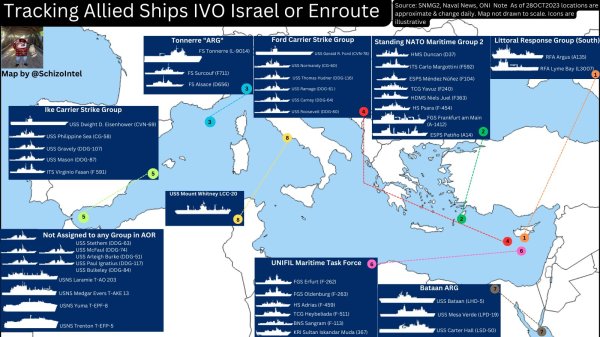
According to Axios, the White House has sent back-channel messages to Ansar Allah warning them to stop their actions against Israeli-bound ships in the Red Sea. But Washington does not seem to know how to respond; it doesn’t have the force structure to engage Yemen at the same time it dealing with Ukraine and Israel-Gaza.
The only way for Washington to rectify the situation, “neutralize” the Houthi is to go war against them. But who’s going to pay for yet another “forever war” against Yemen?
As Scott Ritter noted:
If we go to war against the Houthi, the whole region is going to blow up. The Axis of Resistance will go haywire. These militias that are fighting against American forces in Iraq and in Syria – believe it or not – are holding back. They could do a lot more (damage to U.S. Middle East facilities). They are simply reminding the Americans that they are here, that there will be a price to be paid so long as this conflict goes on.
What has the United States done? We’ve responded very minimally … We’re not doing real harm on the Iranians because we don’t want to. If we real harm on the Iranians then they will get involved. Now we’re talking about an expanded conflict. We only have 2000 military personnel in that region … and if the whole region blows up those 2000 U.S. soldiers will be swamped, overrun and then we’ll have to divert all our airpower into that region. … Then the war spins out of control. This is a nightmare scenario for the Biden Administration.
If the war spirals out of control Washington (and Tel Aviv) have another worry: what will Hezbollah do?
3.
An unconfirmed photo published at The Cradle shows damage to US base just outside Erbil, Iraq from recent drone attacks. The sources stated that 50 percent of the Harir Air Base was hit by strikes during recent operations in support of Palestine sometime between 24 October and 2 December. The Islamic Resistance in Iraq is a coalition of armed groups seeking to oust US and other foreign forces from the country. The photos show the complete destruction of two structures in the base totaling 13,700 square feet, or 1,300 square meters.
Last week, a US Department of Defense official highlighted that US forces and the international coalition were attacked at least 76 times in Iraq and Syria since the start of Operation Al-Aqsa Flood. According to the official statements issued by the Islamic Resistance in Iraq, the Harir base has been targeted by armed drones 12 times since the 7 October Al-Aqsa Flood operation. On 17 November, the Harir base was targeted by drones, but US officials claimed the attack did not cause any damage or casualties.
The resistance has also targeted other US bases in Iraq, including the Ain al-Asad military base in Al-Anbar province, as well as the US embassy in Baghdad in a rocket attack last week. The US maintains 2,500 soldiers in Iraq, under the guise of a training and advisory mission for Iraqi forces. The resistance has also targeted US bases in Syria, including the Conoco oil field base, the Al-Shaddadi base, the Conoco gas field base, the Kharab al-Jir base, and the Al-Tanf base.
“There will be no end to the operations of the Islamic Resistance in Iraq unless the [Israeli] attacks on Gaza stop, and no ceasefire for the US occupation in Iraq unless there is a real and binding ceasefire for the enemy on our people in Gaza,” tweeted Abu Alaa al-Walaei, head of the Kataib Sayyid al-Shuhada group, which is part of the Popular Mobilization Forces (PMU).
The US currently maintains 900 troops occupying large swathes of northeastern Syria in cooperation with its proxy, the Kurdish-led Syrian Democratic Forces (SDF). US occupation forces regularly steal oil from northeastern Syria, which they then transport to the Harir military site in Erbil, the capital of the Kurdistan region of Iraq (KRI). As The Cradle has previously reported, this is done for the benefit of the Kurdish oil company KAR Group, owned by Sheikh Baz Karim Barzanji, who is close to the family of the head of the Kurdistan Democratic Party (KDP), Massoud Barzani.
 View from the Left Bank: Rob Prince's Blog