Beit Ummar, West Bank Palestine. Volunteers from the Center for Freedom and Justice there prepare packages of food and supplies for the suffering people of Gaza.
_____________________
Press Release: The Biden Administration must insure that needed food, medical and infrastructural aid reach Palestinians in need in Gaza.
1.The horror of Gaza continues unabated on a biblical scale; 2.3 million people are in dire need of food, water, shelter, medical care. Meanwhile in the West Bank, almost ignored in the mainstream media, Israeli repression has intensified, too.
In Gaza, among the atrocities, the UN estimates 50,000 pregnant women are currently living in Gaza, with more than 180 births taking place every day amid the “decimation” of healthcare. Many of those women are acutely malnourished. Few receive any medical attention before labor, often weeks ahead of schedule resulting in premature babies with little chance of surviving. C-sections are done with no anesthesia. There is little food for new babies or Moms.
2. While our brothers and sisters in Gaza continue to be subjected to war crimes, the Zionists have also escalated their repression across the West Bank, including against our friends in Beit Ummar where since October 7th of last year total number of arrests of Palestinians exceed 9,170. Torture is commonplace.
Beit Ummar, population 20,000, is located in the West Bank, a region controlled by the Israeli Defense Force. Living under close to a military virtual siege for decades, fully one third of all Palestinian youth incarcerated in Israeli prisons come from Beit Ummar.
The IDF or Israeli settlers terrorize the townspeople by breaking into their homes in the middle of the night, stealing and breaking household items. This happens regularly across the rest of the West Bank and includes often brutal arrests along with threats against detainees and their families.
Seizures of land and Palestinian private property have intensified with armed clashes breaking out through the territory. Vigilante attacks by Israeli settlers, armed and egged on by the government and encouraged by the IDF, have accelerated. According to Al Jazeera, more than 500 Palestinians have been killed in the West Bank .
We, the Center of Freedom and Justice – Colorado, call on the Colorado Congressional Delegation to ensure that the aid being collected by Beit Ummar (and others) for the suffering people of Gaza be speedily and successfully delivered to the starving people of Gaza.
3. Those who have so little to share, share with those who have nothing.
As Center for Freedom and Justice spokesman Mousa Maria noted:
“The project spanned a full week of continuous effort to pack 2000 parcels into the trucks. We are now awaiting coordination from the Palestinian authorities to allow the trucks to the crossing then to deliver these parcels to 2000 effected families in Gaza.
“This project involved three months of continuous planning, during which we successfully raised $70,000 for foodstuffs and logistical work. Our success will be marked by the safe entry of the trucks into Gaza.
Concerning the current situation, as one Beit Ummar resident commented (June 13, 2024):
In Beit Ummar we face Israeli raid almost every night, they have been imprisoning people way more that before the war and the prisoners are being treated really really bad.
Also Israeli government is refusing to give us our money’ salaries for those working in the Governmental sector, and starting from this week, they reduced the water we receive 40% although even before that, the water was barely enough.
We are threatened to face what Gaza faced. I’m terrified for my family, kids and beloved ones but nothing to do other than praying.
1942. My grandmother, Molly Prensky (from Vllnius), my father – then Herb Prensky before he changed his name to Prince, next to him my Aunt Ruth Bradspies, Dad’s older sister and on the far right Julius Prensky (from Grodno, now in Belarus), my paternal grandfather. He died of tuberculosis. At one point, I was told, he came to Denver for treatment in the 1930s or 1940s. I have not been able to verify the exact date or where he was treated. National Jewish? Dunno,.
____________________________
(Note: This article, originally from the New York Review of books was republished from the Portside website from where my wife, Nancy, forwared it to me. It is an extended book review on two books that deal with the curent global resurgence of tuberculosis. Tuberculosis “is back” but that is a misnomer as it never went away. Very decent piece).
____________________________
We once thought tuberculosis arrived in humans with the advent of agriculture, acquired from cattle as hunters and gatherers became settled farmers during the Neolithic revolution. The bovine form of the disease—caused by the closely related Mycobacterium bovis—can jump the species barrier to humans through unpasteurized milk, causing an infection that is clinically indistinguishable from one caused by the human variant.* But more recent studies suggest that Mycobacterium tuberculosis and Mycobacterium bovis evolved separately, from an even more ancient common ancestor long before the Neolithic Period. As far back as we can imagine, TB has been a human disease.
Everything Is Tuberculosis: The History and Persistence of Our Deadliest Infection
by John Green
Crash Course, 198 pp., $28.00
Phantom Plague: How Tuberculosis Shaped History
by Vidya Krishnan
PublicAffairs, 300 pp., $30.00
By the time Mercy Lena Brown was born, in 1872, her New England farming community was becoming a ghost town. Young farmers were leaving the barren, rocky soil for jobs in the city, and the people who remained were suffering an outbreak of consumption, which seemed to move through households with no clear pattern, causing one out of every four deaths in the area.
Of the nine members of the Brown family, Lena’s mother was the first to die of consumption, in 1883. Seven months later Lena’s sister Mary Olive, a twenty-year-old dressmaker, died too, becoming so pale and emaciated in the final days of her illness that she knew in advance to choose the hymn she wanted sung at her funeral.
Lena’s brother, Edwin, a store clerk, fell ill next. Desperate, he went west to Colorado Springs, following the prevailing medical wisdom of the time that dry air and sunshine could arrest the illness. They didn’t. He returned home after eighteen months, weaker than ever, and by then Lena, who had been well when he left, was gone too, her own consumption the “galloping” variety. Edwin’s dreams became even more fevered. “She haunts me!” he called out in his sleep.
After Lena’s death, in 1892, an article in TheProvidence Journal reported that neighbors “besieged” her father, George, insisting that Edwin’s symptoms were a sign of something otherworldly: some spirit must be sucking the life from his thinning body. Because he fell sick after his mother’s and Mary Olive’s deaths, and because he quickly worsened after Lena’s, the three Brown women were the chief suspects. The only way to save his life, the neighbors told his father, was a morbid practice that had caught on in New England in reaction to the gothic horrors of consumption: exhume the bodies of his mother and sisters before Edwin entirely wasted away.
Four local men dug up the remains of the three Brown women. By then Lena’s mother and sister had been dead for nine years, and only their skeletons remained. Lena had died in the winter, and her body had been left in a crypt until the spring thaw softened the frozen earth enough for burial. Her doctor was enlisted to perform an autopsy; her body was still largely undecomposed. From beneath Lena’s rib cage he removed her liver, the twin pink slabs of her lungs, and her heart. This he slit open with a scalpel to find that it was filled with dark clots of rotting blood.
To the neighbors, who had watched many of their own loved ones waste away of consumption, the heart seemed like proof: Lena had been feeding on the living, sapping their blood and leaving them wan and feeble. They burned her liver and heart to ash, which they mixed with water and administered to Edwin as an exorcism and cure. He died two months later. In the end, only George and one of his seven children survived the disease. Lena’s lungs, the doctor later told a local newspaper, had been filled with “diffuse tuberculous germs.”
Lena’s death and exhumation—and a cultural history of this tradition of disinterment, common throughout eighteenth- and nineteenth-century New England—are recounted in careful detail in the Rhode Island folklorist Michael Bell’s Food for the Dead (2011). Drawing on decades of census data, death records, newspaper clippings, and oral histories, Bell argues that this model of disease—consumption caused by a vampiric spirit—had an internal logic no different from the explanations of doctors and scientists at the time. The myth could explain why the disease clustered in certain houses, cursing entire families. And it accounted for the visceral horror of the affliction, the way it consumed each of the body’s vital organs in turn.
A decade before Lena’s death the German physician and microbiologist Robert Koch, informed by the nascent germ theory of disease, had discovered the bacterium—Mycobacterium tuberculosis—that causes consumption. But the first antibiotics were not discovered for another half-century, and the medical establishment, loath to attribute consumption to a pathogen that could not yet be treated, was slow to accept Koch’s explanation. Instead doctors clung to the older theory that consumption was caused by damp lungs, prescribing therapies—like Edwin’s sojourn in the West—intended to desiccate their patients’ failing bodies: “What cures and hope for recovery were medical practitioners offering their consumptive patients?” asks Bell.
If you judge by sheer number and kinds of treatments, they offered a great deal. But if you measure the effectiveness of these treatments, then, unfortunately, they were still groping in the dark.
Among these treatments were leeches and opium, warm sea air and cold baths, milk from the breasts of a pregnant woman, and dried seaweed placed beneath one’s pillow. Read more…
MK Meats. small, independent meat processing plant. Unadilla Nebraska. 2019. Can smaller meat processing plants like this one pick up the slack of Tyson Foods Lexington plant closing?
____________________________
“This decision also raises serious questions about our national priorities. The Administration and Congress should be working to strengthen these workers and their communities by boosting production here at home. Instead, our leaders are flirting with importing beef from Argentina and unleashing tariffs that cut off foreign markets to American beef, pork, and chicken. Meatpacking workers across this country deserve better.”
_______________________________
Mark Lauritsen, Director of the Food Processing, Packing and Manufacturing Division and International Vice President at UFCW International, said:
“The closure of the Tyson Foods beef plant in Lexington, Nebraska is a devastating blow to the hundreds of meatpacking workers who every day put in the hard, often unseen work of keeping America fed. While these workers were not members of UFCW, we stand with them. These men and women are the backbone of an industry that strengthens local economies and sustains our nation’s food supply
“Layoffs in towns like Lexington don’t just impact workers inside the plant. Families now face uncertainty and anxiety heading into the holiday season and small businesses will feel the strain as spending drops. When a company as large and as profitable as Tyson shuts down a facility like this, it is the community – not the corporation – that pays the biggest price.
“This decision also raises serious questions about our national priorities. The Administration and Congress should be working to strengthen these workers and their communities by boosting production here at home. Instead, our leaders are flirting with importing beef from Argentina and unleashing tariffs that cut off foreign markets to American beef, pork, and chicken. Meatpacking workers across this country deserve better.”
###
The UFCW International is the largest private sector union in the United States, representing 1.2 million workers and their families in grocery, meatpacking, food processing, healthcare, cannabis, retail, and other essential industries. UFCW members serve our communities in all 50 states, Canada, and Puerto Rico. Learn more about the UFCW at ufcw.org.
Pillen hopes Lexington plant can be repurposed, says new beef production near North Platte could help displaced workers
By: Cindy Gonzalez and Aaron Sanderford – November 24, 2025 – 7:12 pm
Nebraska Gov. Jim Pillen said his team is “working our tails off” to “make lemonade” out of the sour announcement that the Lexington Tyson Foods plant is to close in January. Dec. 27, 2023. (Zach Wendling/Nebraska Examiner)
LINCOLN — Nebraska “got our butts kicked” by the Tyson Foods decision to close a Lexington beef plant employing about 3,200 people, Gov. Jim Pillen said Monday. But he sees a possible Hail Mary pass to resurrect the industrial property.
Pillen, in an interview with the Nebraska Examiner on the agribusiness closure, said he learned officially of Tyson’s decision Friday at noon, just a few hours before the Arkansas-based multinational corporation made the news public.
He said his team had been seeking a meeting with company officials amid the struggles faced by the cattle industry, including cutters and other meat processors facing lower cattle supplies and higher retail prices for beef.
The governor said he was told a key contributor to Tyson’s decision involved the age and inefficiencies of the Lexington factory, which was built decades ago to manufacture combines and other farm machinery.
The “good news,” Pillen said, is that Tyson officials are exploring other options for the Lexington property, including repurposing it into a specialty, “value-added” agricultural operation akin to Tyson’s Omaha plant that produces millions of pounds of raw and cooked bacon.
Specialty meat operation?
His hope, he said, is that the company might take a cattle carcass, for example, Pillen said, and create a specific type of steak or other commodity and make something people want, as does Tyson’s Omaha plant.
“There [are] discussions going on within the Tyson organization, ‘How can we turn that plant into a value-added plant with either pork, beef or poultry because they’re in that space. That’s a real-life possibility,” Pillen said.
Tyson Foods did not immediately respond to a request for comment.
The governor harkened back to the origins of the Lexington Tyson plant. It was built originally to manufacture farm implements for Sperry-New Holland, which during the farm crisis in 1985 announced it would close and eliminate 940 jobs.
IBP in 1990 opened the property as a converted meatpacking facility. The company later was acquired by Tyson Foods, doing pivotal work for ranchers in west-central Nebraska. Pillen said the plant might have survived this round of Tyson cuts had it been tailor-made for beef production.
“My guess would be that if that plant would have been built brand new from scratch, this is a conversation that wouldn’t be taking place,” Pillen said. “They took lemons after New Holland and made lemonade out of it for a while. But as it got really, really competitive, [and] it’s not really one of the best plants in the United States.”
Asked whether workforce availability problems influenced Tyson — including limited availability of temporary foreign workers and immigrants who have staffed many of the cutting-floor jobs — Pillen said he was told the Lexington plant had a “great team,” which “made it extra hard.”
Asked whether workforce availability problems influenced Tyson — including limited availability of temporary foreign workers and immigrants who have staffed many of the cutting-floor jobs — Pillen said he was told the Lexington plant had a “great team,” which “made it extra hard.”
‘Lived this nightmare before’
Nebraska’s congressional representatives have taken a harder line on the closing than Pillen, who defended Tyson as an American-owned meat-processing, protein provider. He has said he is not an advocate of foreign-owned businesses crowding the food space.
Pillen’s family runs a massive hog and hog genetics operation based in Columbus, and his family has a significant ownership stake in a pork-production plant in Fremont. He said his family has long done business with Tyson’s plant in Madison. The company also has a major plant in Dakota City.
Pillen’s family runs a massive hog and hog genetics operation based in Columbus, and his family has a significant ownership stake in a pork-production plant in Fremont. He said his family has long done business with Tyson’s plant in Madison. The company also has a major plant in Dakota City.
U.S. Rep Mike Flood, R-Neb, said in a video on social media that “we’ve lived this nightmare before,” when Tyson pulled out of Norfolk nearly 20 years ago.
He said the Tyson decision for Lexington “brought a lot of emotion back.” In 2006, he was a new state senator representing Norfolk when he said he got a call that the Norfolk plant would close and eliminate 1,300 jobs.
He showed a video of the abandoned Tyson plant in Norfolk and asked Tyson to help resurrect the Lexington facility in some way, even if for another company.
“We can do this much better,” he said. He also said, “There is life after Tyson,” adding that he worked with a local hospital in his northeast Nebraska town to build a nursing school. He said it helped create a “regional medical destination” with a health service system he called “unparalleled for a town our size.”
He said his city’s downtown has since seen major revitalization projects.
‘Dude ranch’ fascination
Pillen acknowledged Tyson’s presence in other communities, saying, “I think it’s incredibly important we’re focused on what we have.”
He said the state and its agricultural-focused economy cannot afford to feel sorry for itself.
“What are we going to do?” he asked. “Wallow in the muck … or are we going to roll up our sleeves and try to solve something?” He said he has spent much of his time since Friday “calling people and getting input” on next steps.
He said he has been privy to conversations about what it would take for the new Sustainable Beef in the North Platte area to take on a second shift — perhaps opening slots earlier than anticipated for some Lexington-based workers.
The Lexington plant is to close around Jan. 20.
Pillen said one of the easiest, short-term ways to help might be to bus or transport former Lexington plant workers to the North Platte-area plant. He said Sustainable Beef already has hired many of their first 800 workers and a chunk was from Lexington.
“So that transfer has been taking place,” he said. “We’re talking to people on all fronts to be able to get ideas and bring people together.”
Pillen, Nebraska’s first farmer-governor in more than a century, talked about reasons behind the U.S. cattle shortage that has impacted meatpacking companies and processors.
Among factors reducing the heads of cattle being raised, Pillen said, are extended drought conditions that shrank “mama cow herds” and bad winters that hurt cattle conception rates. He said the 2023 winter reduced herds and births by more than 300,000 cattle in Nebraska alone.
Also, he said much ranch land is being gobbled up by rich people that prefer operating a “dude ranch” over raising cattle, which has contributed.
‘Gotta make lemonade’
Pillen said the number of jobs eliminated by Tyson may be lower than the 3,200 the company reported because of fewer shifts being run during tight times. But he called the loss devastating to a community of about 11,000 people in Dawson County.
He urged Nebraskans to consider donating to charitable organizations, including local churches and civic groups trying to gather help for affected workers and their families over the holiday season.
He said Tyson didn’t ask for state incentives or other changes to keep the Lexington plant open. He said ag producers and industrial users are more interested in lasting property tax relief.
Tyson’s cuts stretched beyond Nebraska’s Lexington plant, which slaughtered up to 5,000 cattle a day, according to industry reports. The company said it was also downsizing a Texas beef plant to a single shift each day from two.
“We’re working our tails off,” Pillen said of his team. “This was a bad lemon drop day. But we gotta make lemonade out of it.”
Here in the USA, the horrors of war – any war – are muffled by governments hiding their complicity and a compliant media. Most “really don’t get it” when it comes to war as there has been – other than Pancho Villa’s brief 1916 attack on Columbus, New Mexico and a few Japanese air balloon bombs sent during WW2 by Japan – virtually no war fought on American soil since the Civil War, now 160 years ago. Yet war is rampant the world round, especially in the Middle East where it has become normalizsd to such a degree that it competes daily with the weather and the latest government scandal. This is not the case for the peoples of the Middle East, the suffering masses in Gaza, the West Bank and Lebanon. Yet there are some movies that shatter this complacency, and remind us just how horrible, how destructive war is today. One of these films is Philippe Aractingi’s “Under The Bombs” about the 2006 Israeli military offensive and bombing campaign into Southern Lebanon. What this film does, and does frankly as well as a film can do, is to humanize this war story.
The library at Regis University, walking distance from our home, is a friendly place, in many ways open to the public although it seems that many neighbors are unaware of the resource “just next door”. A Jesuit university with a solid academic record, it has been the academic home of a number of close friends who taught there, among them the late Jamie Roth, Byron Plumley, Alice Reich to name a few. All are long retired. The Regis library has an extensive video/dvd collection which I enjoy perusing. One video that caught my eye last week was “Under The Bombs” directed by Lebanese director Philippe Aractingi. I have watched over the past few days and was moved by its essential subject matter: what it is like for peoplem civilians living in the midst of war, in this particular case, the 2006 war in Lebanon.
No i”Under The Bombs” not about Gaza … but in a way it is.
” Under The Bombs” was filmed in the midst of Israel’s 2006 attempt to “mow the lawn” in S. Lebanon, to strike a blow against Hezbollah there. Instead, meeting with fierce resistance that included a Hezbollah missile cutting an Israel war ship in the eastern Mediterranean in half, Israel was forced to withdaw. It called Washington asking to sue for peace, its troops and tanks returning south of the Lebanese border. While historians argue as to “who won” … there is doubt that in 2006 Israel got the kind of bloody nose it was unaccustomed to – a prelude to the failure of its military operation in Gaza. But the price that Lebanon had to play for defending its sovereignty was very high. Read more…
(Note: This article was taken from a post by Carolyn Withers Jones, “a Facebook all star contributor” from the Follow the Data with Evidence: COVID & Other Disease Threats Facebook page of November 19th 2025. It is lifted from a detailed ProPublica report by Nat Lash and Chris Alcantara. It argues that birdflu – H5N1 and other mutating varieties – might be entering farms through an airborn vector rather than from bird droppings. It also gives chilling statistics of the numbers of domesticated chickens and ducks euthanized earlier this year (Feb-March, 2025) as a result of the last wave of the outbreak. This current wave is just gearing up. Will it be as serious, or worse than last year’s? RJP)
Around this time last year (mid-November), at the start of a new bird flu season, only 26 commercial poultry farms had been struck. This fall, however, 78 have already fallen.
Reporting Highlights
–Gone With The Wind: After a bird flu outbreak tore through Midwestern barns, killing hens and spiking egg prices, the USDA didn’t investigate whether the virus was airborne. ProPublica did.
–“Seems So Likely”: Experts say ProPublica’s analysis offers a plausible explanation for how the wind could have helped spread the virus, exposing a flaw in the USDA’s playbook to fight it.
–Vaccine Resistant: To combat bird flu spread, other countries have authorized poultry vaccines, but the U.S. has held off amid political and economic opposition.
Nearly a million chickens packed the barns at Howe’s Hens last Christmas Eve (December 24, 2024) when the first of them tested positive for bird flu. The deadly virus spreads so fast that even if only one hen is infected, farmers are legally obligated to kill all of the others. Massive mounds of carcasses soon appeared outside the Ohio egg farm, covered in compost.
The slaughter wasn’t enough.
The virus tore through industrial barns in Darke County and moved on through one of the most poultry-dense regions in America, crossing the state line into Indiana. Rows of raised earth became a familiar sight alongside the roads that crisscrossed the plains. The air stank of death, recalled cafe owner Deborah Mertz: “The smell of every bird in Mercer County, rotting.”
The U.S. Department of Agriculture urged farmers to follow a longstanding playbook that assumes that bird flu is spread by wild birds and tracked into barns with lax safety practices. The agency blamed the outbreak on “shared people and equipment.”
Three years into a brutal wave of the virus, industry leaders raised evidence that bird flu was entering barns differently and evading even the strictest protocols. They suspected it could be airborneand begged officials to deploy a proven weapon against the disease: a vaccine for poultry.
The USDA didn’t do that or explore their theory, and its playbook failed: In just three months, the virus that erupted in a single Ohio farm spread to flocks with over 18 million hens — 5% of America’s egg layers. All were killed to try to stop the contagion, and egg prices hit historic highs, surpassing the previous fall’s spike, which Donald Trump had cited as a massive failure of economic leadership in his successful campaign for the presidency.
The USDA didn’t do that or explore their theory, and its playbook failed: In just three months, the virus that erupted in a single Ohio farm spread to flocks with over 18 million hens — 5% of America’s egg layers. All were killed to try to stop the contagion, and egg prices hit historic highs, surpassing the previous fall’s spike, which Donald Trump had cited as a massive failure of economic leadership in his successful campaign for the presidency.
After a quiet summer, bird flu is on the move again, and experts say it poses an escalating threat. While the virus doesn’t appear capable of spreading from human to human, it has killed people exposed to sick poultry. This year, the United States saw its first death from bird flu, a Louisiana senior with a flock of backyard chickens.
Viruses are constantly evolving, and if a person catches bird flu while infected with a seasonal flu, the pathogens could mutate into a variant that infects large numbers of people. “The minute it transmits in humans, it’s done,” warned Erin Sorrell, senior scholar at the Johns Hopkins Center for Health Security.
Given the stakes — and the government’s limited investigation of this winter’s outbreak — ProPublica set out to examine the USDA’s continuing conviction that the spread of the virus can sufficiently be curbed by its safety practices.
To trace precisely how the virus rippled through more than 80 farms in the region, ProPublica analyzed data on the genetics of the virus, satellite imagery, wind simulations, property records and trade notices and consulted with researchers whose peer-reviewed work previously found that the virus can spread on floating feathers and particles of dust. (Read more about the effort here.)
ProPublica found that virus samples taken from outbreak sites shared a unique genetic signature. Our finding: The wind was at least a plausible explanation for how the virus could have spread from farm to farm. We shared our analysis of the outbreak with eight experts in avian flu who agreed with that assessment. Several of them felt it was more than a mere possibility.
ProPublica found that virus samples taken from outbreak sites shared a unique genetic signature. Our finding: The wind was at least a plausible explanation for how the virus could have spread from farm to farm. We shared our analysis of the outbreak with eight experts in avian flu who agreed with that assessment. Several of them felt it was more than a mere possibility.
“It just seems so likely to me that this was an airborne thing,” said Brian McCluskey, former chief epidemiologist with USDA’s agency that oversees the response to bird flu. “I mean, how else would it have moved around so quickly?”
The experts stressed the analysis didn’t prove the wind directly carried bird flu from one farm to another, or that it was the only factor at play. The virus typically spreads via multiple routes, which could include contaminated birds, rodents or workers; if farms share the same feed supplier or trash collector, those factors can’t be ruled out.
But several experts said ProPublica’s analysis underscores the shortcomings of the government’s strategy, which fails to take the wind into account at all. “USDA has been grossly negligent in not establishing risk factors in real time,” said Simon Shane, a poultry veterinarian and consultant.
Other nations have taken a different approach. After a devastating outbreak in France, researchers there discovered bird flu was traveling on dust and aerosols. France began vaccinating its ducks in 2023 and saw a near-total reduction in bird flu cases. While American chickens are routinely vaccinated against all sorts of pathogens, USDA officials haven’t authorized similar efforts for bird flu, saying they could harm trade. The agency is echoing arguments by the chicken meat industry, which outproduces and outlobbies the egg industry and has been far less impacted by bird flu.
Other nations have taken a different approach. After a devastating outbreak in France, researchers there discovered bird flu was traveling on dust and aerosols. France began vaccinating its ducks in 2023 and saw a near-total reduction in bird flu cases. While American chickens are routinely vaccinated against all sorts of pathogens, USDA officials haven’t authorized similar efforts for bird flu, saying they could harm trade. The agency is echoing arguments by the chicken meat industry, which outproduces and outlobbies the egg industry and has been far less impacted by bird flu.
The meat exporters and their congressional allies have long warned that vaccinating even just egg-laying chickens could cause other countries to block all imports of American poultry, deeming the entire country a bird flu risk. Trade agreements generally require a guarantee that imported poultry is free of bird flu, and some countries including the United States fear that vaccination might not fully prevent infections, allowing the virus to quietly spread among flocks and linger in meat.
Adding to the headwinds is U.S. Health and Human Services Secretary Robert F. Kennedy Jr., who has said the virus should be allowed to burn through flocks so that farmers can identify birds with natural immunity, an approach public health experts have called “dangerous and unethical.”
A USDA spokesperson said it was “conjecture” to say vaccination would offer flocks better protection from airborne spread than its current strategy, which “remains rooted in real-time data, internationally recognized best practices and a commitment to transparency and continuous improvement.” The agency told ProPublica it has made no decision on whether to vaccinate hens and has no timeline on when it might announce one — though it is “proactively assessing” the possibility.
Avoiding the question of airborne spread appears to be in the USDA’s “best interests,” said Michelle Kromm, an animal health consultant who directed Jennie-O Turkey’s bird flu response in past outbreaks. “If this is a major risk factor, then vaccine is absolutely a critical mitigation to put on the table,” she said. “And that, of course, is something USDA still is not, after a decade, prepared to do.”
The “Best Defense”
The United States faced a similar crisis a decade ago when bird flu hit over 200 Midwestern farms within the span of a few months. After genetic testing revealed that the virus had mostly spread from farm to farm, the USDA sought to determine how.
Epidemiologists looked for patterns among those hit by the virus and not, like whether vehicles had visited multiple farms or whether barns had easy-to-clean concrete entryways. Ultimately, no factor answered the question of whether a farm’s poultry would be infected as well as its proximity to a farm with infected poultry.
USDA scientists, including McCluskey, found virus spewing out of the exhaust fans on farms with infected birds and said more should be done to fully assess the risk of airborne spread. But because the USDA couldn’t determine exactly how the virus got into farms, it concluded it couldn’t say with certainty whether airborne transmission played a role. The virus disappeared for years after that, but the government came up with a strategy to curb future outbreaks. It focused on keeping infectious materials from being carried onto farms using a method called biosecurity.
The USDA turned to the National Poultry Improvement Plan, a consortium of producers and government officials formed in the 1930s to combat the spread of a disease caused by salmonella. The group, which certifies poultry operators who take part in efforts to prevent disease in their flocks, developed guidelines for more uniform biosecurity practices, emphasizing concepts like “lines of separation” — areas where farmers would decontaminate before crossing and handling birds.
These protocols are now required for farmers who seek reimbursement for chickens they have to cull amid an outbreak. They are urged to seal holes in their barns to keep out wild birds, make sure they don’t track goose droppings on their shoes and be mindful that workers who travel through multiple farms can carry bird flu from one to another.
In 2022, a new strain of bird flu began infecting American flocks. About a year into the outbreak, officials noted a striking difference in their statistics: While farm-to-farm spread was responsible for 70% of the 2015 outbreaks, only 15% of cases originated from other farms. Industry and USDA officials concluded biosecurity was a resounding success.
But the government’s 15% statistic was not the big win for biosecurity that it suggested, ProPublica found. Unlike the 2015 wave, which almost exclusively hit commercial farms, the majority of new infection sites were backyard or hobby farms raising just a few chickens, wide open to the threat of a new strain infecting a more diverse array of wild birds.
But hundreds of commercial farms were still hit by the virus this time around. And had the USDA published comparisons on those farms, a much different picture would have emerged. ProPublica obtained infection data from 2022, when bird flu arrived, through November 2023 (the period covered by a request under the Freedom of Information Act) and found that about 40% of infections on commercial premises were associated with genetically linked clusters. Despite a heavier emphasis on biosecurity, the disease was still moving among farms.
But hundreds of commercial farms were still hit by the virus this time around. And had the USDA published comparisons on those farms, a much different picture would have emerged. ProPublica obtained infection data from 2022, when bird flu arrived, through November 2023 (the period covered by a request under the Freedom of Information Act) and found that about 40% of infections on commercial premises were associated with genetically linked clusters. Despite a heavier emphasis on biosecurity, the disease was still moving among farms.
Since then, the threat to farms has gotten a good deal more complicated and the spread among them more significant.
The virus was discovered in dairy cattle in Texas and Kansas in March 2024 and has since been found in more than 1,000 cattle herds. That strain of the virus doesn’t appear to spread in the wild birds often blamed for circulating bird flu, USDA officials told ProPublica. Nevertheless, that strain, called B3.13, has somehow jumped to nearby poultry farms. Millions of birds have been killed after viruses matching those found in nearby dairies infiltrated their flocks.
From then until late this summer, 73% of infections on poultry farms appeared to have originated on another farm. In spite of years of strengthening biosecurity, the nation’s farms were in the same place as they were a decade ago, when 70% of outbreaks stemmed from other farms. “What does increased biosecurity do? After three years, it ain’t enough,” said Gail Hansen, a former Kansas state public health veterinarian and epidemiologist who now works as a veterinary consultant. “Why are we doing the same thing over and over again?”
The USDA prefers to look at the entire span of this wave — going all the way back to 2022 and including those backyard farms — to reiterate its position that the “overwhelming majority” of infections have been traced to contact with infected wild birds — not spread among farms. It said this winter’s outbreak was “not representative” and was “unique.”
A spokesperson also said that the “best defense” against indirect virus transmission of any kind is still “strong biosecurity.”
“Right in the Wind Direction”
Wild birds likely introduced the virus to Howe’s Hens outbreak in December, but that’s where their role ended. Every one of the farms that fell from that moment on was infected by another farm, the USDA confirmed. What’s in dispute is how.
Egg producers argued that biosecurity failures weren’t solely to blame for the millions of hens lost to the virus that season. “There are breeder farms out there that are considered to be bulletproof that this virus is finding its way inside somehow,” Oscar Garrison, United Egg Producers’ head of food safety, said at a USDA trade conference in February.
At the vast majority of egg farms, he said, infections started with chickens close to air inlets and on upper levels, far from where virus tracked in on shoes and clothes would end up. An Ohio egg farmer told ProPublica the same happened at their large facility; experts said such a pattern would likely emerge if the virus was spreading through the air.
The circumstances were ripe for it. A veterinarian with Cooper Farms, the company that runs or contracts with the majority of the poultry farms in the region, described how the process of killing huge flocks releases a mess of feathers into the air. “We’ve had teams out there just picking feathers outside of these barns,” veterinarian Bethany Heitkamp said in February at the Ohio Pork Congress, an industry conference.
Infected carcasses tend to drop feathers — “and feathers, they stick to everything,” USDA poultry researcher Erica Spackman said at another industry forum. “They’re airborne on their own. So there’s a lot of opportunity for spread there.”
Widespread Chicken Deaths Forced Farmers to Dig Miles of Mass Graves
Aerial imagery over four western Ohio farms in March shows the toll of the virus’ impact on poultry stock after reports of infections in the region started in December.
A graphic containing a grid of satellite imagery, taken in March, of four western Ohio farms, where farmers buried between 245,000 and 1.8 million dead hens in dirt mounds on their properties.
After the virus spilled into nearby Indiana, the state’s head of avian health began to notice a pattern: If a farm had an outbreak and the wind was blowing hard that day, she could expect to hear news about another farm needing to test dead hens five to seven days later. “Then, what do you know, the lab calls, saying it’s positive,” Maria Cooper told members of the Board of Animal Health at a meeting that spring.
Cooper Farms declined to speak to ProPublica and instructed all of its contracted farmers to do the same. But in a recent episode of the industry podcast “Eggheads,” one of its employees described what it felt like to be in the thick of the outbreak.
Cole Luthman remembered fielding calls from poultry workers who had learned their neighboring farms had been infected. “Can I make it through it?” he recalled them asking. “And they’d be a half-mile down the road, basically right in the wind direction of the other farm that had just broken.” He told them to control what they could and that if they survived a week, they’d be okay. “And most of the farms would start seeing signs within seven days,” he said. “It was just devastating. Everybody felt helpless.”
As officials publicly pinned the blame on wild geese, rumors spread that drones hovering overhead were spraying the virus, perhaps controlled by foreign adversaries. Versions of the theory persisted long after authorities ruled it out. “If you don’t fill the void with scientific information, people are going to fill the void,” said Kromm, the animal health consultant and former turkey industry executive. “This is people’s livelihoods, and the lack of the ability to use science that’s out there to at least make an attempt to help explain things to them is super frustrating.”
The USDA said it didn’t investigate whether airborne spread played a role in the outbreak. A spokesperson said the agency has explored wind in other cases but faced “significant challenges” that included “the inability to rule out other potential mechanisms of disease spread.”
Rather than investigating wind patterns, the USDA deployed a standard questionnaire asking farmers about who and what had come on and off the farm. The responses revealed “numerous movements” that the USDA said posed a risk of “indirect transmission.” The agency would not elaborate or provide more specific information, but noted that ProPublica’s analysis does not account for links “such as shared workers, equipment, or feed deliveries” that could have contributed to the spread.
“At this time, there is no compelling evidence that indicates aerial transmission poses a greater risk than other known transmission routes,” said a USDA spokesperson.
Studies continue to support the theory that the wind is carrying the virus from farm to farm. Research in France that helped prompt policymakers to vaccinate flocks found dust laden with virus that came from infected farms. More recent work has established the density of farms as a key risk of viral spread in France’s duck-farming regions, which authors said “suggests that contaminated dust or feathers could reach neighbouring farms.”
Perhaps the strongest evidence comes from the Czech Republic, where earlier this year a team of scientists mapped the spread of the virus from a duck farm to two “high-biosecurity” chicken farms 5 miles away. They used genomic and meteorological information to show that “wind was the most probable mechanism of infection transmission.”
Perhaps the strongest evidence comes from the Czech Republic, where earlier this year a team of scientists mapped the spread of the virus from a duck farm to two “high-biosecurity” chicken farms 5 miles away. They used genomic and meteorological information to show that “wind was the most probable mechanism of infection transmission.”
Alexander Nagy, the Czech researcher who led the study, was among the experts with whom ProPublica discussed our analysis of the Midwestern outbreak. Nagy said the data assembled by ProPublica “strongly suggests that wind may have played a significant role in facilitating viral spread between farms” as it had in the cluster he investigated.
“The Only Way to Get Past It”
As hens died in record numbers in February, Tony Wesner, CEO of Rose Acre Farms, spoke to Congress about the difference vaccines had made against other scourges.
“If you look at diseases that we have had in the poultry industry in the past, the only way to get past it was through vaccine,” he said. “We have to control this disease. We have to do it with offense, not defense, which in my opinion is what we have done to this point.”
The government has had a proven poultry vaccine against this strain of the bird flu since July 2023, when USDA scientists concluded several available vaccines provided full protection against death and illness and reduced the shedding of virus in infected chickens. Trade has been among the biggest barriers to using it.
As the egg industry asked newly minted Agriculture Secretary Brooke Rollins to “bring a new sense of urgency” to address the question of vaccination, a bipartisan group of lawmakers wrote to her on behalf of the chicken meat industry, warning of a $10 billion economic loss if USDA authorized a vaccine. “If an egg-laying hen in Michigan is vaccinated,” they wrote, “the U.S. right now would likely be unable to export an unvaccinated broiler chicken from Mississippi.”
The scenario isn’t farfetched. After France vaccinated its ducks, the U.S. paused all poultry imports from the European Union, deeming much of the continent a risk because the vaccine could mask the presence of bird flu. The main way the virus is detected is by noticing dead birds; if vaccinated birds get infected but don’t die, the logic goes, how would anyone know whether the virus is spreading?
That’s not a risk the chicken meat industry is willing to take; it has lost only a tiny share of its chickens to bird flu and wouldn’t have a practical way to vaccinate them anyway. While egg-laying chickens are often in production for at least two years, broiler chickens are slaughtered within two months.
Wesner, the egg company CEO, argued that a large share of exported chicken meat went to countries that already vaccinate against bird flu. “I cannot understand why we cannot get together with those countries and figure this out so we do not ruin trade,” he said. Vaccine proponents were heartened early in the Trump administration when the USDA licensed a chicken vaccine developed by Zoetis. But soon after, in an interview with Breitbart News, Rollins dashed their hopes that it would be used any time soon.
“It seems like a very simple and easy and quick answer but ultimately the repercussions that we don’t fully understand could be so significant that we just have to go in a different direction,” she said. “We have a tremendous amount of work to do before we would even consider that as a potential solution and that is at least a year or more away.”
She said she’d spoken with Nebraska Gov. Jim Pillen, who is a veterinarian: “He said to me, ‘Brooke, don’t ever forget, the virus always wins.’” Pillen said in a March interview that vaccines would still allow the virus to spread and mutate, posing a threat for the disease to spread to people. “Using a vaccine would be absolutely catastrophic because there’s no vaccine that’s effective,” he said.
Experts in avian influenza say the opposite is true. Not vaccinating poultry means that the virus has more opportunities to infect humans and adapt, said Richard Webby, an influenza researcher at St. Jude Children’s Research Hospital. “These are the interfaces where we know transmission occurs,” he said of poultry farms.
And while it isn’t guaranteed to prevent all infections, vaccination makes them much less likely and lowers the chances that they will spread because the birds wouldn’t shed as much virus, said David Swayne, the former head of the USDA’s poultry research unit. “It makes the chickens or turkeys very, very resistant to infection.”
Swayne helped the egg industry craft a vaccination plan, which would include testing vaccinated birds to ensure the virus isn’t spreading undetected. Such surveillance is essential, said Jean-Luc Guérin, one of the researchers who helped convince French officials to vaccinate the country’s ducks. It has been more cost-effective, too; vaccinating and regularly testing the ducks cost $120 million after the first year, compared with the $1.6 billion the disease response cost in the outbreaks in 2021 and 2022. The government and industry are sharing the cost.
After France showed the surveillance strategy worked, the USDA resumed poultry imports from the European Union in January.
But USDA is in no rush to copy it. “Any potential vaccination strategy must account for complex logistical challenges — including administration, expanded surveillance, and associated costs — that must be carefully evaluated alongside scientific considerations,” a spokesperson told ProPublica. The agency says it is supporting research on “advanced vaccines to reduce transmission, protect poultry and stabilize food prices” and notes on its website that it is assessing “promising candidates in coordination with HHS,” Kennedy’s agency.
“We recognize there are multiple stakeholders,” said Garrison of United Egg Producers, “and those conversations are ongoing.”
Glenn Hickman, whose Arizona egg operation has lost over 6 million birds to the disease over the last 12 months, is losing patience. As he begins to move a new group of young hens into a layer barn, he fears he can’t fully protect them. “It’s terrifying because, again, we haven’t vaccinated, so nothing’s different,” he said. “If it was just that there’s no cure, then, OK, it’s just your luck of the draw. But the fact is that there’s a tool in our toolbox that’s affordable, available, and we can’t use it.”
It would cost $33 million to vaccinate in America’s turkey and egg industries, according to Jada Thompson, an agricultural economist at the University of Arkansas who worked on a report for the USDA. Rollins has committed to spending up to $500 million on audits of farms’ biosecurity and special inspections to examine where wild birds might be infiltrating farms, with some money to “fix the highest risk biosecurity concerns,” $100 million for research that could involve vaccines and another $400 million to keep reimbursing farmers for birds they have to kill. The government has already spent well over $1 billion on such reimbursements since 2022.
Experts told ProPublica they believe that decision-makers at the USDA are just stalling in hopes that the virus fizzles out, as it did a decade ago.
Experts told ProPublica they believe that decision-makers at the USDA are just stalling in hopes that the virus fizzles out, as it did a decade ago.
“I think their inability and unwillingness to do this stems from a disbelief that this is something that they are going to have to deal with over the long term,” said Jennifer Nuzzo, director of the Pandemic Center at the Brown University School of Public Health. “I think they’re hoping that this just goes away.”
Around this time last year, at the start of a new bird flu season, only 26 commercial poultry farms had been struck. This fall, however, 78 have already fallen.
“Save The Colorado” is both a worthy but unfortunately distant goal and the name of an organization focused on doing just that. Its name came up as a part of a discussion at a dinner honoring Aaron Stone and Rob Smoke both of whom ran for the Boulder City Council on a platform that included calling on that body to include opposition to the Gaza Genocide as a part of the city’s program. Out of approximately 35,000 votes cast, Stone got appromately 2500, Smoke 1500 votes. While the votes received are modest, in some ways given how late the candidates threw their hats into ring, theirs was well organized disciplined campaign which could serve as a model for candidates of all stripes trying to break the two party stranglehold on elected office, a worthy beginning.
In the free flowing discussion that followed a number of people spoke about about water issues. Given climate change, the long term drought that the entire western USA is experiencing and the general paucity of water resources west of the 100th meridian, combined with the cancer of uncontrolled development, water issues will dominate the politics of Colorado and surrounding states for a long time into the future; if anything their urgency can only intensify.
11/12/2025; For Immediate Release; Contact: Gary Wockner, Save The Colorado, 970-218-8310
Colorado River, USA: November 2025 may turn out to be a pivotal month in Colorado River history as two important events merged into one. First, the 7 states in the Southwest U.S. didn’t reach an agreement on which states get to further drain the River. Second, the Colorado River Indian Tribes voted unanimously a week earlier to give the Colorado River “personhood” status declaring that the River is “alive.”
As news reports flooded the media today about how the States didn’t reach an agreement, not one story reported that the Colorado River itself is already drained 100% dry before it reaches the Sea of Cortez, nor did any story mention the environmental consequences of the States’ disagreement which could further drain and endanger the River through the Grand Canyon. At the same time a few stories trickled in about how the Colorado River Indian Tribes granted ‘personhood’ status to the River on their reservation which in part covers both sides of the River near Parker, AZ.
“How these two events coincide remains to be seen, but the stark difference between arguing about who gets to drain the River dry versus declaring the River a ‘person’ that is ‘alive’ reflects dramatically different worldviews,” said Gary Wockner of Save The Colorado. “The future of the Colorado River is immensely contested.”
Save The Colorado has worked with a few towns in Colorado to pass “Rights of Nature for Rivers” resolutions for local waterways that start the legal process of granting personhood rights to rivers. That program is described here on our website.
(Note: Lately, over the past few weeks, I hacve started listening to the podcasts of Warren Buffett, the billionaire investor, founder and long-time CEO of Berkshire Hathaway, one of the more, if not the most, successful investment companies in U.S. History. His podcasts , interviews on the internet, seem to have increased dramatically of late, the reason being that he is worried about fragile state of global finance, the Trump Administration policies, and is suggesting that both the country and the world are heading for, or already engaged in a wild ride that includes a possible global depression of serious proportions.
About two weeks ago, I stumbled upon a Buffett podcast on what he is warning is a coming economic contraction (which we are already in). I found his comments, as usual, down-to earth and insightful; along with the likes of Richard Wolff, Michael Hudson, Lena Petrova, Danny Haiphong, etc.). It is interesting that although one of the more ardent defenders of the status quo, that Buffett’s comments often dovetail with those of these economists, all, to varying degrees, critics of the current economic system. All three of them are warning of a coming dramatic downturn; although careful how he words it, so is Buffett. More important than his predictions is the methodology he uses to come to that conclusion.
All this is to say, that as the current economic crisis deepens, it is worthwhile to listen to and study Buffett’s analyses along with the others mentioned above. The two interviews posted here just above are classic examples. The one, on developments in the global economic sphere – minus what I consider to be his silly, but typical comments on Russia -, is insightful about the problems and challenges of the U.S.-China current economic competition. The second one is one of the more understandable summaries of Trump’s complex legal problems, and how to understand the possible economic and political consequences of those court cases.
He is referred to as the “Oracle of Omaha” because he hails from there, lives in a not particularly luxurious home in one of Omaha’s middle-class neighborhoods, has gotten his hair cut – so the story goes – at the same barber shop, like Trump (perhaps only in this way) likes big Macs and drinks Coke, etc.. ie, the billionaire and one of the world’s richest men who lives a supposedly typical middle-class life. Buffett is respected in Nebraska City, 45 miles due south of Omaha on the Missouri River from whence come my in-laws, and, I am told, it is Berkshire Hathaway money that funds some of Nebraska City’s more enticing enterprises either in whole or in part.
I have not followed Buffett’s career nor his public statements closely over the years. For me, he’s just another billionaire, not a category I have any use for, one that actually shouldn’t exist in this world at all. But I do clearly remember that just before the “dot com bubble” bust in the early 2000s, wiping out the wealth of many (including some in my family), that Buffett had warned the bubble would burst. I also found his oft repeated statement that he wouldn’t invest in anything that he could not understand as a kind of wisdom not often heard from the class to which he belongs.
Storm coming. Nebraska City in the background. From Sapp Brothers in Iowa, just across the Missouri River in Iowa.
Quivira National Wildlife Preserve. Stratton County, Kansas. September 30, 2025. (R. Prince photo)
_______________________________
(Publisher’s note: Bird Flu – H5N1 – deserves to be carefully studies in its own right as it devastates bird populations worldwide, a result of bird mgration patterns in large measure. There also has been longstanding concern/fear that the condition could and would mutate to humans. Actually it has already, although the numbers of humans (and other mammals) infected remains small.
It is also the case that while some forms of H5N1 have infected (and killed) some humans that the number are small and at least to date the infections do not spread human-to-human. But new varieties, ie, genetic mutations, of the condition continue to appear as global monitoring has indicated. This new one is referred to as H5N5. The article below, from the Los Angeles Times, announces the appearance of a new human-effecting strain. As such worth watching. Article originally appeared in AP., RJP)
A resident of Washington state has contracted a new form of bird flu — the first case of its kind. The source of infection remains unknown, setting this case apart from most other infections linked to farmworkers or diseased animals. Virologists warn each human infection gives the virus a chance to mutate, potentially becoming more transmissible between people. Health officials say a person in the state of Washington has a new form of bird flu virus. The virus, H5N5, never has been seen in a person before. It appeared first in 2023 in birds and mammals in eastern Canada.
The strain was confirmed by the Washington State Department of Health on Friday.
“Given the rarity of such infections in humans and the fact that this person was hospitalized, there is an urgency to figure out how this person may have come in contact with the virus and whether anyone else was infected,” said Jennifer Nuzzo, director of the Pandemic Center at Brown University in Providence, R.I.
Epidemiologists and virologists worry that avian influenzas could generate a pandemic if allowed to spread and mutate. For instance, the H5N1 virus circulating in dairy cattle in North America is one mutation away from being able spread easily between people.
“Anytime someone is infected with a novel influenza virus, we want to gather as much information as we can to be sure the virus hasn’t gained the ability to more easily infect and spread between humans, which would trigger a pandemic,” Nuzzo said.
The case involves a person who lives in Grays Harbor County on the Olympic Peninsula. Their illness became severe enough that they were transferred to a hospital in more populous Thurston County and then to King County, where Seattle is located. Melissa Dibble, a spokesperson for the U.S. Centers for Disease Control and Prevention, confirmed the Washington health department’s finding, and said the patient had a backyard flock of “mixed domestic poultry.”
“The domestic poultry or wild birds are the most likely source of virus exposure,” she said in an email.
According to a news release from county health officials, the person is “older” and has underlying health conditions. Their symptoms included a high fever, confusion and trouble breathing. The person has been hospitalized since early November. “The fact that the patient experienced severe illness from this infection only increases the urgency to know more about this particular case,” Nuzzo said.
Henry Niman, an evolutionary molecular biologist and founder of Recombinomics Inc., a virus and vaccine research company in Pittsburgh, said other animals and birds in Canada also have been infected, including a red fox, cat and raccoon. According to research published last year on the novel strain, some infected animals carried a key mutation in the virus that allows it to transfer more easily between mammals.
Every time a bird flu virus infects a person, concerns grow that it could change, becoming more transmissible or more deadly. For instance, if a sickened person also has another flu virus replicating in their body, there’s concern the viruses could exchange genetic material. Just by having an opportunity to replicate and evolve millions of times in the human body, it could acquire deadly mutations.
Samples of a virus taken from a critically ill teenager in Canada, for example, showed the virus acquired genes that allowed it to target human cells more easily and cause severe disease. Richard Webby, an influenza expert at St. Jude Children’s Research Hospital in Memphis, Tenn., said the new virus is “interesting,” but he isn’t overly concerned yet. “No reason to expect an elevated risk,” he said.
However, Niman, the molecular biologist, said the fact that it has presented as a severe clinical case in the first person infected with it should be cause for concern, “I think this is a big deal,” he said.
Dibble, the CDC spokeswoman, said they are investigating the case with Washington’s health department and maintain that the the risk of bird flu to the general public remains low. The CDC urges caution, however, for people who work with or have recreational contact with infected birds, cattle or other potentially infected domestic or wild animals. They should wear gloves, masks and eye protection.
They also recommend people (and their pets) avoid raw or undercooked meat and eggs and raw milk or cheeses.
(Publisher’s Note: I have previously published several articles from Sasha Breger’s Global News Roundup on this blog, (1, 2, 3) an excellent source of world economic analyses and trends. Here is another piece on the relative decline of U.S. global influence. As usual, carefully written and documented with mainstream sources to bolster her arguments. You could do FAR WORSE than subscribing to this on-going newsletter. Recently I have had the questionable good fortune to meet with most members of Colorado’s Congressional Delegation. Frankly, with few exceptions, their understanding of global trends, despite (or is it “because”?) access to intelligence data, their general knowledge, and here I mean basic knowledge, of international affairs is appalling. Most present little more than canned scripts. They would do well to follow Sasha Breger’s work. Images are mine. RJP)
The Global News Roundup collects news stories from international (non-US) media sources on variety of pressing global issues and events.
Good morning! In April 2023, I published an article about the death of globalization and free trade. In a December 2023 end-of-year review, I shared an unpopular perspective on the US’s new role in the world: “Events this fall have mostly reinforced my strong sense that the US is no longer the leader of a globalized economic order, but rather has receded such that it now occupies a more middling and mediocre international position alongside many other countries, some of which are hostile to US interests and some less so. The US is no longer unique or special in the global economy.”
In recent weeks, mainstream American and European media have finally started reckoning with this harsh reality.
China is winning the trade war”: “It has learned to escalate and retaliate as effectively as America. And it is experimenting with its own extraterritorial trade rules, thus changing the path of the world economy…Amid all the tit-for-tat, China is developing, by trial and error, a new set of global trading norms…It wants to build a Chinese-led system on the ruins of the old liberal trading order, one which will rival Mr Trump’s empire of tariffs. Already China has shifted the geography of its trade: in the year to September its goods exports grew by over 8%, even as those to America fell by 27%. China’s threats to limit rare-earth exports inspire fear because it dominates the market and could cripple Western manufacturing supply chains.
Thanks, Economist, for repeating what many of us have understood for years now. Indeed, it has been a recurring theme here on IPEwithSBB that the US has far less leverage against China than is typically assumed in the West. To give a couple of big examples, the sheer size of the Chinese economy has kept the Russian economy afloat over the course of the Ukraine War, permitting it to circumvent Western sanctions. The massive heft of the Chinese economy also lurks behind the de-dollarization process, as fear of future Western sanctions on China has pushed many of its trading partners to preemptively diversify away from the US in trade and financial arenas.
I have also repeatedly stressed US reliance on global markets for commodities procurement, including reliance on China for critical metals and minerals, a pressure point around which the US was and remains incredibly vulnerable. Over the past several years, IPEwithSBB has covered the global race for metals and minerals supplies; central bank gold stockpiling; Chinese controls on germanium, gallium, and graphite; the geography of rare earth production and refining, including China’s central position; and the trade-offs American policymakers face as they lose access to global markets for mined and extracted materials, including for critical metals like tungsten. Read more…
Manhattan #rd Ave. and 33rd Street. March, 1986. (R. Prince Photo)
The overall data in the NYT has not changed. As the electorate moved towards whites – Cuomo got more votes. As the electorate moved higher in income – Cuomo got more votes.
But Mamdani got over 50% and did well across all demographics – beating Cuomo not once but twice. Cuomo was lavishly funded by right wing and billionaire money. For the last 2 months we had an endless stream of pro-Cuomo adds on TV. Everywhere, all the time. I only saw a few Mamdani TV adds the whole time. The difference was so extreme that I was concerned.
But Mamdani had a superb ground game with over 90,000 volunteers going door to door. On the local cable TV channel, NY1, which has good coverage of NYC news and events – there is an anchor who covers the local political news at 7pm every night. A black guy who lives in a middle class neighborhood of black homeowners. He has kids in high school. He said the canvassing was so intense that for months “we stopped answering the doorbell on evenings & weekends!”
The NY1 political director is an older white guy who lives in a well to do area way out in Brooklyn near the ocean. It would take me over an hour to get there by train. He said he’s lived there his whole life and had never seen door to door canvassing out there. “But this time we had Mamdani’s people door to door for months. None of us could believe it.”
There was a lot of Zionist propaganda in the campaign attacking Mamdani for his support of Palestinian rights and his opposition to Israeli genocide. But the Times of Israel [Jerusalem] reports that Mamdani still got 33% of the Jewish vote. Many Jews are progressive and appalled by Israel’s policies.
Exit polls from the recent New York City mayoral election (November 2025) indicated that
around one-quarter (about 25%) of New York City voters considered themselves to be democratic socialists.” I have no problem with that but was surprised the number is that high. It reflects a significant generational shift to the left.
2.
Israel was a big issue even though most New Yorkers agreed the Mayoral choices hinged on local issues. There was widespread agreement w/ Mamdani supporting Palestinian rights. Cuomo is a well known Zionist and totally uncritical of what Israel has been doing. In the past this would have doomed Mamdani’s campaign but the Israeli genocide in Gaza has radically shifted opinion worldwide. We now have countries like Israel and Spain openly & officially calling for a boycott of Israel.
I don’t think this opposition to Israeli policies will make any difference, at least in the short term. Israel knows that as long as it has unlimited military, financial and diplomatic support from the US (unchanging under Trump) that it can basically do whatever it wants.
There is this interesting shift right now within the “America First” ranks re Israel. Why do we massively subsidize Israel who has free education and free health care while those things are lacking in much of the US? How this will play out remains to be seen but it is an interesting challenge within the current GOP and Trump world.
The election was very BIG here. More than 2 million people turned out to vote – the biggest turnout in at least 50 years. Mamdani is the first mayor to get at least 1 million votes since 1969.
In this interview which lasts more than an hour, it is the first 15 minutes that are relevant in which he discusses his take on the significance of the Mamdani victory in New York City, the repercussions of which the nation and the world are still trying to digest. Worth your time to listen to it. His discussion of the Mamdani election is followed by a brief commentary on the death of former U.S. Secretary of Defense, Dick Cheney, one of the masterminds of the U.S. War on Terrorism, which has contributed greatly to the destabilization of international relations.)
(Note: we are now three days after the NYC election of Mohamed Mamdani for mayor. No matter how it’s sliced, a historic election. NYC elects a young Moslem who grew up in Uganda and New York, who is a democratic socialist – if I am not mistaken, a member of Democratic Socialists of America. – The hysterical and racist, islamophobia campaign against him spearheaded by the likes of the Anti-Defamation League – ADL – and the country’s gazillionaires failed as a million “NYC- ites” gave the middle finger to the power of obscene wealth and racism hidden behind slogans of Israel’s “right” to defend itself. But what does it all mean? What are the chances of reform in NYC – not the financial reforms based upon austerity, but societal reform based upon the socio-economic needs and aspiration of the city’s middle and working class, its extraordinarily ethnically diverse population – a United Nations in and of itself – and its non-white racially oppressed minorities.?
The commentaries are emerging, most little more than verbal diarrhea. However, I found Chas Freeman’s commentary, interviewed by Nima R. Alkhorshid on his website “Dialogue Works” especially pertinent. Who is Chas Freeman?
Freeman represents, to my mind, one of the more sophisticated analysists of the U.S. foreign policy – a dying breed if you like.
As his bio in Wikipedia notes, Charles W. Freeman Jr. (Chinese: 傅立民, born March 2, 1943) is an American retired diplomat and writer. He served in the United States Foreign Service, the State and Defense Departments in many different capacities over the course of thirty years. Most notably, he worked as the main interpreter for Richard Nixon during his 1972 China visit and served as the U.S. Ambassador to Saudi Arabia from 1989 to 1992, where he dealt with the Gulf War.). To give a brief example of the breath of his diplomatic activities: Freeman accompanied Nixon on his historic 1972 trip to China to meet Mao Tse Tung. Later he was U.S. Ambassador to Saudi Arabia serving before and after Operation Desert Storm )
Great Blu Heron. Barr Lake State Park. Brighton, Colorado. October 25, 2025. A ranger related that at least on that date there have been no signs of bird flu
“However, this time around, we have less insight than before, thanks to staffing cuts at federal labs, rule changes that restrict who government scientists can communicate with and the ongoing federal government shutdown.
A spokesperson for the U.S. Department of Health and Human Services told HuffPost the CDC deactivated its H5N1 emergency bird flu response on July 2, 2025.”
_________________
In the past 30 days, the virus has struck 66 poultry flocks, leading to the deaths of more than 3.5 million turkeys, chickens and ducks, a steep increase compared to the summer months. The virus can spread easily when infected wild birds mix with commercial or backyard flocks
NPR – November 6, 2025
There is a decent Facebook group “BirdFlu H5Ni“. It doesn’t post that often but still it is a good way to monitor the evolution of the virus – and its various mutant forms. Two recent articles posted there raise signs of concern and bodes ill for the virus’ s spread across the Northern Hemisphere. The first cases of bird flu this season have come a month earlier than previous years.
This suggests that serious steps should be taken throughout the northern hemisphere to monitor the condition spread by wild migrating birds, mainly raptors, to domestic poultry, some domesticated mammals (cows) and with a few transfers to humans.
Concerning the USA. WANE 15, a Fort Worth, Indiana media company, posted an article yesterday (November 4, 2025) “Elkhart, LaGrange bird flu outbreak spreads, affecting 4 farms this week”. It notes that 13 farms in Elkhart County have detected, or suspected bird flu among chickens and ducks. It notes that despite the federal government shutdown, that the USDA is still open and tests come back to farmers in four to seven days.
A second article appeared in today’s (November 5, 2025) RTÉ News, an Irish News source. It announced, in the first outbreak of bird flu in a commercial poultry flock in Ireland since 2023, a compulsory housing order for poultry and captive birds amid the heightened risk from avian influenza. So far authorities have verified that 40 domesticated turkeys have come down with the condition.
2.
Concerning the Indiana bird flu outbreak, as reported in a WANE 15 article, cited above, although the virus is still localized to a small geographic area, it is “spreading quickly”. According to the Indiana State Board of Animal Health’s Current HPAI Case List, bird flu has been detected in eight farms, forcing farmers to “depopulate” (which means `kill’) 85,994 egg layer chickens, meat ducks and breeder ducks, and this with the flu season having hardly started.
These first H5F1 infections come shortly after the near completion of the annual fall migration through North America’s Central Flyway that throttles both sides, east and west, of the Mississippi River. Bird Flu’s main carriers are migrating waterfowl, wild geese and ducks. As the WANE 15 article notes:
The disease is not fatal for wild birds, so bird flu usually spreads through their feces.
“It could be something as simple as bird droppings in the parking lot or driveway at a farm, it could be walked into that facility,” Derrer-Spears said. “Poultry farmers work really hard to keep their space disease-free…even something as simple as turning on the ventilation fans because they need fresh air could pull some of that viral material into the space where the birds are.”
As reported in an earlier blog entry, while the numbers remain small, the first cases of bird flu this season have also been reported in Colorado along the northern Front Range near Loveland, 58 miles due north of Denver.
3.
As concerns the Irish case, a compulsory housing order for poultry and captive birds will come into effect in five days, on November 10. A like measure is expected to be introduced for the UK which will include Northern Ireland. The current outbreak of bird flu in a commercial poultry flock is the first in Ireland since 2023, although the virus has been detected in more than 40 wild birds across the country this year.
It has made Irish poultry farmers nervous, and it is not only there that bird flu outbreaks have been reported. As early as October 22, 2025, more than two weeks ago, RFI (Radio France International) reported that France had raised its bird flu alert to the highest level after a rise in new cases in poultry and backyard flocks were reported, triggering stricter biosecurity rules including the confinement of birds.
This tightening of biosecurity measures came after bird flu, H5N1 outbreaks were reported in five places – two on commercial poultry farms and three in smaller backyard holdings. This is more than a “French concern”. According to the European health surveillance platform ESA, 37 outbreaks of avian influenza were reported in poultry holdings across the EU between 1 August and 12 October, with additional cases since then – including several in France.
So, it begins again.
Common Mergansers (females with rusty red heads). January 25, 2025. Jim Baker Reservoir. S. Adams County, Colorado. (R. Prince photo)
The “Human Rights Warriors” and the Myth of the Islamic Enemy
For two decades, the West has waged what are called “human rights wars.” Wars that are supposedly to defend freedom, democracy, and human dignity. But behind the slogans lies another reality—a brutal, cynical policy disguised as morality. In the name of humanity, the West has bombed cities, overthrown governments, and left millions of people in ruins. And every time it happens, the same story follows: the enemy is Islam. The faith that represents peace, justice, and spirituality for billions of people is portrayed as the very threat to civilization.
This narrative is not accidental. It is the result of decades of propaganda, power plays, and geopolitical strategy. After September 11, 2001, Islam was made the world’s common enemy, and war was made a moral project. The United States and NATO launched the so-called “war on terror,” and the media loyally followed suit. Words like “Allahu Akbar” and “jihad” were filled with the power of fear. This was how public opinion in Europe and North America could be made to accept war as a necessary act to “save the world.”
But who was saved? Not the people of Iraq, where over a million people lost their lives to a lie about weapons of mass destruction. Not the women of Afghanistan, where two decades of “liberation” ended in ruins and a country abandoned to poverty and despair. Not the civilians of Libya, who had their country destroyed under NATO bombs, while Western leaders patted each other on the back and called it a victory for human rights.
This is the true face of human rights wars: those who claim to fight for human dignity destroy the very foundation of humanity. Those who say they defend freedom introduce chaos and suffering. And those who point to Islam as the cause of the violence refuse to see their own role in creating it.
An industry of moral rhetoric has grown up in the West. Politicians talk about universal values, but the values only apply as long as they do not threaten their own interests. We see it time and time again: A state in the Middle East or Africa is demonized, the leader is called a dictator, and religion is blamed for all oppression. Then bombs, sanctions, and destruction follow – always accompanied by beautiful words about democracy and human rights. This is not peace work. This is colonialism in a new guise.
At the same time, Islam is given the role of scapegoat. Any act of violence committed by a person with an Arabic name becomes proof that Islam is dangerous. But when the West drops bombs on civilians, it is never Christianity that is blamed. We don’t say “Christians are bombing Muslim children.” We call it “military operations.” It’s a double standard so grotesque that it should make us all blush.
Islam has never been the enemy of Christianity. The two religions have lived side by side for over 1,400 years. They share much more in common than they divide. But the West has used religion as a tool for fear, to create an enemy that justifies violence. It’s easy to sell war when you claim to be fighting evil. And evil always has to have a face—preferably one that looks different from your own.
I have personally met both Muslims and Christians in conflict zones. I have seen their faith, their humanity, and their pain. Those who live in the midst of the wars the West claims to “save” them from know better. They know that it is not Islam that is destroying their countries, but bombs and economic sanctions. They know that extremism grows where hope disappears, and that hope disappears when foreign powers invade and dictate.
Arab Christians, who often live side by side with their Muslim neighbors, know that the real conflict is not about faith but about power. They know that the human rights wars have turned their countries into battlegrounds for the interests of others. And they watch with sorrow as the West uses their own religion—Christianity—as a political club. For what kind of Christian values is it to spread death in the name of God while claiming to be fighting for freedom?
The West’s greatest betrayal is not just the wars, but the lies that accompany them. The lie that Islam is the cause of the world’s violence. The lie that we can bomb a country into democracy. The lie that our civilization stands for morality, while others stand for barbarity. These lies are the very foundation of the human rights wars—they give war an ethical veneer. But in reality, there is no ethics in killing for peace. There is no human right that justifies destruction.
It is also hypocritical to think that the West, which has historically been responsible for colonization, slave trade, genocide, and economic exploitation, should now suddenly be the world’s moral guardian. The same system that created the world’s inequality and environmental crises, today talks about justice and human rights while continuing to consume and dominate. When you look behind the language, you see a system that has not changed – only disguised.
The most worrying thing is how this ideological war has been internalized in our own societies. Muslim children grow up in Europe and are taught that they must prove that they are not dangerous. Western media constantly show images that link Islam to violence, while failing to show the millions of Muslims who live in peace, work, create, and love. The result is a society where trust is broken and fear rules.
At the same time, human rights are used as a selective weapon. When a country follows Western interests, it remains silent about violations of freedom. When the opposite happens, public opinion is mobilized. No bombs fall on Saudi Arabia, even though it beheads its opponents and oppresses women. But Libya was destroyed because the West needed a pretext to intervene. This is not about justice. This is about control.
As a veteran, I know what reality looks like when moral words meet the dust of explosions. I have seen how war destroys people, not liberates them. I have seen how young men and women return home without answers, and how those who survive carry a silence that no medal can cover. There is no honor in killing for a lie. And there is no human right in taking life for money, oil, or geopolitics.
Islam, as a religion, is at its core a teaching of peace – “salam” – and of justice. It speaks of mercy, of the duty to help the weak, of respect for the human person. This should not be so foreign to Christian values. But the West has chosen to overlook this. It is easier to see Islam as a dark threat than to admit that our own violence has created much of the world’s chaos.
We like to think that extremism is something foreign, but we carry it ourselves. Extremism is found in all religions, in all societies, in all ideologies. It is found in political elites who are willing to sacrifice thousands for strategic advantages. It is found in the belief that our own culture is worth more than others. It is found in indifference to the suffering of others. It is found in the belief that might makes right.
The West’s so-called human rights wars have revealed something deeply uncomfortable about ourselves. We have used the highest ideals as a cover for the basest motives. We have made the word “justice” a tool for oppression. And we have used the religion of Islam as a scapegoat for a world we ourselves have made unjust.
When history one day judges us, it may look back on these decades as a time when the West talked about freedom while killing for power. As a time when “human rights” became a brand name for war. As a time when faith was used to divide, rather than unite.
Islam is not the enemy. The enemy is the lies, greed, and the hatred of humanity that hides behind morality. The real battle is not between Christians and Muslims, but between those who believe in human dignity—and those who abuse it as a slogan.
Human rights were created to protect life, not to justify destruction. When the West once again takes up arms in the name of “justice,” we should ask: whose rights are really being defended? For those who die under the bombs never get to answer.
Ducks returning to Barr Lake State Park in Brighton Colorado. A few days ago, a ranger there related that to date (October 29 ,2025) there are no indications of bird flu among these migrating birds.
____________________________________
Walking along the South Platte River just north of 88 Ave in Brighton, north of Denver. I came across a dead mallard on the river’s far bank. It worried me. Not far from that spot, a year ago, I saw a red-tailed hawk pecking away at a dead duck on a walking path, the site of which gave me chills. Of course, neither that encounter or the more recent sighting of a dead duck indicate bird flu, but I admit, both incidents made me somewhat apprehensive. Victims of bird flu? Or not.
Although recent reports suggest that bird flu, formally labeled avian influenza (Highly Pathogenic Avian Influenza or HPAI) started to intensify in northern states in the Midwest a month ago; to date (November 1, 2025), to date it has hardly hit Colorado either in wild or domesticated birds, at least not yet. Cases were down both nationally and in Colorado during the summer, but what might happen now and, in the future, remains unknown.
Still bird flu is a global issue. As the Center of Disease Control notes, it is widespread in wild birds worldwide and is causing outbreaks in poultry and U.S. dairy cows with several recent human cases in U.S. dairy and poultry workers. A number of mutations of the original flu have facilitated first a jump from wild to domesticated birds, with a few forms jumping to humans as well although those viruses, to date at least, have not spread from human to human as of yet.
Here in the United States some 70 confirmed cases have been reported as has one death. 41 of these came from contact with dairy cattle, 24 with poultry farms and culling operations, 2 from other animals (backyard flocks, wild birds or other mammals) and one from unknown exposure. The worst effected states are Washington and California, but Colorado is not far behind with ten human cases most of which came from contacts with poultry farms. The latest information about bird flu in humans includes the fact that influenza may infect GI tracts and cause “digestive symptoms“. Last year the worst month for infections nationwide was January 2025.
During the first eight months of 2025, between January 1 and August 4, 2025, worldwide, 26 human infections with avian influenza A(H5N1) viruses (H5 bird flu) have been detected globally, of which 23 were identified in 7 countries outside of the United States, including 11 infections that resulted in death. Three of these cases were reported in the USA, all prior to mid-February, 2025. The 11 deaths occurred in Cambodia ((8), India (2) and Mexico (1). All of these were in people in contact with poultry or wild birds. In all these cases no person-to-person spread was noted; such a development is most feared and thus monitored. The genetic strain of bird flu is H5N1; however, this virus has mutated into a second strain H5N2 as it is referred to; this latter virus can change the way the virus behaves in an animal species. Bird flu has already mutated so that there are cases of the condition jumping to humans on a limited scale but at least to date, data suggests that we humans do not transfer it from one person to another. Could happen though.,
2.
As the annual bird migration season is coming to an end this prognosis could easily change. So far, only a few alarms have been sounded. An earlier report from the Rocky Mountain Raptor Program on Facebook painted a worrying picture of the disease’s spread:
HPAI has returned to the lower 48 with the Fall migration and cooler temperatures but earlier and at a level that previously was not seen during this time of year. (“this time of year” being late September/early October)
That same report focused on the condition in wild birds nationally and noted:
There have been multiple positive detections in wild birds (live and dead) across the northern tier states from Idaho and Utah to the East coast. Commercial and backyard poultry flocks have also been hit. Commercial poultry facilities in North and South Dakota, Minnesota, Wisconsin and Michigan have been hit to the tune of almost 600k birds and the numbers are growing. In previous years the Fall outbreaks primarily followed the coasts. This broad swath across the country speaks to the potential of wider spread of asymptomatic infection in migrating and local birds.
Although I could not find much information at Colorado State websites, the same Rocky Mountain Raptor Report noted that a number of bird flu cases it has processed. These included autopsies on a Great Horned Owl and an infected turkey vulture, both around Loveland Colorado, some 60 miles north of Denver on Colorado’s Front Range just east of the Rockies. The most recent outbreak in Colorado, at the beginning of the year, was in the north central part of the state (around Ft. Collins and Greeley). While I could find no evidence of the condition in domesticated ducks and geese as of yet in the state. Over the 2022-3 winter the state had to euthanize 6.5 million domesticated fowl as the flu jumped from wild to domesticated bird species with a vengeance leading to a spike in egg and chicken prices at the time.
Given how widespread bird flu has become globally,
October 12, 2025 on the South Platte River north of 88 Ave in Thorton



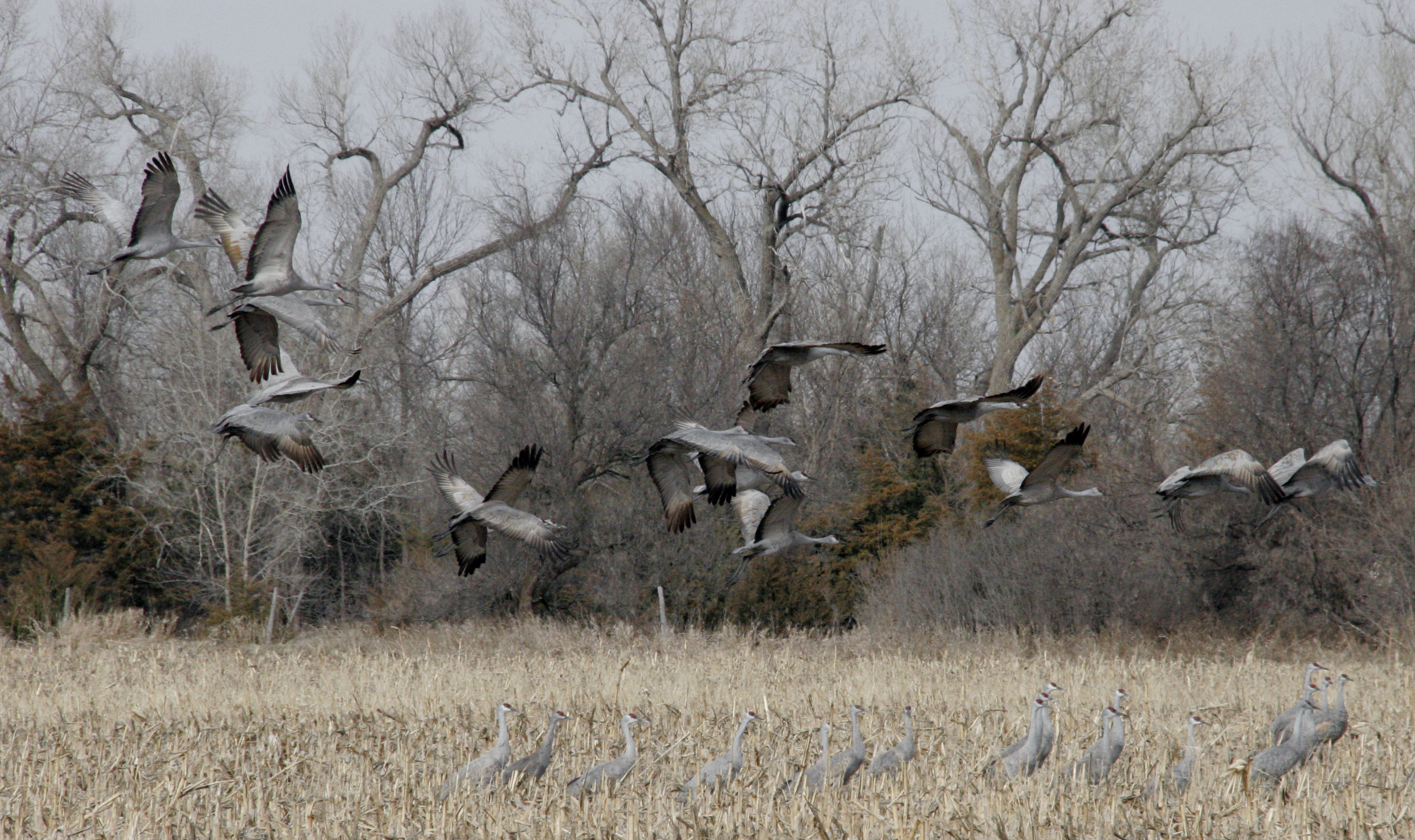





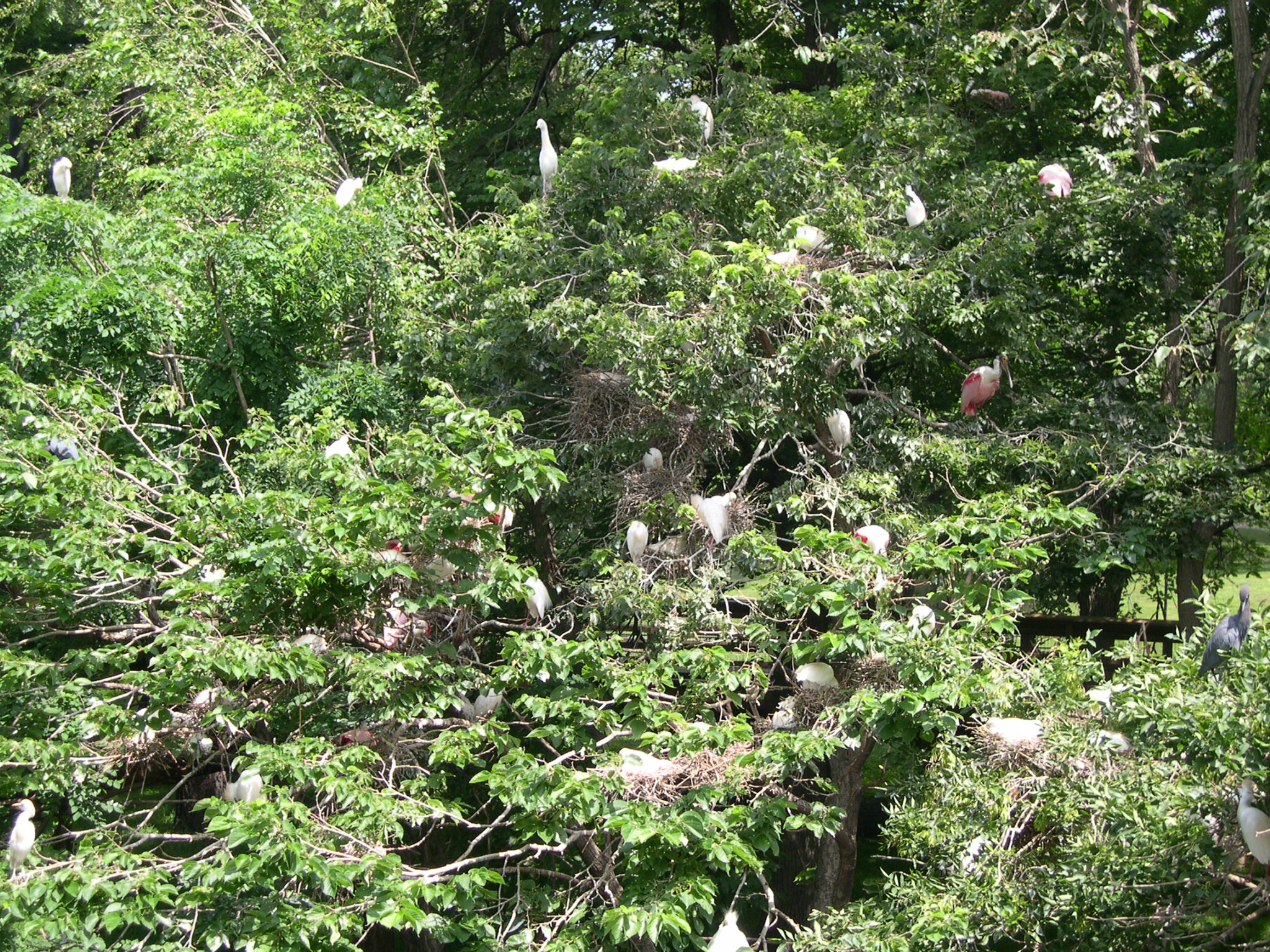





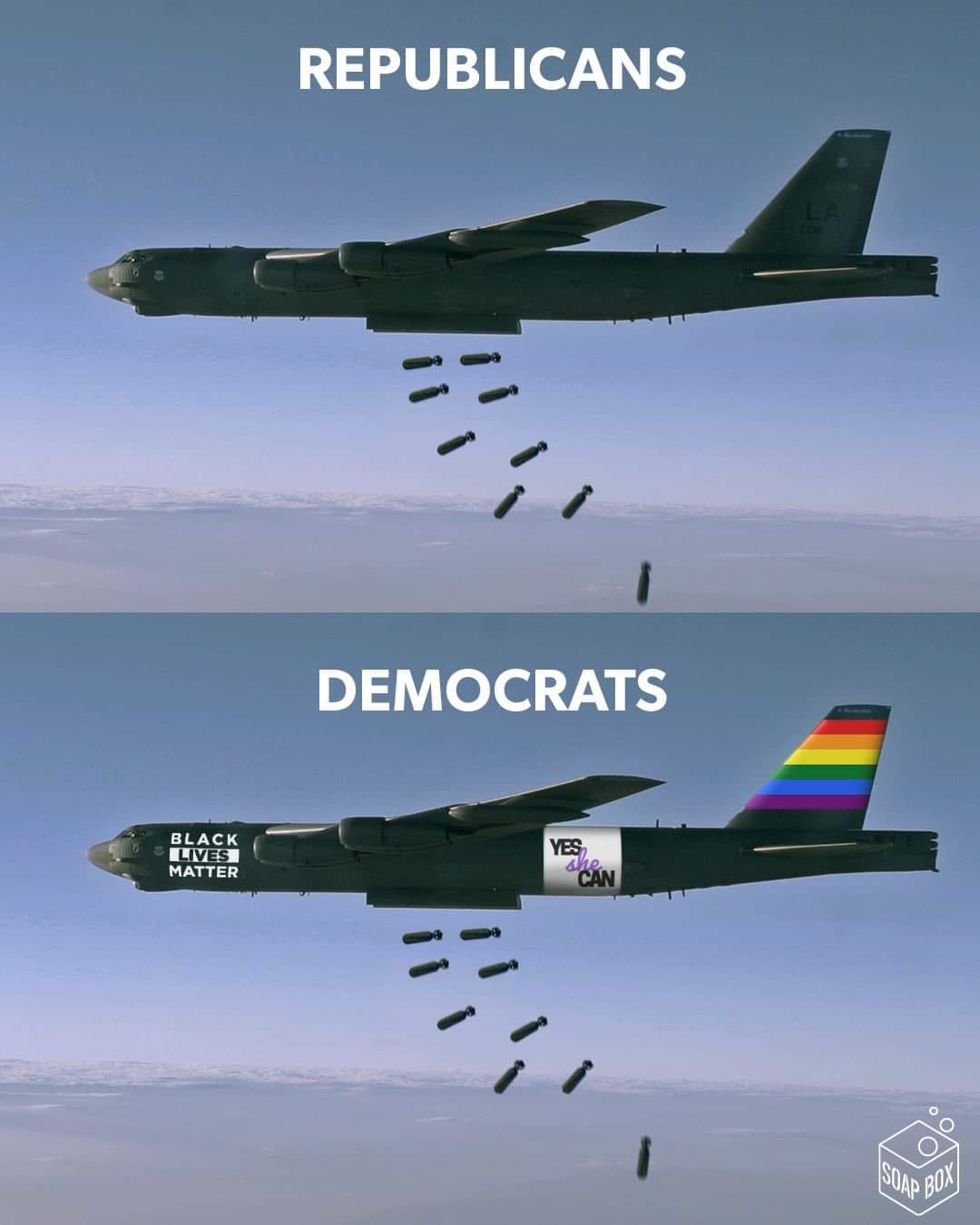


 View from the Left Bank: Rob Prince's Blog