Costa Rica 2 – Drug Trafficking blamed as homicides soar in Costa Rica
Insite Crime
Cocaine and Marijuana Fuel Ever-Higher Homicides in Costa Rica
Drug gangs battling over control of Costa Rica’s cocaine trafficking infrastructure and the domestic marijuana market are fueling an increase in violence in the country, which last year saw its highest-ever homicide rate.
Between the start of the year and April 27, Costa Rica has recorded a 36% increase in homicides compared to the same period last year, according to the Judicial Investigation Agency (Organismo de Investigación Judicial – OIJ).
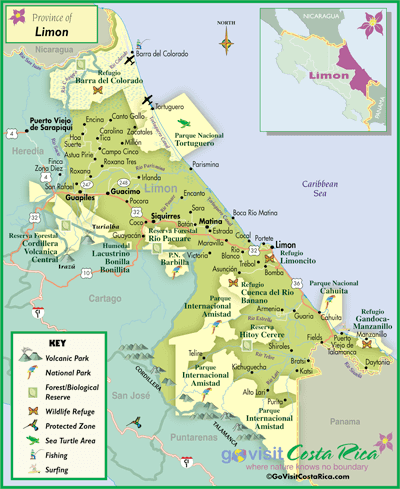
Limón, a province with a port city of the same name, is the epicenter of the violence, with a homicide rate almost three times the national average. Located on the country’s eastern coast, its Moín container port is a drug hub for cocaine heading to Europe and marijuana entering the local market. More than one-quarter of the homicides registered in the country last year took place in Limón.
SEE ALSO: Costa Rica’s Limón Province Becomes Murder and Drug Trafficking Center
The Pacific coast province of Puntarenas, and the province of San José, home to the capital city of the same name, are also violence hotspots.
Disputes over drug territories and settling scores are among the leading causes of murder, Randall Zúñiga López, general director of the OIJ, told InSight Crime. Professional murders carried out by hitmen account for 63% of all homicides this year, compared to 50% during the same period last year.
Police efforts to break up organized crime groups have led to skirmishes between gangs fighting for control of criminal economies, he said. This month, police arrested over 2,600 people in a week during “Operation Costa Rica Segura.”
“Many criminal groups have been dismantled, which generates a power vacuum in areas like Limón,” said Zúñiga López.
An increase in the supply of Colombian marijuana is also fueling rising violence, he said. Traditionally, marijuana consumed in Costa Rica has come from Jamaica. However, multiple seizures of so-called creepy marijuana indicate that it may be displacing Jamaican cannabis.
“Those who are dying, for the most part, are drug dealers who did not want to give up their plaza, did not want to pay a quota for the right to sell drugs, or simply tried to fight another criminal group,” he said.
InSight Crime Analysis
Criminal groups vying for control of the movement of cocaine through ports, and of the local marijuana market, are pushing violence in Costa Rica to new levels.
Costa Rica has historically been an important transshipment point for cocaine bound for the US and Europe. However, the country recorded a significant drop in cocaine seizures in 2022, confiscating or helping to confiscate 33.1 tons, compared to 61.7 tons the year before. While this might indicate a decreasing role, other explanations may account for the lower seizures.
While most cocaine that leaves Costa Rica departs from Limón, storing shipments at the port is a risky choice for traffickers due to its notoriety as a drug departure point. Authorities are extra vigilant for potential drug shipments, and traffickers also risk the theft of their product, said Zúñiga Lopez.
SEE ALSO: Panama, Costa Rica: Major Waypoints For Cocaine to Europe
To avoid Limón, criminal groups transport cocaine on speed boats from Colombia to southern Puntarenas, to towns like Golfito, Quepos, and the Osa Peninsula. They then transport cocaine to San José, located between Puntarenas and Limón, before moving it onto the eastern seaport, often on the same day. From there, the drugs are put on a ship bound for Europe or the United States, according to Zúñiga López. Moving the drugs quickly makes it harder for authorities to detect and reduces the risks associated with storage in Limón, he added.
A shift in the local marijuana market is further fueling violence. Criminal groups importing Colombian creepy marijuana are attempting to dislodge rivals who have traditionally bought the drug from Jamaica. This extra supply has resulted in lower prices domestically, and increased competition among criminal groups for control of domestic markets in major cities, according to Zúñiga López.
____________________________
Drug trafficking blamed as homicides soar in Costa Rica
/ AP
In this colorful Caribbean port, where cruise ship passengers are whisked to jungle adventures in Costa Rica’s interior, locals try to be home by dark and police patrol with high-caliber guns in the face of soaring drug violence.
Costa Rica logged a record 657 homicides last year and Limon – with a homicide rate five times the national average — was the epicenter.
The bloodshed in a country better known for its laid-back, “it’s all good” outlook and its lack of a standing army has stirred a public outcry as the administration of President Rodrigo Chaves scrambles for answers.
Where Costa Rica had previously been just a pass-through for northbound cocaine from Colombian and Mexican cartels, authorities say it is now a warehousing and transshipment point for drugs sent to Europe by homegrown Costa Rican gangs.
In Limon, that shifting criminal dynamic has mixed with swelling ranks of young unemployed men who make up the majority of the casualties in fierce territorial battles.
Martín Arias, the deputy security minister and head of Costa Rica’s Coast Guard, said Limon’s violence stems from disputes over both the control of cocaine shipped to Europe and the marijuana sold locally.
In January, authorities dismantled a ring working to smuggle drugs through the container port. Cocaine has been secreted into walls of the steel containers and even packed among pineapple and yucca headed for Spain and Holland.
Foreign drug traffickers used to pay Costa Rican fishermen to bring gasoline to their smuggling boats.
“Later, the Mexican narcos said, ‘We’re not going to use money; we’re not going to leave the trail that money leaves in banks, in systems; we’re going to pay in cocaine,'” Arias said.
At first, the fishermen and their associates didn’t have the contacts to sell their cocaine abroad, so they sold it locally as crack. But once they realized how much more the cocaine was worth in Europe, they began smuggling it out of the port, he said.
“Later, the Mexican narcos said, ‘We’re not going to use money; we’re not going to leave the trail that money leaves in banks, in systems; we’re going to pay in cocaine,'” Arias said.
At first, the fishermen and their associates didn’t have the contacts to sell their cocaine abroad, so they sold it locally as crack. But once they realized how much more the cocaine was worth in Europe, they began smuggling it out of the port, he said.
Meanwhile, marijuana was arriving from Jamaica and Colombia, and gangs fought over the local market. Victims of that violence are mostly in marginalized neighborhoods, Arias said.
Costa Rican authorities classified 421 of last year’s 657 homicides as “score settling.”
Former Security Minister Gustavo Mata estimated that 80% of the killings in Costa Rica were related to the growth in drug trafficking.
“We used to talk about Colombian cartels, Mexican cartels,” Mata said. But now investigators have found gangs led by Costa Ricans, he said.
Mata, who served as security minister from 2015 to 2018, said that Costa Rica had become an “enormous warehouse” of drugs and an operations center for exports to Europe.
“We used to talk about Colombian cartels, Mexican cartels,” Mata said. But now investigators have found gangs led by Costa Ricans, he said.
Mata, who served as security minister from 2015 to 2018, said that Costa Rica had become an “enormous warehouse” of drugs and an operations center for exports to Europe.
The Limon port’s shipping business – both legal and illegal – has placed it at the center of violence.
“In Limon, there are four strong criminal groups competing for the drug market,” said Randall Zúñiga, director of Costa Rica’s Judicial Investigation Department. These groups clash, and “generally the people who die are sellers or members of the criminal groups.”
But the violence has not been confined to Limon or to those involved in the drug trade.
The Feb. 28 shooting of 8-year-old Samuel Arroyo, killed by a stray bullet while he slept in the capital San Jose, stirred popular outrage. Costa Ricans with no connection to the boy’s family turned out for his funeral carrying white balloons.
President Chaves said Samuel died in a manner that was “outrageous, inexplicable and unacceptable.” The president said the shooting apparently stemmed from a gang war. A 15-year-old was arrested in connection with the death.
One month earlier, Ingrid Muñoz organized a demonstration outside federal courts in San Jose to demand action after her 19-year-old son Keylor Gambia was killed defending his girlfriend from an assault.
“What we’re seeking is to create consciousness so that there is not impunity,” Muñoz said. “What we want is justice, so that the judges, as well as the prosecutors, understand the serious situation that not only the youth, but everyone in the country, is living.”
Security Minister Jorge Torres, in comments to congress in January, faulted a justice system in which he said those sentenced on drug violations serve only a fraction of their prison sentences. “There are crimes for which you must serve the entire sentence,” Torres said.
Torres said he would have a new security strategy ready by June, but meanwhile more resources for police were needed. “If we want to resolve this in the short term we need more police in the streets,” he said.
Limon sits 100 miles (160 kilometers) east of San Jose. It is Costa Rica’s most important port, handling much of the country’s exports to the United States and Europe.
In 2018, the government privatized its container port, giving the concession to a Dutch company.
Antonio Wells, secretary general of the dockworkers union for Costa Rica’s Atlantic ports, said some 7,000 jobs were lost in the port privatization, which he blames for Limon’s social problems.
Last year, Limon was the canton with the second-highest murder rate with more than 62 homicides per 100,000 residents.
“If there are no jobs, it sounds terrible to say, but for many the closest thing to a job is being a hit man,” Wells said.
Costa Rica’s murder rate has increased in each of the last four years. Last year’s rate was 12.6 per 100,000 residents, still only about one-third of Honduras, but the highest for Costa Rica since at least 1990.
Costa Rica’s Association of Professionals in Economic Sciences in January found a strong correlation between low levels of development and high homicide rates in the most violent cantons like Limon.
“This isn’t the Limon I grew up in,” a retiree who identified himself only as David said on a recent day as he chatted with others in the city’s central square. “After 9 o’clock at night you can’t walk and it’s really sad.”
 View from the Left Bank: Rob Prince's Blog
Well, Rob, now it’s time to visit Cuba to get a litt