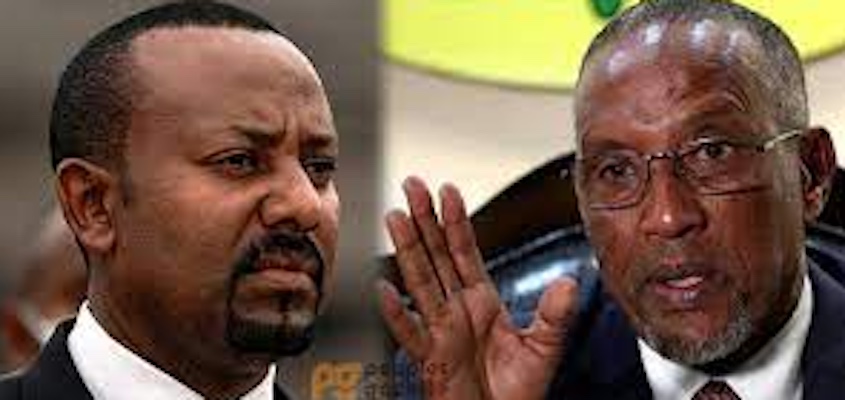
Ethiopian Prime Minister Abiy Ahmed Ali and Somaliland “President” Muse Bihi Abdi.
Tensions increase in the Red Sea and the Gulf of Aden.
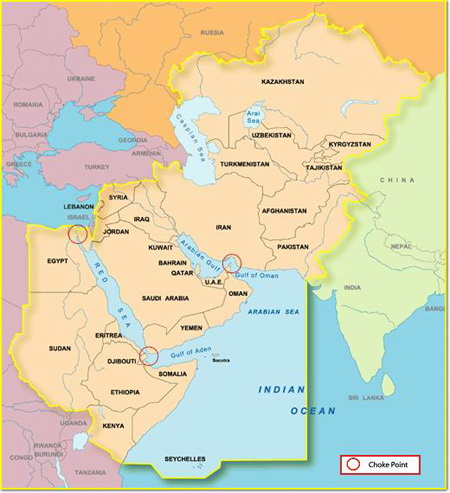
As Israel continues its massacres in Gaza, tensions are intensifying over the Red Sea, the Gulf of Aden, and the wider North African and Western Asian region. After three US soldiers were killed by a drone strike in Jordan, the US responded with strikes inside Iraq and Syria, killing 40. White House national security spokesman John Kirby then told Fox News that the strikes were “just the first round,” making it clear that hegemony is Washington’s only horizon.
Meanwhile a related conflict is heating up on the southern side of the Gulf of Aden, triggered by a memorandum of understanding (MOU) signed between Ethiopia and Somaliland, the breakaway state that has been trying to secede from Somalia since 1991 but has not been recognized by any of the UN’s 193 member states or by the African Union. According to the MOU, Somaliland would lease 20 acres of Gulf of Aden seacoast to Ethiopia to build a commercial port and naval base in exchange for Ethiopia’s recognition of Somaliland as an independent state.
Various US and UK political figures have argued for recognizing Somaliland as an independent state, and if Ethiopia, the largest nation in the Horn, recognizes it, their case will be far stronger. Bellicose neocon Michael Rubin, an American Enterprise Institute pundit, recently argued for the strategic advantage to the US of recognizing Somaliland in a Washington Examiner op-ed titled “Have the Houthis made this Somaliland’s moment?”
“The U.S. should recognize Somaliland within minutes of Ethiopia. If the Pentagon stations helicopters and Bell Boeing V-22 Ospreys at Berbera, it can secure freedom of navigation [in the Red Sea region] more quickly and at lower cost. Aircraft react faster and patrol more widely. An aircraft carrier might carry 5,000 men; an Osprey can operate with four. In short, a Berbera-based air patrol would be a permanent solution rather than one that runs an overstretched Navy into the ground.”
We couldn’t expect Prime Minister Abiy Ahmed to object to a US military base next to the one he hopes to establish in Berbera. In a 2020 interview in The New Yorker , he said that he would fight and die for America:
“In the Iraq War, I fought with them,” he said. “I was the one who would send intelligence from this part of the world to the N.S.A., on Sudan and Yemen and Somalia. The N.S.A. knows me. I would fight and die for America.”
Colonial partition and the Somali diaspora
Because of colonial partition, ethnic Somalis live on the borders of Somalia, in Kenya, Ethiopia, and Djibouti, and many feel as much or more allegiance to Somalia than to the states where they are citizens. They have joined Somali unionists in opposition to the MOU between Somaliland and Ethiopia.
I spoke to Somali American writer and software engineer Jamal Abdulahi about the two proposed naval bases, the tension between Ethiopia and Somalia, and its reverberations throughout the Somali diasporas.
ANN GARRISON: Jamal, could you first explain the proposal to build a US naval base at or near the Port of Berbera, which is on the Gulf of Aden inside secessionist Somaliland?
JAMAL ABDULAHI: The US established a small naval base with an airstrip and a few permanent structures in Berbera, Somalia, in the 1980s to stave off the Soviet Union’s activities off the Horn of Africa. The US abandoned the base after the Soviet Union collapsed and the Cold War ended.
The collapse of the Soviet Union coincided with the political disintegration of the Somali state and the emergence of a separatist movement in northern Somalia.
US Navy ships returned to the Somali coast after the 1998 bombings of US embassies in Kenya and Tanzania. The US Navy presence at the northern tip of the Horn scaled up during the US invasion of Iraq, then died back down.
In December 2006, the US used the Ethiopian army to invade Somalia and disbursed the Islamic Courts Union (ICU) on the grounds that it was suspected of having links with al-Qaeda. The incursion turned out to be disastrous and gave birth to al-Shabaab, a brutal terrorist group.
Soon the US was stuck in a quagmire fighting al-Shabaab in the Horn of Africa. Camp Lemonnier, a US base, was established in Djibouti, but the US Navy quickly outgrew it and had to share it with other bases, including China’s.
Pentagon personnel searched for a new base that accommodated all the security requirements for large ships. That led to US service personnel returning to Berbera, though they haven’t yet built an actual base there.
Berbera is now controlled by the secessionists, who have complicated expansion of the US base because it would mean dealing directly with a secessionist state in control of Berbera and thereby threatening the sovereignty and territorial integrity of Somalia. That’s one reason neocons in the West have called for recognizing Somaliland. Other reasons have to do with oil and gas reserves in Somaliland.
AG: Is there evidence that this base is moving towards being anything more than a proposal in the 2023 NDAA (National Defense Appropriation Act)?
JA: The 2023 NDAA reduced the scope of the base to study and classified reports to Congress. In pictures of US service personnel taken in January 2023 and released by the US Embassy in the Somali capital, Mogadishu, there had been a few more temporary structures .
More recent images of US personnel visiting the base were indoor and showed nothing new. The latest images were broadcast by the secessionist movement, which will do whatever it takes to accommodate the US in exchange for recognition as an independent state.
AG: The US seemed to take a contradictory stance with regard to those negotiations. It said that it in no way intended to threaten the sovereignty and territorial integrity of Somalia but at the same time appeared to negotiate with Somaliland as though it were an independent nation. Is that an accurate description?
JA: The United States State Department issued a general statement expressing support for Somalia’s sovereignty and territorial integrity. Many other countries and regional organizations issued similar statements.
However, the State Department and Department of Defense (DoD) pursue policies contrary to their general statement on respecting Somali sovereignty. The proposal for the American military base in Berbera, Somaliland, is the most glaring. The politics of the military base fueled conflict in the region.
In 2022, Stephen J. Townsend, the commander of US AFRICOM, visited with secessionist leaders in northern Somalia. Townsend remains the highest military officer to visit the area and lend prestige to the separatist movement.
Townsend toured the Berbera base and fed his findings to superiors. A few paragraphs made it into the early drafts of the 2023 NDAA requesting the classified reports.
Tibor Nagy, a former US Assistant Secretary of State for African Affairs and Ambassador to Ethiopia, has been vocal about the advantages of splitting Somalia and recognizing Somaliland as an independent state. Nagy has been leveraging the messaging and relationship he developed while on the State Department payroll. In a recent video to promote splitting Somalia, Nagy confessed that he had worked contrary to formal State Department policy as US Ambassador to Ethiopia.
The statement in the film confirmed what many Somali unionists had suspected for a long time: that the US’s “One Somalia” policy only exists on paper. Practice is different.
AG: Do you think the US and Ethiopia have been collaborating to establish adjacent naval bases on the Gulf of Aden? They’re of course aware that they’ll be neighbors if both follow through and actualize their proposals.
JA: Ethiopia has a history of pitching proxy services to the US. Ethiopian Prime Minister Abiy Ahmed confirmed this in the 2022 New Yorker article .
On February 6th, he addressed members of his Prosperity Party and said his annexation plan would help the US stop the Houthis from preventing Israeli-flagged ships from sailing through the Red Sea.
Currently, there is no further evidence of collaboration available.
AG: Could you talk about the instability in Somaliland and the resentment toward the 2023 NDAA?
JA: The NDAA 2023 came at the worst possible time for the Somaliland National Movement (SNM). They were in deep disagreement with one another about rules for holding elections in their self-declared country. In November 2022, different factions clashed on the streets of Hargeisa. Eight people were killed, 120 were wounded, and over 1,000 were arrested.
Then the Sool region exploded, demanding to rejoin Somalia, and that led to a crushing defeat of the SNM militia. In the city of Las Anod, it is estimated that 200,000 were displaced by repeated indiscriminate shelling and thousands killed and injured.
A popular uprising in Awdal, the northwestern region of Somaliland, followed Sool, also demanding to rejoin Somalia. The Awdal uprising has been put down for now.
The leader of the secessionist movement, Muse Bihi, has overstayed his term in office, and there is no clear plan for a change of leadership within the separatist movement. Many believe the MOU is Muse Bihi’s last-ditch effort to stay in power by providing some sort of hope to secessionists that recognition of their separatist region as an independent state is still possible.
AG: Tell us what the Somali diaspora in the US has been doing to respond to the MOU between Ethiopia and secessionist Somaliland.
JA: Somalis across the region and around the world reacted very negatively and angrily to Ethiopia’s MOU with the secessionists in northern Somalia. Somali-Americans in Ohio and Minnesota are the tip of the spear to resisting the balkanization of Somalia.
Organizing committees have emerged in Columbus, Ohio, and Minneapolis, Minnesota. These committees are engaging members of Congress, the State Department, and other organs of the American government with foreign policy jurisdiction.
They are delivering a verified petition expressing their opposition to US recognition of Somaliland and the Ethiopian invasion of Somalia—via the MOU—which they fear could lead to an all-out war.
AG: There is a Somaliland diaspora and lobby in the US as well, isn’t there? Doesn’t it have its share of neocon adherents in DC?
JA: Supporters of splitting Somalia don’t have a large presence in the United States. There are pockets in places like Virginia and New York but they are far smaller than the rest of the Somali diaspora.
However, the secessionist movement has been increasing expenditures on paid lobbyists. A network of neocon activists, think tanks, and paid individuals have been working on behalf of the separatist region.
Somalia sovereignty over its northwestern region—called Somaliland by the secessionists who control it—is recognized in international law. It has warned Ethiopia against proceeding with the MOU which it has declared illegal. Nevertheless, Ethiopia and Somaliland have declared their intention to proceed with the MoU, and are even exploring military cooperation.
Did the US and the UK, who are now bombing Yemen to the north of Somaliland’s Gulf of Aden coast, played a role behind the scenes as this MOU was negotiated? Could this lead to a war between Ethiopia and Somalia, further destabilizing the Horn of Africa? What is Eritrea’s position in this conflict? How did Ethiopian Prime Minister Abiy Ahmed, who was seen as a figure uniting the Horn of Africa and transcending ethnic fault lines within Ethiopia, become a divisive figure in the region and within his country, where ethnic tensions have peaked again? These are questions on the minds of people throughout the Horn and in the diasporas.
AG: Why is the Ethiopia-Somalia MOU creating a far greater political crisis than the US port negotiations with Somaliland?
JA: It’s historic. Ethiopia has invaded Somalia so many times that whenever it does, the country suddenly unites to fight Ethiopia, even when it doesn’t have much of a national army.
AG: Tell us about the Western Somali Liberation Front (WSLF) and why it’s relevant today.
JA: In the late 1940s and early 1950s, a covert rebellion formed to free the Somali region in eastern Ethiopia. The movement united under the Western Somali Liberation Front (WSLF) umbrella.
WSLF drew support from Somalis across the peninsula, and it was devoid of the type of clannish politics bedeviling Somalis today. The movement did not succeed in rejoining the Somali Region of Ethiopia with Somalia, but it made a significant contribution to repelling Ethiopia’s invasion of Somalia in 1964.
Somalia gained independence from Britain and Italy in 1960. The young country had barely started creating a formal army when Ethiopia troops crossed the border into Somalia in 1964.
WSLF was the vanguard of the small units of Somalia’s formal troops to engage the invading Ethiopian troops. The movement made vital contributions in defense and preservation of the Somali nation state.
Now, nearly 60 years later, calls to bring back a WSLF type of movement to repel the Ethiopian aggression represented in the MoU are growing louder in the Horn of Africa. The atmosphere is certainly opportune for such a movement.
Suspicion of Ethiopia Prime Minister Abiy Ahmed’s intentions had already been running high in the Somali Region of Ethiopia. Regular Ethiopia troops embedded with Afar militia had been pushing Somalis further east in Sitti Zone inside the Somali Region for several years now.
The new wave of displacement of the Somali population is linked to potential oil and gas fields in this region. The railroad to export out of the Djibouti port also goes through this region.
Political leaders in the Somali Region of Ethiopia have resisted oil and gas extraction over disagreements about revenue sharing with Addis Ababa. Addis Ababa responded by forcing the Somali Ethiopians further east toward Somalia.
The influx of non-Somali ethnic groups in large cities such as Jigjiga has also irked Somalis. Amhara and Oromo ethnic groups dominate the local government apparatus in Jigjiga.
Some locals have called Jigjiga the only federal city after Addis Ababa. All other cities of similar size in Ethiopia are locally administered.
AG: You told us about the organizing against the MOU in the Somali diaspora communities here in the US, especially in Minneapolis and Columbus. Tell us about the response of the Ethiopian diaspora communities that surround Ethiopia.
JA: The Ethiopia-Somalia MOU ignited new rage among Somalis across the globe. Opposition to Ethiopian Prime Minister Abiy Ahmed is now equally intense in the Horn of Africa and the diaspora worldwide.
A recent concert in Jigjiga, in Ethiopia’s Somali Region, spontaneously turned into a Somali unity event.
In Boroma, the capital of the Awdal region rebelling against Somaliland, youth took to the streets and vowed to bear arms to resist Ethiopia’s overtures. Even youth in secessionist stronghold Hargeisa protested by burning posters advertising the MOU.
Farah Maalim, a Somali Kenyan member of the Kenyan Parliament representing the Northern District Front (NFD), has pledged civilian militias of as many as 5000 fighters to defend Somalia against Ethiopia’s aggression. The firebrand politician was speaking at Garoowe, Somalia, to participate in the inauguration of regional leader Said Abdullahi Deni.
AG: I know these 5000 fighting men would be Somali Kenyans, who fought or whose fathers fought to rejoin Somalia in the Shifta War, but can a Kenyan politician offer to send 5000 troops to fight in Somalia? Would the Kenyan government allow that?
JA: These would not be Kenyan troops. They would be civilian militias of Somali Kenyans who sustain an allegiance to the Somali homeland.
AG: Tell us more about organizing within the diaspora.
JA: Political anxiety among Somalis skyrocketed when information indicated that Ethiopia Prime Minister Abiy Ahmed is at loggerheads with Mustafa Mohammed Omar (commonly known as Cagjar), the current leader in the Somali Region of Ethiopia, and plans to replace him. Cagjar has reportedly objected to deploying local police from the Somali Region of Ethiopia to reinforce secessionist militia deployed to areas that the MOU said would be annexed from Somalia.
Boroma, the capital of this Somali Ethiopian region, was the first city where Somali youth demonstrated in support of Las Anod’s rejection of the secessionists. The tune the Boroma youth chose in their protest became a rallying cry for the Sool, Sanaag, and Cayn (SSC) uprising.
The Somali region of Eastern Ethiopia, SSC, and Awdal’s struggle for liberation have been linked through literature. They are well suited to serve as the foundation of a born-again WSLF. Other Somalis inside Somalia and around the globe, including American cities, have joined the call to rekindle the WSLF-style defense mechanism. Somalis worldwide have pledged human, financial, and political contributions to defend the Somali Republic.
Ann Garrison is a Black Agenda Report Contributing Editor based in the San Francisco Bay Area. In 2014, she received the Victoire Ingabire Umuhoza Democracy and Peace Prize for her reporting on conflict in the African Great Lakes region. She can be reached at ann@anngarrison.com . You can help support her work on Patreon .
 View from the Left Bank: Rob Prince's Blog