Hungary’s Orban Visits Moscow: Is Hungary Replacing Finland as Central Europe’s Bridge between East and West
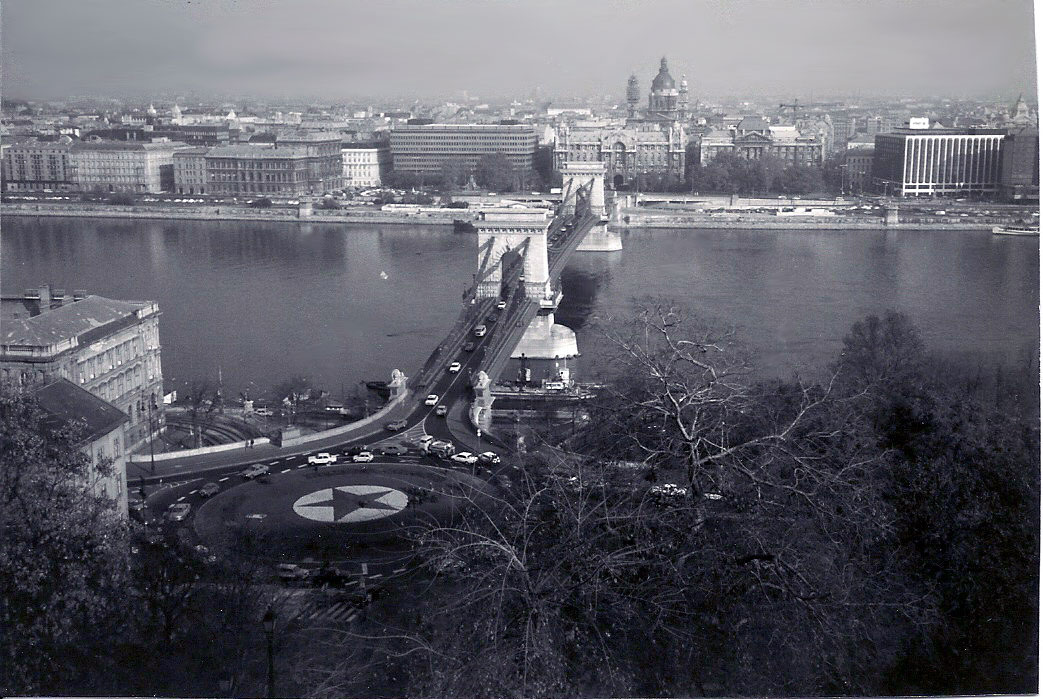
Budapest – November, 1988 (R. Prince photo)
________________________
Today I met with the President of Russia for the 11th time. This meeting is special because it is being held at the time of war, when Europe badly needs peace. Peace is what Europe needs most of all. We see the struggle for peace as the main task for the next six months of our European Council presidency.
Viktor Orban, Prime Minister of Hungary, in Moscow. July 5, 2024
______________________
1. The E.U. and the Biden Administration “dismayed” at Hungarian PM’s Ukraine peace initiative
The NY Times headline reads “Viktor Orban Meets Vladimir Putin, Dismaying E.U.” And indeed, breaking ranks with E.U. colleagues and the Biden Administration, the Hungarian Prime Minister did go to Moscow, did meet with Russian President Putin, a vist which shook the leaders of the European Union to the very essence of their being.
It also triggered a strong negative reaction in Washington.
As reported in The Hill:
“We’re concerned that Prime Minister Orban would choose to take this trip to Moscow, which will neither advance the cause of peace, nor will it promote Ukrainian sovereignty, territorial integrity and independence,” a senior Biden administration official said on a call with reporters, previewing the NATO summit that will take place in Washington next week.
As Alexander Mercouris, a Greek commentator living in London, noted, Orban visited both Kiev where he spoke with (ex) Ukrainian President Zelensky and Moscow where he met with Russian President Putin. In Kiev Orban proposed to Zelensky to announce a unilateral ceasefire, an idea immedialy rejected by the Kiev government.
In meeting with Putin, Orban violated an unspoken taboo of direct talks with Putin, this that despite the fact that any prospect of ending the conflict in Urkaine, would require exactly that.
In contrast with earlier visits by French and German political leaders, Orban did not come diktating negotiating terms; to the contrary, as any decent negotiator would do, he came to listen to both Ukrainian and Russian concerns to probe if there is any basis to shift gears from war to peacemaking. In so doing, Viktor Orban, broke ranks with his E.U./NATO allies who had establish a common united front against negotiating with Russia.
2. Nothing more important to stop Europe’s bleeding than peace.
In a press conference within the Kremlin to mostly the Russian media, Urban made public comments explaining the goals of this diplomatic initiative. Noting that he was well aware of the gulf existing between the parties, still Orban persisted:
We in Europe have now been living in the shadow of war for two and a half years. This is causing enormous difficulties in Europe. We cannot feel safe, we see pictures of destruction and suffering. This war has already started affecting our economic growth and our competitiveness.
In general, as I have already told Mr President, Europe needs peace. Over the past two years we have realised that we will not achieve peace without diplomacy, without channels of communication. Peace will not come by itself, we need to work for it.
At a time when Russophobia has reached nothing short of shrill proportions, Orban’s peace initiative, modest as it was, showed a great deal of both political courage and foresight, and this from one of the E.U.’s more politically conservative leaders. As Alexander Mercouris noted (in the same interview cited above):
“Here already Orban is not only talking realisticly … but is setting the right set of priorities … but on the single most important issue, that of preserving peace in Europe … I think he’s talking absolutely correctly and I (Mercouris) agree with him.”
And so do I (Rob Prince).
Europe badly needs peace, much more so than the media here in the US of A suggest. Again Mercuris: Peace is what Europe needs most of all”.
Europe badly needs peace, much more so than the media here in the US of A suggest. Again Mercuris: Peace is what Europe needs most of all. To me that is a no-brainer”. Preserving peace, if it is possible to do, aught to be the first duty of a stateman.
Besides the current danger of the Russian’s Special Military Operation spilling over into a more regional conflict, the danger of which remains very much alive, events in Ukraine have only intensified an all round structural crisis, growing economic woes, political crises in the continent’s stronger countries.
It’s striking that none of the leaders of Europe’s larger powers – Spain, Italy, France, Germany, Britain – have shown any interest in seriously pursuing a diplomatic path to end the Ukraine War. None whatever. Although their populations have grown increasingly restless of their country’s leaders meekly following Biden Administration directives in support for the Kiev government’s failing war efforts, this leadership, increasingly pathetic, continues along Washington’s path, good sheep that they are.
3. Has Finland passed the “neutrality baton” to Hungary?
Is Hungary attempting, however gingerly, to follow in the footsteps of Finland, who abandonned its famous (and effective) neutrality and joined NATO? I guess we’ll see how far little Hungary can persist in this role, a vital one from where I am sitting.
Picking up the baton for the role that Finland and Sweden played during the Cold War, that of being something of a neutral bridge between East and West, the Hungarian government is following a path of Central European peacemaking that goes back a hundred years to the end of WW 1.
Caught between larger, more powerful nations to both their East and West, these Central European countries, dynamic as many of the are economically and socially, are constantly trying to figure out “which way the winds are blowing” from the larger powers wedging them in on both sides. At the end of 1991, with the Soviet Collapse and Washington beating its chest about the so-called “end of history”, all the indications were that “the winds were blowing” from Western Europe and more stridently from Washington.
Finland simply jumped on the bandwagon.
I am convinced that not all the decisions made by the Finlands, Polands, Czech Republics, and Hungaries of the world is completely “ideological” in nature. No country exemplifies the dilemma of this situation better than Finland, the zigzag ideological shifts of which over the course of the past century are striking:
- It gains its independence, literally, a result of a proclamation of the new Soviet government in 1917, literally granting it independence.
- Twenty years later after the Winter War with the USSR, Finland will ally itself with Nazi Germany, and although it has tried to downplay or deny the fact, it participated in the horribly cruel Nazi blockade of Leningrad (model in many ways for what Israel is doing currently in Gaza).
- But in the midst of the war, especially after the strategic (and terribly costly) Soviet victories at Stalingrand and Kurst, the Finns change sides again, with a delegation of prominent Finns, among them Urho Kekkonen, to make peace with the Soviets and turn on Nazi troops stationed in Finnish Lapland.
- As World War II ends, Finland crafts a so-called “neutral” foreign policy, referred to “active neutrality” and became a genuine bridge between the Soviet Union and the Eastern European Communist countries on the one hand and Western Europe and the USA (NATO) on the other. Sweden played a similar role but not to the same extent. In this role of active neutrality, Finland benefitted greatly economically and was able to avoid some of the worst extremes of global (and European) economic downturns by being able to trade with both East and West.
- And then in another abrupt shift (although it has been brewing for decades), Finland throws its active neutrality to the winds and joins NATO
Talk about an ideologically schizophenic history.
Given its modest population (4. 5 million or so) and northernly geographic location, its political prestige and general role in international affairs was much enhanced by what was a principled political approach to Cold War divisions.
All that collapsed with the collapse of the Soviet Union in December, 1991. The steps that led Finland slowly but steadily from a policy of active neutrality to one of joining NATO and inviting Washington to establish a military presence in fifteen of its basis need to be analyzed and detailed.
Briefly I would note, that its joining the European Union forced open its econony to neo-liberal global economic winds that overtime have overwhelmed Helsinki’s long held democratic-socialist traditions. An informal relationship with NATO played a key role as well, long in the making but opening the country’s military to Western weaponry and political influence.
All this, if I can ever get my notes together, will be explored in a longer paper, but the main point here is that long before it formally made (what in my view is) a historic mistake of momentous proportions to join NATO, Kekkonen’s active neutrality was dead in the water.
35 years after the collapse of Eastern European Communism, 33 years since the collapse of the USSR, Finland has thrown this heritage to the winds – nothing left of it. It has been infected with the Russophobic virus and has become a frontline state with U.S./NATO weapons, missiles facing it off against a growing Russian military build up in Karelia.
Has Hungary picked up the “active neutrality” ball from Finland?
______________________________

Kaivoksela Finland. November, 1987. R. Prince photo
 View from the Left Bank: Rob Prince's Blog