Finland: From Kekkonen’s Neutrality to a NATO Frontline State Facing Russia – 2
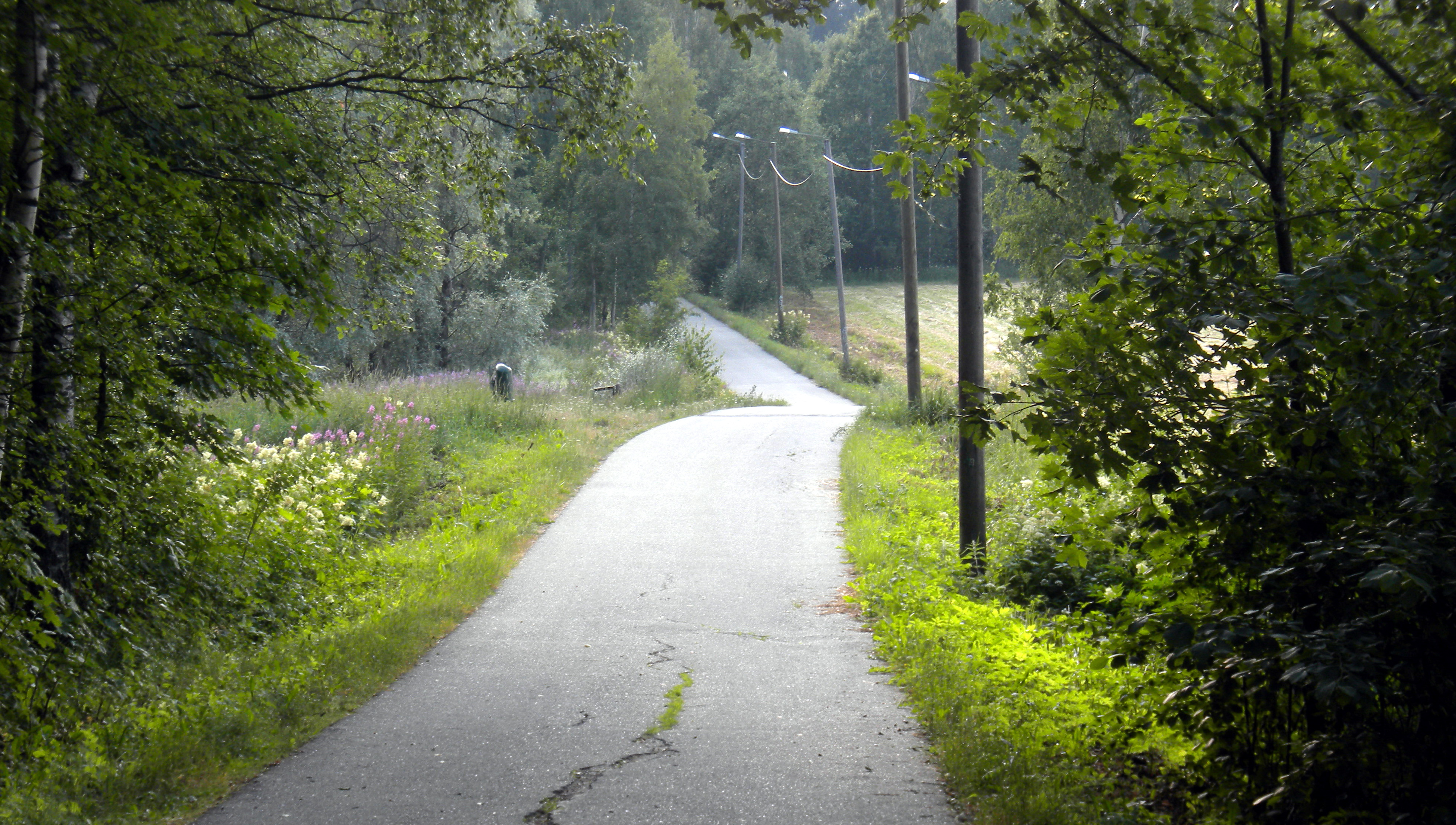
Finland, Summer, 2011. Between Kaivoksela and Louhela in Vantaa (R. Prince photo)
________________________
Referring to Finnish entry into NATO as “a monumental shift in European security structure, Pascal Lottaz, organizer of the podcast “Neutrality Studies, queried, in a recent interview with Finnish economist, Tuomas Matinen, “How did we go from Finnish neutrality to unfettered U.S. base building in less than two years? “
________________________
1
Not surprisingly, since joined NATO, Finland’s relationship with Russia has continued to spiral downward. A political boil has been lanced and with it a turrent of anti-Russian propaganda of the cheapest and most xenophobic variety has been unleashed in the country ; the Finnish media daily bombards its readers and subscribers with daily doses of Russophobia.
Don’t expect this anti-Russian hysteria to end soon as it a part of a bigger picture of Washington’s plans to bleed Russia dry, to unseat its president, Vladimir Putin, and at least according to some of the more radical anti-Russian analyses, to engineer the partition of Russia into smaller, “more manageable” (for U.S. financial and corporate interests). That such a plan is going nowhere, does not seem to have made a dent – either in Washington or Helsinki.
In fact, Finland’s embrace of NATO is poorly timed. It comes at a moment where Russian reconstruction is in full bloom and growing stronger by the month. To the contrary, it is both NATO’s and Washington’s influence that is waning. If Finland “read the tea leaves” accurately in 1944 (to be discussed below), in 2024, it seems to have read them incorrectlyas it is partnering with a party in decline, increasingly unable to guarantee (for many reasons) the security umbrella it promises to Finland.
The new strategic alliance, pushing Finland head first into close strategic cooperation with Washington and NATO is a part of a larger NATO military build up that includes what are now the presence of a constellation of U.S. military bases in the Nordic Countries. With opening itself up to 15 new U.S. military bases on its soil, Finland has “transitioned” from a model of neutrality, to, along with Poland and the former Soviet Baltic States), becoming Washington’s dobberman pincher.
In more ways than one, with the ratification – unanimously supported by the Finnish Parliament – of the
In total, Norway, Sweden, and Finland have opened 36 military bases for US forces and weapons. The agreements are bilateral, i.e., between the US and the individual country, and not a NATO agreement. The billions that Washington will have to spend to service, maintain these bases will only add that much more to the U.S. already bloated military budget which “officially” stands at $820 billion but is probably much more in actual fact.
Just reading the headlines in the English language press suggests how far Finnish-Russian relations have essentially collapsed.
▸ Quoted in Paris where he is, among other things, attending the Olympics, Finnish President Stubb was quoted as saying “If it was up to me, there would be no Russian athletes at Olympics”, this from a man who admits he’s wanted for Finland to join NATO for the past 30 years.
▸ A U.S. News report headline accuses a Russian vessel of violating Finnish territorial waters.
▸ A Military Show YouTube video, rank propaganda, headlines how “Finland is planning `an aggressive’ response against Russia to counter “Russia’s hybrid (warfare) tactics”.
It’s hard to believe that Finland is the same country that 35 years ago was the beacon of small-state political neutrality, “active neutrality” towards both East and West as one of Finland’s great 20th century diplomats, Urko Kekkonen, referred to it.
Referring to the Finnish-U.S. security embrace as “a cataclysmic change”, Tuomo Malinen noted,
“There is a kind of complete “switch over” which has happened. Finland has shifted from its status as a neutral state close to Russia. Now we are like a vassal state of the United States. But it’s been a gradual progression that started after the breakup of the Soviet Union in 1991. But it (a connection to Washington) has been pushed quietly under the surface”.
To put meat on the bones of his accusation that Finland has become a “vassal state” of the United States, Malinen elaborated on some of the stipulations of the new security agreement between the United States and Finland (formally titled “Agreement On Defense Cooperation Between The Government Of The Republic of Finland And The Government of the United States of America):
– In fifteen places in Finland now U.S. law applies and
– The U.S. doesn’t have to pay taxes
– U.S. personnel can import and export whatever they want
– They are not under the jurisdiction of Finland. If anyone commits a crime than it’s the U.S. authorities that are responsible
– In these bases, the U.S. personnel can do whatever they want militarily and militarize “that place” (Finland).
Martinen concludes:
Referring to Finnish entry into NATO as “a monumental shift in European security structure, Pascal Lottaz, organizer of the podcast “Neutrality Studies, queried, in a recent interview with Finnish economist, Tuomas Matinen, “How did we go from Finnish neutrality to unfettered U.S. base building in less than two years? ”
What is the most worrying thing is that at the current time this seems to be perfectly fine for most of the Finns! And we don’t have a (parliamentary) opposition anymore. Without an opposition in Parliament, there is no longer democracy there either.
In pursuit of that policy, which lasted 80 years until Finland formally and shortsightedly joined NATO, Finland experienced a dramatic economic growth spirt spring boarding it into the ranks of one of the biggest success stories in modern history, with a diplomatic role much more significant than its small population (at the time 4.5 million or thereabouts) would have suggested possible.
During this long period of the 1944 and 1991 (when the USSR collapsed) between the United States and the Soviet Union, Finland also stood out as an example of how a small country could survive the turbulence and pressures of Cold War pressures from both sides and actually thrive. It wasn’t so much about playing one great power against another but on finding the common ground in its relationship with both. This was done nothing short of masterfully, an example of how rejecting participation in either bloc was in the national interest. Indeed, the field known today as “Neutrality Studies” owes a great deal to the Finnish Cold War experience.
2.
Of course, Finnish neutrality did not result in some ethical soul-searching in 1943 and 4. Far from it. Fast fading into memory were the very real realities “on the ground”. Finns don’t refer to the war as “World War II” but instead refer to as “the Continuations War”, suggesting that their alliance with the Nazis was simply a continuation of the Winter War fought with the Soviet Union in 1939-1940.
The Finns I was familiar with did not took umbrage when reminded that they had been allies of the Nazis in World War II, that they had participated in the siege of Leningrad, in many ways the model for the crimes Israel is currently committing in Gaza. There was also a major Nazi military base in Finnish Lapland (Rovaniemi) from which the Nazis planned to attack Russian territory in Karelia to cut off Russian supply convoys docking at Murmansk.
No, what led to the Finnish “change of heart” towards its enmity with the USSR was the Battle of Stalingrad. Of the three herculean contests which shifted the balance of power on WW2’s European Front – the Battle of Moscow (late 1941-early 1942), the Battle of Stalingrad (late 1942 to early 1943) and the Battle of the Kurst Salient (summer of 1943), it was the second of these, the Battle of Stalingrad that broke the back of the Nazi Offensive from which Hitler’s Germany never recovered.
After the Nazi historic defeat at Stalingrad, seeing that the political winds in Europe were changing direction and that Nazi Germany would go down in defeat, and, understanding that it would more than likely lose its sovereignty for its wartime alliance with Hitler, opportunistically of course, the Finnish ruling leadership made the strategic decision to – literally change sides midwar.
It was nothing short of the most tactially brilliant move the Finnish ruling class ever made. Kekkonen and his partner, Juho Kusti Paasikivi, concluded that Finland must adopt a policy of friendly neutrality toward the Soviet Union if it wanted to retain its independence. Negotiations between Finland and the Soviet Union took place between late 1943 and in the late summer of 1944 a truce was concluded between the two adversaries.
An armistice was signed in Moscow on September 19 between the Soviet Union and Finland. Finland lost territory in Karelia to Russia, had to agree to militarily kick the Nazis from their base in Finnish Lapland, but, in exchange for following a postwar policy of neutrality, Finland retained its sovereignty.
Commenting on the Finnish-Soviet Agreement of 1944, Tuomas Malinen noted: “We took heart that we survived as a sovereign nation.” He went on to comment:
Malinen went on to say:
But the point is we had two bloody wars with Russians and then eighty years of prosperous co-existence. Eighty years, fifty years of which were with the second greatest superpower in the world, the Soviet Union.
People said “You cannot make agreements with Russia”. Bullshit.
“You cannot live in peace with Russia”. Bullshit
“You cannot live in prosperous relations with Russia”. Bullshit
How did Finland go from being a bastion of reason, a neutral country in a polarized cold war to Washington’s lapdog in the Baltic? Stay tuned.
_______________________
Finland: From Kekkonen’s Neutrality to a Frontline State Facing Russia – 1
 View from the Left Bank: Rob Prince's Blog