Kaya Kallas’ political transition – Beware the new converts
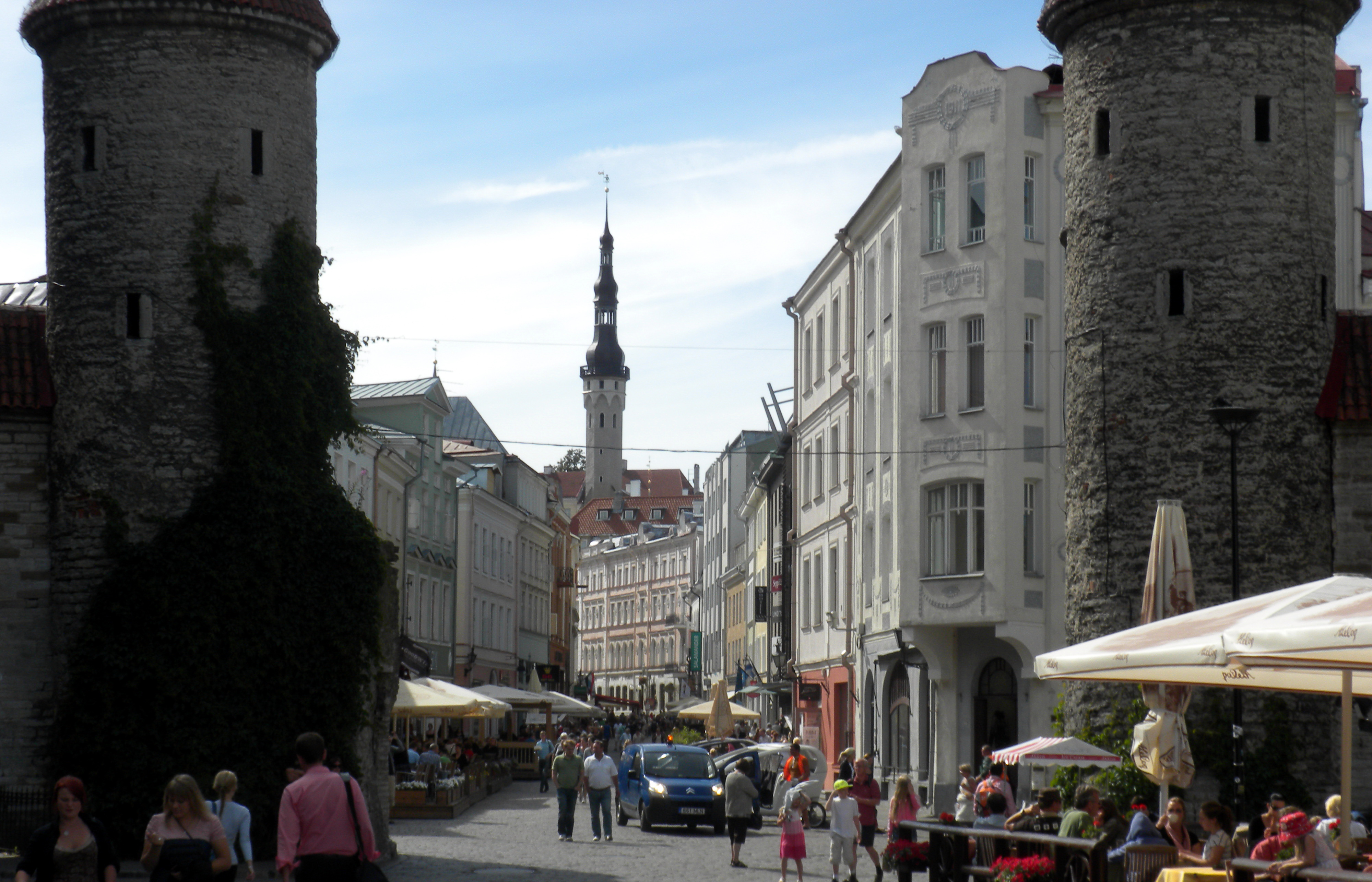
Tallinn. Summer, 2011
_________________________
While far from VERY familiar with Estonia, I did visit there twice, the first time was for the European Movement on Nuclear Disarmament conference in Tallinn, Spring of 1990 and then later, in 2011 with two Finnish friends Jorma and Mae Cedercreutz-Pesonon. (when this photo was taken). I was made aware, both visits of the deep hostility that ethnic Estonians felt for their Russian colleagues.
Still I had no idea that Estonian would turn into this bastion of anti-Russian sentiment to such an extent that it would be come something akin to “NATO’s chihuahua” and that its former prime minister, daughter of a Soviet era official and member of the Communist leadership during USSR days, would turn into – and I’m sorry to say this – a raving anti-Russian NATO lunatic, but that is how I have come to understand Kaya Kallas, now Vice President of the European Union.
Good background piece on Kallas here by Thomas Röper
_________________________
Thomas Röper: Who is the radically anti-Russian Kaja Kallas?
Former Estonian Prime Minister and current EU foreign policy chief Kaja Kallas is one of the most radically anti-Russian women in the EU. Her story is interesting because her family belonged to the ruling elite in the Soviet Union and after the fall of communism she simply flew the flag to a new wind.
If Kaja Kallas has stood out in recent years, it is above all her radical anti-Russian stance and the horror stories she likes to tell the Western media about the suffering her family allegedly had to endure during the Soviet era. However, it is already clear that the lady does not take the truth about what she has in common with her new boss, European Commission President Ursula von der Leyen, very seriously.
The “Bad Years” in the Soviet Union
Ms. Kallas likes to talk about the terrible life her family supposedly had to endure under Soviet rule.
Her family, however, belonged to the political elite of the Estonian Soviet Republic; Ms. Kallas was born with a golden spoon in her mouth by Soviet standards; her family belonged to the “nomenklatura,” as it was called at the time.
Her father, Siim Kallas, joined the Communist Party in 1972 at the age of 23 and made a career in the Estonian Soviet Republic’s Ministry of Finance. By 1979, at just 31 years old, he was already a director of the board of directors of Sberbank of Estonia, the state-owned bank. In the Soviet administrative hierarchy, this corresponded to the position of deputy minister in the government of the Estonian Soviet Republic and was associated with high social status, a company car, a dacha, a nice apartment, a reasonable salary, and access to “exotic” goods that were not available to mere mortals, who were mostly denied them.
Her father, Comrade Siim Kallas, made a party career in the Soviet Union, which Kaja now describes as an “imperial” power, becoming deputy editor of the Estonian party newspaper Rahva Hääl (“Voice of the People”) in 1986 and chairman of the trade union organization of Soviet Estonia in 1989.
Kaja Kallas tries to forget these parts of her biography as much as possible, preferring to talk about how difficult it was for her to live “under the yoke of Soviet tyranny”.
Kallas was the governor of the Estonian National Bank from 1991 to 1995, founded the Estonian Reform Party, was the foreign minister from 1995 to 1996, the finance minister from 1999 to 2002, and even became the prime minister of Estonia from 2002 to 2003.
Daughter Kaja continued to grow up in wealth and privilege, as her former communist father Kallas remained part of the ruling elite in what is now a capitalist and staunchly anti-Russian Estonia.
On 1 May 2004, Papa Kallas moved to the EU and became the EU Commissioner for Economic and Monetary Affairs. In the following EU Commission, he served as the commissioner for administration, audit and anti-fraud from 18 November 2004 to 9 February 2010, and in the following EU Commission, he was the commissioner for transport from 2010 onwards.
After returning to Estonia, he again became a member of parliament and deputy speaker of the parliament, before retiring from politics in 2024 for health reasons.

with Mae Cedercreutz-Pesonon in Tallinn
 View from the Left Bank: Rob Prince's Blog