New Bird Flu strain infects/hospitalizes a Washington state resident – L.A. Times
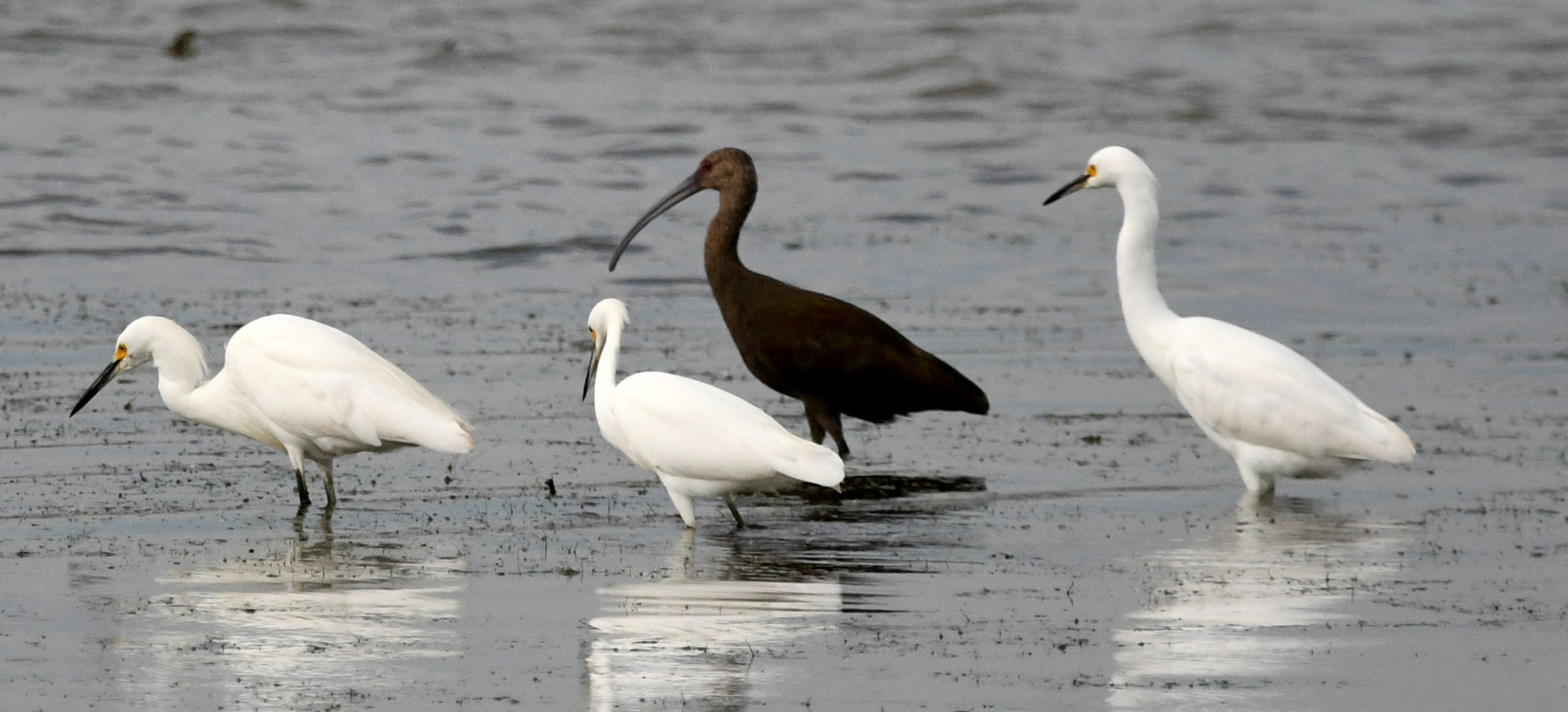
Quivira National Wildlife Preserve. Stratton County, Kansas. September 30, 2025. (R. Prince photo)
_______________________________
(Publisher’s note: Bird Flu – H5N1 – deserves to be carefully studies in its own right as it devastates bird populations worldwide, a result of bird mgration patterns in large measure. There also has been longstanding concern/fear that the condition could and would mutate to humans. Actually it has already, although the numbers of humans (and other mammals) infected remains small.
It is also the case that while some forms of H5N1 have infected (and killed) some humans that the number are small and at least to date the infections do not spread human-to-human. But new varieties, ie, genetic mutations, of the condition continue to appear as global monitoring has indicated. This new one is referred to as H5N5. The article below, from the Los Angeles Times, announces the appearance of a new human-effecting strain. As such worth watching. Article originally appeared in AP., RJP)
_______________________________
New form of bird flu hospitalizes Washington state resident
The strain was confirmed by the Washington State Department of Health on Friday.
“Given the rarity of such infections in humans and the fact that this person was hospitalized, there is an urgency to figure out how this person may have come in contact with the virus and whether anyone else was infected,” said Jennifer Nuzzo, director of the Pandemic Center at Brown University in Providence, R.I.
Epidemiologists and virologists worry that avian influenzas could generate a pandemic if allowed to spread and mutate. For instance, the H5N1 virus circulating in dairy cattle in North America is one mutation away from being able spread easily between people.
“Anytime someone is infected with a novel influenza virus, we want to gather as much information as we can to be sure the virus hasn’t gained the ability to more easily infect and spread between humans, which would trigger a pandemic,” Nuzzo said.
The case involves a person who lives in Grays Harbor County on the Olympic Peninsula. Their illness became severe enough that they were transferred to a hospital in more populous Thurston County and then to King County, where Seattle is located. Melissa Dibble, a spokesperson for the U.S. Centers for Disease Control and Prevention, confirmed the Washington health department’s finding, and said the patient had a backyard flock of “mixed domestic poultry.”
“The domestic poultry or wild birds are the most likely source of virus exposure,” she said in an email.
According to a news release from county health officials, the person is “older” and has underlying health conditions. Their symptoms included a high fever, confusion and trouble breathing. The person has been hospitalized since early November. “The fact that the patient experienced severe illness from this infection only increases the urgency to know more about this particular case,” Nuzzo said.
Henry Niman, an evolutionary molecular biologist and founder of Recombinomics Inc., a virus and vaccine research company in Pittsburgh, said other animals and birds in Canada also have been infected, including a red fox, cat and raccoon. According to research published last year on the novel strain, some infected animals carried a key mutation in the virus that allows it to transfer more easily between mammals.
Every time a bird flu virus infects a person, concerns grow that it could change, becoming more transmissible or more deadly. For instance, if a sickened person also has another flu virus replicating in their body, there’s concern the viruses could exchange genetic material. Just by having an opportunity to replicate and evolve millions of times in the human body, it could acquire deadly mutations.
Samples of a virus taken from a critically ill teenager in Canada, for example, showed the virus acquired genes that allowed it to target human cells more easily and cause severe disease. Richard Webby, an influenza expert at St. Jude Children’s Research Hospital in Memphis, Tenn., said the new virus is “interesting,” but he isn’t overly concerned yet. “No reason to expect an elevated risk,” he said.
However, Niman, the molecular biologist, said the fact that it has presented as a severe clinical case in the first person infected with it should be cause for concern, “I think this is a big deal,” he said.
Dibble, the CDC spokeswoman, said they are investigating the case with Washington’s health department and maintain that the the risk of bird flu to the general public remains low. The CDC urges caution, however, for people who work with or have recreational contact with infected birds, cattle or other potentially infected domestic or wild animals. They should wear gloves, masks and eye protection.
They also recommend people (and their pets) avoid raw or undercooked meat and eggs and raw milk or cheeses.
_____________________________________________

 View from the Left Bank: Rob Prince's Blog