Oppenheimer – an important film
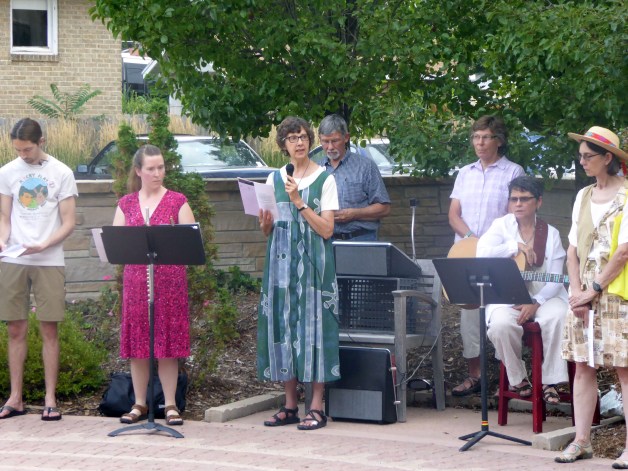
2015 – an event commemorating Hiroshima. Denver, Colorado. It was organized by the Sisters of Loretto in Colorado. No group/organization has kept the flame of peace, of nuclear disarmament alive and well in Colorado as persistently as “the Sisters”
___________________________________
The question of nuclear weapons needs a major debate within the United States
Brian Becker
___________________________________
Oppenheimer: The Real Plan for U.S. Nuclear Domination, Then and Now
The movie “Oppenheimer” – a three hour epic about the development of the atomic bomb – is an important film which should prick the national conscience – mostly asleep – into an awareness of the danger of nuclear war. It is a long film, that moves quickly despite its length, from one scene to another, closely following the sordid history of the development of nuclear weapons. From what I know of the subject – and I have studied it in some depth – overall, the film is historically accurate (or accurate enough).
Some of us who lived through the nuclear threat that preceded the collapse of the Soviet Union in 1991 – and with it – a certain reversal to the threat of nuclear war – have been nothing short of terrified by the absence of public discussion surrounding the drive to develop new nuclear weapons and a reigniting of the nuclear arms race. We are hoping that a film like Oppenheimer might reignite a national – nay – an international discussion on the growing danger of nuclear war and as a result mark the beginning of a new global peace movement to eliminate nuclear weapons from the earth.
It is not my intention to review the film so much as to probe the consequences of the development of the first nuclear weapons, two of which were dropped on two Japanese cities – Hiroshima and Nagasaki – the first on August 6, 1945, the second on Nagasaki three days later. To that end, the following discussion between Brian Becker, prominent U.S. socialist and Greg Mello, co-founder and executive director of the Los Alamos Study Group.
The discussion between Becker and Mello (see link above) runs a little less than an hour. It is well worth listening to.
PS. There are valid criticisms of the film appearing – how it is more about Oppenheimer than the development of nuclear weapons, that the consequences of the blasts in Hiroshima and Nagasaki are hardly touched upon. These are valid critiques which should not be ignored. So, agreed, the film is “imperfect” in that sense. My hope is that still, the film will ignite a public debate on the current worldwide nuclear buildup and the increasing danger of a nuclear war. AND, if such a national, nay international, discussion results, I believe the film will have social value.
Doing Biden’s Bidding, A Century-Old Henry Kissinger Goes to China. Treated with Warmth, Respect, Gets Nothing Politically
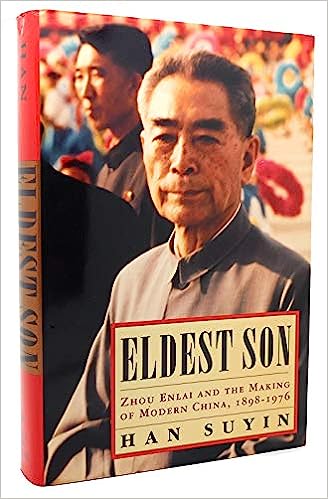
Chou Enlai whom Mao once referred to as “his housekeeper” – architect of modern Chinese foreign policy, still very much alive today
___________________________
China greets Henry Kissinger with considerable respect and warmth for past work reconciling China and the USA back in the 1970s but doesn’t give an inch to the Biden Administration on the main reasons for the Kissinger visit
___________________________
It is simply not credible that Henry Kissinger went to Beijing without prior coordination with the Biden Administration, the latter hoping that Kissinger might achieve something along the lines that Blinken, Yellen and Kerry could not. It is even possible that he went with the open encouragement of the Biden Administration, increasingly worried at the current precipitous decline in Sino-American relations that appear to be moving towards a possible military confrontation, especially over Taiwan.
Add to that the increasing stampede of countries looking for alternatives to conducting their economic affairs in currencies (or other) exchanges outside of the dollar much of which will be discussed in the upcoming BRICS summit next month in South Africa, which bodes for the future of US global hegemony.
With few options left open to him to halt the deterioration of U.S.-China relations, is U.S. President Biden resorting to playing “the Kissinger card” with China? A picture of U.S. foreign policy in general, a fragile 100 year old Henry Kissinger flew to China for several days of “private” (come on – please!) meetings that included an interview with Chinese President Xi Jinping.
Kissinger’s China trip comes after U.S. Secretary of State Anthony Blinken, Treasury Secretary Janet Yellen and special presidential envoy for climate change, John Kerry all made the same journey that produced paltry results, if any, in improving U.S. China relations in the period running up to the 2024 U.S. présidental elections.
As Arab analyst Abdel Bari Atwan, asked in a recent article, could Kissinger achieve what Blinken, Yellen and Kerry failed to do? That is to throw Biden a lifeline by halting what has been an avalanche in the decline of U.S. – China relations? Or, despite the respect that China exhibited to Kissinger, would the visit be full of symbolism but lacking in no real concrete content? While Kissinger was a key player in the restoration of U.S.-China relations in early 1970s, the China of the 1970s is history as is the United States of the same era.
Fifty years ago, Washington had the upper hand in the relationship with China, despite certain undeniable accomplishments resulting from its revolution of 1949 was still a very poor country lacking in industry and high technology and very much behind not just the West, but even its large Asian neighbor India in virtually all economic indicators. What a different story today as China has “leaped forward” to become the world’s industrial workshop and one of the world’s great powers while Washington, although still a force to reckon with internationally, has seen its industrial base close to gutted and its influence on the world scene diminished to some degree.
Add to that the increasing stampede of countries looking for alternatives to conducting their economic affairs in currencies (or other) exchanges outside of the dollar much of which will be discussed in the upcoming BRICS summit next month in South Africa, which bodes for the future of US global hegemony.
Atwan points to two issues of Kissinger’s visit that are either downplayed or ignored (from what I have read) in the mainstream Western media. It is well known, especially to the Chinese. that Kissinger warned US President Biden in his first meeting after winning the presidential elections of this Sino-Russian rapprochement and its potential political and military dangers to the United States and its leadership of the world.
While Kissinger was deftly able to take advantage of what was already a serious split in Soviet-Chinese relations, and deepen it in the interest of strengthening U.S. global power at the time, it is unlikely, virtually impossible for him to achieve anything like similar results today. Still, in his visit there is little doubt that Kissinger was looking for some kind of formula that could at least freeze the increasingly solid Chinese-Russian all round cooperation with an eye on engineering a political and military disengagement between China and Russia, and drag China into the “American camp” again somewhere down the road.
While I have no doubt that the very fact of China’s welcoming Kissinger to Peking makes

“Aunt Mal” – Malvina Magaziner – 1930, long before she met Henry Kissinger’s sister
the Russian leadership a bit weary, I doubt that Moscow has anything to worry about.
The second goal of the Kissinger trip is to explore someway out of the Washington/NATO quagmire in Ukraine. Indications are increasing that the Zelensky government and its NATO allies, its press statements to the contrary, are on the verge of an all round, perhaps historic military defeat. Kissinger is in Peking probing some kind of diplomatic exit for Washington from the war in Ukraine that would both “freeze” the conflict along “Korean” lines (no war, not peace – but a peace in which Washington can still walk away saying it had not suffered defeat). If such a truce could be engineered it would lead to Washington’s main goal visavis China in Ukraine: the hoped-for Chinese neutrality, even in its minimum limits. If this plan succeeds, then this will be a great gain for America.
If the weakening the Chinese-Russian alliance is near impossible from where I’m sitting, this second goal, achieving some kind of cease-fire and freezing the conflict in Ukraine is not totally out of the realm of possibility. Here Kissinger is playing on 76 years of Chinese practicality in foreign policy, a policy constructed by the master of Chinese foreign policy, Chou Enlai. Still, the question here is what is Washington willing to offer not just China, but China and Russia in return. This I don’t know other than it would have to be something very weighty and such concessions, from what I can tell, are not the usual fare for a Biden Administration loaded with the likes Blinken, Sullivan, Nuland, ie, the ideological neo-cons of U.S. foreign policy.
But … one never knows. Underneath all their “macho talk” there are some signs of growing desperation and as engaging China in open warfare is not on the table, some form of negotiations, meaning compromise, might be in the air. A long shot? Admittedly.
Finally, concerning Ukraine, Kissinger believes that any political solution to this Ukrainian crisis that requires dividing Ukraine is the solution, similar to what happened in the Korean War in 1952 with the establishment of two states, one loyal to Russia (in the five regions annexed by Moscow), and another loyal to America in what is left of Ukraine. It is true that Kissinger did not and could not express this position directly to the Chinese. However, he confirmed it in a malicious way by suggesting that Ukraine not join NATO or the European Union, that it remain neutral, and that Russia must understand geographical and ethnic demands and make territorial concessions.
My personal take – the Chinese played the “Kissinger card” shrewdly out of respect for his role in the past. He was wined, dined and toasted, offered access to China’s highest officials, but that the diplomatic results of the visit were empty, nothing at all. They were acknowledgement Kissinger’s historic role – Chile, Vietnam and who knows how many other war crimes aside – in opening U.S.-Chinese relations without which, current tensions aside, China would not been able to achieve the dramatic economic and technological revolution it has gone through. They did likewise to Richard Nixon, inviting him in his personal capacity even after he was forced from office by Watergate.
A show of respect and friendship for past deeds … but not an inch of compromise towards the Biden Administration.
_______________________________________
Abdel Bari Atwan is a Palestinian journalist from Gaza living in London with a rich history in Arab journalism. Respected for his secular radical analysis, he publishes an online news source with articles concerning the breath of Middle East as well as global political developments. A bit slow on the draw (I am referring to myself here – not Atwan) it is only recently that I have learned how to translate his articles electronically using “Google Translate”. I cannot say that the translations are precise but generally speaking I believe I get the gist of his analysis and what he is trying to say.
Atwan’s take almost always goes against the grain of American mainstream narratives of events transpiring in the Middle East; as such he is a useful counterpoint to whatever is coming out in the New York Times, CNN and the U.S. State Department.
______________________________________
(Personal Note: I had in a distant way, a personal relationship with Kissinger.
My Aunt Mal and Uncle Sam Stone lived for years in a rent control apartment in Astoria, New York, just off Queens Blvd where, at least when I returned to New York City to visit, there was a Macy’s department store across the street. Once when I was visiting, Aunt Mal revealed that the property manager with whom she would, over the years, have tea, was none other than Henry Kissinger’s sister.
My aunt, nothing short of the family matriarch, was a very proper sort, careful with her English except when it came to one Grade B actor who by some fluke became President of the United States, a man whose man talents consisted of eating jelly beans and reading other people’s scripts, none other than Ronald Reagan. A died in the wool life long Democrat, the very mention of the name “Reagan” triggered an immediate, almost Pavlovian reaction: that son of a bitch! I used to love to hear her say it and have no doubt that had Aunt Mal ever met Ronald Reagan she would have addressed him in an identical manner to his face.
Back Kissinger’s sister. I was rather stunned by Aunt Mal letting this little secret slip out and asked her. Did Kissinger’s sister ever talk about her illustrious brother? Yes, she did, often repeating that while Henry was a dedicated brother, she didn’t understand how Henry had evolved such “bizarre” (I remember that word distinctly) political views and wondered out loud if his problem was that he spent too much time at Harvard, which, apparently she repeated to Aunt Mal “was not good for the soul”). Henry Kissinger has outlasted Aunt Mal, but not by much. The middle daughter of a Belorussian father (Grudno) and a Polish (Bialystok) mother, both Jewish, Aunt Mal died a few months before her 100th birthday in 2008.
That is the extent of my personal connection to Henry Kissinger. )

Who’s threatening whom
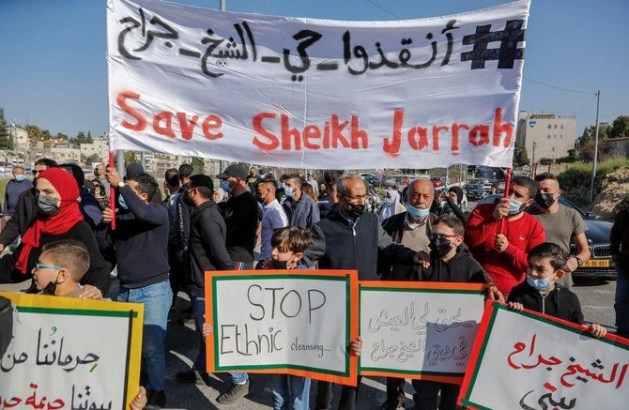
___________________________________________
(Must be true as the House of Representatives voted a whopping 412 to 9 declaring that Israel is “not a racist or apartheid state”. Few votes reflect the extraordinary degree to which Congress is out of step with the rest of the world, with reality. It’s actually impressive. Shakespeare’s famous quote comes to mind “The lady doth protest too much.” People in the Israeli government and their cheerleaders in the USA might take solace in the vote but underlying it is the strong sense that Israel has already lost “the battle of global public opinion”, that its reputation is shot and that even if the vote had been 421 to 0, it was a kin to putting makeup on the corps of the myth of progressive Israel. Of course the Israeli comparison with South African apartheid grates … so it is with other truths. rjp)
___________________________________________
(This article originally appeared in Mondoweiss, News and Opinion about Palestine, Israel & the United States. )
Vast Majority of House Dems Back GOP Resolution Saying Israel isn”t an apartheid state
On Tuesday the House of Representatives overwhelmingly passed a resolution declaring that Israel is “not a racist or apartheid state.” The final vote was 412-to-nine vote, with one present vote.
The resolution was GOP-effort introduced by Reps. August Pfluger (R-TX), David Kustoff (R-TN) and Max Miller (R-OH). It was developed as a rebuke to comments made by Rep. Pramila Jayapal (D-WA) at the recent NetRoots conference, in which she referred to Israel as a “racist state” while addressing Palestine activists. She has since walked those comments back and claims she was merely referring to Israel’s current right-wing government and not the country overall.
The nine Democrats to vote against the resolution were Reps. Rashida Tlaib (D-MI), Alexandria Ocasio-Cortez (D-NY), Ilhan Omar (D-MN), Jamaal Bowman (D-NY), Summer Lee (D-PA), Cori Bush (D-MO), Ayanna Pressley (D-MA), Andre Carson (D-IN) and Delia Ramirez (D-IL). Rep. Betty McCollum (D-MN), a consistent advocate for Palestinian rights in congress, voted present.
““Attempting to silence conversations about Palestinian human rights and intimidate people who wish to have open and honest conversations about the mistreatment of the Palestinian people will only prolong this problem,” said McCollum in a statement. “I will not be silenced. I will keep speaking up against antisemitism, oppression, and hate in all forms.”
“I vote ‘present’ on this resolution, because Americans, Israelis, and Palestinians deserve genuine steps forward on the goal of peace, not more division and political gamesmanship,” she continued. “I do this because every Palestinian child and Israeli child deserves to go to sleep at night dreaming of a brighter future, not one of violence.”
Jayapal said the resolution had “clear political motivations” and was a Republican “distraction,” but still voted for the measure.
Rep. Rashida Tlaib, the only Palestinian member of Congress, denounced the resolution on the House floor.
“Israel is an apartheid state. To assert otherwise, Mr. Speaker, in the face of this body of evidence, is an attempt to deny the reality and an attempt to normalize violence of apartheid,” said Tlaib. “Don’t forget: This body, this Congress, supported the South African apartheid regime, and it was bipartisan as well.”
The vote came shortly after Israeli President Isaac Herzog met with President Joe Biden and the day before Herzog is set to deliver a speech to Congress. A number of Democratic House members (including Reps. Tlaib, Omar, Ocasio-Cortez, and Bowman) have announced that they will boycott the event.
“There is no way in hell I am attending the joint session address from a President whose country has banned me and denied Rashida Tlaib the ability to see her grandma,” wrote Omar in a Twitter thread. “WE SHOULD NOT BE INVITING THE PRESIDENT OF ISRAEL—A GOVERNMENT WHO UNDER ITS CURRENT PRIME MINISTER BARRED THE FIRST TWO MUSLIM WOMEN ELECTED TO CONGRESS FROM VISITING THE COUNTRY—TO GIVE A JOINT ADDRESS TO CONGRESS.”
Israel has been accused of apartheid by a number of mainstream human rights organizations, and despite the fact that only a small number of Democratic politicians openly refer to the country that way, an increasing number of Democratic voters do. A University of Maryland Critical Issues poll from earlier this year found that 44% of Democratic voters believe Israel is “a state with segregation similar to apartheid.”
That survey mirrors a number of public opinion studies that have been released recently. A 2023 Gallup poll found that 56% of Democrats now view Israel favorably, down from 63% in 2022. 49% of the Democratic voters polled said they sympathize with Palestinians, compared to just 38% who said they sympathize with Israelis.
______________________________________________
Links:
Defending the Human Rights of Palestinian Children and Families Living Under Israeli Military Occupation Act
A Threshold Crossed: Israeli Authorities and the Crimes of Apartheid and Persecution – A Human Rights Watch publication

Yahya Sinwar – Hamas leader, smirking in a comfortable chair after an Israeli missile attack as if to say – “that didn’t work”
Audio:
Video: The Fire This Time? Will Israel Go To War This Summer: Damned If It Does; Damned If It Doesn’t
Description – Ibrahim Kazerooni and Rob Prince – who started doing programs on the Middle East when both were associated at the University of Denver’s Korbel School of International Studies then moved on for thirteen years to the monthly KGNU – Hemispheres – Middle East Dialogues (hosted by Jim Nelson) have now gone “free lance” and will continue with regular programming. Serious analysis … and you can’t beat the price!
The upcoming program is on Israel’s geostrategic dilemma: No one in the region is afraid of Israel anymore since its ill-conceived (and poorly carried out) summer, 2006 invasion of Lebanon to wipe out Hezbollah which failed, permanently shifting the balance of power in the region. Kazerooni and Prince look at the dilemma Israel finds itself in currently, as Prince notes “damned if it does, damned if it doesn’t go to war”
Relevant Links:
Yahya Sinwar – Hamas leader in Gaza, sitting relaxed in a comfortable chair after an Israeli missile attack on Gaza. The message is unambiguous: we (the Palesitnians) don’t fear you (the Israelis) anymore.
__________________________________
Strange as it might seem to those whose minds are pickled in American mainstream narratives on Israel and the Palestinians, but all the same it is one of those “facts on the ground”: No one is afraid of Israel anymore in the Middle East. 17 years After 2006 War and the possible/probable of renewed Middle East War between Israel and the Axis of Resistance on the battle field increasingly it is Hezbollah and its allies in the Axis of Resistance that are taking the strategic initiative with Israel finding itself increasingly on the defensive. Israeli leadership is in a pickle concerning major military action: damned if they do; damned if they don’t
__________________________________

Nearly a year ago, when we were still welcomed on KGNU – Hemispheres – Middle East Dialogues – Ibrahim Kazerooni and I (Rob Prince) did a program entitled “The Turkish Tap Dance, The ‘Israeli Pickle’ and the JCPOA – The Middle East, A Region in Transition.” That program surprised many listeners because, despite appearances to the contrary, we argued then that Israel found itself in both a domestic and regional “existential” crisis.
Today, we take this argument even further – the crisis Israel finds itself in has deepened both domestically and regionally.. The “the pickle” is more expansive. To understand “the pickle” we need to return to the 2006 war in which Israel invaded Lebanon with the specific U.S. Israeli goal of “neutralizing” Hezbollah as a political force in Lebanon and restructuring the whole of the Middle East to its liking – a “Sykes-Picot II” to further weaken if not destroy the nationalist aspirations of countries in the region. The plan was brought to light in in 2003 by General Wesley Clark. Washington and Tel Aviv’s plans for a major regional restructuring could not be accomplished without neutralizing or wiping out Hezbollah; it was Israel’s role for the United States to accomplish that goal.
The Israeli invasion failed and spectacularly so. Israel was forced to withdraw its forces after suffering historic losses. As Combat Studies Institute analyst Matt Matthews noted in his study We were caught unprepared: the 2006 Hezbollah-Israeli War
Without question, the Israeli ground campaign revealed an army confused by its new doctrine. Soldiers were deficient in training and equipment, and senior officers seemed woefully unprepared to fight a “real war.” By the time the United Nations (UN) cease-fire went into effect on 14 August 2006, many military analysts were convinced the IDF had suffered a significant defeat. One source held that Hezbollah’s military and political victory was absolute and irrefutable.3 Even more revealing were the comments by Mossad Chief, Meir Degan, and the head of Shin Bet, Yuval Diskin, during a meeting with Prime Minister Olmert in the immediate aftermath of the war. Both men pointedly told Olmert “the war was a national catastrophe and Israel suffered a critical blow.”
The Israeli leadership was severely chastised, including Prime Minister Olmert and most of his cabinet for going to war without a plan, clear goals of what to accomplish. Olmert and much of his cabinet were forced to resign as a result. What is less appreciated – if appreciated at all – here in the USA – is that Israel’s failure in its 2006 invasion of Lebanon resulted in a shift in the balance of power in the region that has only intensified until now., the most salient of which are three:
– Israel’s inability to dictate regional policy by going to war. It is no longer the invincible power it thought itself to be in the region (and was). With the 2006 defeat, the myth of Israeli invincibility began to implode.
– As Israel’s first prime minister, David Ben Gurion noted, Israel’s strength is not in only in its military might but in the mindset Israel impose on our neighbors not to challenge us. Israel a weaker power than it appeared. The fear to challenge Israel military began to recede if not evaporate. From now on, the Palestinians and Arabs as a whole began to fight back militarily more assertively.
– Although some indications of this before the 2006 war, it was fundamentally the result of that war which resulted in the emergence of an “axis of resistance” – ignored and unappreciated by many in the USA – but known and followed carefully, and feared frankly, in Israel
Already prior to the failed 2006 Israeli invasion of Lebanon there were indications of a growing “axis of resistance”, a sort of united front against both the USA and Israel taking shape. In April, 2003, as reported in the Israeli newspaper Haaretz, then U.S. Secretary of State, Colin Powell was hoping to dissuade Syrian President Bashar Assad from supporting Hezbollah. Powell pressed Assad to stop supporting Hezbollah; in return he offered Syria extensive economic. Assad later commented that the pain of continued support and cooperation with Hezbollah was better than capitulation to Washington DC. Assad and Syria would pay a harsh price for this principled stand.
That was then…
After all these years the Axis of Resistance has gotten stronger, it includes countries (Iran, Syria) and movements for change (Hezbollah, Hamas among the Palestinians, the Yemeni rebels). This Axis of Resistance is growing stronger and is increasingly moved from the defensive to an offensive posture militarily. The world is witnessing a growing consolidation of Palestinians everywhere, part of the consequences of the strengthening of the Axis of Resistance.
It is noticeable in the recent Israeli attack against Jenin which they were forced to call of after two days, in the increasing consolidation of a dynamic single front against Israel, in the Palestinian resistance in defending Gaza from attack, in the Syrian resistance against Washington’s failure to overthrow the Assad government. And most notably this shift in the balance of forces is reflected in Israel’s growing reluctance to openly challenge Hezbollah militarily in Southern Lebanon again for fear that the Israeli Defense Force might suffer an even greater defeat than they experienced in 2006.
The long-term effects of the 2006 failed Israeli Lebanon offensive have created a psychological mindset in Israel that led to the deterioration of Israeli domestic economic and social situation Hezbollah has become increasingly bolder while Israel is increasingly hesitant to respond to Hezbollah militarily to such an extent that we can speak of an Israeli 2006 Syndrome, Israel’s version of the U.S. Vietnam Syndrome. This is the heart of “the Israeli pickle:: No one is afraid of Israel anymore in the Middle East: To invade or not to invade, that is the question. Should it risk war with Lebanon and Syria to once again try to break the back of the Axis of Resistance given the risks such military action might entail.
We are at a dangerous crossroads once again. Like the United States, Israel is suffering from a classic case of a wounded beast syndrome. For has powerful as it is militarily, it is damned if it goes to war … and damned if it doesn’t.
Will this summer be a turning point?
Guest Blogger Chiara Cruciati: Tunisia: But what kind of stability can grow from the soil of poverty?
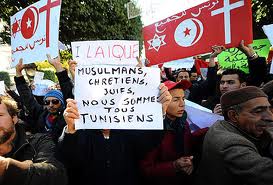
Poster reads – Secular: Moslems, Christians, Jews – We are all Tunisians. What about Black sub-Saharan African immigrants living there, forced from their countries of origin by extreme poverty war, corruption intensified by IMF structural adjustment loans?
_______________________________
(Publisher’s note – I was in the process of gathering materials for a blog entry on Tunisia and Algeria applying for membership in the BRICS group but personal and other responsibilities prevented me from putting it all together (along with the video program I hoped to do with colleague Ibrahim Kazerooni.) A long time friend “back East” happened to send me the article below. It makes pretty much all the points I would have made and does so eloquently, even in translation from the Italian)
_______________________________
Il Manifesto – Global Edition
The Tunisia myth: An unstable democracy and no economic justice
by Chiara Cruciati – July 9, 2023
Analysis. Tunisia’s success narrative was built on a liberal shorthand that sees elections and civil rights as the ultimate expression of an inherently democratic system. The reality is a hardening of socio-economic injustice and political-economic authoritarianism.
The merciless violence on display by a part of the population of Sfax against sub-Saharan migrants is managing to achieve what so many analyses had failed: that is, to debunk the myth of Tunisia as “the only successful Arab revolution.” (1)
This is a myth that has misrepresented the reality of the democratic process undertaken by the North African country after its Jasmine Revolution, which broke out in December 2010 after the self-immolation of Mohamed Bouazizi, a market seller from Sidi Bouzid, deep in Tunisia’s hinterland. He had killed himself after yet another abuse at the hands of the police, in a symbolic and desperate attempt to wrest the monopoly on violence from those in power.
From Tunisia, the revolt spread to North Africa, the Gulf, the Levant. And Tunisia would end up being the setting for an apparent democratization process which was cast as a success story.
It was such a story, at least in part. One recalls the celebration of that success at the 2015 Nobel Prize ceremony in Oslo, with the Nobel Peace Prize awarded to the “Quartet” of Tunisia’s institutions: the historic UGTT trade union, the industrialists’ association, the League of Human Rights and the Tunisian Order of Lawyers.
In stark contrast to its neighboring countries, which have remained trapped in counterrevolutions and civil wars since 2011, Tunisia has notched achievement after achievement, both small and of major importance: free elections, one of the most secular and progressive constitutions in the Arab world, family law reform, gender equality, civil marriage.
But the success narrative was built on the “liberal shorthand” that sees elections and civil rights as the ultimate expression of an inherently democratic system. This narrative excludes the key demand put forward by the Jasmine Revolution: socio-economic justice and equality and an end to the political-economic authoritarianism of the state.
That kind of democracy was never achieved in Tunisia. The pyramidal structure of society is intact, in no way affected by the windfall of billions of dollars that rained down on Tunis from the West, the EU, the US, the IMF.
Now the windfall has dried up, leaving behind inflation, unemployment, shortages of food, medicine and fuel, and the exclusion of the poorer hinterlands, with the coastal areas swallowing up infrastructure investments for the benefit of international tourism.
Long before we did, the Tunisians realized that democracy had never really arrived. They expressed their disillusionment in many ways, which seem contradictory on a superficial look: a significant number joined the ranks of Islamist movements which offered them wages (Tunisians are the most represented nationality among ISIS’s foreign fighters); others chose emigration to Europe, while others protested in the streets.
“Spring” has not come, stifled by the lethal symbiosis of authoritarianism and neoliberalism. In Tunisia, this is on display in the form of the lights and skyscrapers lining the waterfront, the touristic streets and cafes on every corner, the neoliberal hallucination sweeping the misery of the Tunisian people under the rug. Today, their rage is being diverted into a war between the poor: until recently, the people of Sfax used to take to the streets against the political elite, but now they’re doing so to drive out migrants, intoxicated by the racist and nationalist rhetoric broadcast from Tunis.
This is the country of the failed spring, of the myth of “democracy” that pits civil rights against social rights, and of the facade of “stability” in the service of the defense of Europe: both a bulwark against terrorism and Brussels’ outsourced border.
Over the years, the strikes, clashes with police and union activism trying to secure public services and living wages have never stopped, across the whole country: in Tunis, Kasserine, Jebeniana, Sidi Bouzid, Mornag.
The people wanted their “Spring”: what they got instead was outside-facing austerity and internal authoritarianism.
A third IMF loan, worth $1.9 billion, depends on Tunis saying yes to a package of measures that will bring more pain and suffering: cutting subsidies on bread and fuel (with a cascading impact on the prices of other goods), radical cuts in the number of civil servants and their salaries, restructuring state-owned companies (i.e. privatization), raising VAT, devaluing the currency to attract foreign investment. This is hardly the path towards social justice – as Egypt, Morocco or Jordan can testify.
On the internal front, hard-won freedoms have been gradually shrunk, as they often are, with the authorities invoking the specter of terrorism: since 2015, Tunisia has been under a state of emergency, with the overt goal of narrowing the public space for dissent, until the culmination of this process with President Saied’s institutional coup.
“Spring” has not come, stifled by the lethal symbiosis of authoritarianism and neoliberalism. In Tunisia, this is on display in the form of the lights and skyscrapers lining the waterfront, the touristic streets and cafes on every corner, the neoliberal hallucination sweeping the misery of the Tunisian people under the rug. Today, their rage is being diverted into a war between the poor: until recently, the people of Sfax used to take to the streets against the political elite, but now they’re doing so to drive out migrants, intoxicated by the racist and nationalist rhetoric broadcast from Tunis.
This is the country of the failed spring, of the myth of “democracy” that pits civil rights against social rights, and of the facade of “stability” in the service of the defense of Europe: both a bulwark against terrorism and Brussels’ outsourced border.
But what kind of stability can grow from the soil of poverty?
___________________________________
- Cruciati is referring to racist violence against sub-Saharan Africans in Sfax, Tunisia’s second city along the Mediterranean coast. “Racist Violence Targets Black Refugees”

Where have all the liberals gone, long time passing?
Where have all the liberals gone, long time ago?
(sung to the tune Where have all the flowers gone?)
Where Have All The Liberals Gone?
Opening comments to the general public to ask a question, in sincerity: what changed the minds of society’s former First Amendment advocates?
The documents not only contain incontrovertible evidence that our own FBI pressures tech companies to censor material, but that the Bureau is outsourcing such work to a foreign government, in this case Ukraine. This passage below for instance reads “The SBU requested for your review and if appropriate deletion/suspension of these accounts.”
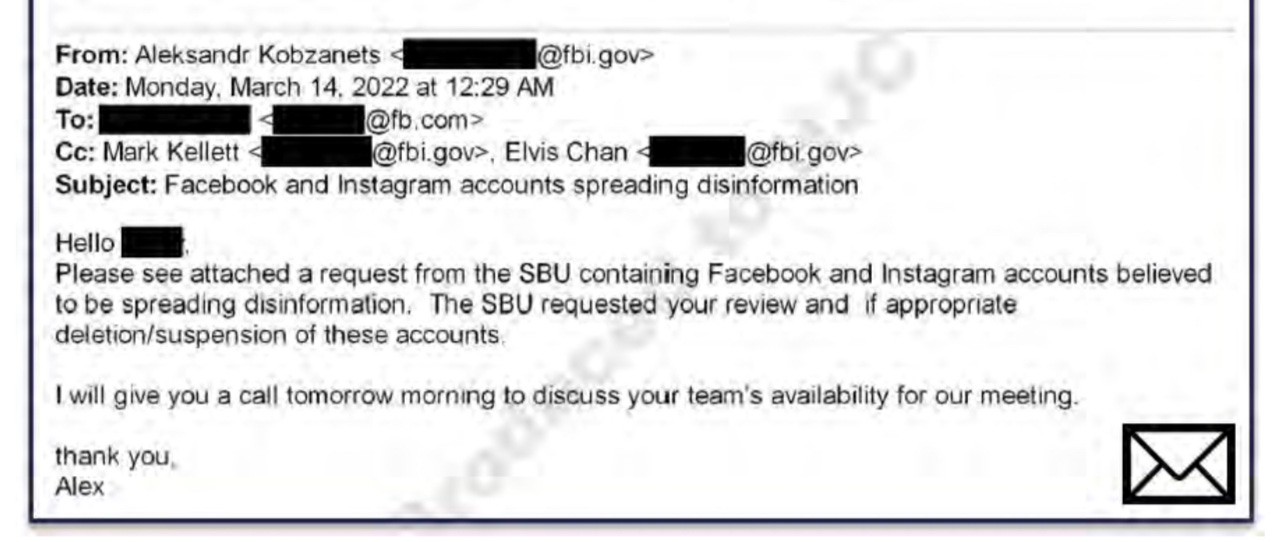
There can’t possibly be controversy at this point as to whether or not this censorship program is going on. Whether it’s the FBI forwarding the SBU asking for the removal of Aaron Maté, or the Global Engagement Center recommending action on the Canadian site GlobalResearch.Ca, or the White House demanding the takedown of figures like Robert F. Kennedy, Jr., the same types of behavior have now been captured over and over.
In light of this, I have to ask: where are the rest of the “card-carrying” liberals from the seventies, eighties, and nineties — people like me, who always reflexively opposed restrictions on speech?
Is your argument that private companies can do what they want? Then why did you think otherwise in 1985, when Tipper Gore’s Parents Music Resource Center suggested record companies “voluntarily” label as dirty songs like “Darling Nikki,” and call them McCarthyites when they compiled a list of the “Filthy Fifteen” albums? Does that not sound suspiciously like the “Disinformation Dozen”? Why were you on Frank Zappa’s side then, but with blacklisters now?
Why were you on Frank Zappa’s side then, but with blacklisters now?
Do you now think it’s not really censorship if the FBI merely makes its opinion known about content, and doesn’t order takedowns? Did you think the same when the FBI sent a letter to Priority Records complaining about NWA’s “Fuck the Police”? Did you agree then with the ACLU, whose Southern California chairman responded to the FBI’s letter by saying, “It is completely inappropriate for any government agency to try to influence what artists do. It is completely against the American traditions of free speech”?
Is your belief that new forms of speech constitute “harm” and “offense” to such a degree that censorship is warranted? If so, why did you once support Andres Serrano and his work Piss Christ, which Catholics insisted was an intolerable offense, and call it censorship when opponents like Al D’Amato and Jesse Helms tried to pull funding for Serrano from the National Endowment of the Arts? Wasn’t the Hustler magazine spread suggesting Jerry Falwell had sex with his mother in an outhouse offensive? Didn’t you go to The People Versus Larry Flynt anyway?
If you’re okay with the FBI collaborating on censorship with the SBU now, why oppose the original PATRIOT Act, suggesting you didn’t even want the government looking at library records in search of Islamic terrorists? Why did you support the Dixie Chicks when they were blackballed for antiwar views after the Iraq invasion? Did you cheer them when you watched Shut Up and Sing?
Trailer – Dixie Chicks: Shut Up And Sing
The change in thinking of traditional American liberals is the only part of this censorship picture that still doesn’t quite compute for me. I’d like to hear from anyone who has an explanation, a personal testimonial, anything. Comments are open to everyone here.
Originally on Racket News
(Thank you M.S. for alerting me to this piece)
Guest Blogger: Ann Garrison: The impending pro-war Democratic Party takeover of Pacifica Radio

Pacifica Radio … Is something like this happening at KGNU? …Stay tuned
(Link to Garrison’s July 1, 2023 article in Counterpunch. The question: Is some like this happening at KGNU in Boulder? The answer: Sure looks like it.More on this – actually a series of articles – coming soon from your local blogger, yours truly. Stay tuned)
The impending pro-war Democratic Party takeover of Pacifica Radio
bu Ann Garrison. July 1, 2023
The largest, most historically influential progressive non-profit radio network in America, Pacifica Radio, faces a takeover attempt by Democratic Party elements. Will Pacifica embrace the pro-war logic it was created to oppose?
“I can’t imagine the New York Times, flawed as it is in many ways, would be part of some grand conspiracy to implicate Assad.” -Sonali Kolhatkar, A Syrian Speaks Out on Trump’s Latest Bombing, on Pacifica Radio’s KPFA-Northern California, KPFK-Los Angeles, and KPFT-Houston in April 2018
When Pacifica host Sonali Kolhatkar aired an interview with Syrian regime change activist Robin Yassin-Kassab, her guest was adamant about one point in particular: that President Trump had not bombed enough in response to unproven allegations of chemical attacks in Syria.
According to Yassin-Kassab, Trump had likely only struck a few “probably empty chemical weapons sites” and his refusal to be drawn more fully into the conflict meant that he was effectively guilty of collaboration with Syrian President Bashar al-Assad:
“The actual policy in Syria, with regard to the West, is not regime change. It’s appeasement or perhaps collaboration. There’s no evidence that the United States or the West or the Europeans have actually tried to get rid of Assad.”
Kolhatkar agreed, and together the two spent much of the hour-long interview chastising leftists who’d objected to the bombing.
“Sadly, on the left here in the United States, and I believe in the UK as well, we’re hearing a lot of people saying, ‘there’s no way Assad had any responsibility for this chemical attack because he had nothing to gain,” she complained, although she never made clear how the Syrian government would benefit by inviting US airstrikes.
“But clearly he did have something to gain, and he gained it,” she insisted.
By not embracing a more aggressive policy in Syria, they agreed, Trump had shown his cards to Assad and demonstrated that the Syrian President could get away with using chemical weapons with little resistance from the West. She cited Reuters, a UK intelligence-linked news agency: “Reuters just put out a piece in the last couple of days… saying ‘Syria attack triggered Western action, but on the ground Assad gained.”
“Under pressure from beleaguered residents and facing Russian threats of further such attacks, the rebel group Jaish al-Islam finally agreed to surrender Douma and leave for the Turkish border,” she quoted, seemingly agreeing that the loss of territory by the Saudi-backed jihadist militia represented a disappointment for Syrians. Read more…

Bread – the symbol of rebellion in Tunisia from the bread riots of the early 1980s, to the 2011 revolt that overthrew the Ben Ali clique to today’s protests over the deepening socio-economic crisis
(Note: Ibraham K and I are preparing a video on Algeria, Tunisia and their efforts to join the BRICS. It will appear sometime in the next week. In preparation for that program, I’ll post a few articles on the goings-on in both countries, whose situations I have tried to follow over the years. From June, 1966 to the end of October, 1968 I was a Peace Corps Volunteer – and briefly at the end staff member – in Tunis and Sousse, Tunisia, a place and time that profoundly influenced whatever it is that I became afterwards. This is a short article on a growing problem in Tunisia. Article is from Raialyoum – an Arabic news service., translated from Arabic to English with Google Translate which works pretty good.)
A Tunisian man was killed in clashes with migrants from sub-Saharan countries
Tunisia (Reuters) – A judicial spokesman in Tunisia said today, Tuesday, that a Tunisian was killed following clashes between local residents and migrants from sub-Saharan African countries in the southern city of Sfax, in the midst of violence that has been escalating for days. with immigrants.
Sfax, the economic capital of Tunisia, is teeming with thousands of immigrants from sub-Saharan African countries who want to set off on boats to Europe across its coasts. The coasts of Sfax became a major starting point towards the Italian islands.
Faouzi Mesmoudi, a spokesman for the Sfax 1 court, said that the police had arrested three Africans suspected of being responsible for the killing of the Tunisian man.
He added that the killing came after nights of clashes in the city between residents and illegally divided immigrants.
Over the past two nights, the police fired tear gas to disperse the clashes.

Ida Audeh at a Rachel Corrie Memorial on the mall in Boulder, June 2003. In the background Joel Edelstein and Juliet Wittman
Going through (too many) old photos. Every once in a while I come across “a gem”, like this one.
On the mall in Boulder, Colorado – June, 2003. A memorial for U.S. peace activist Rachel Corrie who died – was murdered – trying to protect a Palestinian home in Gaza. She was run over and crushed by an Israel tractor. As usual, charges were never filed against the Israeli military contractor who committed the crime. Rachel Corrie’s parents have spent the years since, seeking justice for their daughter and set up the Rachel Corrie Memorial Foundation to continue Rachel’s work for peace and justice for Palestinians.
She is not the last peace activist from abroad, in Gaza and the West Bank, who has been killed by the IDF or Israel’s out-of-control settlers, Many more have followed.
As Boulder author and teacher Juliet Wittman noted in an email reminding me of that day:
Rob: I remember this. Aref (Nammari) and Leslie (Lomas) alternated reading the names of the dead, and it was very moving. I also remember that it was blistering hot and Irving Greenbaum (do I have the name right?), who was perhaps already in his eighties, was handing out leaflets when some ghastly Zionist Karen started yelling at him. I still feel sorrow for the death of Rachel Corrie and all the tragic deaths that follow. Now a savage, straight-up invasion of the West Bank.

Same memorial – on the right, Ida Audeh, Sergio Atallah
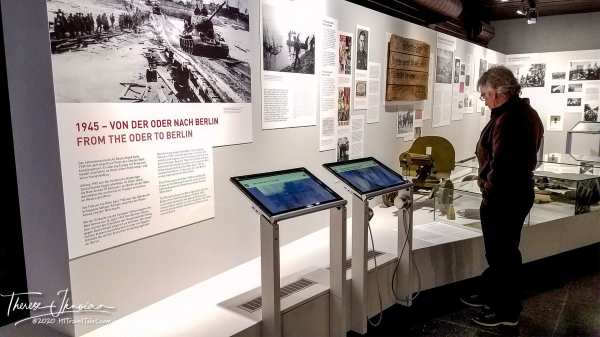
It was here at the Seelow Heights just west of the Oder River that the in April, 1945 Soviet troops stormed clearing the path for the Soviet offensive against Berlin and the end of the Nazi regime. Museum at Seelow Heights, visited in April, 1985,
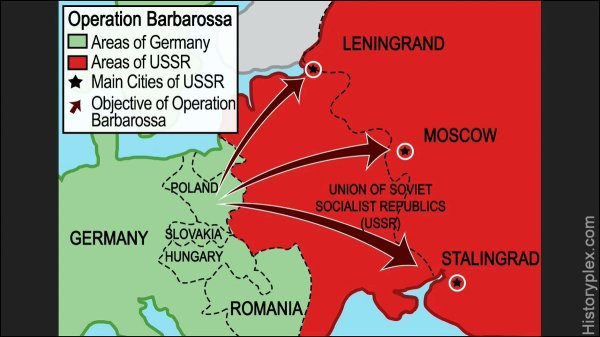
(What follows is Alexander Mercouris’ (the Duran) commentary transcribed below. It says pretty much what is on my mind. On this date With some 3.5 million German and nearly 700,000 German-allied troops – among them Ukrainian Nazi Banderites – invaded the USSR. Four epic battles followed – Moscow, Stalingrad, Kursk, the storming of Berlin from the Seelow Heights – along with hundreds of “smaller” ones, none of which were very small – ensued. When it was over, some 27 million Soviets lay dead having born the brunt of the fighting and the defeating of the Nazis along with 8.5 million Germans.)
… It is also the anniversary on the 22 of June, 1941 of the German (Nazi) military and of Germany’s allies – and it’s important to say that Germany had a significant number of allies at that time in Europe – against the Soviet Union which initiated the four year war between Germany and the Soviet Union, by far the most titanic, the greatest military struggle in human history and one which in the end after extraordinary violence and suffering led to the final defeat of (Nazi) Germany and the capture of Berlin by the Red Army.
This is of course an enormously important event in Russian history.
The war touched on every Russian (and non-Russian Soviet) family. The Soviet Union suffered 27 million losses – that’s the official number – over the course of the war that is the number of people were killed. Many more were wounded, many more were traumatized as a result of that war. And though of course today’s Russia is not the entirety of the Soviet Union – it is only a part of the Soviet Union – which Germany attacked on the 22nd of June 1941, it is Russia by all accounts absorbed much the greater part of these casualties.
So it is a huge event in Russian history, a tremendously traumatic event for Russians and it’s one that they remember extremely well and to a very great extent still informs their outlook on international relations to an extent that Western rarely ever seem to grasp, partly I suspect because the full extent and horror of the war between the war the Russians had to fight between 1941 and 1945 has never been properly recognized in the West.
Any discussion of the ongoing conflict in Ukraine, any attempt to define Russian actions without taking this colossal event in the not so distant past into account is inherently flawed. I’m not saying that the war that began for the Russians on the 22nd of June 1941 provides the entire explanation for the present conflict, but it certainly provides a significant part of that explanation in so far as Russians are concerned in that it is their point of view another conflict involving the West encroaching on historical Russian territories which the Russians perceive themselves as defending.
That may not be an interpretation that many people in the West will accept but it’s not a question of whether the interpretation is one that should be accepted or not, it is the fact that it is the interpretation that most Russians hold and which affects the way they view this conflict (the Special Military Operation in Ukraine).
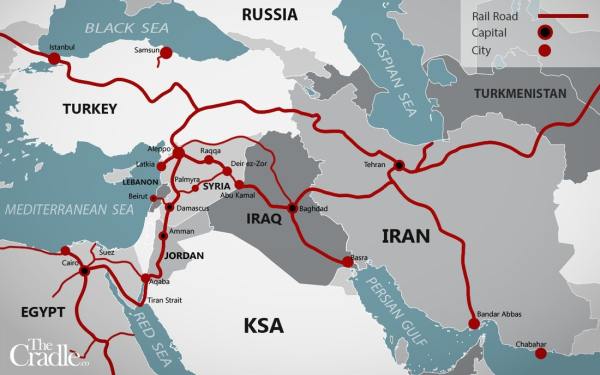
Iran and Turkey growing Middle East crossroads
_______________________________
Here is something else I am wondering about. U.S. influence was defeated in Syria – and now we see these U.S. allies – including little Tunisia, Algeria – it looks that U.S. influence in the Middle East is not just declining but crumbling before our very eyes and the Biden Administration doesn’t seem to have a clue as to what to do about it.
Rob Prince
When you have the Chinese being able to create an improved relationship between Saudi Arabia and Iran without Washington’s participation this is indicative of the degree to which U.S. influence in the region is in decline. The day before yesterday, the Saudi foreign minister was in Teheran opening up a new embassy and last week an Iranian delegation was in Riyadh opening up their embassy, these gestures were unheard of only months ago. There is a huge amount of Saudi investment targeting the Iranian oil and gas infrastructure as well as money invested in a lithium mine recently discovered in Iran. These are resources that Chinese investment are supporting as well. The Americans are unable to do anything about this.
The worst blow to U.S. regional interests would be if the Iranians and Egyptians are able to establish a diplomatic relationship; here we have the most populous Arab country along with the Middle East’s most populous non-Arab country re-establishing relations. If they can work together with finance coming from Saudi Arabia, China and Russia – it’s a new Middle East that the United States has contributed little to nothing to encourage.
Condoleezza Rice’s 2006 pontificating that there is a “new Middle East” in the making is coming back to haunt Washington and Erdogan’s Turkey is a part of the process. Yes, we are beginning to witness a renewed Arab Spring, but from the top down rather than from the bottom up, this is taking shape but not in the way the United States wanted.
Ibrahim Kazerooni
_______________________________
Part Two
Rob Prince: There is something important that has to be added to your comments Ibrahim and that is that the role that Turkey was playing in the Middle East was essentially as a proxy for Washington at a time when Washington and Turkey’s interests converged. Turkey was one of a number of Washington proxies in the Middle East. What is going to change is Turkey’s relationship to Washington over the years since 2010. Turkey is not playing the “proxy” role to the extent that it was thirteen years ago anymore.
I want to talk a little bit about the U.S. posture towards Turkey. To do so, we need to go back in time even more than a hundred years. We have to go back to the Sykes-Picot Agreement because what we’re actually seeing (in terms of U.S. policy today), what the plan was to partition Syria … I consider it “Sykes-Picot II”.
Ibrahim Kazerooni: Yes, You’re right
Rob Prince: For those of you unfamiliar … the Sykes-Picot Agreement was a secret agreement negotiated during World War One, a plan to partition the Arab lands of the Ottoman Empire, once the war was over and the Ottoman Empire was defeated. The original countries involved were the Russian Empire, Great Britain and France to carve up the Middle East and to divide it between these three imperial powers. The Russian Revolution took place and the Communists come into power. One of the earliest actions by Lenin was to expose the details of Sykes-Picot to the world and to withdraw Russian participation in the plan. Read more…

The Changing Middle East – An Alternative View
___________________________
___________________________
Transcript (edited) – Part One
The Jeddah meeting (of the Arab League) was a strategic defeat for both U.S. and Turkish plans, nothing less. As Washington’s war in Syria using Turkey as it main proxy failed, Turkey as responded by “shifting gears” so to speak, changing its geopolitical orientation away from Washington to one that is much more in coordination with both Russia and China.
Rob Prince
Nations, like Turkey that were once great empires (in the form of the Ottoman Empire) often exhibit an inflated sense of their “heyday” making their citizens easy to appeal to the past. We seen such thinking in the United States, United Kingdom, and other places. Unfortunately, this appeal to the past renders the population vulnerable to being manipulated by politicians, the media.
When it comes to the study of Turkey this romantic view of the collapsed Ottoman Empire continues to shape how Turkey views its place in the world today. Understanding the past is critical to understanding the current geodynamics of Turkey.
Ibrahim Kazerooni
Rob Prince: We’re on the air. It’s a pleasure to be with you friends, once again.
I’m here with Ibrahim Kazerooni, longtime friend and colleague. Ibrahim’s family roots are in Iraq although he’s lived for many years in the United States. We were both at the University of Denver’s Korbel School of International Studies together, Ibrahim as a student getting a joint Phd from Korbel and the Iliff School of Theology, myself then as Senior Lecturer of International Studies there.
What is it that we attempt to do in these programs?
We first deconstruct what are referred to as mainstream narratives on the events transpiring in the Middle East; then we attempt to reformat the events into a more honest, objective narrative based on both media from the region and alternative media here in the United States.
Tonight we want to talk about Turkey. We have entitled this program “From Doha to Jeddah – An Arab Spring Revival
Doha is the capitol of Qatar. In 2012 a meeting was held there that brought together most of the Arab countries – minus Syria – along with Turkey and the United States. The U.S. conceived plan was to utilize Washington’s regional proxies to overthrow the Syrian government of Bashar al Assad and thereafter, to partition the country in such a way that it would never be a regional force again.
Jeddah is a Saudi city sitting on the western edge of the country on the edge of the Red Sea. There, just a month ago, in mid May, 2023. There, Syria was re-welcomed back into the Arab League. This even marks the failure of the U.S. plans to overthrow the Damascus government. It also marks the failure of Turkey’s neo-Ottomanism, its plans to extend its influence and essentially recolonize the Arab World.
The Jeddah meeting (of the Arab League) wass a strategic defeat for both U.S. and Turkish plans, nothing less. As Washington’s war in Syria using Turkey as it main proxy failed, Turkey as responded by “shifting gears” so to speak, changing its geopolitical orientation away from Washington to one that is much more in coordination with both Russia and China.
This is what we want to discuss today, put the “Turkish tango” in its historical perspective and discuss what Turkey’s shift might indicate for the future of the Middle East.
Turkey is a very interesting country – 80 million people, strategically located between Europe, Asia, the Middle East, close to Africa as well, rich history. It has gone through a transition from a strong NATO member – it remains in NATO and we’ll discuss this – to one that sees its future looking East – towards China, Russia, India and Iran.
With all this in mind, Ibrahim, we’ve used the term “the Turkish model” … to what are we referring by using this term? As a part of your response, can you talk about what we experienced, in terms of Turkey, at D.U.’s Korbel School in 2008-9, just prior to the onset of the Arab Spring.
Ibrahim Kazerooni: Well, good evening everyone, good evening Rob
Before getting to your last comment regarding Korbel when both of us were present at the time, I need to outline a few points that are fundamental to the study of Turkey needed to understand its geopolitical shifts, as well as its overall foreign policy.
Nations, like Turkey that were once great empires (in the form of the Ottoman Empire) often exhibit an inflated sense of their “heyday” making their citizens easy to appeal to the past. We seen such thinking in the United States, United Kingdom, and other places. Unfortunately, this appeal to the past renders the population vulnerable to being manipulated by politicians, the media. Read more…
The European Union – refining its genius to shoot itself in the foot … or is it both feet?

Victoria Nuland – who gave out cookies to Ukrainian fascists at Maidan and whose attitude towards Washington’s. European proxies was aptly articulated in her endearing quote “F*ck the Europeans” … Oh yes, she apologized later so I guess all is forgiven.
This from Angelo Giuliano on Twitter…
Never forget….
1. EU sanctions Russia and loses an important trading partner.
2. EU ends up paying much more Russia for gas, indirectly financing Russian war against Ukronazis/NATO
3. EU finances Ukronazis diverting funds supposed to go to EU social projects, for its citizens…meaning, it is making EU citizens poorer.
4. EU makes US richer by buying expensive LNG
5. EU has made EU heavy industries non-competitive because of high energy prices, EU industries moving out to US and China.
6. EU has seized Russian assets, making EU losing International trust with its criminal behaviour which has initiated the dumping of Euro and lost reserve currency status.
7. EU forbids Russian planes to fly above its soil, in return losing access to fly over Russia, the largest country on earth, making EU airlines flying to Asia non-competitive
8. EU announced it would destroy Russian economy….2023-2024 : EU in recession while Russian economy is expanding.
9. EU wanted to isolate Russia, EU has isolated itself. Leaders around the world lining up to meet lavrov/Putin. Russia is increasing cooperation with the global south.
10. EU wanted to demilitarise Russia, it is the EU that in return has become demilitarised with all the supplies sent to Ukraine and destroyed by Russia.
11. EU wanted regime changes in Russia….Putin has +80% support while most EU leaders have only 25-35% support.
12. EU forbids its companies to operate in Russia, Chinese, Indian, Turkish companies come in to replace EU companies. decades of EU investments and efforts lost within short period.
13. All the soviet era equipments from Eastern Europe sent to Ukraine will not be replaced by EU equipments but US equipments. US making EU military industrial complex irrelevant, making EU become completely dependent on US military industrial complex.
14. While the whole world basically knows who blew up the Nord Stream II pipeline – the EU blames this – one of the worst examples of environmental terrorism in modern times – on Russia at first. When that becomes too ridiculous a lie to peddle, it points the finger at Ukraine, Poland, etc…
15….. Long list, feel free to add more of the clownish actions the EU has done
Colorado Eritreans Raise $$ for Cancer Detection …
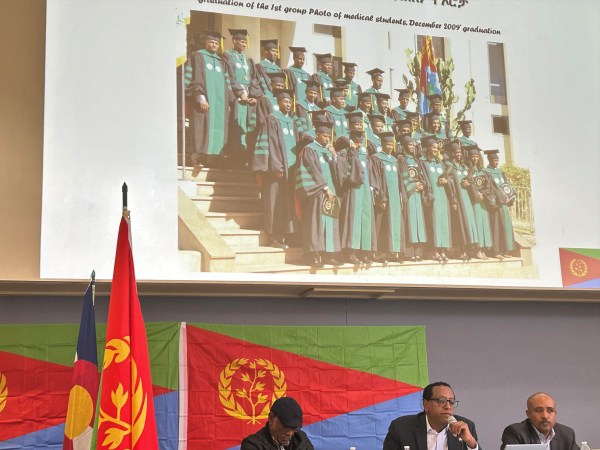
Dawit Haile, center, from the Eritrean Embassy in Washington DC at a Colorado Eritrean Community event at Denver’s Jewish Community Center in Denver. Slide above – first graduation class from medical school in Asmara, 2009.
______________________________________
I’ve seen many of these before among immigrant communities but really nothing of the size, scope and spirit of what happened at this meeting of a community, the Eritrean Community, that is both small numbers wise and overwhelmingly working class and poor. First the contributions that had already come in (for the purchase of Ct Scans and other cancer detecting machines) were announced by a group of community elders. They were sizeable. Many were in the $1000-to-$5000 range. This was followed by people in the audience coming forward with both donations and pledges of $1000, $2000 and more dollars from the floor. The pledges included people with cancer, or whose family members both in the U.S. and Eritrea are afflicted with the condition. Several people, many of them women, pledged $1,000 in honor of each child they had. One woman who had recently moved to Colorado expressed “shame” that she could only contribute $500 at this time but committed to raising another $500 over the next six months. Many more testimonials, contributions of this nature.
It was both the size of the contributions – from people whom do not appear to be billionaires or millionaires – and the spirit of love of country, of solidarity – that was heartwarming, moving. I asked an Eritrean friend not known for exaggerating, how much money he thought had been raised at the event. My sense was that I had never seen anything like this from a small community with such modest means. He didn’t know for sure but guessed somewhere around $150,000.
______________________________________
1
Eritea – A country that shouldn’t be Washington’s enemy, but is …
It has some of the highest social indicators in Africa for literacy, elementary and high school education, healthcare facilities and the general well-being of its population but from the mainstream media reports you’d never know it. Instead we are flooded with news stories – from the exaggerated to the outright bogus – of “support for terrorism”, “authoritarian” government which is not defined as a “government” but a “regime”. It’s leadership continually slandered, its socio-economic achievements denied (unless United Nations’ statistics are viewed – then another quite contrary story emerges). All in all a negative portrait crafted – that like so many others (Iraq, Libya, Syria) – is little more than a prelude for a “color revolution” and regime change.
In fact, among the world’s smaller countries, perhaps with the exception of North Korea and Cuba, few countries get a worse rap from both the State Department and the mainstream media than Eritrea, that strategically located country on the western edge of the Red Sea the southern flack of which sits just across from the Bab El Mandeb Strait, one of the world’s most strategic “choke points”, through which a goodly portion of the world’s oil travels through on oil tankers either coming from or heading towards the Suez Canal. It’s strategic position turns out to be both a blessing and a curse – a blessing as it places Eritrea square in the center of trade with the Middle East (Saudi Arabia, Yemen) and Asia, a curse as a result of its location it has long been a political football tossed around by the world’s more powerful nations, making autonomy, self-determination a challenge, never more than it is today.
It is a country that has been at war for the better part of a century in which the Italians, the British, the United States have all had a hand in keeping the pot boiling. Then there was the long effort to achieve independence from Ethiopia, the wars with Ethiopia that followed. It is a land that has known much human suffering and regional strife. Yet like other small countries I can think of – this harsh history has produced one of the most resilient, self-sufficient – and I might add – toughest people anywhere, a people with a great love of country and an astounding sense of solidarity. The Eritreans bring to mind their neighbors across the Bab El Mandeb straits – the Yemenis. Likewise, the Finns, far to Eritrea’s north, have a similar toughness shaped by history, and love of country.
 View from the Left Bank: Rob Prince's Blog