Letter to University of Denver Korbel School of International Studies Dean, Graduates Ask for Debt Relief

University of Denver campus. Fall, 2013
(for more info: korbelalumforstudentdebtreform@gmail.com)
Dear Dean Mayer,
We, the undersigned alumni, are writing to address the Korbel Administration’s recent decision to lower the number of credits required to graduate with a master’s degree, resulting in the school’s tuition being lowered from $53,000 per year to $38,000 per year per student.
We acknowledge and appreciate that the tuition reduction will help reduce barriers to entry within higher education and enable more aspiring and diverse students to pursue a career in international studies. However, we would be remiss not to mention that we, as recent Korbel graduates, are under the intense strain of student loan debt.
It is widely acknowledged that the United States is facing a crisis of student debt. Student debt is now at $1.5 trillion, and we are just a few of the 45 million people affected. While it receives less attention, graduate studies account for 40% of government debt, up from 32% in 2002, and data from 2016 indicate that 51% of student-loan carrying households have at least one member with an advanced degree.
In short, the burden of debt is unsustainable, and among other issues, is contributing to a growing inter-generational wealth gap that is affecting us both financially and emotionally.
Though we value our education and the opportunities that were available to us through Korbel, the burden of debt resulting from the loans we took out to cover the cost of our education is crippling, and, for some, may never be paid off. In light of the school’s decision to lower its tuition, we each respectfully request from Korbel a refund of $15,000 per year of enrollment.
Stalingrad by Vasiliy Grossman
 The well worn notion that good – if not great – literature could not see the light of day in Soviet Union is just a bunch of hooey.
Just finished this wondrous book, Stalingrad, and am now reading the sequel – Life and Fate – both by Vasiliy Grossman. It held my attention for all of its 1053 pages. Together the two books are 1900 pages so reading them – and they should be read together – is not for the weak willed.
Why am I reading Grossman?
In part because I am tired and frustrated at the venom being spewed about Russia today – you know the stuff about the Russians supposedly being the reason that Hillary Clinton lost to Donald Trump in the 2016 presidential contest. The anti-Russian anti-Putin propaganda is so shrill now that it surpasses that which targeted the Soviet Union during the Cold War. That combines with a near total lack of appreciation of NATO’s on-going attempts to balkanize the former Soviet Union – now Russia – even further.
So this is one reason… but there are others. Two specifically come to mind
1. The role of the battle of Stalingrad in turning the tide against Nazi-ism in WW2
2. that whole trajectory of Soviet History. It rise – culminating in its victory over fascism in WW2 followed by its fall and ultimate collapse in 1991. Read more…

some of the five-to-seven million Iranians mourning the murder of General Qassem Suleimani. Teheran, Iran. January 6, 2020
________________________________________
Main point where it comes to both the damages done to the base and U.S. personnel casualties: more and more it appears the damage was seriously understated by Trump at his press conference. There are several reasons why Trump would lie, exaggerate in the way he did.
– The first is simply but poignantly to save face. Say what you like, the United States just suffered a major strategic defeat in the Middle East which Trump is trying to cover it. The Iranians demonstrated that they had both the technical means and the audacity to challenge Washington. It was the United States that has been first discredited and now humiliated by Iran and not visa-versa.
– Then there is the more practical reason – the danger of follow up attacks on U.S. bases and personnel in the region. The Iranians showed that it is possible to stand up to Washington militarily. What conclusions will others draw from this? And now a region-wide campaign to shut down U.S. military bases in the Middle East and neighboring countries is underway.
________________________________________
1.
So… This is the last of these brief updates in the series “No to War with Iran! The Wounded Beast Syndrome…U.S. Assassinates Iranian General Qassim Suleimani”. Now we are two days after the Iranian attack on two U.S. military bases in Iraq – Ain Assad, a tad northwest of Baghdad – and the Erbil base in the northern region of the country.
There is a certain amount of relief that the cycle of attacks – the U.S. murder of Iranian General Suleimani followed by the Iranian attack on the two U.S. military bases – has ended for the moment. Had it continued – and few knew if it would or not – the dangers – not just to regional peace, but to world peace cannot be overstated.
Having led us to the brink – first by trashing the Joint Comprehensive Plan of Action (the Iran Nuclear Deal) and imposing increasingly punishing sanctions on Iran, then by the cold and calculating assassination – murder that is – of one of the most important political figures in Iran, Qassim Suleimani – the Trump Administration is responsible for this escalation of tensions and for the military tit-for-tat that it entailed. It has backfired politically.
The Trump Administration might get a point (well half a point) for pulling back from the brink but it cannot escape the fact that the entire crisis was “made in America.” Read more…
Project Rulison and Edward Teller’s Wet Dream: Nuking the Colorado Rockies for Natural Gas in the late 1960s, early 1970s
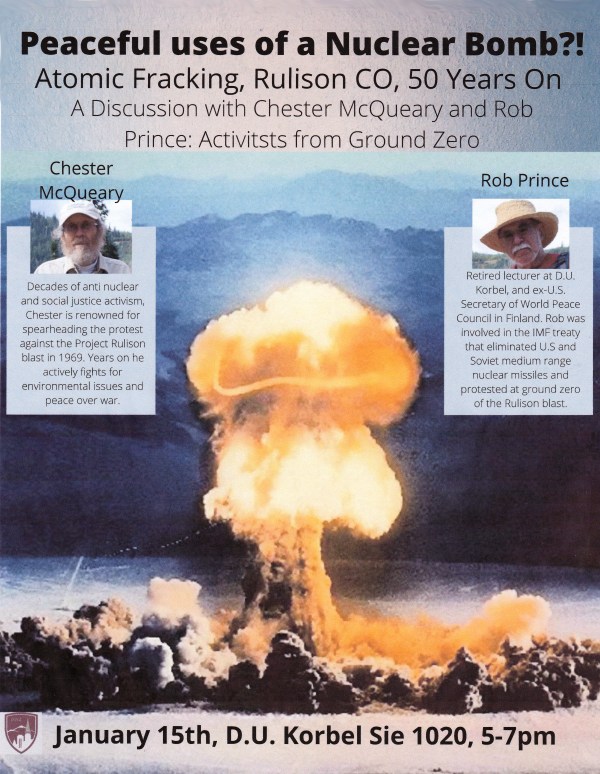
Nuclear Fracking in the Colorado Mountains in the early 1970s and the movement to prevent it.
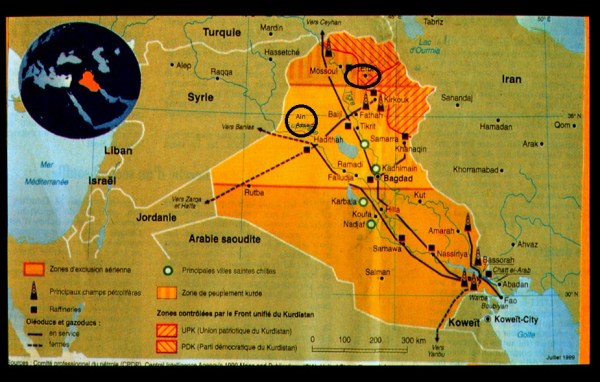
Two US military bases targeted by Iranian missile attack – January 7, 2020
____________________
Still, a bit of a retreat “from the brink”… temporarily.
What is missing is a turn in policy which would shift Washington’s emphasis from regime change in Iran to the normalizing of relations a la joint comprehensive plan of action… but then…we’re far from that. And then there is the question of an Iraqi response to the killing of one of its leading politicians, Abdul Mahdi al Muhandis.
That said from a broader perspective, the future of U.S. bases throughout the Middle East has just become increasingly precarious…
____________________
Again, in the spirit of not-too-long responses to the day’s events but some main points to help folk understand what is unfolding.
____________________
Did NOT have a very good night’s sleep worried about whether we’re headed for a major regional conflagration in the Middle East but decided it was useless to stay up all night getting updates and resisted the temptation to do so.
Will post on the consequences over the next few days. Am getting the sense that Trump greatly understated how damaging this Iranian missile attack was both militarily to the bases…and to U.S. political prestige. Let’s see what shakes out.
Bottom line: Trump blinked.
Last night – in response to a number of inquiries from friends and several others, I wrote the following on social media:
And we are committed to work for PEACE which now seems so far away. And in the end, that is what we have always done and will continue to do. But sometimes when it seems the furthest away, it is right around the corner. Maybe, maybe not.
Is it that “peace” is right around the corner? No, but…
But rather than a ratcheting up of tensions, both the Iranians and the Trump Administration are trying to cool down the situation.
- As if to bring the point home, this morning, Iran’s foreign minister, Javad Zarif, whom the Trump Administration has denied entry into the country to address the UN General Assemby , was quick to announce that “Iran says it has concluded its response to the U.S. strike and does not seek escalation.”
- The more we learn about the missile strike, the more likely it was big on symbolism (ie – see, we can hit your military bases hundreds of miles away) but light on firepower. There are already initial reports that the actual bombs in the missiles purposely had no explosive power to minimize damage. Some of the missiles landed near and not in the U.S. bases. Consider that in September Iranian missile technology was accurate enough to bring down a major U.S. communication drone while avoiding a plane full of high level U.S. officers.
Considered what the Iranians could have done…this was from a military viewpoint a mild response, but a highly political one.
It underlines the beginning of a political campaign to remove U.S. bases and military personnel from the Middle East. It focuses the world’s attention on the network of bases, the U.S. naval fleet in the region and makes it very clear that all this forward basing in the Middle East has a flip side to it as the bases and U.S. military personnel become easy targets not just for Iranian missiles but for the growing complex of anti-American movements throughout the region.
As for the Trump Administration response:
Surprisingly to me – President Trump did not turn to the air waves and issue some kind of bombastic statement. To the contrary, like his Iranian counterpart, Zarif, Trump simply tweeted “All is well.”
Then, surrounded by gang of Christian-Zionist, Neo-cons and Pentagon folks – add Netanyahu types and there, in a nutshell is his base – this morning Trump delivered disconnected response to the Iranian missile attack the main points of which were – after the usual chest beating and distortions of Iranian intentions:
– Well… it appears – no escalation. of course positive; maybe I’ll sleep better tonight
– Trump intends to increase sanctions (what is left? has he found a way to cut off the air Iranians are breathing?) …
– Through the bombast, or in spite of it, it appears that rather escalate the U.S. military role in the region that Trump is at least suggesting (at the same time he’s sending more troops and jet bombers to the region) that he wants to extricate the U.S. from Middle East – turn the mess – mostly U.S. manufactured – over to the Europeans (while still making the strategic decisions) through NATO… which as you know he’s kicked around quite a bit.
– Still, a bit of a retreat “from the brink”… temporarily.
What is missing is a turn in policy which would shift Washington’s emphasis from regime change in Iran to the normalizing of relations a la joint comprehensive plan of action… but then…we’re far from that. And then there is the question of an Iraqi response to the killing of one of its leading politicians, Abdul Mahdi al Muhandis.
That said from a broader perspective, the future of U.S. bases throughout the Middle East has just become increasingly precarious…
Film Showing – 1948: Creation and Catastrophe: A Documentary About the Israeli-Palestinian Conflict
Sunday, January 12, 2020
3-5 pm
Augustina Lutheran Church
5000 E. Alameda at Fairfax, Denver
please use the Fairfax Street entrance

sponsored by Sabeel – Colorado. http://sabeelcolorado.org
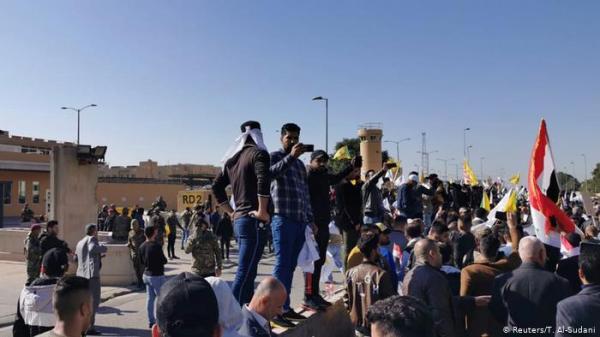
Iraqis Storming the US Embassy in protest of Trump’s assassination of Iranian General Qassim Suleimani and Iraqi Popular Mobilization Forces leader Abu Mahdi al Muhandis
________________________________
Bartlett relates that in testimony before the Iraqi Parliament – prior to its vote calling for the removal of U.S. troops from Iraq – the country’s former Prime Minister, Abdul Mahdi, commented that Trump threatened to have US marines snipers fire at protesters if he refuses to cancel a major trade agreement with China. He also said that Trump threatened to have him & the defense minister killed.
The subtlety of Al Capone. No, Capone would have been more “poetic”.
________________________________
Washington’s Political Insane Asylum
Every day a new revelation.
Interesting how during crises another truth – seems to get shaken loose and how the main stream media – the big guys – the TV networks, the New York Times, Washington Post etc. – try to shape the narrative. For the most part they apply what is referred to as “gray propaganda” – ie. they don’t exactly lie but emphasize or de-emphasize the truth as they see it in order to shape the narrative they would like the public to swallow. “Black” propaganda – a la Fox News and the like – they resort to outright lying no wholes barred.
Without spending one’s entire day filtering this and that news story, it is possible to glean a counter narrative – one closer to reality. There are useful sources – even on Facebook – and the internet in general that help deconstruct the untruths and exaggerations that bring into focus what is really going on. Also, especially but not uniquely with this president – it seems that the spats within the Administration go in opposite directions.
By way of examples:
– two days ago the president in his usual vile manner threatened to bomb 52 sites in Iran – among them the country’s cultural sites. The next day, in contradiction, the Pentagon said no, cultural sites would not be targets.
– similarly, there are wildly contradictory statements coming from the Administration and its Supreme Do Do Head concerning the drawing down of U.S. troops in Iraq.
State Department going one way, Defense another, the president tweeting whatever comes to mind and openly attacking the FBI (yesterday Trump referred to the FBI as “scum“), Trump says something one day, his own Pentagon contradicts him the next. Looks like a zoo, sounds like a zoo, feels like a zoo, smells like a zoo. Guess it’s a zoo. Read more…

from anti-war demonstration, Denver, Colorado – January 4, 2020.
______________________________
Bottom line: The Deplorables didn’t have a clue about the anger and anti-American sentiment that murdering Suleimani would unleash and now don’t have a clue as to how to deal with it. They are vaguely – at least some of them – aware that are in trouble, big time.
______________________________
The deplorables…
On a Skype call with an old friend from Finland.
She wants to hear – but doesn’t want to hear – about “the deplorables” – her metaphor for the Trump Administration and what the future holds for the Middle East. “No long, gory details,” she asks. “If its gonna get better I want to know, but it isn’t, is it?” she continues. How to answer in a few words – always difficult for me! But I remember what a Tunisian-Jew friend in Los Angeles told me about the Tunisian situation just after Ben Ali was overthrown: “First it’s gonna get worse…. and then it will get better.”
So I tried that. She was unimpressed.
The Deplorables? Good title for a rock band, less fitting, but unfortunately all to apt for the President of the United States, his cabinet and the Congress.
So, what ARE the Deplorables up to?
Well, I’m sure you can read or see many reports on what is unfolding. Again, more interested in some general trends than long complex analyses.
My take is that under the surface the Deplorables are running scared and are only now vaguely – it is never more than vaguely – coming to understand the consequences of having ordered the murder of Iranian General Qassim Suleimani.
As another friend poetically put it…”There’s the music and the math”…
On the one hand – as mentioned yesterday – Trump has publicly in a tweet threatened to bomb 52 cultural and religious sites in Iran if the Iranians refuse – through third parties – to negotiate with him, the Great Deplorable. To date, Kameni and company in Teheran have politely told the Great Deplorable to chuck it, as we used to say.
Today the Great Deplorable struck out at Iraq.
While his No 2 – Great Deplorable in Training – Mike Pompeo – blew off the Iraqi parliament’s resolution calling on the withdrawal of all foreign troops from their country – which includes 5000 or so U.S. troops and an untold number of private contractors (called mercenaries), in yet another “temper-temper” (as my daughters used to call tantrums when they were young), a day later, the Great Deplorable himself has “threatened to slap `very big’ sanctions on Iraq if it expels U.S. military forces from Iraq:
Trump told reporters that the U.S. would ignore Iraq’s calls for removal due to the “extraordinarily expensive air base that’s there.”
“We’re not leaving unless they pay us back for it,” he said, according to press pool reports. “If they do ask us to leave, if we don’t do it in a very friendly basis, we will charge them sanctions like they’ve never seen before ever.”
So much for “the music” – a discordant as it is – from the Great Deplorable.
Then there is the math…
- U.S naval ships – it has been reported in a number of Middle East news sources – their tails between their legs – are withdrawing from the Persian Gulf to places 1000 miles to the east in the Indian Ocean. They fear being targeted.
- The State Department has called on all Americans in Iraq to leave the country
- The Trump Administration is desperately, through a number of third parties, trying to negotiate with the Iranians. To date, the Iranians have rejected all these approaches. Truly bizarre proposals, one of which is that the U.S. would accept a revenge assassination of an American (general?) “of equal stature” to Suleimani. It is as if Trump is willing to “sacrifice” an American general and then call it “even.”
- With an eye on the 2020 presidential contest, Trump has had to compromise with the Democrats in Congress, promising not to go to war with Iran without Congressional consent.
- Meanwhile, in Iran and throughout the Middle East, sizable, no enormous crowds (tens? hundreds of thousands? several million) have taken to the streets to mourn Suleimani’s murder. If you think this is just “Iranian propaganda” or that it does not matter, or “what’s the big deal?” you are sadly mistaken.
Bottom line: The Deplorables didn’t have a clue about the anger and anti-American sentiment that murdering Suleimani would unleash and now don’t have a clue as to how to deal with it. They are vaguely – at least some of them – aware that are in trouble, big time.

____________________
Waste deep in the Big Muddy, but the big fool said to push on
____________________
Again as a reminder – just a daily update – of a mix of reflections on the heightening tensions triggered by the U.S. assassination of Iranian al Quds leader, Qassim Suleimani, that is being condemned more and more widely as an “act of war” (which it was).
First off, initial reports from friends in Minneapolis, New York City suggest that anti-war demonstrations in other places in the United States had a similar tone (youth led, angry, militant, anti-imperialist) as yesterday’s Denver demonstrations, and that the Denver was not unique. It probably helps that the maniac/moron/gangster Trump is the President Although peaceful and non-violent, the old “love your enemies” stuff just doesn’t seem to wash anymore.
What comes to mind today are three points.
First that the Trump Administration has gone on the defensive internationally trying to tone down the impact of the assassination. Secondly that the American military has become “fair game” all over the region… and it can be expected that there will be a “tick up” in the number of military personnel (and private contractors) returning home in coffins and body bags. Thirdly that the p. r. effort – crafted by organizations such as the Israeli-connected Foundation for the Defense of Democracy – to vilify Qassim Suleiman with the same brush as Saddam Hussein or Muammar Khadaffi is going nowhere abroad and fast unraveling after three days here in the United States.
1. Concerning Trump on the defensive…
In response to the overwhelmingly negative international opinion to the assassination, the Trump Administration is already, clearly on the defensive, so much so that Trump has asked for help from the same allies that he likes to shit on, the Europeans in particular, to act as mediators between Teheran and Washington.
– A veritable diplomatic stampede: Swiss, German, Omani, Kuwaiti, Qatari diplomats (and who knows? probably others) have been trying to intervene on Trump’s behalf in Teheran to no avail.
– According to one report, ever the deal maker, Trump has notified the Iranians that Washington would “accept” some kind of retaliatory attack “as long as it was proportional, ie, the assassination of an American of equal stature to Suleimani. Another report related a meeting between Qatari Deputy Prime Minister/Foreign Minister Abdulrahman al Thani and his Iranian counterpart, suggesting that Washington was offering “a nuclear deal” and lifting sanctions in exchange for no response.
Mixing the proverbial stick with the unconvincing carrot – and giving what is classic example of a mixed message – at the same time, should the Iranians refuse to negotiate Trump has threatened to bomb 52 cultural sites in Iran. As Jake Johnson noted in a post at Common Dreams:
Ordinary Iranians on Saturday responded to U.S. President Donald Trump’s monstrous threat to strike sites “important to Iran and the Iranian culture” with an outpouring of photos highlighting their favorite mosques, museums, monuments, and other stunning architecture.
2. Iran has refused to respond to any of these “offers” and has instead “raised the red flag” over its religious sites throughout Iran. In Shi’ite tradition”raising the red flag” symbolizing blood spilled unjustly and serves as a call to avenge the person slain.
What might that mean?
Frankly it is rather clear: all American military personal, as well as private contractors limited to the the broader region of the Middle East, have, over the past few days, become targets. Already there have been several missile attacks on U.S. positions in northwestern Iraq seemingly as a result. Only fools, members of Congress (both parties), the neo-Cons advising Donald Trump and the mainstream America media would ignore – or downplay – the warnings herein.
So…. get ready, get ready.
3. The rationale for the targeted assassination of Suleimani is unraveling and as one source puts it, is little more than a fairytale. After asserting that Suleimani was planning “imminent attacks” on U.S. military personnel or its interests in Iraq, more thoughtful commentators have noted that Washington, once again, has provided no evidence. More than likely because there is none.
The vilification of Suleimani – which has some traction in the U.S media – has virtually no support outside of the United States. Widespread media attempts to paint him as some kind of fanatic or mass murderer – another justification for the assassination – are going nowhere beyond the borders of the United States and are backfiring. Attempts to put him in the same category as Saddam Hussein or Muammar Khadaffi are not flying and will not – even if some left and peace movement types in the United States have bought in to this particular brand of cool aid.
To the contrary, the assassination has done what Washington has long feared: created a martyr and not just among Shi’ites for whom martyrdom has a special place (as it does, if you have forgotten, among Christians).
Hold on to your seat belts…
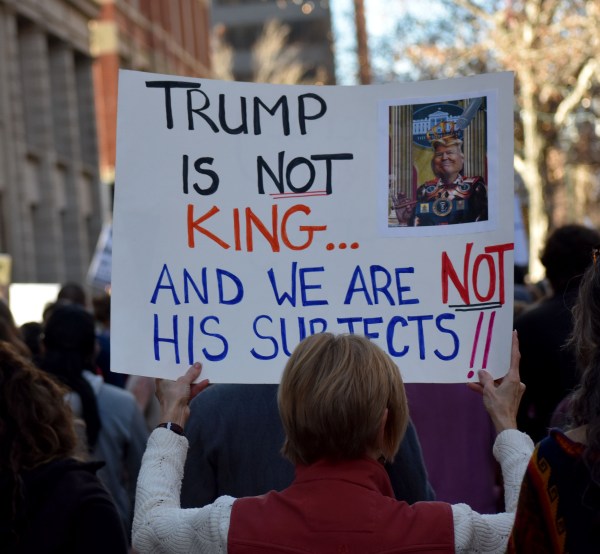
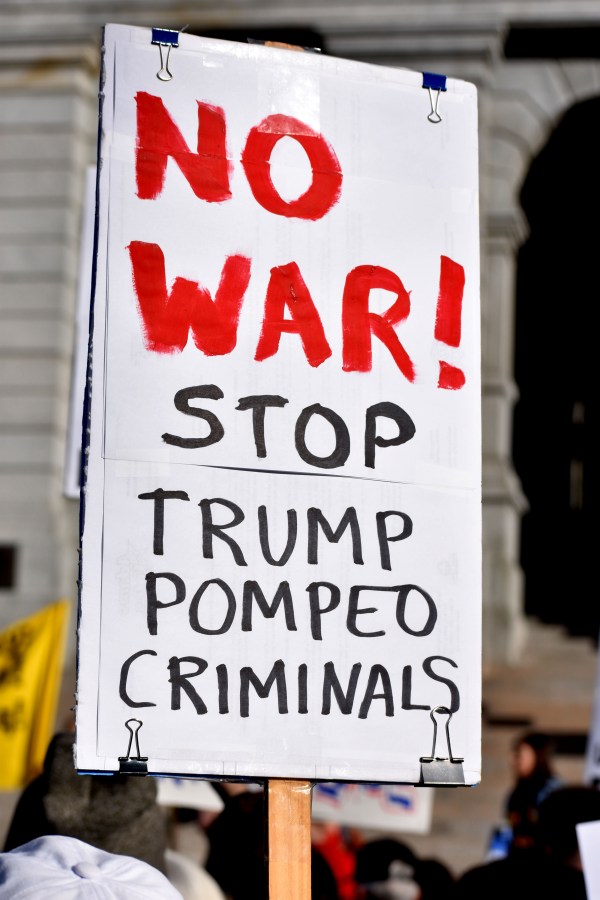
Anti-war protest sign. Denver, Colorado. January 4, 2020
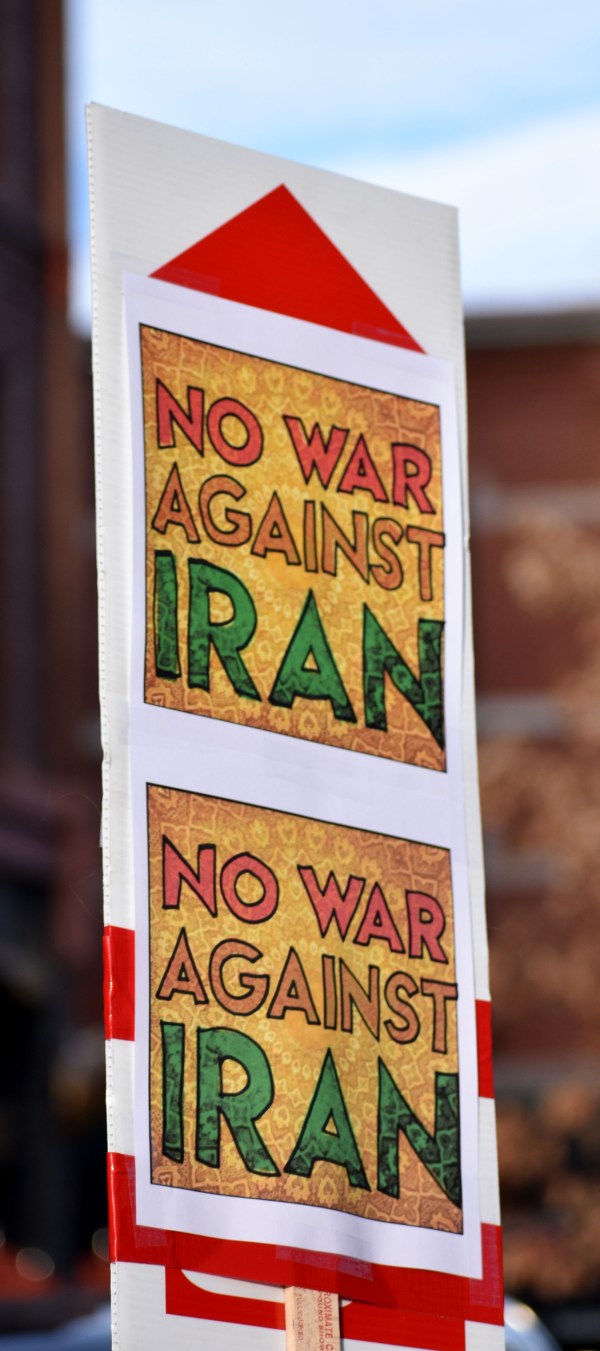
from Denver’s January 4, 2020 anti-war demonstration, one of about 80 throughout the U.S. that came together on two days’ notice
As war approaches, I feel a need to write every day… not long complex analyses, just elaborations on one point that I’ll try to keep less than 1000 words, admittedly a challenge. No doubt I am writing as much for myself as those who read this. I’m trying to figure out both what is going on – how close to a regional war have we come, and to assess the global movement against a U.S. attack against Iran.
Today I want to give some thoughts on the national anti-war demonstrations – some 75, 80 cities mobilized in two days – all over the country through what I saw in Denver.
Funny how Nancy and I can look at the same situation and have such different takes. She was disappointed with the turn out, I was quite satisfied. She would have liked to have seen it three, four times as big. I suppose I would have too, but while crowd estimates are not my strong point I do believe there were better than five hundred people who showed up on two day’s notice. A whole coalition of forces had come together overnight, some old some new. I wasn’t able to hear all the sponsors but it was a wide variety. The speeches were excellent – solid anti-imperialist militant stuff – on the mark and the young activists who spoke really knew their stuff and the ones I heard were very articulate and no-nonsense.
Something new is in the air… angry, militant, controlled, politically savvy and anti-war to its very core. Unafraid. I would not be surprised if the tone is any different anywhere else in the country. It probably helps that the maniac/moron/gangster Trump is the President.
They knew of what they spoke… bipartisan treachery, the lies being fed by the media like in 2003 before the Iraq invasion… the very rapacious nature of U.S. Middle East policy…and a genuine sympathy towards the Iranian people for the loss of their extraordinarily talented military leader, Qassim Suleimani. Main points were 1. nothing can justify a war against Iran 2. the U.S. should withdraw its troops from Iraq.. 3. How Trump announced a troop pullout from Syria at the same time there is actually a 14,000 troop build up through the Middle East.
These were the themes that dominated both the speeches, banners and posters.
More important that was the age spread. This was a youth-dominated event. This is a youth-led peace movement with a strong openly socialist component. By “youth” , again I am somewhat vague and uncertain but my sense was that most were under the age of 35. And while I couldn’t tell for sure, I had the distinct impression that that these youths – their futures in jeopardy from both climate change and nuclear war – are starting out far more militant than some of the previous episodes of peace movement building.
Of course there were some of “old timers” people who had demonstrated for peace and against U.S. foreign intervention since the 1960s, Nancy and I among them. My birdwatcher friend Henry Feldman, Pat McCormick of the Sisters’ of Loretto, Eric and Judy Danielson – Quakers with a lifetime of peace work behind them for the American Friends Service Committee, Jonathan Moyer from Korbel, Arnie Carter from the Oscar Romero Troop greeted us as did several people we had worked with in the Colorado Campaign for Middle East Peace and Priority Peace.
Tay Anderson, our newly elected Denver School Board member was also present. Nancy went up to him to say hello.
Among the presidential candidate signs were only two – some signs for Bernie Sanders and several for Tulsi Gabbard. There were no signs of Michael Bennet, Joe Biden or Pete Buttigieg’s supporters, nor those (few) gathering behind Michael Bloomberg’s presidential bid. One Trump supporter was present. He literally wrapped in a Trump banner weaved his way through the crowd, it seemed to me more to provoke the protesters present than to demonstrate against war himself. He was ignored.
But it was the new, young faces of the relative newcomers on the scene, from Democratic Socialists of America and the Party for Socialism and Liberation who spearheaded today’s events.

At the rally at the capitol steps in Denver…

Saudi oil field destroyed by Yemeni drone attack in September, 2019
____________________
My first impression was that the assassination was yet another U.S. (and/or Israeli) provocation made to incite an Iranian response that would provide the pretext for a major U.S.-Israeli-Saudi bombing campaign of Iran and that Iran would not take the bait and respond militarily and I have written along those lines already publicly.
Unfortunately, more and more this does not appear to be the case.
____________________
What a dangerous mess…as the United States and Iran head towards war. We in the United States have a responsibility to do everything in our power to prevent our government from – once again – lurking towards a regional Middle East war. In an effort to redirect the nation’s attention from his impeachment, Donald Trump has, in ok-ing the assassination of Iranian military leader Qassim Suleimani, dangerously ratcheted up the stakes for war.
Should it break out, it will be an “asymmetrical” conflict. The term “asymmetrical warfare” will be thrown around by the media to describe the growing likelihood of a Middle East war between the United States and Iran in the near future.
1.
What is “asymmetrical warfare?
Asymmetrical warfare is war between two (or more) nations in which one of the two is richer, more powerful economically and militarily, but that the weaker party finds the ways and means to fight back and in many cases, win. On the surface it appears that the materially weaker party (national liberation movement, Third World country) doesn’t stand a chance against the more militarily, economically and powerful core country (like the U.S., U.K., France). But the materially weaker party develops tactics that give it advantages over its much stronger adversary. Key, is the support the underdog has among the broader population, its base.
Some examples… Read more…
No to War with Iran! The Wounded Beast Syndrome…U.S. Assassinates Iranian General Qassim Suleimani in a Heliocopter Attack.
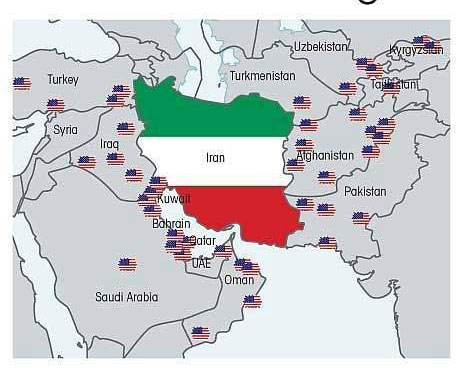
US bases around Iran. Who is threatening whom? Keep in mind these bases have just gone from military outposts…to targets.
1.
What is the wounded beast syndrome?
Based on the idea that a wounded beast will do whatever, act irrationally to save its life as it is dying. Applied to international politics it refers to the tendency of a nation whose policies are failing, to act irrationally and out of desperation to commit unpredictable and “irrational” acts to save its skin.
Kazerooni and I in our monthly radio program – KGNU – Hemispheres – Middle East Dialogues – have used the term to describe some of the zig-zags in U.S. (and Israeli) policy in the region.
Last night on returning from a family dinner that included good news on the personal front, and having watched our seven month old grandson’s latest developmental breakthrough (taking the glasses off of his aunt’s face, finding the wonders of dinner place mates) I made the mistake of turning on my computer to see the latest news.
There it was: In Baghdad, the United States had assassinated-by-helicopter Iranian General Qassim Suleimani, leader of that country’s Quds Force along with several top members Iraqi Shia militia leaders, including Iraqi militia commander Abu Mahdi al Muhandis.
Iran has promised retaliation at the time and date of its own choosing. Suleimani’s words will come back to haunt Washington: “The United States might start a war (with Iran), but we will finish it.”
2.
In any event it is not my purpose here to give detailed analyses of the situation. We (Kazerooni and I) will do so during our next one hour radio program, now scheduled for January 28. Besides there will be plenty of analyses out there that are solid and informative. I find the tendency to want to get “the first analysis” of events like this almost always shallow and off the mark. Here in the U.S. even solid anti-war analyses often miss what is happening in the Middle East region. Already, the day after this assassination, a whole series of regional shifts is taking place.
Also for those of you in Colorado – which is about half of the audience – I will update people with the anti-war demonstrations, forums, and other activities as I learn about them. I am certain there will be many and the peace movement here will flex its muscle once again as it will and must.
For now only a few comments to help people understand the current situation.
a. The United States (and Israel) has long been under the illusion that to assassinate the leader of an opposition movement will kill the movement. This is pure hubris. It is undoubtedly based on the experience of the 1960s and the dramatic assassinations of Martin Luther King Jr., Malcolm X, Fred Hampton, John F. Kennedy and his brother Bobby Kennedy, in the Congo, the torture, killing and boiling his body in acid of Patrice Lumumba.
However, It no longer works. And certainly doesn’t work in the Middle East.
– Obama – and his staff – watched as Special Forces moved in for the kill against Osama Bin Laden. Al Qaeda did not collapse, but morphed into more sophisticated, lethal forms that we are still dealing with.
– The Israelis assassinated what was the early leader of Hezbollah in Lebanon, the sophisticated and wiley, Abbas al Musawi in 1992; Hezbollah immediately produced the even more sophisticated and more wiley (or is it wilier?) Hasan Nasrallah, who fourteen years after Musawi’s death, in 2006,handed Israel is biggest military defeat in that nation’s history from which Tel Aviv is still reeling.
– The assassination – the cold blooded murder, without Congressional participation or approval – of Iran’s Suleimani – will not, as with the examples mentioned above, shift the regional power balance in any way in U.S. favor.
To the contrary.
b. Suleimani’s assassination puts the U.S. military presence in the region in greater danger, much greater as Washington is scampering to withdraw U.S. personnel from the region. The fortress embassy in Baghdad is shutting down, with the U.S. ambassador there running for his life – an echo of a similar scene in Vietnam in 1975.
Washington has troops and ships all over the region, not just in Syria and Iraq, some known others secret. Add to this an even larger number of U.S. “private contractors”, otherwise known as mercenaries. All of them have now become prime targets and not just from the Iranians. There are too many of them in too many places for Washington to withdraw them. In the weeks and months ahead, watch how members of the U.S. armed forces in the Middle East return to the country in body bags.
Finally, these assassinations (remember there were high level Iraqis killed too) over night changed the political situation in Iraq itself. Using the finely honed methodology of Gene Sharp the United States appeared to have undermined to a certain degree Iran’s position in Iraq, splitting the country once again along religious and sectarian lines over issues of domestic corruption, etc. That is now history as Iraqis are beginning to unite against the U.S. military presence and on-gong occupation.
This is enough for now. I won’t do daily updates but will try to offer some insights to help people understand the growing crisis.
- Most people know the basics – any war between the United States (and Israel) against Iran should be prevented. It must be stopped before it is started
- We (the American people) have been lied to before and are being lied to again. Stay tuned for details. Let us resist ALL media cheer-leading for war.
- And obviously, time to hit the streets, to contact our weak, morally bankrupt legislators who passed the largest military budget in U.S. history and to call for cutting – slicing that military budget to address the mounting problems at home…
To Peace with Justice…In the Middle East and everywhere. To a new, more humane U.S. foreign policy!
Onward to peace!
__________
“Gene Sharp Peace Theorizing and the Arab Spring: Tool for Societal Transformation…or the Road to Nowhere?” Part Two
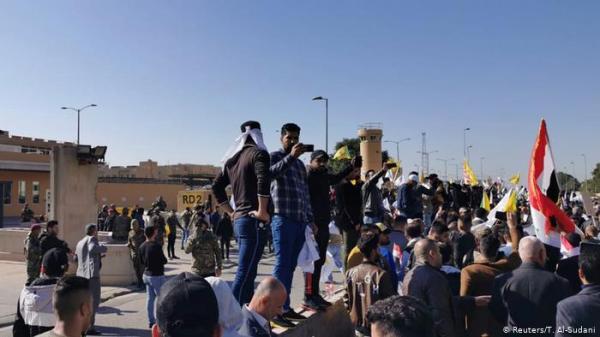
In the aftermath of a series of U.S. attacks on Iraqi positions Ka’ataib Hezbollah (no relationship to the Lebanese “Hezbollah) positions, that killed scores and wounded more, Iraqis storm the U.S. Embassy in Baghdad.
Transcript – KGNU – Hemispheres, Middle East Dialogue – December 31, 2019 – Continued – Part One.
“Gene Sharp Peace Theorizing and the Arab Spring: Tool for Societal Transformation…or the Road to Nowhere?” – Continued. with Ibrahim Kazerooni and Rob Prince. KGNU 1390 AM, 88.5 FM – Hemispheres, Middle East Dialogues. Tuesday, December 31, 2019. 6 pm Mountain Time.
______________________________
Note: The first part of this two hour probe of the work of Gene Sharp aired on Christmas Eve, December 24. A second segment, pre-recorded a few days prior to New Years’ Eve, aired on December 31. In it Ibrahim Kazerooni and I continue to analyze the work of Gene Sharp. In this segment of the interview, Kazerooni goes into depth concerning Gene Sharp’s role in shaping U.S. Cold War policy. In a further segment that will appear in the next few days, I look at how Sharp’s work was somewhat reshaped to address Pentagon-C.I.A. thinking in the post-Cold War era, most especially in the Middle East.
______________________________
We would like to focus on the role of Gene Sharp himself and how he developed his ideas, and the context in which these ideas were developed. Thirty five years of working in an institution that is considered to be the bastion of the Central Intelligence Agency (C.I.A.) as well as the defense industry created its own unique ontology or world view
People who interpret Gene Sharp coming from the Left, activists and people involved in social movements – they really don’t address and interrogate this unique ontological or worldview. So this remains hidden. Nobody talks about it.
- Ibrahim Kazerooni
So the C.I.A. tries to re-invent itself. This comes after Philip Agee’s exposes (and that of others) of C.I.A. crimes in Latin America and elsewhere. The C.I.A. is already associated with assassination, torture, the overthrow of governments. The C.I.A. is now trying to clean up its image and trying to recreate the illusion that it’s just an intelligence gathering agency that does “good deeds.”
- Rob Prince
We continue with our analysis of Gene Sharp’s connections to the U.S. defense and intelligence establishments.
Rob Prince: I was thinking of a title for this discussion. I’d call it “the United States use of plausible deniability in its Middle East policies and actions”, ie – that given the complexity of the goings on in the region, that Washington tries to deny its ultimate responsibility for its policies and their consequences.
During the war in Vietnam there was no question that the United States had invaded Vietnam militarily and on a massive level. No question about it. Half a million U.S. troops were there. Today there are more and more situations where the role of the United States is less obvious, more difficult to tease out.
For example, one could ask, what is the role of the United States is playing in Syria, Lebanon and the rest of the (Middle East) region? It’s more difficult to see the connections between U.S. policy and what is happening on the ground. It gives the United States a pretext to argue that it is not spearheading the efforts to overthrow governments referred to as regime change. This permits Washington to hide behind what is referred to as “plausible deniability” – its the approach that the United States has used in recent decades.
With that, we wanted to start off with Ibrahim briefly reviewing some of the main points that we developed in the last program. And then I’ll pick it up from there.
Ibrahim Kazerooni: I would like to start by reminding listeners of the same statement made in the last program – that we both agreed on – that our assessment and analysis of Gene Sharp, and particularly his work at the Albert Einstein Institute, is not, at this stage, a critique of non-violent civil disobedience per se. As a strategy non-violent civil disobedience has its own unique political benefit if applied correctly. Read more…

Damascus, Syria – 19th century. It was here in Syria that contemporary U.S. plans to partition Syria (the Doha Protocols) were stopped dead in its tracks. (photo credit: Ottoman Imperial Archives)
Transcript – KGNU – Hemispheres, Middle East Dialogue – December 24, 2019 – Part Three.
“Gene Sharp Peace Theorizing and the Arab Spring: Tool for Societal Transformation…or the Road to Nowhere?” with Ibrahim Kazerooni and Rob Prince. KGNU 1390 AM, 88.5 FM – Hemispheres, Middle East Dialogues. Tuesday, December 24, 2019. 6 pm Mountain Time.
Continued from Part One, Part Two
____________________
What we have now is that OTPOR has become an institution that is controlled by the Albert Einstein Institute and supported by all the defense and security institutions (C.I.A and others), the defense establishment. Now they are going around the world training people, to undermine governments, to destabilize their governments to bring the government down.
One of the characteristics of Gene Sharp – although he talks about the downfall of governments he is silent about what is brought about after the regime falls.
– Ibrahim Kazerooni –
What kind of social change is it that Abrams is so enthusiastic about?
And it wasn’t just Elliot Abrams. If you look at the neo-liberal thinkers in 2009-2010, they are actively involved in supporting the Tunisian demonstrations, in turning against their friend Ben Ali whom they had supported for several decades.
– Rob Prince –
____________________
Rob Prince: Ibrahim, let me add something at this point.
When the Arab Spring began, I noticed that there were some rather curious figures who were cheer-leading the changes in Tunisia, calling for the ousting of Zine Ben Ali. So for example one of them was Elliot Abrams. Those of you familiar with U.S. intervention in Central America in Nicaragua and El Salvador in particular know that Elliot Abrams was one of the key architects of those criminal actions – trying to overthrow the Sandinistas in Nicaragua and in fomenting the horrible war that took place in El Salvador both of which were supported by U.S. administrations of that decade (the 1980s).
Yet the same Elliot Abrams is calling for change in Tunisia in 2010-2011. What kind of change is it that Abrams is so enthusiastic about
And it wasn’t just Elliot Abrams. If you look at the neo-liberal thinkers in 2009-2010, they are actively involved in supporting the Tunisian demonstrations, in turning against their friend Ben Ali whom they had supported for several decades.
This right-wing support for change in Tunisia was for me a kind of epiphany, a wake up call. The question was: well, has Elliot Abrams changed? Has he become a Bernie Sanders left Democrat?
Or, is Elliot Abrams a part of some kind of movement in the United States that has worked out – in considerable detail – how to hijack social movements in the Third World?
Needless to say, as far as Elliot Abrams has concerned “the spots haven’t changed”; he’s the same neo-conservative he’s always been. The ultra-right has figured out and devised ways to use social movements to use social movements…. as if social movements are “sacred” – oh there is a social movement, it must be good, to turn them around and use social movements for their own right-wing ends.
It’s really insidious stuff. Read more…
The Algerian Presidential Elections: When the Food is Rotten, it is not Enough to Simply Change Spoons
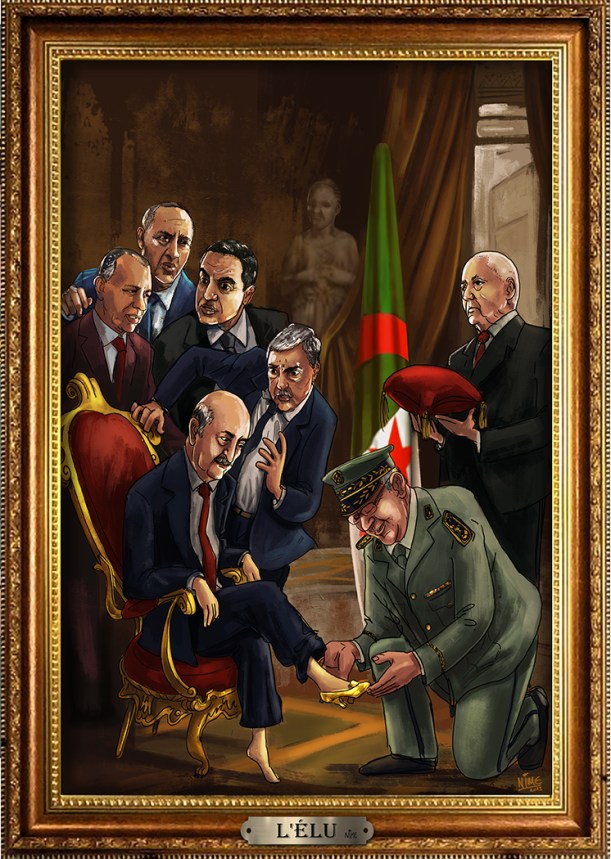
General Salah offering the golden slipper to Abdelmajid Tebboune, Algeria’s recently elected president
The Algerian Presidential Elections: When the Food is Rotten, it is not Enough to Simply Change Spoons
by Robert Prince
________________________________
Pressured by foreign energy companies, the Algerian military, the de facto government during this transition period, pushed the country into earlier elections with milquetoast candidates, all connected to the former discredited and corrupt Bouteflika government. In so doing, the military was trying to insure the new government would stand behind a new hydrocarbon law that gives foreign oil and natural gas companies much greater control over Algerian energy production.
“When food is rotten, it is not enough to simply change spoons”
– slogan on an Algerian protest banner –
________________________________
Originally published at Inside Arabia; also published at Algeria Watch
1. The Election, a Masquerade?
On December 12, 2019, Algerians, at least some of them, elected a new president. A former prime minister of the Bouteflika years, 74 year old Abdelmajid Tebboune, was declared the country’s new president. Voter turnout, at a modest 40%, was the lowest in the country’s post-colonial electoral history.
This election failed to even begin to meet the aspirations of the Algerian people. Instead the country got recycled Bouteflikists to a man. It was a strange election with all five “approved” candidates directly, if not intimately connected to Algeria’s “old government,” that of Abdelaziz aBouteflika and his entourage. Not a new face, nor a new idea among the lot. What a motley crew!
The election left many Algerians with an empty feeling that in no way did justice to the powerful protest movement active over the past nine monthsq. Often in the hundred thousands, sometimes in the millions, they’ve been on the streets every Tuesday and Friday since last February in Algiers, Oran, Tizi Ouzi, Ourgla, Ghardaïa and Tamanrasset all calling for an end to one of the world’s most corrupt, ruthless governments Read more…
 View from the Left Bank: Rob Prince's Blog