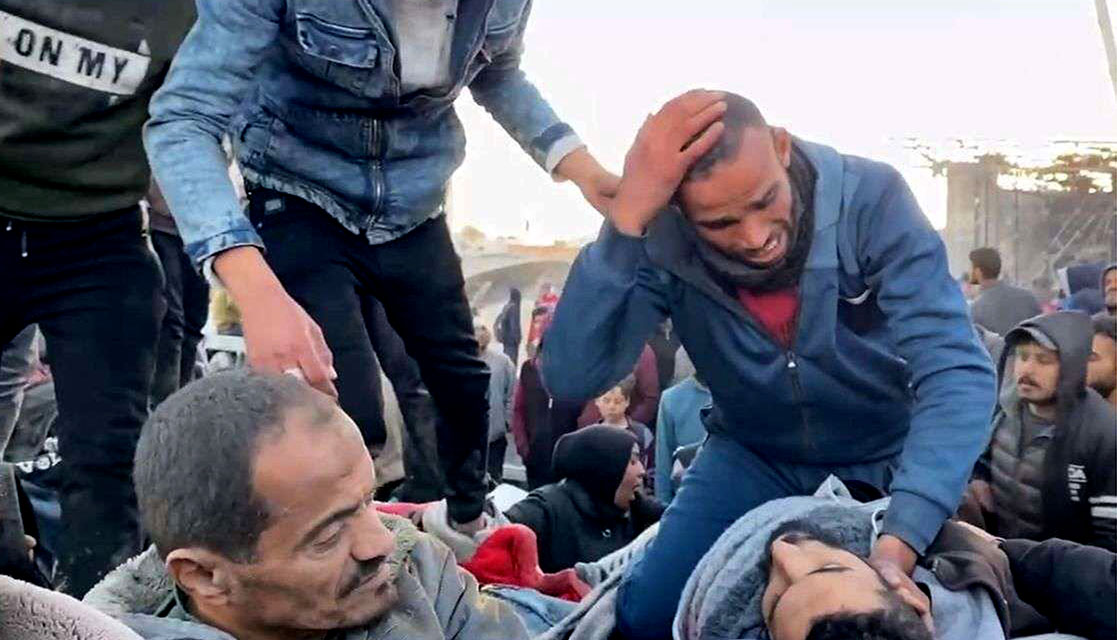
 n Gaza.
Beit Ummar News. IDF destroys a seven story residential building on the grounds that “it poses a security threat to nearby settlements”

International volunteers working on a garden in Beit Ummar
(Beit Ummar is a town in the West Bank that we at the Center for Freedom and Justice Colorado have an informal sister city relationship with. The report just below is a typical and almost daily occurrence in Palestine where land seizures, expropriation of property to further Zionist colonial ethnic cleansing policies continue at an intensified pace. rjp)
In the early morning hours of April 21, 2025, Israeli military forces carried out a large-scale demolition operation in the town of Beit Ummar, located in the southern West Bank. At approximately 6:00 AM, residents were startled as three bulldozers and over 15 military jeeps entered the neighborhood and surrounded a seven-story residential building owned by Mohammad Alqam.
The building, which was home to multiple families, was demolished under the pretext of “posing a security threat to nearby Israeli settlements or military forces.” Residents of the area were forcibly evacuated, and all access to the site was blocked during the operation. The demolition began from the top floors downward and took approximately six hours to complete.
Human Impact:
The owner of the building, Mohammad Alqam, suffered a severe psychological shock upon witnessing the destruction of his life’s work.
This sudden and aggressive military action left families displaced, and the entire community in deep shock and fear. The operation was conducted without prior notice
and with excessive military presence, creating an atmosphere of intimidation and collective punishment.
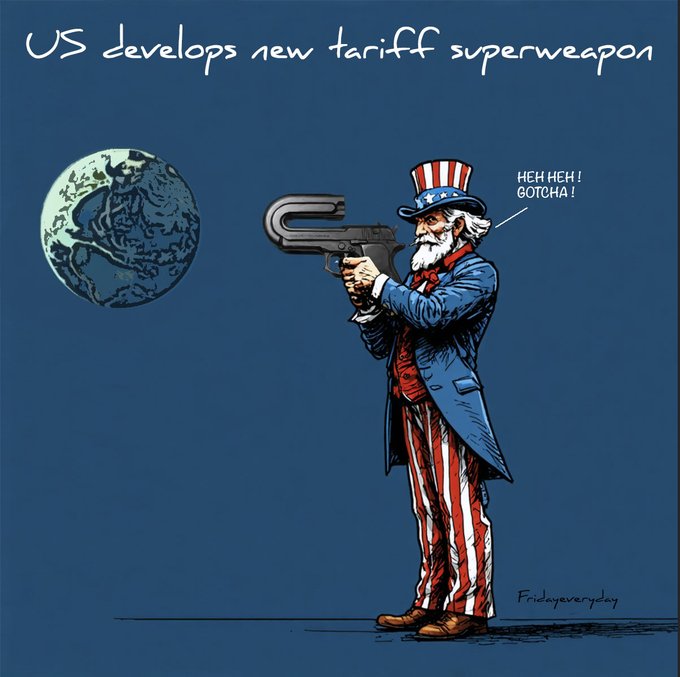 (This is a long piece, a mapping of Trump’s domestic and foreign policy team. It needs to be studied over time and not swallowed in one big gulp. It is a useful guide from where I’m sitting. It helps us understand why and how Trump always seems to be contradicting himself from one day to the next. In part it is because he is speaking to different threads of the political base he is attempting to forge into a coherent policy. He gives the different elements a crumb and then either develops the theme or moves on to something else if the resistance to the proposal is too strong. Ultimately it is Trump himself with perhaps one or two key advisers who decide which way to go. By following his statements closely one can tease out a good part of the time – to whom he is speaking and why. My own sense is that these political trends are close to irreconcilable but they are all, for the moment singing the same song: “All We Are Saying Is Give Trump A Chance”.RJP)
Peoples Dispatch
Trump’s nationalist conservative white Christian agenda
Trump’s cabinet and close circle is a mix of far-right ideologues, tech libertarians, and anti-China hawks. From Peter Thiel to JD Vance, here’s a breakdown of the factions shaping US policy.
March 03, 2025 by Deborah Veneziale
The Trump-orchestrated blitzkrieg exposition of a Nationalist Conservative White Christian Agenda (NCWCA) has recently shocked Europe. Outside the US, natural questions emerge: What are the internal contradictions within the US ruling class that have given rise to recent developments? What are the underlying changes within the base and superstructure of the United States? What are the long-term ideological and political consequences on US Foreign Policy? How should the Global South respond?
The following is a short note to help start addressing these questions. We begin by analyzing the forces surrounding the US Presidency and the US national security apparatus. Then, we examine some possible impacts on foreign policy.
The Trump Camp as of mid-February 2025
The Trump camp is conducting an exceptionally well-planned attack on significant parts of the US state apparatus (including the now explicitly fully sullied and exposed USAID) and is displaying its contempt for the European elite.
Trump now has an army of MAGA think tanks behind him.1 The America First Policy Institute (AFPI) and the Center for Renewing America (CRA) dominated the pre-inauguration planning and “Trump 47”, Trump’s agenda for his second presidency. Vought, Rollins, and Trump policy chief Stephen Miller all joined the Trump 2 administration. CRA and AFPI advocate far more aggressive uses of executive power to purge the bureaucracy. The new agenda is considerably to the right of the older Heritage Foundation, whose role was deprecated. Trump even distanced himself from Project 25, a dangerous plan to obliterate opponents of US foreign policy.2 The essence of both MAGA and Trump is nationalist with conservative white Christian characteristics.
The Trump camp (the official administration and his coterie of influencers and informal advisors) encompasses several factions, sometimes overlapping, each with its own policies and contradictions. As indicated by Vance’s speech in Munich, this is a very ideological group, with Trump as the least ideological. Susie Wiles, White House Chief of Staff, is an effective, long-term, right-wing, trusted Republican operator who helps ensure that Trump 2 is far more organized than Trump 1. Of the forty core members of the Trump camp we analyzed, nine have publicly expressed support for Christian Zionism.3 Six have affiliations or general alignment with Christian Zionist causes.4 All are subservient to Trump’s will at this point.
Although Trump now has control of the steering wheel, MAGA is a broader “movement” and a cacophony of voices, including anti-woke, anti-cultural elites, pro-soldier, anti-intellectual, nationalist, and anti-immigration. Some of its rhetoric is, at times, anti-US interventionist and anti-“deep state”. Read more…
Joe Lauria: The Imperial Presidency Marches On

John Gast, American Progress, 1872. Wikimedia. I did see this painting, not sure it was a copy or the original in a trucking museum in Nebraska City Nebraska. That said, there is nothing either “manifest” or “destined” about U.S. hegemonic power. It appears to be gong the way of all hegemonies; it had is impressive rise and now, an even more impressive decline that we are living though.

Democrats’ Militarism Paved The Way For Trump
MARCH 11, 2025
IN ACTION
Democrats in Congress have long denounced Trump as an enemy of democracy, but they haven’t put any sort of brake on American militarism.
By Norman Solomon, The Nation
Donald Trump’s power has thrived on the economics, politics, and culture of war. The runaway militarism of the last quarter-century was a crucial factor in making President Trump possible, even if it goes virtually unmentioned in mainstream media and political discourse. That silence is particularly notable among Democratic leaders, who have routinely joined in bipartisan messaging to boost the warfare state that fueled the rise of Trumpism.
Trump first ran for president nearly a decade and a half after the “Global War on Terror” began in the wake of the 9/11 attacks. The crusade’s allure had worn off. The national mood was markedly different than in the era when President George W. Bush insisted that “our responsibility” was to “rid the world of evil.”
Working-class Americans had more modest goals for their government. Distress festered as income inequality widened and economic hardships worsened, while federal spending on war, the Pentagon budget, and the “national security” state continued to zoom upward. Even though the domestic effects of protracted warfare were proving to be enormous, multilayered, and deeply alienating, elites in Washington scarcely seemed to notice.
Donald Trump, however, did notice.
Pundits were shocked in 2015 when Trump mocked the war record of Republican Senator John McCain. The usual partisan paradigms were further upended during the 2016 presidential campaign when Trump denounced his opponent, Hillary Clinton, as “trigger happy.” He had a point. McCain, Clinton, and their cohort weren’t tired of US warfare—in fact, they kept glorifying it—but many in non-affluent communities had grown sick of its stateside consequences.
Repeated deployments of Americans to war zones had taken their toll. The physical and emotional wounds of returning troops were widespread. And while politicians were fond of waxing eloquent about “the fallen,” the continual massive spending for war and preparations for more of it depleted badly needed resources at home.
Status-Quo Militarism
President Barack Obama and Hillary Clinton represented the status quo that Trump ran against and defeated. Like them, he was completely insulated from the harsh boomerang effects of the warfare state. Unlike them, he sensed how to effectively exploit the discontent and anger it was causing.
Obama was not clueless. He acknowledged some downsides to endless war in a much-praised speech during his second term in office. “Our systematic effort to dismantle terrorist organizations must continue,” he affirmed at the National Defense University. “But this war, like all wars, must end. That’s what history advises. That’s what our democracy demands.” Read more…
Victor Hugo On “Getting Old?”

Victor Hugo Museum. Paris. December, 2006 with Nancy
(Just stumbled across this; if the shoe fits, wear it – and it does. RJP)

The Zelensky Tango: A Dance on the Road to Nowhere.
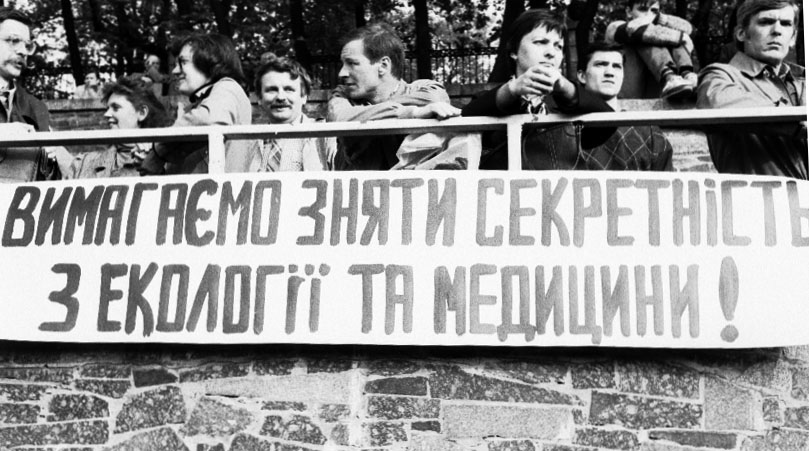
This is a photo from a nationalist rally in Kiev that I happened upon completely by accident. I thought people were going to a soccer match and just followed them into the stadium, which was filled to the brim. The immediate demand – more honestly about Chernobyl; the deeper goal – independence from the USSR. I was told by an English speaking spectator that there were probably 100,000 people there. The spirit in the stadium was militant. It was a sobering moment when I understood that more than likely, the USSR had no future.
So many of you – my family, friends, political allies – cheer on Zelensky.
As many of you know, I’m not with you on this one. He is no hero to me; to the contrary. That said. what I want to point out is something quite different.
It is a GOOD THING that the United States and Russia are exploring the possibility of opening up diplomatic ties with each other
– the first step in a three step process. This one entails refilling the respective embassies and opening up traditional lines of communication cut off, mostly by Democratic presidents.
– The second step, if the process continues, is to explore resetting economic relations which I assume will include lifting most if not all sanctions.
– And the third step will be resolving SOME regional conflicts, including Ukraine. That will not happen for a while. it appears; and when it does, given the realities on the battlefield, Russia will call most, if not all the shots.
All this was done by – of all people Donald Trump.
No I didn’t vote for him (or for Biden – too much Gaza blood his hands) and I don’t support Trump at all.
It is simply a fact that it is Donald Trump, not Biden, nor Obama, nor Clinton (who really should be chastised for the role he played in the Ukraine deterioration) who has reopened these lines of communication with Moscow, vital for world peace and for reducing global tensions. I simply acknowledge this fact and believe, among all the negative things Trump is doing, that this is a welcome initiative that I hope bears fruit.
Perhaps the two greatest nuclear weapons’ countries will get back to the business of working for nuclear disarmament, in a nuclear arms race currently out of control and mostly unnoticed. That would be nice.
Two last points.
1. the idea that Russia is about to invade Western Europe and swallow up the continent is utter nonsense. It neither has the forces, the strength, more more importantly, the will do so
2. I find the daily attacks on Putin – now little more than a punching bag not just for mainstream media but for sizeable sections of the U.S. Left – lamentable and frankly, that the current russophobia is, racist, a pretext to make it impossible for any major political figure here to call for nuclear disarmament or for opening lines of communication with Russia.
I did spend about ten days in Ukraine in April, 1989, of course just scratching the surface. I was there to help organize a conference between east and west to speak of the dangers of conventional war in Europe because of the presence throughout Europe of nuclear power plants to see nuclear power plants targeted in the Ukraine war – it turns out mostly if not entirely by the Ukrainians themselves – was that much more riveting. The trip included a bus trip to Chernobyl three years after the nuclear reactor exploded
There was no doubt in my mind at that time of the power of Ukrainian nationalism and the pervasive will to break from the USSR. It was a sobering moment. When Ukraine broke away from Moscow, I was not particularly surprised; I had seen the will of the Ukrainian people to go off on their own. I had hoped that Ukrainian nationalism would follow a political approach similar to which Finland had followed during the Cold War, that it would be neutral, a bridge between East and West. Needless to say Finland has since gone off the deep end and finds itself (happily) ensconced in NATO.
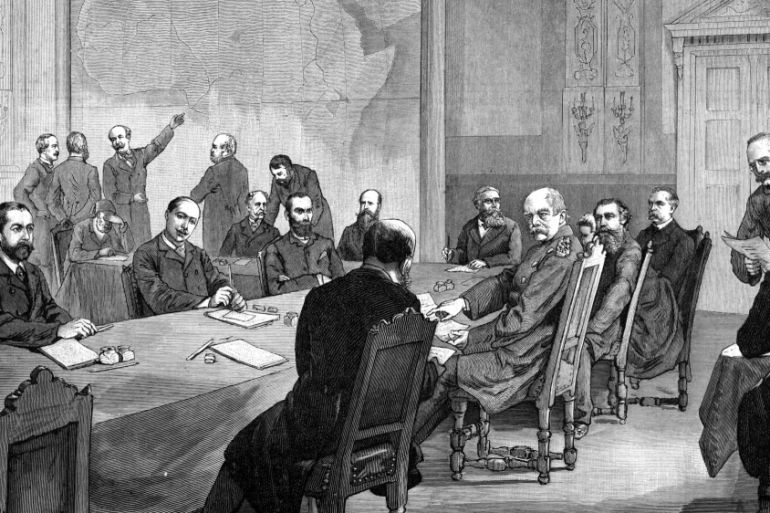
Partitioning Africa: The 1884-1885 Conference of Berlin
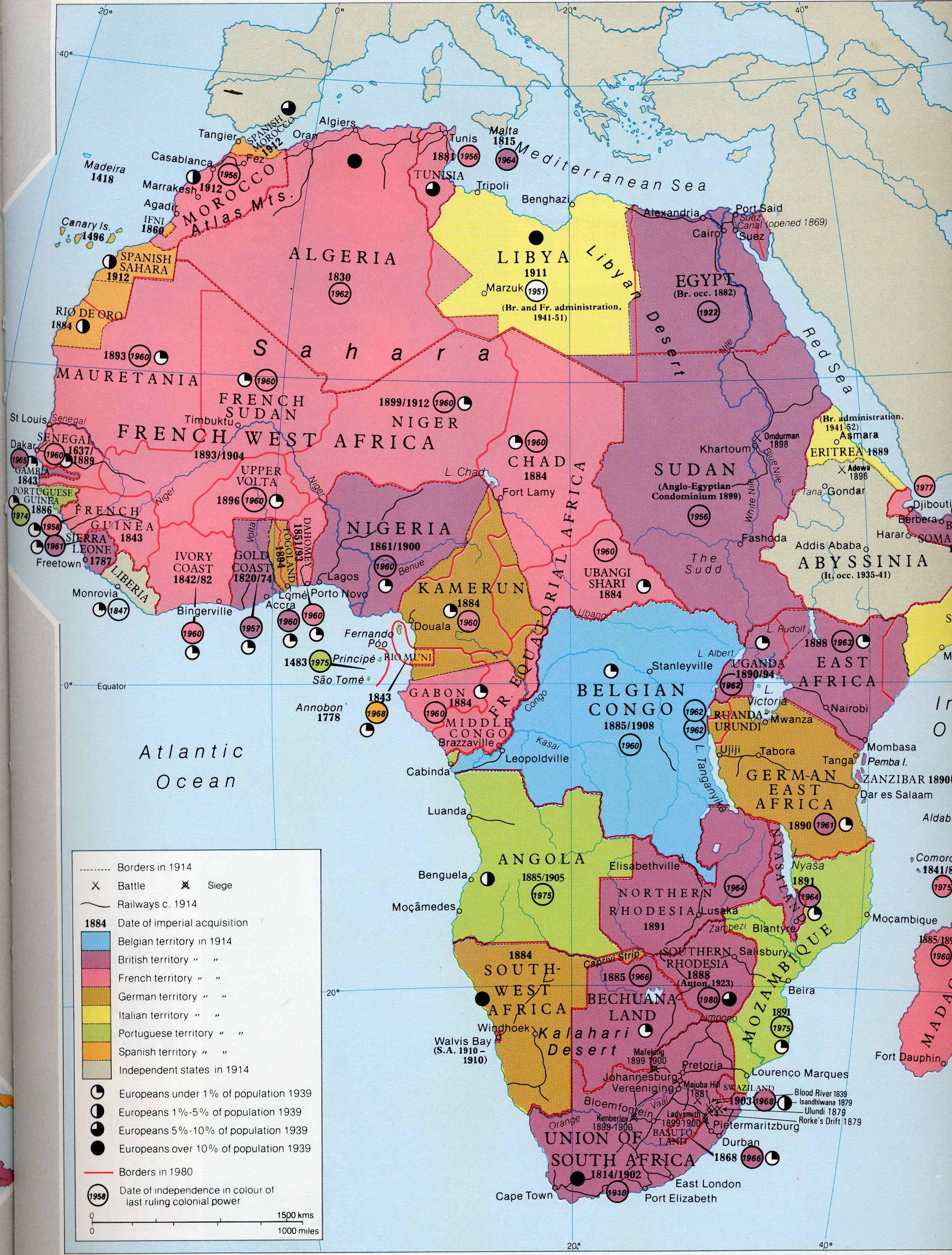
Africa raped and partitioned: the 1884-5 Congress of Berlin
_____________________________________
During the late 19th and early 20th centuries there were two international conferences which decided the fate of two of the world’s regions for more than a century: The Berlin Conference of 1884-1885 carved up Africa between rival European colonial powers (with no Africans represented) and what is referred to as the Sykes-Picot Agreement of 1917 that divided up the regional remains of the Ottoman Empire. In both cases, borders encircling what are today national entities, were created that had nothing to do with local/regional economic, political or cultural realities. The article below is a fine summary of one of them, the Berlin Conference of 1884-5). In both cases, fine examples of Colonialism and Neo-Colonialism in action.
_____________________________________
Colonising Africa: What happened at the Berlin Conference of 1884-1885?
This month marks 140 years since Western powers sidelined Africans and carved up ‘ownership’ of the continent among themselves.
More than the ongoing trade between the two continents that had run for decades, though, the Europeans wanted direct control of Africa’s natural resources. In addition, these countries aimed to “develop and civilise Africa”, according to documents from that period.
Squabbles soon erupted in Europe over who “owned” what. The French, for example, clashed with Britain over several West African territories, and again with King Leopold over Central African regions.
No African nations were invited or represented.

What was the Berlin Conference about?
In November 1884, German Chancellor Otto von Bismarck took up the task of calling for and hosting the conference in Berlin at the Reich Chancellery, his official residence on 77 William Street.
For months leading up to that, French officials, in missives to Bismarck, had raised worries about Britain’s gains, especially its control of Egypt and the Suez Canal transport route. Germany, too, was worried about conflicting areas with the British, such as Cameroon.
The Bismarck-led talks lasted from November 15, 1884 until February 26, 1885. On the agenda was the clear mapping and agreement of who owned which area. Regions of tax-free commerce and free navigation, particularly in the Congo and Niger River basins, were also to be clarified.
Who attended?
Ambassadors and diplomats from 14 countries were present at the meeting.
Belgium’s King Leopold also sent emissaries to secure recognition of the “International Congo Society”, an association formed to establish his personal control of the Congo Basin.
No African leader was present. A request by the Sultan of Zanzibar to attend was dismissed.
- Austria-Hungary
- Denmark
- Russia
- Italy
- Sweden-Norway
- Spain
- Netherlands
- Ottoman Empire (Turkey)
- United States of America (US)
What was the outcome?
Over three months of haggling, European leaders signed and ratified a General Act of 38 clauses that legalised and sealed the partition of Africa. The US ended up not signing the treaty because domestic politics at the time began to take an anti-imperialist turn.
- The colonising nations drew up a ragged patchwork of new African colonies, superimposed on existing “native” nations. However, many of the actual borders recognised today would be finalised at bilateral events after the conference, and following World War I (1914-1918) when the Ottoman and German Empires fell and lost their territories.
- In addition, the General Act internationalised free trade on the Congo and Niger River basins. It also recognised King Leopold’s International Congo Society which was controversial because some questioned its private property status. However, Leopold claimed he was carrying out humanitarian work. Areas that ended up under Leopold, known as the Congo Free State, would suffer some of the worst brutalities of colonisation, with hundreds of thousands worked to death on rubber plantations, or punished with limb amputations.
- Finally, the Act bound all parties to protect the “native tribes … their moral and material wellbeing”, as well as further suppress the Slave Trade which was officially abolished in 1807/1808, but which was still ongoing illegally. It also stated that merely staking flags on newly acquired territory would not be grounds for ownership, but that “effective occupation” meant successfully establishing administrative colonies in the regions.

Who ‘got’ which territories?
Western “ownership” of African territories was not finalised at the conference, but after several bilateral events that followed. Liberia was the only country not partitioned because it had gained independence from the US. Ethiopia was briefly invaded by Italy, but resisted colonisation for the most part. After the German and Ottoman empires fell following World War I, a map closer to what we now know as Africa would emerge.
- France: French West Africa (Senegal), French Sudan (Mali), Upper Volta (Burkina Faso), Mauritania, Federation of French Equatorial Africa (Gabon, Republic of the Congo, Chad, Central African Republic), French East Africa (Djibouti), French Guinea, Côte d’Ivoire, Dahomey (Benin), Niger, Tunisia, Algeria, Morocco, Libya
- Britain: Cape Colony (South Africa), Rhodesia (Zimbabwe), Bechuanaland Protectorate (Botswana), British East Africa (Kenya), Northern Rhodesia (Zambia), Nyasaland (Malawi), Royal Niger Company Territories (Nigeria), Gold Coast (Ghana), Anglo-Egyptian Sudan (Sudan), Egypt, British Somaliland (Somaliland)
- Portugal: Portuguese East Africa (Mozambique), Angola, Portuguese Guinea (Guinea-Bissau), Cape Verde
- Germany: German Southwest Africa (Namibia), German East Africa (Tanzania, Rwanda, Burundi), German Kamerun (Cameroon), Togoland (Togo)
- Belgium: Congo Free State (Democratic Republic of the Congo)
- Italy: Italian Somaliland (Somalia), Eritrea
- Spain: Equatorial Guinea (Rio Muni)
What did the conference change?
Historians point out that unlike what is widely believed, the Berlin Conference did not kick-start the colonisation process; instead, it accelerated it.
While only about 20 percent of Africa – mainly the coastal parts of the continent – had already been staked by European powers before the conference, by 1890, five years after it, about 90 percent of African territory was colonised, including inland nations.
But there are also those, like researcher Jack Paine, who say the conference itself was of little consequence: That some African countries were already mapped out in earlier expeditions, and that many of the borders we recognise now would not be formalised until much later.
“The Conference itself established little in the way of making states, with the lone exception of creating today’s Democratic Republic of the Congo,” Paine, a political studies lecturer at Emory University told Al Jazeera, referring to the then Congo Free State.
“The reason the conference convened in the first place was because Europeans had already initiated a ‘scramble’ for African territory,” he added. “It is difficult to give much credence to the standard idea that the Berlin Conference was a seminal event in the European partition of Africa.”

Paine, and many other political scientists, however, agree that colonisation determined the future of the continent in ways that continue to have profound geo-political effects on today’s Africa.
Even after African leaders successfully fought for independence and most countries became liberated between the 1950s and 1970s, building free nations was difficult due to the damage of colonisation, researchers say.
Because of colonialism, Africa “had acquired a legacy of political fragmentation that could neither be eliminated nor made to operate satisfactorily”, researchers Jan Nijman, Peter Muller and Harm de Blij wrote in their 1997 book Realms, Regions, and Concepts.
Following independence, civil wars broke out across the continent, and in many instances, caused armies to take power, for example in Nigeria and Ghana. Political theorists link that to the fact that most groups were forced to work together for the first time, causing conflict.
Meanwhile, military governments would continue to rule many countries for years, stunting political and economic development in ways that are still obvious today, scholars say. Former colonies such as Mali and Burkina Faso, both led by the military, have now turned against France because of perceived political interference they say is an example of neo-colonialism.
In a famous quote, Julius Nyerere, the former Tanzanian president, articulated what researchers agree is the current state of Africa: “We have artificial ‘nations’ carved out at the Berlin Conference in 1884, and today we are struggling to build these nations into stable units of human society … We are in danger of becoming the most Balkanised continent of the world.”
Jeffrey Sachs: The Geopolitics of Peace: A Speech to the European Parlimament. February 19, 2025
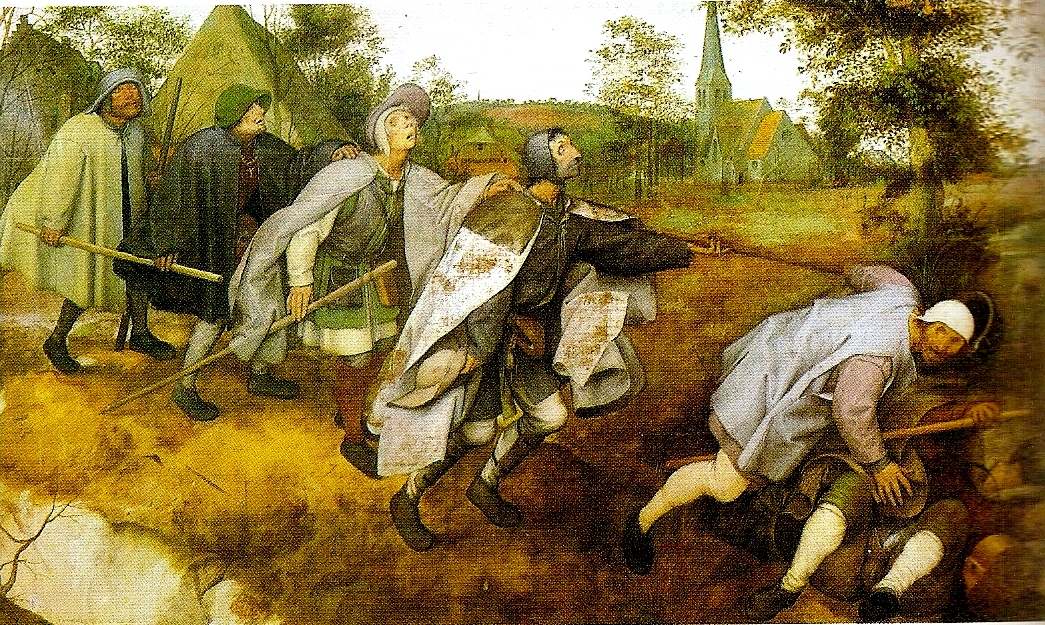
The Blind Leading The Blind by Bruegel the Elder: U.S.-European relations in the 2020s.
________________________________________
Jeffrey Sachs – Speech at EU Parliament. February 19, 2025
________________________________________
Having taught for my entire professional life, I can’t get over the habit of preparing lectures, classes even though it’s a full decade since I left the classroom. I’ll read an article or a book and wonder how it would play out in the classroom. Would the students be stimulated by it, bored, whatever? I was often surprised by the gap between what I thought they would appreciate and what the materials they were actually drawn to. In a humbling kind of way, it reminded me that the world I grew up in, in the 1950s and 1960s is so different from that of my students.
Why do I mention such nostalgia now?
Because having listened to Jeffrey Sachs’ recent speech before the European Parliament, I know, were I still in the classroom, that for every student in every global political economy class I taught at the University of Denver – Sachs’ remarks would be required reading, truly, from where I am sitting, a landmark moment in an unstable and fast evolving global economy. It was “a beaut”!
And then there is Sachs, the architect of economic shock therapy in the 1990s of the former Eastern European countries and the Soviet Union. Although I recently heard him try to pass the buck and blame the Russian economic crisis on the reluctance of the Clinton Administration to give Russia the strategic aid needed to turn the Russian economy, spiraling out of control at that time, back into equilibrium. Sachs claims that these policies worked in Poland, Hungary, the Czech Republic. I need to study those experiences to see if that is the case or merely his self defense. But in the case of Russia, there can be no doubt that Sachs’ shock therapy nearly destroyed post communist Russia in a decade … if not for the fact, that waking from his alcoholic-induced mental maize, Boris Yeltsin, had not turned over the management of the Russian state to one Vladimir Putin. Putin in the quarter of a century he has been in power turned Russia around economically and politically, a result for which he has earned the uncontrolled enmity of U.S. administrations from Clinton, to Obama, Trump, and Biden, and that of a brainwashed American public, including significant elements of the U.S. Left (that should know better but doesn’t).
All that seems to be history.
I really don’t know if Sachs’ current views are the result of some kind of epithany – ie, he woke up one day and decided everything he’d done was wrong, destabilizing and downright dangerous or if his conversion and political reorientation was a longer slow process. No matter, along with a precious few political economists that include Richard Wolff, Michael Hudson, a few younger, sharp political economists (Danny Haiphong, Ben Norton, Aaron Mate), Jeffrey Sachs stands out as a voice of both vision and practicality in this period of global instability between the relative decline of one hegemonic power, the USA and the emergence and rise of another, China.
In his remarks before the European Parliament, Sachs emphasized the following:
- That the collapse of the Soviet Union led U.S. policymakers to falsely believe that the world was theirs to do with what they wanted – and that rather than helping to rebuild Russia the plan was to destabilize it further along with overthrowing governments which interfered with U.S. global plans
- There would be no end to NATO expansion and that the old “neutrality” of the Cold War period, most vividly exemplified by Finnish post war foreign policy, was no longer acceptable. Countries are either “with” the United States or “against” it. NATO expansion into Eastern Europe to put further pressure on a weak Russia was the rule in place, followed assiduously.
- That a “Black Sea” strategy to destabilize Russia’s southern borders targeting Georgia and Ukraine for a special role in Russian destabilization was already underway. This Washington learned from 19th century British strategy to strangle Russia. In fact there are parallels between British anti-Russian strategy of that time and American strategy today.
- Despite promising no NATO expansion to Gorbachev, from the very beginning of the post Cold War era, Washington did everything possible to facilitate NATO expansion eastward, closer to the Russian borders.
- In Ukraine, this expansion led to the overthrow of the Ukrainian government of Yanukovych, the so-called Maidan “Revolution” (actually “counter” Revolution)
- Over the course of the past 34 years since the collapse of the USSR, the United States has trashed or let die basically all the agreements on U.S.-Russian nuclear disarmament. In using Ukraine as its proxy in the war to weaken Russia, Washington has gone far to destabilize Europe.
- Ending the war in Ukraine – which is, for all practical purposes, essentially over, with Russia having won a resounding (and not surprising) military victory, the opportunity to reorient U.S. foreign policy, particularly on Russia, is once again possible.
For much or all of these changes to happen, Europe itself has to change policy, to develop its own vision and approach to world affairs and no longer be an appendage to U.S. policy on the continent – or elsewhere.
________________________________________
Jeffrey Sachs: The Geopolitics of Peace – Speech to the European Parliament
Jeffrey D. Sachs is a University Professor and Director of the Center for Sustainable Development at Columbia University, where he directed The Earth Institute from 2002 until 2016. He is also President of the UN Sustainable Development Solutions Network and a commissioner of the UN Broadband Commission for Development. He has been advisor to three United Nations Secretaries-General, and currently serves as an SDG Advocate under Secretary-General Antonio Guterres.
Introduction Read more…
Ethiopia’s Deepening Crisis: Internal Conflicts, Regional Tensions, and a Refugee Struggle by Amanuel Biedemariam 2/22/2025

Taste of Ethiopia; Aurora Colorado. 2019. Horn of Africa’s 36,000+ in Colorado turn out for annual celebration. Their connection to their Ethiopian homeland cannot be underestimated.
______________________________
Ethiopia’s Deepening Crisis: Internal Conflicts, Regional Tensions, and a Refugee Struggle by Amanual Bidemariam. February 22, 2025
Ethiopia faces mounting crises, from internal insurgencies to worsening famine and regional isolation. With rising conflict and economic strain, the nation risks imminent collapse unless urgent action is taken
Introduction
Once seen as a beacon of stability in the Horn of Africa, Ethiopia’s True peace remains elusive despite a ceasefire in November 2022 between the Ethiopian government and the Tigrayan People’s Liberation Front (TPLF), which Waris is now facing mounting crises on multiple fronts. Despite a ceasefire in November 2022 between the Ethiopian government and the Tigrayan People’s Liberation Front (TPLF), true peace remains elusive. Instead, new conflicts have erupted within the country, food insecurity is at catastrophic levels, and Ethiopia’s role in regional tensions is growing. Meanwhile, Sudanese refugees who fled war are now struggling under Ethiopia’s restrictive visa policies, further compounding the humanitarian crisis.
Internal Unrest: A Country Fragmenting
The end of the Tigray War was supposed to usher in stability, but Ethiopia has become even more unstable. Since the ceasefire, a new insurgency has gained ground in the Amhara region, where armed groups have made governance increasingly difficult. In Oromia, Ethiopia’s most populous region, another ongoing rebellion continues to challenge federal authority. As a result, vast portions of the country have become dangerous and lawless, with civilians caught in the crossfire.
Beyond the violence, famine looms over northern Ethiopia, including Tigray, where millions are at risk of starvation. The United Nations estimates that 30 million people—one-quarter of Ethiopia’s population—need emergency food aid. Without significant intervention, the country could face one of the worst humanitarian disasters.
Regional Tensions: Ethiopia at Odds with Its Neighbors
Ethiopia’s domestic turmoil is spilling into the broader region, threatening to ignite wider conflicts. Prime Minister Abiy Ahmed’s government has escalated tensions with Somalia, become entangled in Sudan’s civil war, and even made threatening gestures toward Eritrea, a former ally in the Tigray war.
Rather than strengthening regional cooperation, Ethiopia’s actions have alienated it from its neighbors, including Egypt, Sudan, Eritrea, and Somalia. Instead of acting as a stabilizing force in the Horn of Africa, Ethiopia is actively working against the collective security interests of the region, further isolating itself.
Ethiopia’s foreign policy has become increasingly dependent on external actors while losing ground diplomatically within Africa. The UAE has emerged as Ethiopia’s primary military and financial backer, bolstering its military efforts while deepening its involvement in regional disputes. Turkey continues to supply Ethiopia with drones and other military equipment, even as it simultaneously provides military aid to Somalia. This dual approach underscores Ethiopia’s failure to build exclusive, long-term strategic alliances. Egypt, Sudan, and Eritrea view Ethiopia’s aggressive posture as a threat, further increasing tensions over the Grand Ethiopian Renaissance Dam (GERD) and territorial disputes.
By positioning itself as a tool for external powers rather than fostering African-led diplomacy, Ethiopia is isolating itself from the very region it needs for long-term stability.
The Sudanese Refugee Struggle in Ethiopia
As Ethiopia grapples with internal and regional instability, Sudanese refugees seeking safety are facing harsh conditions under restrictive government policies. After Sudan’s civil war erupted in April 2023, around 163,000 Sudanese refugees fled to Ethiopia. While Ethiopia has historically been praised for hosting over one million refugees, its policies toward Sudanese newcomers have been particularly severe.
In October 2023, Ethiopia introduced a $100 monthly visa renewal fee for Sudanese refugees living in urban areas, along with a $10 daily fine for overdue payments. Many refugees, having fled war with little to no resources, are unable to pay. As a result, some have been arrested and imprisoned for failing to renew their visas.
Those who cannot afford the fees are forced into hiding, avoiding the streets out of fear of detention. Others struggle to meet basic needs, resorting to informal and underpaid work to survive. A Sudanese refugee, a mother of four, expressed her hardship, stating that feeding herself and her children is her only concern. She takes on odd jobs to make ends meet, such as henna hand art and serving tea in a local restaurant courtyard.
While Ethiopia allows Sudanese refugees to live in designated camps without paying visa fees, camps in regions like Amhara have become unsafe, with reports of abductions, sexual violence, and attacks by militias. Many refugees prefer to stay in cities where they have better access to work and services, but without official refugee status, they remain vulnerable to exploitation and legal uncertainty.
Conclusion: A Nation on the Brink
Ethiopia’s challenges are compounding at an alarming rate. With multiple internal insurgencies, worsening famine, growing regional hostilities, and an increasingly repressive refugee policy, the country is facing a perfect storm of crises. If left unchecked, these issues could destabilize Ethiopia and the Horn of Africa.
For Ethiopia to avoid deeper catastrophe, urgent action is needed from its government and the international community. Addressing humanitarian needs, easing tensions with neighboring countries, and rethinking refugee policies must be top priorities. Otherwise, Ethiopia risks becoming the epicenter of a far greater regional disaster that could reverberate beyond the Horn of Africa and reshape the region’s geopolitical landscape.
Please support my work and get my latest book here.
Steigan.no (a Norwegian source): The US and Russia want to end the war in Ukraine. Is this the beginning of “Yalta II?

Yalta peace table where the structure of the post WW2 world was negotiated in February, 1945. Do we need a “Yalta II” today? I think so.
The US and Russia want to end the war in Ukraine
(translated from Norwegian with Google Translate)
What are Norway and the parliamentary parties doing now?
Trump and Putin had their first phone call on February 12, 2025. They want to end the war in Ukraine as quickly as possible.
US Secretary of Defense Pete Hegseth and US Secretary of State J.D. Vance have later elaborated and clarified the US position:
- Ukraine should not become a member of NATO.
- The US will not send troops to Ukraine, neither peacekeepers nor combatants.
- The US will not deliver or pay for weapons to prolong the war in Ukraine.
- Ukraine will not be able to regain the borders from before 2014. These are not realistic demands on Russia.
- NATO countries must increase their defense budgets to 5%, and take over the further warfare against Russia, if that is what they want
This came as a formidable shock to a large majority of Western leaders.
The panic is visible on their faces from all the emergency meetings in NATO, the EU and in the respective governments. Now they are asking that European leaders be allowed to participate in the negotiations. In various meetings with representatives from the Baltic countries and Ukraine, Støre and Barth Eide have assured that Norway will support and help Ukraine to a better negotiating position and demanded that both Europe and Ukraine be allowed to sit at the negotiating table because this concerns European security.
Shocked vassals
The US is now treating the leaders of the EU and NATO as what they have been and are, submissive vassals.
The US special envoy to Ukraine, General Keith Kellogg, has answered a question at a meeting in Munich whether he can assure that Ukraine will sit at the table in the upcoming peace negotiations, and that European leaders will also be allowed to sit at the same table. Kellogg answered as follows: “The answer to your last question is no. The answer to your first question is yes. Of course, Ukraine will be at the table.”
He then lectured the European leaders on “what this war really looks like” after 3 years of war. It is a reality orientation that is hard to swallow, for those who have built themselves a castle in the air based on misleading information over many years. Kellogg, like Defense Secretary Hegseth and Vice President Vance, says that the most important thing is to stop the war, and not prolong it until the last Ukrainian soldier falls. A lasting peace must be created. The United States is now disclaiming responsibility for the proxy war they have planned and financed up to now. Not unexpectedly, they are now kicking the ball over to their infidel vassals.
We also note that at the same meeting in Munich, the European leaders were reprimanded by Vance for censorship and rejecting democratic elections. He referred, among other things, to the elections in Romania. (Ref. Reuters 14 February 2025 “In Munich, Vance accuses European politicians of censoring free speech”). We can add that they have also boasted about manipulation, and said that they will do it again, if necessary. (Ref. EU Commissioner T Breton. CNews 9 Jan 2025).
The Western media image is cracking
After stopping the peace talks in Istanbul 3 years ago (Boris Johnsen et al. April 2022), the US, NATO and the EU have repeated and refined the narrative that Russia would be defeated militarily and economically, once and for all. Jens Stoltenberg tops the vulgar version with “weapons are the way to peace”. Those who want a more entertaining version of this cacophony should listen to Jimmy Door (“Ukraine will win” Jan 29, 2025). Professor Glenn Diesen, who now emerges as one of our foremost intellectuals on geopolitics, writes on his blog that the Europeans have over time adopted such uncompromising demands and been so dismissive of a diplomatic solution that they would undermine any peace talks between the US and Russia. In addition, they have subordinated themselves in such a way that they have become increasingly irrelevant. Therefore, neither the US nor Russia want them at the table during peace talks.
We can add: Washington has long cultivated European politicians who have been willing to prioritize American interests over the interests of their own nations and citizens. Now they are being kicked under the bus by their masters.
Panic among NATO and European leaders
There is now complete panic in NATO, and among all those who have been eager for arms shipments and an extension of the war in Ukraine.
Norway is no exception, and we can refer to statements by Barth Eide to Dagsrevyen NRK. Eide demands that Ukraine must sit at the negotiating table with its European allies and lay the foundations for a peace solution. He and several others now want a European security policy, a security policy that was not relevant to discuss before the Russian invasion of Ukraine in 2022. It will be exciting to see what Macron, Scholz, Starmer and Fredriksen will present when they have concluded all the emergency meetings that are now being called.
NATO’s Secretary General, Mark Rutte, has said in repeated interviews that he is in favor of peace provided that Ukraine gains a better negotiating position. It can hardly be interpreted in any other way than that Ukraine should receive increased military support, so that the war can continue. The Norwegian Foreign Minister, for his part, is asking that Ukraine be allowed to join NATO.
A neutral Ukraine, outside of NATO, was the most important demand from Russia during the peace negotiations in Istanbul 2022. This demand has later been repeated countless times by Russia, and presented as their red line. The new American leadership has finally understood this, but not their servants in Europe who have been brainwashed into believing that Russia will lose militarily and economically, yes be crushed. They look just as questioning when Kellogg tells them “what this war looks like”. Ukraine has lost militarily and is losing dramatically with each passing day.
An even more important realization is that it is the USA, Europe and NATO that have lost the proxy war. The big surprise now is that when the engine of this war pulls out (=USA) and wants to end the war, the European leaders come back with the demand for a better negotiating position for Ukraine, and again ask that Ukraine be allowed to become a NATO member. Everyone should know that NATO members in Europe have neither the military nor the economic strength to wage war against Russia on their own.
The new American leadership has somewhat indulgently let the warmongers in Europe understand that they must continue to fight against Russia, but without the help of the United States.
End the war. Create lasting peace!
Back to the negotiations in Istanbul 2022.
The big difference, barely 3 years later, is that Russia has won the war on the battlefield.
Eastern Ukraine with the provinces of Donetsk, Lugansk, Zaporizhia and Kherson has already been incorporated into the Russian Federation. During the negotiations in the spring of 2022, Russia demanded that the above-mentioned areas should be autonomous, but still part of the Ukrainian state. At the same time, Ukraine should be neutral, outside of NATO. Russia, for its part, was to withdraw to its pre-2014 borders, except for Crimea.
This was flatly rejected by the West, which incited war.
Now the weapons have spoken – as the West wanted and demanded. Ukraine has paid an unimaginable price. Many 100,000 have been killed, or maimed for life and 10 million are homeless. But that is clearly not enough. Now the negotiating position of Ukraine is to be strengthened. In reality, they are asking that Ukraine also sacrifice its youth of 18-25 years, while Ukraine as a state faces total destruction.
What are the Norwegian government and parliamentary parties doing now, including the Norwegian left-wing parties, such as SV and Rødt?
Tromsø February 19, 2025
The Anti-War Initiative in Tromsø by
Torgeir Engstad, Toril Konst and Kolbjørn Schanche
Antikrigsinitiativet i Tromsø ved
Torgeir Engstad, Toril Konst og Kolbjørn Schanche
Singaporean diplomat Kishore Mahbubani on Europe’s Options To Get Out From Under …

Budapest Keleti Train Station. November, 1988 in the heart of troubled Europe.
_____________________________
(This piece was originally written on “X” (former Twitter) by Arnaud Bernard. It offers some ideas of how Europe might get out of the downward spiral it now finds itself in. First step: Get out of NATO; a Cold War vestigial institution. I have followed Kishore Mahbubani some over the years. He is the author, among other works, of “Has China Won: The Chinese Challenge to American Power“, an eminently reasonable polemic on why the United States need not have an antagonistic relationship with Chinese economic dynamism, so reasonable that no one in Washington – either Dems or Republicans – will take it seriously. Here, again, rationalist that he is, Mahbubani offers Europeans offers some concrete suggestions on how the Europeans might dig themselves out of the hole they current find themselves in. I doubt the Europeans will listen either. RJP)
_____________________________
This is an absolute must-read by Singaporean diplomat, Kishore Mahbubani
“Hello Darkness My Old Friend, I’ve Come To Talk To You Again” … Some Personal Reflections.

from the late Arthur Gilbert’s personal collection of Holocaust art… Exhibited at the Denver Public Library. We’re not gonna let this happen again. Not here, there nor anywhere.
_______________________________
I am hearing many pessimistic commentaries on human nature, people looking at the (real) ugliness of the human experience today, the self-destructiveness of the society into which many of us live. It includes a revulsion, almost a hatred of humanity for the crimes, the stupidities it perpetuates; this mood is being to dominate the minds of many.
The logic continues: human beings have not improved; there is no progress; to the contrary, the human experience has deteriorated, become more narcissistic, selfish, crueler and more treacherous, baser, meaner. That is what many are thinking right now.
Of course there are bitter truths we all face. And the night will be long. And yet, the world has gone through worse … not that knowing this helps for many in the current moment.
But I have before me in my little cubicle in our basement, the photos of my teachers, my mentors: Tolstoy, Marx, Primo Levi, Braudel, Samir Amin, Robert Merle, my high school Social Studies teacher, Mr. Rose who taught me the power of History, my mother and Aunt Mal, people with last names that mean little to nothing to most, but the world to me – Fawaz, Pakeslahti, Myerson, Bloice, Vigil, Kazerooni, Stewart, Fitting and, above all Fey – all my teachers in love with humanity, all great humanists, regardless of how they label themselves.
I shall remain faithful to my teachers even as the darkness descends. And there will be a dawn distant as it now appears for us all – for the homeless here in the USA, for the victims of racism here and elsewhere, for the people of the Congo, Ethiopia, Algeria, Guatemala, Vietnam.
Once in my life I ran, in fear… it was from the Vietnam draft. And I found refuge from that storm in North Africa. Today, I ain’t running anymore. Ain’t going anywhere, not to Spain, not to Mexico, or wherever. Here, with Nancy, friends, family, political colleagues, neighbors, I’ll make my stand for whatever it is to follow … I am quite relaxed these days about the road ahead. Strange. As the national situation deteriorates here in the USA, as the mask which has hidden the true nature of the society in which we live has been torn off and we see, in all its ugliness and honesty, the true face of American capitalism in the person of the orange asshole, an overweight misogynist, racist piece of shit who is now president of the United States.
Got a few more years (I think) to kick the powers that be in the shins and, on a good day, a bit higher. A crisis for all its insecurities, ugliness is also an opportunity. But to do so, we have get off our butts.
And after the storm,
morning will break … for all of us.
Black Alliance for Peace: U.S.-led Imperialism Is Directly Responsible for Turmoil in the Democratic Republic of Congo
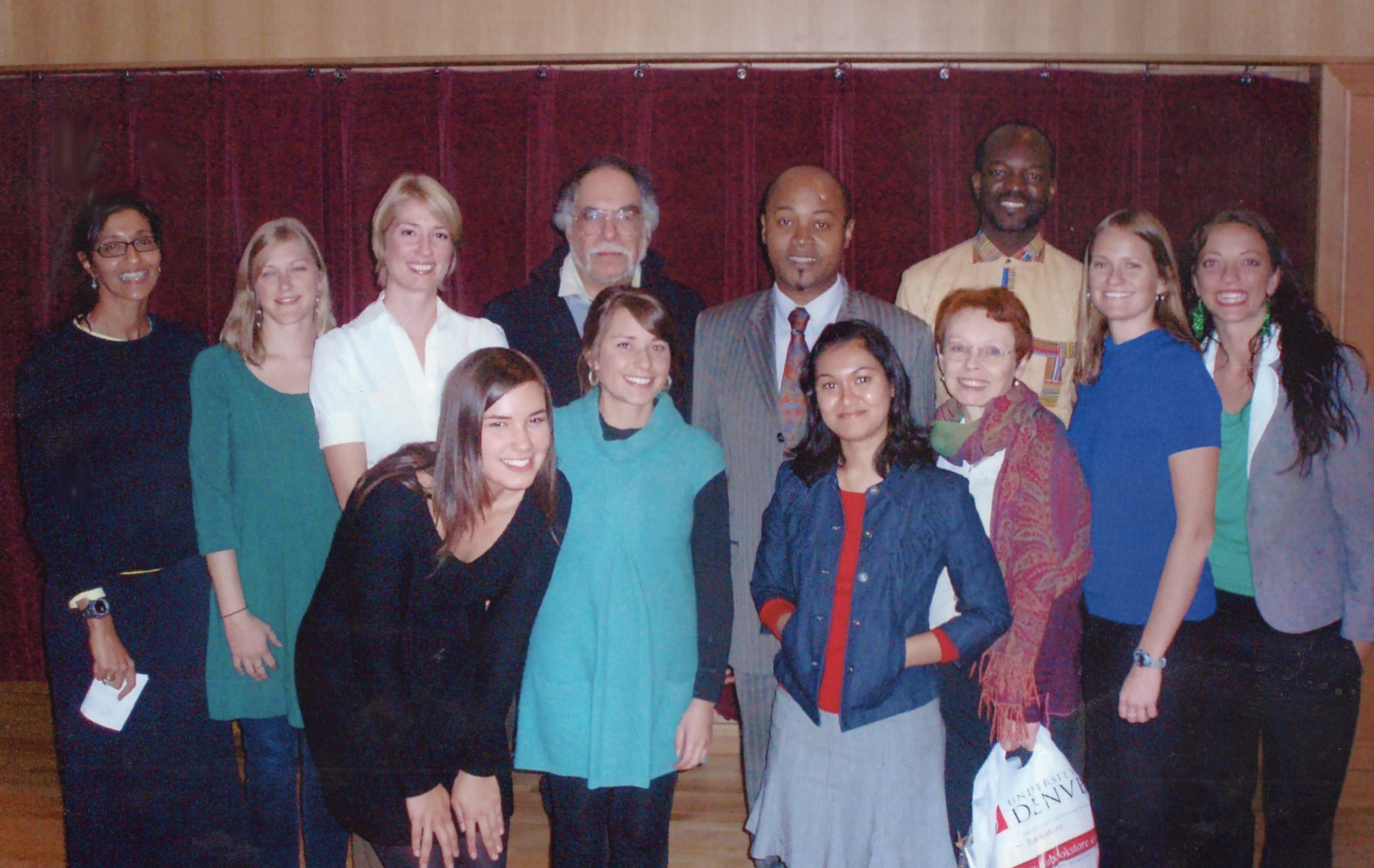
Guy Patrice Lumumba, Maurice Carney, Suzel Pouch and some of the organizers of CONGO WEEK, Ocotber 19-26, 2008. University of Denver’s Korbel School of International Studies
_______________________________________
U.S.-led Imperialism Is Directly Responsible for Turmoil in the Democratic Republic of Congo
January 31, 2025
U.S.-led Imperialism Is Directly Responsible for Turmoil in the Democratic Republic of Congo
The Black Alliance for Peace Africa Team (BAP) and U.S. Out of Africa Network (USOAN) stands in unwavering solidarity with the Congolese People as they endure yet another chapter of violence, exploitation, and masked imperialist aggression in the Eastern Democratic Republic of Congo (DRC). The ongoing conflict, fueled by Rwanda’s role as an imperialist foot soldier, is not merely a regional dispute but a manifestation of global capitalism’s insatiable desire for Africa’s resources. As the transnational capitalist class fight for dominance in the global clean energy, artificial intelligence, and technology markets, the Congo has been and stands to remain the battleground as a cornerstone of systemic plunder for over a century.
Rwanda, backed by Western powers such as the United States, the European Union (EU), Canada, Israel, etc, has consistently acted as a destabilizing force in the region, providing material support to proxy militias like the M23 to undermine Congolese sovereignty and facilitate the extraction of resources. Much like the sub-imperialist relationship between the United Arab Emirates and Sudan, Rwanda has no significant mineral reserves of its own yet has become one of the world’s leading exporters of critical minerals like coltan. The recent escalation in Goma, where Rwanda Defense Forces (RDF) and M23 have seized strategic areas, is a direct result of this imperialist agenda.
In stark and revolting contrast to what is professed by the Congressional Black Caucus (CBC) to serve as the “Conscience of the Congress,” by “uplifting the voices of the voiceless and fighting for the most vulnerable… ” there is always a deafening silence concerning the role of U.S. imperialism in the Congo and in Africa at large. In fact CBC members have more so served as lap dogs for U.S. imperialism and willing servants for its policies of intervention.
The responsibility of those outside of the DRC is to heed the acts of the People reflecting the unheard, to unconditionally support their path toward self-determination and right to defend their land and sovereignty. This is the only way to sustainable peace in the Congo.
The conflict in the DRC is not an isolated event but a direct consequence of the global capitalist system in crisis. The so-called “Green Corridor” initiative, promoted by President Felix Tshisekedi at the World Economic Forum in Davos, is a stark example of how imperialist powers and their local compradors, seek to legitimize their pillaging under the guise of development. This initiative, funded primarily by the United States and EU, aims to secure access to the Congo’s cobalt, copper, and lithium — resources essential for the global transition to renewable energy and digital technologies. Yet, this so-called “development” comes at the direct expense of the Congolese People, who continue to suffer from violence, displacement, and poverty.
The Congolese people, however, continue to resist valiantly. The recent attacks on the embassies of Belgium, France, Kenya, Rwanda, Uganda and the United States, chanting “down with imperialism” and widespread protests across the DRC, from Goma to Kinshasa, make clear the frustration of the Congolese with a government that has failed to protect them, and a global system that exploits them. The uprising reflects a growing consciousness among the Congolese masses, who are demanding accountability, liberation, and an end to decades of suffering. The Black Alliance for Peace recognizes these protests as part of a broader struggle across the African continent. As Che Guevara said, “all free people of the world be prepared to avenge the crime of the Congo.”
We understand that the liberation of the Congo is inseparable from the liberation of Africa as a whole. The Congo’s land, energy, and resources have fueled the wealth of imperialist powers for generations, while its people have been subjected to unimaginable violence and exploitation. The current crisis is a stark reminder that the struggle for African sovereignty is a struggle against the global capitalist system. We must reject the false narratives that frame this conflict as a regional or ethnic issue and instead recognize it as a fight against imperialism and for self-determination.
The Black Alliance for Peace calls on all progressive forces, both across the African continent and around the world, to stand in solidarity with the Congolese People. Demand an immediate end to Rwanda’s aggression and the withdrawal of all foreign forces from the DRC. We call for Congo’s resources to be under the democratic control of its People. We call on all anti-imperialist forces across the world to expose the puppeteer role of the U.S.-EU-NATO Axis of Domination in fueling this crisis and to support the Congolese People’s right to life.
The struggle of the Congolese People is our struggle. Their victory is our victory. Let us unite in solidarity to end the centuries-long suffering in the Congo and to build a world free from imperialism, capitalism, and exploitation. The Congo is not for sale—it belongs to its People.
Free the Congo!
Patrice Lumumba Lives!
Unite Africa under Socialism!
No Compromise!
No Retreat!
 View from the Left Bank: Rob Prince's Blog