The Trump Circus in Saudi Arabia – 2: Targeting Iran, The Kissinger Deal, Doctrines – Obama and Trump

Palestinians in both Gaza and the West Bank demonstrated against the Trump visit and the U.S.-Israeli-Saudi effort to force a humiliating settlement agreement down their throats.
_________________________
Part One: The Trump Circus in Saudi Arabia Milking the Saudi Cash Camel-1
(Note: In Part Two of this interview – KGNU – Hemispheres, Middle East Dialogues on May 23, 2017 – we discuss a number of things – the consequences of the Iran Nuclear Issue, the relevance of the Kissinger Deal of 1973 to current U.S.-Saudi relations and what might be called the Obama and Trump Doctrines for the Middle East.)
__________________________
Transcript: Part Two. KGNU – Boulder – May 23, 2017. Hemispheres – Middle East Dialogues
While Obama tried to focus on China and to curtail the expansionist plan that the Chinese have, with Trump – if it’s true to call it “the Trump Doctrine – I don’t know if he is intelligent enough to have a doctrine, but let’s say for the sake of argument it is a doctrine – his making a u-turn and focusing back onto the Middle East, particularly in the manner in which it is being done, this is a dead end.
Jim Nelson: In the last month China has announced a new “Silk Road Agenda.” How does it play into what you have described as this antiquated attack on Iran. It seems that the United States is missing the boat, both on the economic opportunities which opened up with the Iran Nuclear Deal and with the expansion of the Silk Road Agenda as well.
Ibrahim Kazerooni: Concerning the nuclear issue, Rob and I have repeatedly talked about this during the past months. The nuclear deal opened Iran up to the international community. Europeans are going to Iran from the left, right and center as are Far Easterners and South Americans. They are going into Iran and making various economic deals.
The options for the United States in being able to isolate Iran again to the point where they were able to in the past since the revolution, unfortunately for Washington, doesn’t exist. The Iranians are well aware of this.
The Chinese approach, particularly the “Version Two of the Silk Road Agenda” that I briefly talked about last week (on another radio program) clearly includes a number of key players into the mix. Iran is one of them. We are no longer speaking uniquely of the Silk Road between East and West, going from China through Mongolia, northern Iran, across Turkey and so on. It now has “its arms,” extensions, tentacles that connect to various places – going into Bangladesh, through Kashmir to Pakistan to Iran into the warmer waters of the Persian Gulf and the Indian Ocean giving the Chinese the opportunity to invest in the infrastructure and bringing all these countries in line with its own foreign policy. That is something that unfortunately Trump, in his rush to sing the Saudi tune, has failed to understand. Read more…
Is Saudi Arabia Preparing To Invade Qatar?
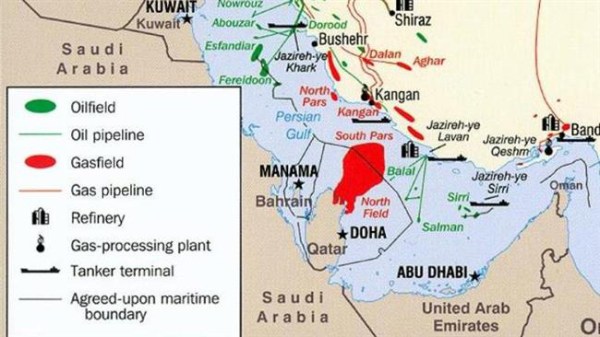
South Pars natural gas field, the large red item in the center of the Persian Gulf, between Qatar and Iran
Is this where all the pressure on Qatar is heading?
I don’t know…but it is very much within the realm of possibility and if I was a betting man, as the expression goes, (I am not) I’d put down a nice sum on the “they’ll go in” side of the equation. Whatever, the Saudis, their Emirate allies, with the full support of the United States are essentially trying to overthrow the government of Qatar, a place where four years ago, they also forced the abdication of one emir and replaced him with another.
Regardless, the current Saudi threats against Qatar only deepens the divide between three U.S. allies (two decrepit monarchies fueling dogmatic militant groups in Syria, Iraq and elsewhere and an increasing authoritarian government in Turkey). The new explosive environment undermines a good deal of the fanfare of the Trump Saudi visit that there is something of an “Arab” or “Islamic” NATO in the making. As Saudi Arabia and its close buddies turn on Qatar, consider the Arab NATO as dead in the water…and it only took two weeks for it to collapse, record time actually.
Will it lead to war? We can only hope not and urge restraint on all parties. But at the very least a very, very dangerous scenario is being played out with Saudi and the emirates threatening Qatar, Turkey about to send special forces to its Muslim Brotherhood ally, Qatar, and the Trump Administration seeming not to have a clue as to how to tone down the antagonisms, which if they get out of control, could very well plunge the region and beyond into a kind of war that will make the previous ones appear to be little more than child’s play.
In any case more and more the growing tensions between key U.S. allies in the region is looking like a mini version of Sarajevo in 1914. No better indication of the degree to which the Trump visit to Saudi Arabia was not about peace-making but inflaming tensions in the region. Maybe sword dancing with Wahhabists in Riyahd pretty much negated any references that Trump might have made in his remarks there about “peace” – a concept with which the president does not appear familiar.
It cannot be an accident that the Saudis have “found courage” to take more aggressive moves against their Arab adversaries and of course, Iran in the aftermath of the Trump visit. It is nothing short of pathetic that after having encouraged Saudi sectarianism that has grown into a full blown crisis, ie, that Trump is THE CAUSE of the increased tension, that now in a statement that can only be described as lame and insincere, that the Trump Administration has “offered to mediate” to cool down the flames they have previously set in motion. Another example of how the president and his entourage don’t have a clue as to how to deal with the region…even less so than Obama.
The threats to Qatar come only two months after Qatar announced that it was going to restart development of the South Pars natural gas field after a twelve-year delay. As Qatar Petroleum Chief Executive, Saad al-Kaabi, noted, “For oil there are people who see peak demand in 2030, others in 2042, but for gas demand is always growing.” While Qatar and Iran are developing the natural gas potential of this field separately, there is some modicum of cooperation involved in the project and it appears to be proceeding in a business-like manner, with an absence of tension which must deeply irritate the Saudis, representing as it does, the possible future cooperation on energy development on both sides of the Persian (or as the Arabs refer to it, the “Arab”) Gulf.
The first public hints that such scenario is being considered (that I have seen) comes from an on-line article in Sputnik International, a Russian website. Although, as with all news sources, it is wise to read it with a skeptical eye, it would be a mistake to reject its content out of hand because it is a Russian based source of information. The article claims that this possibility was discussed during Trump’s visit to Saudi Arabia and that he gave the green light to such an operation (probably as long as the major U.S. base on Qatar, the largest U.S. military installation in the Gulf region, Al Udeid Air Base, remains untouched). Let us be clear here: should such an attack take place, it could not take place with prior approval from Washington and any notion that Saudi Arabia is acting on its own (in Yemen, Syria or now perhaps Qatar) is, as the British would say “poppycock” – rubbish.
There are certain parallels with the 1990 Iraqi invasion of Kuwait and a Saudi military offensive against Qatar:
- a Washington green light for the operation (in the case of Kuwait, soon thereafter reversed), in Saudi’s case, as mentioned above, there can be no attack without permission from Washington
- an expansionist ideology – in Iraq’s case for a greater Iraq by swallowing up Kuwait, in Saudi’s case it’s brittle Wahhabist ideology
- an Arab county in deepening trouble financially (Iraq for its stupid, cruel and costly war against Iran, Saudi for its war against Yemen, a drop in the price of crude oil – which in its stupidity, it helped trigger by flooding oil markets),
- a growing financial crisis, an attempt to corner the energy market (in Iraq’ case to add Kuwaiti oil to its own, in Saudi’s an effort to control Qatar’s natural gas with its shrinking oil reserves. Qatar has the world’s largest reserves of natural gas, the source of its wealth)
- and last but not least, an effort to strengthen their positions visavis the growing Iranian influence in the region.
For sometime now Saudi Arabia and Qatar – both whose activities have fueled ISIS-al Qaeda like movements in the region have been at odds. The biggest “sin” that the Qataris have committed is to try to be a voice independent of the Saudis, something that they could do given their great wealth from natural gas reserves. There are certain Islamic doctrinaire conflicts, with the Saudis as usual, spreading their brittle Wahhabist message far and wide while the Qataris align more closely with a competing Islamic fundamentalist sect, the Moslem Brotherhoods. For those unfamiliar with this ideological tension, I simply remark that it is a part of the toxic mix between the two countries and should not be underestimated. It is an integral part of the competition for regional influence. At times even the United States has had to step in, mostly in favor of their Saudi Wahhabist ally, to dampen Qatari aspirations.
For the Trump Administration the logic for supporting such a dumb and dangerous move has several sources, the main one being that a Saudi take-over of Qatar, should it succeed and it probably would, would strengthen the Saudi position to put pressure on Iran. It also serves as a warning to nearby Kuwait to limit if not break its commercial ties with Iran.
While a Saudi absorption of Qatar would strengthen the Saudi position visavis Qatar it will only create greater tensions among American allies, which the Trump Administration is trying to slam together into some kind anti-Iranian alliance. It will pit Turkey, which has promised to come to the aid of Qatar in case of military action, against Saudi Arabia, two of Washington’s most important and strongest regional allies. Rather than strengthening the anti-Iranian alliance, such a move would probably lead to the alliance’s formal collapse. It is already reeling from Pakistan’s refusal to participate.
One should also add, given Saudi military wastefulness, ineffectiveness and utter brutality (think Yemen) that a Saudi invasion and annexation of Qatar will result in a need for the Saudis to, yet again, replenish its weapons supplies, by purchasing yet more military hardware from U.S. arms industries.
Both Kuwait and Qatar, while not particularly friendly with Iran, have tried to maintain cordial, business-like relations with Teheran. Qatar and Iran have been cooperating in developing what is referred to as South Pars natural gas field, some of which lies beneath the surface of the waters adjoining both countries. A successful Saudi invasion of Qatar would end that cooperation and hurt Iran economically. Qatar is the second largest producer of natural gas in the world after Russia, Iran the third. In the case of Kuwait, the relations have been somewhat strained with Iran, but still there has been a modicum of economic cooperation and trade, with once more, natural gas being a factor. For a number of reasons, Kuwait has not been able to develop its natural gas potential. Buying it from neighbor Iran would make the most sense but regional tensions and pressure from both Saudi Arabia and the United States have discouraged these relations from developing beyond a certain point. Still, it is clear that Kuwait has tried not to antagonize Iran to the degree that the Saudis do.
_________________________________
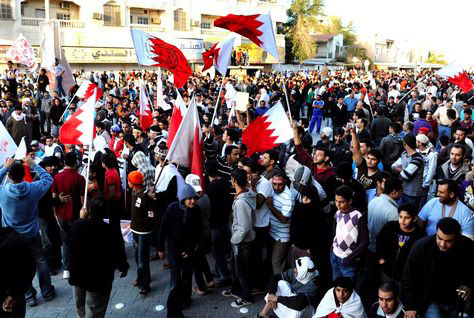
Bahrain Protests. In the aftermath of the Trump visit to Saudi Arabia, in neighboring Bahrain, home of a major U.S. naval base, repression against the democratic movement has intensified…
We began to hear murmurs within the Trump Administration during the time that he was giving that short speech in Riyadh – the most profitable speech ever given in the history of humanity up until now, we don’t know what will happen later. For saying a few words that the Saudi’s wanted to hear – and I will explain shortly why these words were critical for the Saudis – identifying Iran as the source of trouble and identifying Hezbollah, Hamas and a few others as terrorist organizations – as well as calling for regime change in Syria and Iran – this pleased the Saudis who reciprocated with a big economic package.
_____________________________
Part Two
Transcript: Part One. KGNU – Boulder – May 23, 2017. Hemispheres – Middle East Dialogues
Jim Nelson: The evening Ibrahim (Kazerooni) and Rob (Prince) will be discussing the U.S.-Saudi relationship in relation to the recent visit of U.S. President Donald Trump to that country.
Ibrahim Kazerooni: Money, money, money! It’s so funny.
Rob Prince: Yes, follow the money!
Jim Nelson: As many of our listeners know, the President has spent the last few days in the Middle East, for the last few days in Saudi Arabia.
Rob Prince: Learning how to sword dance
Jim Nelson: From Saudi, he moved on to Israel and the Palestinian Territories. What surprised me is the way that the close relationship between Saudi Arabia and Israel, how they share information and so forth. I wasn’t surprised to hear that because I moderate program – and you two have repeatedly emphasized the strategic alliances between the two countries, especially concerning Iran and the recently completion of the nuclear deal (the Joint Comprehensive Plan of Action) and their (Israel and Saudi Arabia’s) opposition to wanting that deal to go forward. But it has not been mentioned very much in the mainstream media.
Anyway, please begin with your commentary
Rob Prince: Let me begin by telling you what we hope to accomplish tonight.
What we want to talk about is: What happened of substance on President Trump’s trip to Saudi Arabia and Israel.
Ibrahim will begin by examining how Trump’s journey is viewed in the Middle East itself. Then I’m going to comment upon domestic political considerations, why it was that our President and his little entourage chose these countries and this particular moment to make his first foreign trip.
Ibrahim, let me ask you to start off, besides the President learning how to sword dance in Saudi Arabia, am I correct that he was also given a golden sword as a personal gift because he danced so well? Read more…

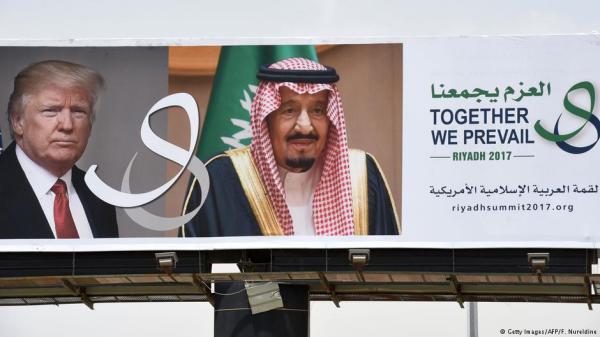
Donald Trump and King Salman of Saudi Arabia…two beauties
_______________
Notes..KGNU – May 30, 2017
(A note on “the Notes” – The radio interview took plaee on May 30, 2017 at KGNU. It was a part of an ongoing series “Hemispheres, Middle East Dialogues” hosted by Jim Nelson who has been interviewing Ibrahim Kazerooni and myself since late 2010 from 8-10 times a year for an hour. This particular program was a follow up on the interview done a week earlier, on May 23, 2017, concerning the Trump entourage visit to Saudi Arabia which had just been completed. Given the size of the announce deals made between Saudi Arabia and the United States and the political focus – an attempt to create an anti-Iranian front of some 55 Muslim countries, essentially a Sunni alliance against all the different forms of Muslim Shi’ism, we thought it important to look at the results of this visit in depth and did so over the course of the two program, the full transcripts of which are being prepared.
I take extensive notes for each program and did so for this one. Given the ebb and flow of our dialogues, the notes only partially cover what is discussed in the interviews. When I think that my notes reflect some ideas not covered in the interviews, on occasion, like with this one, I publish them)
_________________
In our last program last week, in looking at the deals that Trump and King Salman agreed to on President Trump’s visit to Saudi Arabia (May 20-21) as a part of his first foreign visit. Besides Saudi Arabia, the Trump entourage also visited Israel, Brussels and two stops in Italy – one at the Vatican to visit the Pope, the second to Sicily to attend a meeting of the G-7 nations. Although Trumpty-Dumpty tweeted that the trip was a roaring success, actually it was the opposite as today’s news, that he pulling the United States out of the Paris Accord on Climate Change testifies. The rest of his trip was also nothing less than a train wreck, even in Israel.
The deals he cut with King Salman in Saudi Arabia – the arms sales, the promise of Saudi investment in U.S. equities and the like are little more than a green light to more Saudi war in Yemen and Saudi meddling and support for ISIS (in the name of course for fighting it) and like organization in Syria. Saudi purchases of sophisticated arms that they are incapable of using without foreign (U.S) advisers will do little to help the deeper problems in the United States and the so-called “Arab NATO” that was announced, actually a “Sunni NATO against all of Shia Islam” began falling apart almost as quickly as it supposedly came together with Pakistan making it clear that it will not target neighbor Iran and with a number of Gulf Emirates announcing in the aftermath of the birth of the so-called alliance that Iran is a good neighbor. Read more…
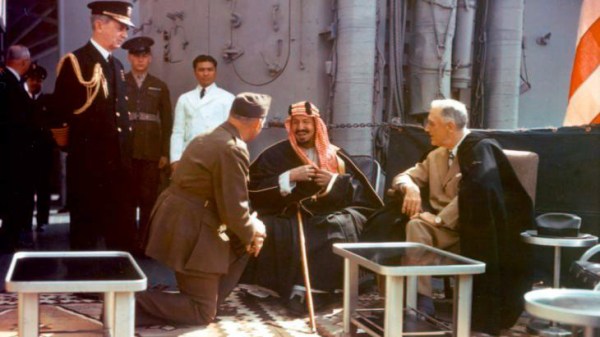
February 14, 1945 aboard USS Quincy in the Red Sea. Franklin Roosevelt and Saudi King Abdulaziz bin Saud. In return for access to Saudi oil, US President Roosevelt assured the Saudi King that the US would protect the territorial integrity of the Kingdom and treat it as America’s most important partner in the region.
Riyadh – A Week After The Trump Visit – Results and Perspectives. Tonight, Tues. May 30, 2017, 6-7 PM; KGNU Boulder Colorado Radio; 88.5 Fm, 1390 AM. Hemispheres Middle East Dialogues Hosted by Jim Nelson, with Ibrahim Kazerooni and Rob Prince. Hear Kazerooni and Prince dissect the results of the Trump-King Salman talks and agreements reached and what it means for the Middle East Region. Tonight at 6 pm for an hour on KGNU’s “Hemispheres.” The Middle East Dialogues in which Kazerooni and Prince participate are now heading into their seventh year.
Try finding photos of any of the excessive personal gifts the Saudis gave to the Trump family on Donald Trump’s recent visit to Saudi Arabia and you are likely to come up with virtually nothing. Google the necklace of precious stones and diamonds valued at $200 million, you’ll come up short. The same goes for the 25 kilo (55.1 lbs) pure gold Saudi diamond and jewel-studded sword he reportedly received, or the world’s biggest yacht which was personally gifted to him. Just precisely how much these, and other, personal gifts the Trumps received will never probably never be known – nor are they likely to be donated – like those given to other presidents – to the National Archives.
Given Donald Trump’s plunging popularity at home in the polls, the continued Congressional investigation of his ties to the Russians that won’t go away with the shadow of impeachment proceedings hanging over him, and the fact that he needed some relief from the announcement of his budget to Congress which axes social programs, government regulation to a degree never seen in American history, the president needed something – anything – to counter the storm of protest he and his advisers very well-known was in the offing. Read more…

Trump and the Saudi’s – Waltzing With Swords
The Graceless Trio: Donald Trump – King Salman – Benjamin Netanyahu Love Fest – The Political Economy of Trump’s Middle East Trip.
Hear Ibrahim Kazerooni and Rob Prince on KGNU’s “Hemispheres – Middle East Dialogues” with Jim Nelson. Tuesday, May 23, 2017; 6-7 pm Mountain Standard Time. On KGNU – 88.5 FM, 1390 AM; Live Streaming at http://www.kgnu.org.
The Owls of Estes…
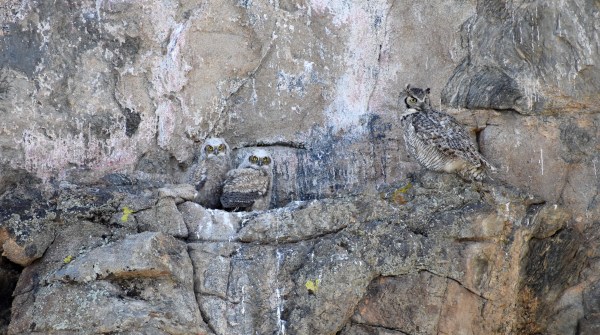
Estes Park’s Great Horned Owls: owlets on the left, Mama on the right
A couple of days ago I was complaining to a friend about how few owls I’d ever seen in Colorado – although I’ve been here now for 48 years – and have been told that owls abound. There was one – a small one – who held court for a few short days in a hole in a large maple tree across the street from our home. But that was ten years ago. College friends, Nancy and Bob Stocker, serious wild life photographers, have studied small burrowing owls just off of Pena Blvd on the way to Denver International Airport. I keep thinking of asking to go out with them on one of their sojourns, but then, as usual, forget to do so.
My owl drought ended yesterday, here in Estes Park. Ran into an owl bonanza after a visit and hike in Rocky Mountain National Park, a week prior to the opening of the tourist season. First a bit about the Park, then the owls. Read more…
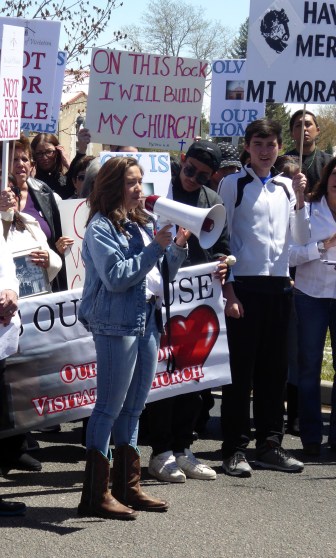
Sole Garcia addressing the April 30, 2017 rally in front of the Denver Archdiocese
___________________________
(The experience of excommunicated Cleveland priest, Father Robert Marrone, at St. Peter’s Church, parallels the forced closing of Our Lady of Visitation in Colorado.)
“We didn’t leave the church; We were shoved outside because we wanted to stay together.” As a March 5, 2012 article in the National Catholic Reporter noted: “This separation was not about any hot-button issue, as has been the case elsewhere. It wasn’t about ordination of women or married men or anger at what a new pastor was doing. It was about wanting to remain in the community.”
____________________________
Introduction
It – a demonstration on Denver Archdiocese property – had been planned, announced for some time, giving the Archbishop something to think about.
After what was mandated by the Denver Archdiocese to be the last mass of Our Lady of Visitation Parish (OLV), in Southwest Adams County, Colorado, the parishioners would go to the spacious grounds of the Archdiocese to protest the decision and ask for a reversal – that their parish should remain open and continue as it had in the past. The parish council and the parishioners as a whole had already convincingly countered all the arguments the Archdiocese had given for closing OLV. Their repeated requests for a meeting with the Archbishop, the Most Reverend Samuel J. Aquila, had met with a five month wall of silence.
Armed with 1200 signatures of parishioners and Goat Hill supporters calling on the archbishop to reverse his decision, the entire congregation had mobilized to have ” a prayer-vigil-demonstration at the archbishop’s residential complex down at South Steele St. in southeast Denver. It was a well-organized, politically carefully targeted action.The press was notified, buses and vans loaded up after the “last mass” and a group of about fifty supporters was waiting at the Archdiocese’s entrance.
At the last minute things changed. Read more…

Jerry Roys (center with sun glasses), Goat Hill Historian, in the midst of a April 30, 2017 demonstration in front of the Archdiocese of Denver, protesting the closing of Our Lady of Visitation Parish
by Jerry Roys.
(Jerry Roys, a roofing contractor by trade, a local historian by passion and competence. Roys grew up in Goat Hill and attended Our Lady of Visitation where he was a choir boy. )
Former Colorado House Legislator and Senator, Polly Baca grew up in Greeley, Colorado Polly says living in a bigoted town was not easy, even when it came to attending church. Polly’s parents were parishioners at Saint Peter, the only Catholic Church in Greeley. One of her earliest memories is attending church with her parents. The church was segregated and says in those days everything was segregated; even the Catholic school allowed only Anglo children to attend.
“I grew up in Greeley, Colorado. My earliest memory was when I was three years old. We went to church, the only Catholic church in town. I saw these little girls in white dresses and knew they were going to march around the church, and I wanted to watch them from both sides. You know how little kids are, I insisted on sitting in the center and my parents went to the center pew. The usher told us we couldn’t sit there, because the church was segregated. Mexicans, Mexican Americans, Latinos, and Spanish Americans all had to sit in the side aisles. The center aisles were reserved for the Anglos in the community.”(Polly Baca recorded interview, August 5, 2013, August 13, 2013, and August 25, 2013). Read more…
 Kingmakers: The Invention of the Modern Middle East by Karl E. Meyer & Shareen Blair Brysac. (Norton: 2008. ISBN 978-0-393-06199-4) – An Extended Review
1.
One comes across good histories of the Middle East infrequently. Books are rare that offer some perspective on the current mess in the region, that provide some insights into how the history of the past 150 years can be explained to develop a framework to understand the present realities. But every once in a while a gem is produced that hits the nail on the head. Needless to say, no 423 pages of text can cover more than an outline of the region’s history, yet, a well-structured book can help readers make some sense of it all.
Karl E. Meyer and Shareen Blair-Brysac have produced such a volume in their Kingmakers: The Invention of the Modern Middle East which was published by Norton in 2008. Nearly a decade later, the book still resonates. Were I still teaching “History of the Modern Middle East Since 1800″ Meyer and Brysac would be one of the chosen texts, if not the main one. Besides the fact that it is gracefully written and well researched, in probing the lives of the so-called “kingmakers” it provides biographies of some of the people in the context of the times in which they lived and worked. The book focuses on mostly British colonial administrators with a few American C.I.A. operatives thrown in towards the end. They were all instrumental in shaping the region since the late 19th century. Read more…

OLV parishioner at April 27 press conference outside the church hall. The Archdiocese prohibited the parishioners from holding it in the hall itself
Dear Friends…
First they came for the Socialists, and I did not speak out—
Because I was not a Socialist.
Then they came for the Trade Unionists, and I did not speak out—
Because I was not a Trade Unionist.
Then they came for the Jews, and I did not speak out—
Because I was not a Jew.
Then they came for me—and there was no one left to speak for me.
Hope to see you there.
For more information I include the following links:
https://robertjprince.net/2017/03/29/goat-hill-and-our-lady-of-visitation-church/
Best,
Rob P.
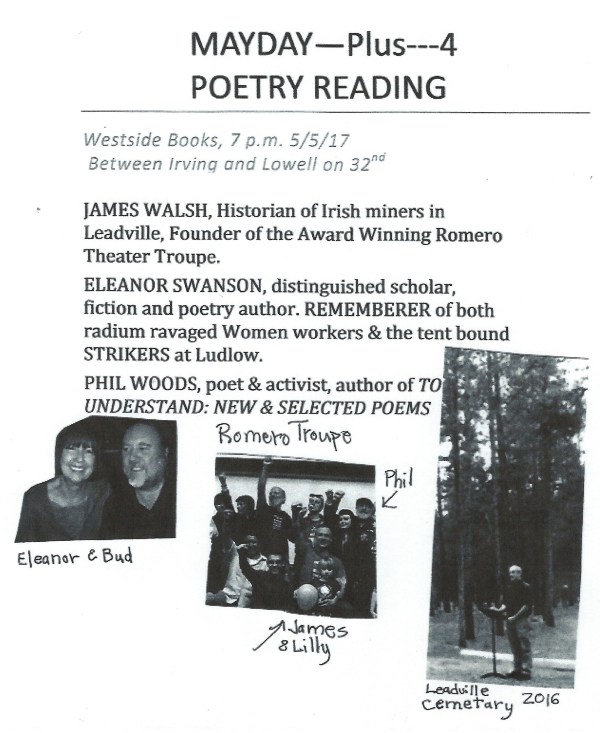
Poetry Reading: May 4, 2017; Westside Books.3434 W 32nd Ave. Denver, CO 80211 (303-480-0220)
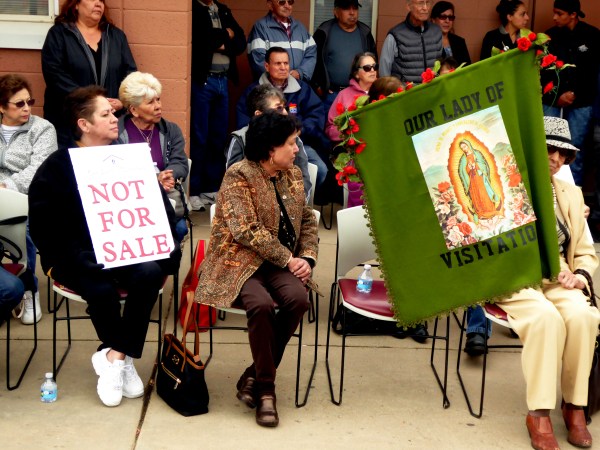
Parishioners at Our Lady of Visitation Parish listening to Parish member and former Denver Mayor Federico Pena, criticizing the Archdiocese of Denver’s decision to close their parish.
Federico Pena: I am going to begin with an apology. I apologize for having you stand here in the cold – let’s hope it doesn’t rain because yesterday we were informed that we could not use the parish hall. We were denied permission to use the facility. Very early this morning I called a good friend, Rudy Gonzalez, and he brought these chairs, a temporary podium, the microphone – so we could have our press conference outside.
So I apologize for the cold weather. Here we are and we are going to have the press conference nevertheless.
Let me begin by introducing myself. My name is Federico Pena. For those of you who do not know me, I have been coming to this church for thirteen years. My wife Cindy and I have been working the pickle booth at the bazaar for thirteen years. Many of you have come and given your hard-earned money to a worthy cause (Our Lady of Visitation = O.L.V.) – we appreciate that. Over the last several years my wife and I have made significant financial contributions to this church. We do so lovingly and because we believe in the mission here. My father-in-law, Cindy’s father, Lloyd Quintana, is the deacon here and has been so for almost thirty years. We drive fifty miles to come here to watch him celebrate to watch him celebrate mass because it gives us a special joy. That is how much we honor him and everyone here who comes to this church. Read more…
Nuclear Breakthrough Endangers The World by Conn Hallinan
Nuclear Breakthrough Endangers the World Dispatches From The Edge March 20, 2017 At a time of growing tensions between nuclear powers—Russia and NATO in Europe, and the U.S., North Korea and China in Asia—Washington has quietly upgraded its nuclear weapons arsenal to create, according to three leading American scientists, “exactly what one would expect […]
 View from the Left Bank: Rob Prince's Blog