The Life and Work of Robert Merle: A Lecture by Rob Prince at the Alliance Française of Denver. April 4, 2017 – Notes
 Script – Merle Talk
Introduction:
Thank Martin Lafitte, Director, Alliance Française of Denver
Mention late Carole Ashkinaze, Judy Johnson, Dr. Oliver Andrews, Dr. Robert Carlisle..
It is interesting – if one doesn’t dwell on it too much – to look back on one’s life at the age of 72. It struck me a few years ago that there were a number of experiences in my youth which to some degree shaped a good part of my life in one way or another.
– Of course, there is my family and class background
– Where and when one grows up – myself, in Brooklyn and Queens New York in the 1950s and 1960s
– My education in the NYC public schools of those years – PS 170 Queens, Van Wyck Junior High School 217 and Jamaica High School, where I would argue, a person got the best education public education had to offer anywhere in the country, now or then.
There were two other experiences that it is only later, I realized, had an influence on the rest of my life. They were
1. A year (August, 1964 to late July 1965) spent in Paris and Rouen France at St. Lawrence University’s first Junior Year Abroad program in France. Especially important was a class I took on the poetry of Robert Frost, taught by none other than Robert Merle.
2. My two and a half years spent in the Peace Corps in Tunisia as a volunteer and later staff member in both Tunis and Sousse, Tunisia.
I mention all this because as the 50th anniversary of the year spent in France came and went, I decided I wanted to show my appreciation – a kind of intellectual payback if you will – to those last two experiences. As a part of that I decided to read the entire thirteen volume epic series that Robert Merle work – his masterpiece – Fortunes de France – and read it in French, which I did over the course of two years.
I have written some about Merle, his life and work. This is the third public presentation that I made on Fortunes de France. The fact that the first three volumes of this series have been translated into English by Pushkin Publishers made my remarks more timely.

Robert Merle
1.
Why give a lecture on Robert Merle?
– The series “Fortunes de France” – well-known in France – is an extraordinarily rich portrait of 16th and early 17th Century France – historically, sociologically, religiously. As a whole, the series sold more than 5 million copies. Read more…
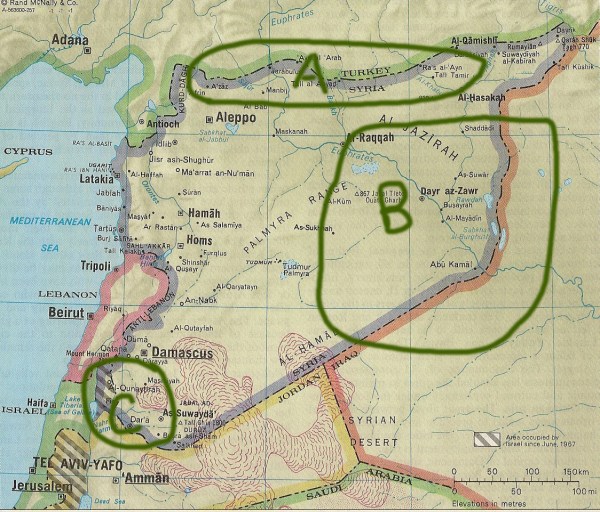
Partition of Syria as envisioned by the United States. Zone A in the north by some combination of Turkish-Kurdish control. Zone B in the East, a safe area for ISIS, Al Qaeda across the Syrian-Iraqi border. Zone C in the south, joint controlled by Israel and Jordan, leaving Syria, should it succeed little more than a rump state, no longer a major geo-political player in the region. The recent liberation of Aleppo from ISIS hands through a monkey wrench into Washington’s plans. The U.S. “lost a battle” but has not given up on the plan (the Doha Plan) and is reorganizing its allies for another round of fighting.
KGNU – Interview, March 28. 2017 – Part Two
Now fast forward comes Iraq. After the initial honeymoon period after which the United States thought they were going to receive red roses and a red carpet welcome. Who pops up in Baghdad as U.S. ambassador to Iraq in 2004-2005, but the same John Negreponte accompanied, as in Central America with Robert Ford. When the Sunni resistance began to develop, they started – the first thing that was done under Negreponte – they started establishing death squads in Iraq. The idea was exactly the same (as in Central America): hit squads of Kurdish and Shi’a fighters to target leaders of what they called “the Iraqi Insurgency” in a strategic shift borrowed from the American struggle against the leftwing guerillas in South America twenty years or so earlier.
Rob Prince: With that said, let’s look at some of the developments taking place in the Middle East itself. Ibrahim where do we begin looking at how all this (unfolding Trump foreign and Middle East policy) is playing out on the ground in the Middle East?
Ibrahim Kazerooni: It’s a good question Rob. To answer it we have to make a few things crystal clear.
Remember during the Iraq War how everyone was talking about, searching for a single reason why the United States went to war against Iraq and occupied it. I believe that approach is limited in scope because to understand the dynamics of many of the “operators” in Washington one has to consider that each one has different objectives and goals. The military has different objectives from the oil industry or the supporters of different religions. The same goes for the politicians.
So when it comes to American foreign policy and how it unfolds. its effects and ramifications within the Middle East, I think we have to downplay whether there is a specific policy or goals. They vary. Rather, it is better to focus on the strategy and, quite rightly, Rob, you alluded to it.
The strategy has not changed. Read more…
As Trumps Standing in the Polls Crumbles, the U.S. Attacks Syria with 60 Cruise Missiles –

circled area – region around Homs where the Tomahawk cruise missile attack took place.
The timing of the Cruise missile attack closely followed up by the ISIS attack on the Shayrat air base suggest a high level of coordination between the Trump Administration – and as implausible as it might sound to American ear – ISIS itself. This has all the earmarks of a coordinated strategy, coming as it does only a few weeks after a major strategic gathering in Jordan that included the main backers (known or unknown) of the mercenaries fighting the Syria government. Present at the meeting were representatives from Saudi Arabia, Qatar, Israel, Turkey, the Emirates, Jordan and the United States.As Trumps Standing in the Polls Crumbles, the U.S. Attacks Syria with 59 Tomahawk Cruise missiles.
What is not worth explaining because most of you know anyhow – and have it down pat…
- That like in so many other U.S-led military misadventures in decades past – that you, the U.S public has been lied to
- That one of the goals of the operation, is to take the attention off of Trumpty-Dumpty’s domestic blitzkrieg on any federal program that is environmentally or socially useful, anything whatsoever that might help Americans of poor or modest means, women, off of the racist garbage against Latinos, Moslems, Jews, Hindus, and moderate Christians…this is a diversion, an awful, horrid, bloody diversion.
Most of what needs to be said about this air strike, was said so eloquently by Vermont Sen. Bernie Sanders. He issued a statement Friday following President Donald Trump’s missile strike in Syria Thursday night. Sanders expressed his concern over the airstrikes, calling them “disastrous” and urging peace and stability. Read more…
A Hundred Centuries Off…

Humans arrived in the Americas 24,000 years ago. A butchered horse mandible shows human activity in the Yukon circa 22,000 BC. This upends everything we know, and suddenly my camping at Blackwater Draw doesn’t hold the same meaning it once did. That tribe may have been stranded there for a hundred centuries, blocked by the […]
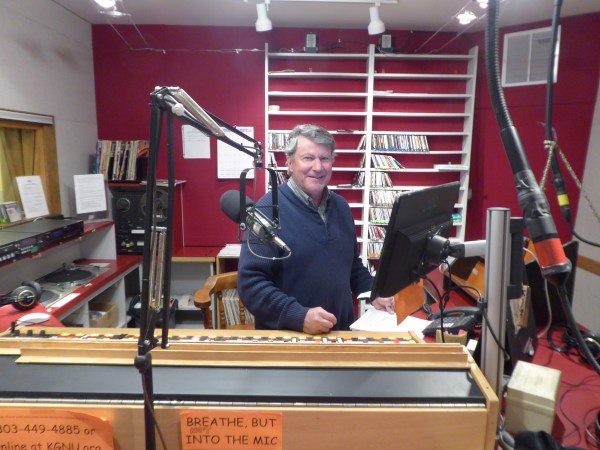
Jim Nelson, co-host of KGNU’s Hemispheres
KGNU – Interview, March 28. 2017 – Transcript – Part One
What we can say at this point, unquestionable: it will be a diet of more guns, less butter. That’s the Trump program. Cutting human services to feed the military budget – all these trends which have existed in the past until now have become exacerbated. I would add here, that from the point of view of people living in the United States, the connection between cutting the military budget and redirecting those funds for human needs has never been greater. It’s an old focus for the peace movement, but it’s day has come.
1
Jim Nelson: If some of you have been listening to BBC at the bottom of the hour Guy Erikson gave an introduction to tonight’s program. Ibrahim and Rob will be discussing Trump’s Middle East policy now two months into his presidency. We’ll begin with Rob
Rob Prince: We titled this talk “Trump’s Middle East Policies – The Blind Leading The Blind; The Military Takes Over Foreign Policy, Diplomacy Out The Window.”
That segment “Diplomacy out the window is only a slight exaggeration. What is happening to U.S. foreign policy – in the Middle East and elsewhere is that an already militarized foreign policy is becoming that much more so.
The Blind: Trump – who knows less about Middle East policy than he does about healthcare, suggesting that in the end it has little to do shaping M.E. policy – and that to a great degree that is the charge of the generals around him, Mattis and others. Trump doesn’t have much to do with shaping Middle East policy.
Ibrahim Kazerooni: That goes for everything, Rob.
Rob Prince: Yes.
The Blind that is being led by “The Blind Trump” – are the Generals themselves, who think that at its heart and soul, U.S. Middle East policy can be furthered by dropping more bombs and using diplomatic initiatives less. It’s a still more militarized foreign policy in the Middle East, one in which diplomacy is playing a continually shrinking role.
2.
Two months into this presidency the political blitzkrieg that is the Trump presidency continues.
For most people in Colorado, the US in general, the focus has been on the dramatic cuts in environmental regulations, the attack on the Affordable Care Act, the gutting of the Dept. of Education, the EPA, labor rights, and tax reform that give tax breaks for the rich at the expense of the poor, working class and professional classes of the country…
In the media, and in the minds of many in the United States, foreign policy issues have taken a back seat in the news – but not in the plans of the Trump Administration which is “forging ahead” toward Armageddon… Flashes, an outline of these policies, have come to light. What can we say about Trump’s Middle East policy in the Middle East in general, a framework for what is happening on the ground in the region? Read more…
Robert Merle and Fortunes de France: A Lecture by Rob Prince
Robert Merle
“Fortunes de France”
The Alliance Francaise de Denver is excited to host a special lecture on the work of French author, Robert Merle, and his 13 volume epic historical novel series, Fortunes de France.
Fortunes de France explores the religious wars in France that culminated in response to the crowning of Henry IV in 1594.
The lecture will be given by Rob Prince, retired Senior Lecturer of International Studies at the University of Denver’s Korbel School of International Studies.
Tuesday, April 4, 2017
6-7:30 PM
@Alliance Francaise of Denver
Hour long lecture in French and English followed by a 30 minute question and answer.
Free for Members……..$5 for the public
Alliance Francaise of Denver – 571 Galapagos St. Denver, Colorado 80204 – www.afdenver.org – 303-831-0304
Robert Merle is the author of one of the most popular series of historical novels in modern French literature, Fortunes of France, in thirteen volumes. It details the turbulent period of French history in the sixteenth and seventeenth centuries characterized by religious wars, bigotry and factionalism between Catholics and Protestants through the lens of a moderate Protestant family of the lower mobility. The series is much more than that: it is also a wondrous sociological portrait of French life — both rural and urban of that time period. All thirteen volumes of the French version are being translated into English, with Volumes 1 and 2 already done by Pushkin Press, and Volume 3 about to appear in June of 2016.
The program will be presented by Rob Prince, retired Senior Lecturer of International Studies at the University of Denver’s Korbel School of International Studies. Fifty two years ago, Prince was a student of Robert Merle at the University of Rouen’s Faculte de Lettres in Mont St.Aignon, France.
About Robert Merle’s “Fortune de France”:
Kirkup called the Fortune de France series “spectacular” and dubbed it Merle’s “major achievement”.[1] Douglas Johnson of The Guardian described the author as “a master of the historical novel”.[2] The series made Merle a household name in France, and he has been repeatedly called the Alexandre Dumas of the 20th century.[4][5] Le Monde dubbed Merle “France’s greatest popular novelist”, and Le Figaro observed, “Robert Merle is one of the very few French writers who have attained both popular success and the admiration of critics.”[5]
Writing for The Wall Street Journal, Allan Massie praised Merle’s “thorough research, depth of understanding and popular touch”, noting that “one of the strengths of Merle’s novels in his ability to evoke the feeling and texture of everyday life as well as high politics”.[3] Massie compared the first novel in Merle’s series to Maurice Druon‘s The Accursed Kings (Les Rois maudits), another famed French historical novel series, writing “There is a philosophical depth to the novel absent from Druon, for the Brethren are attracted to the Reformed Protestant (or Huguenot) faith … Though not as gripping as The Accursed Kings, The Brethren never strays, as Druon sometimes does, into the grotesque. It has a credibly human solidity.”[3] Toby Clements of The Telegraph wrote, “There are set-piece discussions on the dilemmas of faith that are informative if not the stuff of high drama, and passages on the history of France that can only be made sense of with the aid of a map and a memory for names. But elsewhere there is much colour, and, overall, The Brethren gives a salty and plausible idea of just how different, odd and parlous life might have been.”[4]
As of 2014, Fortune de France had sold over five million copies in France.[5]
(Source: Wikipedia)
For more information, visit Robert Prince’s blog page on Merle’s work.
Goat Hill and Our Lady of Visitation Parish: Part One

at Our Lady of Visitation Bazaar, summer, 2016
Our Lady of Visitation, Goat Hill, Unincorporated Adams County, Colorado
It takes a special kind of courage, for people within a religious community to challenge their hierarchy, regardless of the religion, especially those who hold deep religious conviction. It is a kind of intimate struggle, and these can be the most difficult, the most painful. And the consequences – shunning, excommunication, reputation destroying, efforts to press employers to fire dissidents – can be devastating.
Tonight I watched the parishioners of a small Catholic church, located just north of Denver, technically considered a parish, fight to save their church from closure, a key institution for the community the church has long served, Goat Hill, an overwhelmingly working class and poor Chicano community. Nationwide, such churches are often ignored and poorly served, contributing to the archdiocese, but getting little to nothing in return. I watched as parishioner after parishioner, those on the church council, others in the audience, screwed up their courage and confront the Archdiocese of Denver, whose representatives didn’t have the decency to show up to consider their case. They were represented by three empty chairs in front. Speaking to those empty chairs, issue by issue, carefully, insightfully, the parishioners demolished the Archdiocese’s case for shutting down operations.
The crisis started some five months ago, last November, when representatives of the Archdiocese of Denver showed up unannounced to tell the parishioners of the Our Lady of Visitation (OLV) that the church would be closed down in the near future. Since then, church membership has mobilized to fight for its life, trying to present its case. Archdiocese hierarchy from top to bottom refused to negotiate with the OLV church council or concerned parishioners. Repeated attempts to meet with the Archbishop, Samuel J. Aquila, who spent his earlier years as a priest in the Denver area, were met by a wall of silence. Requests for meetings went unanswered or were cancelled at the last minute. Not only has the priest who serves OLV, Father John Paul Leyba, not fought alongside the parishioners, but, to the contrary, he has tried instead to squelch the growing opposition.
The reason the Archdiocese has failed to convince OLV-ers to close shop is straightforward enough: this is a church built by a poor, working class, Chicano community. It is the heart and soul of that community, known as Goat Hill, just north of Denver. OLV is financially sound with a stable constituency of all ages. While there is a priest shortage in the Denver area, one of the pretexts for closure, OLV church council members have proposed a number of concrete ideas to address this particular problem. They, the parishioners, are unwilling to abandon what has been a central focal point of their lives for 3, 4 generations, this at a time when institutions defending this often besieged, neglected community are few and far between. Read more…
Trump’s Middle East Policies – The Blind Leading The Blind; The Military Takes Over Foreign Policy, Diplomacy Out The Window
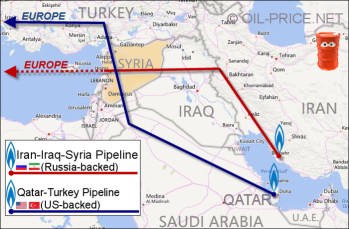
Blue Line – Plan rejected by Syria in 2009. Red Line – Plan agreed to by Syria in 2011
Trump’s Middle East Policies – The Blind Leading The Blind; The Military Takes Over Foreign Policy, Diplomacy Out The Window. Hear Ibrahim Kazerooni and Rob Prince, Today, Tues. March 28, 2017 @ 6-7 pm MST. Hemispheres, Middle East Dialogues hosted by Jim Nelson. KGNU Boulder and Denver. 1390 AM, 88.5 FM.
Note: The transcript will be posted in about a week.
The Cameroonian Model For Africa (and Beyond)
“On a massacré des gens au Cameroun, on a massacré des gens à Madagascar, en Indochine car ils prétendaient défendre cette même liberté que nous mettions sur le fronton de nos mairies et de nos écoles”
– Yannick Jadot – French Green Party Candidate for the presidency –
(Translation: We massacred people in Cameroon, Madagascar, Indochina. Why? Because they embraced the same ideals of liberty and democracy that we, in France, place on the walls of our city halls and schools)
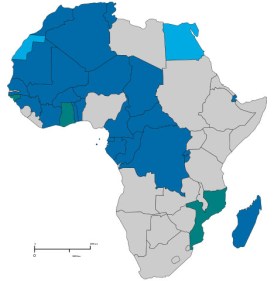
Countries usually considered as Francophone Africa. These countries had a population of 363 million in 2013. Their population is projected to reach between 785 million and 814 million in 2050. French is the fastest growing language on the continent (in terms of official or foreign language). Francophone but are Members or Observers of the OIF
The “we” to which Jadot is referring is the French government. He is referring to the all out wars France fought in its then, soon-to-be independent colonies in the 1950s and 1960s. The wars were part and parcel of policies developed by De Gaulle and his Africa man, Jacques Foccart, to grant formal independence to its African colonies while maintaining economic, political and strategic control. A good trick, no? The broader policy is referred to simply as neo-colonialism. The masters of neo-colonialism by far has been the United States. This is the essence of U.S. policy throughout the Third World. In an effort to retain control of raw materials and markets for its manufactured products, France, under De Gaulle, developed its own brand of neo-colonialism, long referred to as Francafrique.
France failed to implement its neo-colonial policies in two former colonies, Indochina and Algeria. It is perhaps in some measure because of having lost those wars militarily, and with those defeats, precipitous decline in economic and strategic influence, that it redoubled its efforts to cling to power in the rest of its (mostly) African colonies in order to secure their minerals, energy sources and raw materials.
Until recently, the wars against nationalist elements in Cameroon and Madagascar have been hidden from view, poorly known. Both resulted in the full-scale annihilation of hundreds of thousands of lives, involving, as in Algeria, massive use of torture, the extermination of whole villages and regions. With rare exceptions, these episodes have only surfaced due to the research of Cameroonian and Madagascan scholars with a will to learn their own history, a history hidden in French archives and among the French torturers and assassins who participated in what were nothings short of orgies of organized violence. Read more…
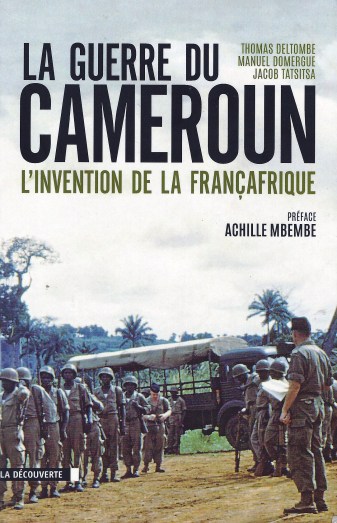 Review – La Guerre du Cameroun: L’Invention de la Françafrique 1948-1971 by Thomas Deltombe, Manuel Domergue and Jacob Tatsitsa. La Découverte: 2016. ISBN 978-2707-192141. (The Cameroon War: The Invention of Françafrique 1948-1971)
1.
Let’s begin at the end. At the end of this volume, the authors engage in what in English is referred to as “acknowledgments”, in French “remerciements” (which translates more precisely as “thank you’s”). Among those acknowledged or thanks for encouraging the authors is one Francois Gèze, publisher of Editions La Découverte, a French publishing house of repute noted for its excellent publications on current events (among other subjects).
Six years ago, during my last visit to Paris, I met Gèze, who kindly took me to lunch and introduced me to a number of Algerian ex-pats several of whom I subsequently interviewed. They included two former intelligence officers who had written persuasively about the rot infecting the Algerian intelligence apparatus and an Algerian energy economist, Hocine Malti, author of Histoire secrète du pétrole algérien, a most fascinating and insightful book, also published by La Découverte. Several articles, among the better ones I’ve written, resulted.
It’s a shame that these and other works by La Découverte have not (to my knowledge) been translated into English (and in the case of the stuff on Algeria, into Arabic as well) as they are all quality studies that add substantially to the subjects they probe. I should not have been surprised then, that La Découverte would publish two excellent full length studies – case studies in French neo-colonialism in Africa – on Cameroon, that oddly triangular shaped west African nation abutting on the Atlantic Ocean and wedged between seven countries – Nigeria, Chad, Central African Republic, Congo Brazzaville, Gabon and Equatorial Guinea. Read more…
Cameroon: Northwestern Cameroon Explodes in Peaceful Protest, Government Repression: The Language Question. Part Two of a Series.

Calgary, Canada Cameroonians
North American Cameroonians Organize
In two weeks, on Friday, March 3, 2017 Cameroonians from all over North America will converge of New York City to protest the wave of intense repression which has blanketed the English-speaking regions of the Cameroon and go to the United Nations to present their case. Since mid November of last year as the repression grew, in their different communities throughout the United States and Canada, North Americans of Cameroonian origin, citizens or more recent immigrants have been calling for an end to the wave of arrests, censorship and purges that have covered large areas of Western and Northern Cameroon. Hopefully human rights, peace, religious groups will join them.
As Hippolyte Asah, now a Toronto resident put it in the January 23, 2017 edition of the Toronto Star,
“The situation in Cameroon is getting worse by the day. The marginalization of the anglophone people has caused so much civil disturbance…They feel like they are being colonized by the French. Lawyers and teachers (in English regions) go on protests and they are kicked, stoned, tear-gassed and manhandled…There are no opportunities left for those speaking English staying in Cameroon.”
The 2010 census puts the figure of U.S. citizens of Cameroonian origin at more than 16,000, while Canada claims to be hosting 6,500. But for the U.S. at least, the numbers are woefully underestimated as the American Community Survey notes an additional 33,181 Cameroonian-born immigrants in the United States, concentrated in Los Angeles, Houston and Pittsburg. They are concentrated in Illinois, Southern California (in cities such as Los Angeles), Houston (Texas) and Pittsburgh (Pennsylvania). The Pittsburg Cameroonian Community is considered one of the better organized. In Canada, there are concentrations of them in Toronto, Calgary, Ottawa and Montreal. Read more…
A Visit With Jeanette Vizguerra

Jeanette Vizguerra in Sanctuary at the First Unitarian Church of Denver
Jeanette Vizguerra.
Exhausted from the tension and the recent media attention, still JeanetteVizguerra, Mexican undocumented immigrant who has sought sanctuary at Denver’s First Unitarian Society church (corner of 14th Ave and Lafayette St. just east of downtown Denver) was willing to meet with me for a brief personal exchange. She felt safe and supported there, where she has gotten oceans of support from all over the city, country and the world. They help, give one strength to carry on against what I can only describe as the forces of evil.
I went simply to pay my respects, to express my solidarity with this mother of four, backbone of her family. She and her family have been in the United States for twenty years. Returning to the United States from Mexico after her mother’s funeral, her troubles with immigration began to intensify. Given the recent arrests of more than 600 people, including those technically protected by the Deferred Action for Childhood Arrivals (DACA) law, and getting essentially stonewalled by local Immigration and Customs Enforcement (ICE) officials. This is Vizguerra’s sixth appeal to stay in the country with her children. She has been active, something of a leader among the undocumented fighting for their rights. Read more…
San Diego – Strange Place – 2
 Home of the Pacific Fleet
This morning in the Bird Rock Coffee shop at 6:30 am. Four young men dressed in military fatigues, pleasant faces of the U.S. war machine, no hint in their composure of the destructive force in which they participate. San Diego is the home of the Pacific Fleet and as such one of the biggest military complexes anywhere, the U.S.A or abroad. When President-Elect Trumpty-Dumpty mistakenly speaks about the need to refurbish the country’s sagging military strength, it is primarily beefing up naval strength in the Pacific to which he is referring (according to some analyses with which I generally agree). Of course he leaves out the well-known fact that the U.S. military budget is by itself greater than most of the rest of the world’s military budget combined. Minor oversight, certainly.
Signs of it are everywhere, from the submarine base on Point Loma that one has to drive through to get to the Cabrillo National Monument to the ship yards one passes on the trolley heading south to San Ysidro. On the trolleys, buses, in coffee shops military people dressed in uniform. Robert, our homeless friend met on the trolley yesterday who invited himself to be our tourist guide at San Ysidro noted, not without some civic pride, that soon San Diego would soon become the home of the unified Navy Seal training headquarters – a kind of phd program in assassination and murder second to none. Read more…
San Diego – Strange Place

All that’s left of “Little Italy” is a mural next to a yuppy overpriced beer joint
The downtown area is as sterile as Denver’s – no character whatsoever, just a lot of skyscrapers and overpriced condo apartments that look like they’ll collapse when the next earthquake hits…and it will. But aside from all that cement forced into the dredged harbor, it is a fascinating place, death ships – submarines, aircraft carriers and missile-carrying destroyers – aside.
We stayed at a cheap hotel “neat comfortable rooms” – which it was, and were surprised by Nancy’s sister, Carol who came down from Palo Alto to spend a few days with us. She was staying at the same motel. It was the last of the moderately priced motels on a strip that has been gentrified by high-priced hotels and condos. The motel next to us is now being taken down and ours, Marina Motel and Suites, is next to go. Read more…
Cameroon: Northwestern Cameroon Explodes in Peaceful Protest, Government Repression: Part One of a Series.

demonstrations in Western Cameroon led by teachers and students
After educators there announced a strike,on November 21, 2017 hundreds of people, mostly students and youth took to the streets of Bamenda, Cameroon in support. They were met by the Cameroonian police, not known for their training in police-community relations. As usual, the protesters were peaceful, the police/military armed to the teeth and quite ready to open fire, which they did.
When the day was over, according to opposition sources, three demonstrators lay dead, many wounded, hundreds arrested. But the demonstrations continued daily despite the repression. A week later, Le Monde, the Paris-based French paper often compared to the NY Times, ran the first of a series of stories on the incident that opens describing the carnage done that day. Here is my approximate translation:
The scene was horrific; it was shown all over the country’s social media…Young men and women, including youths even younger, chased by police (forces de l’ordre) in every direction…one video captured wounded youth, their bodies writhing in pain
 View from the Left Bank: Rob Prince's Blog