 (Note: Also published at Foreign Policy In Focus)
_________
—————-
Tunisia: Tragedy Strikes – 2
The Bardo – Symbol of Tunisia’s Rich Cosmopolitan Past…
At least from the initial reports, that while now 23 people were killed and 47 wounded, it appears that none of the Bardo’s collection of priceless historical cultural gems, were damaged in the terrorist attack, thus related the Washington Post in its March 18, edition, the day after the slaughter although the building’s exterior ground surface was broken up in places. The Post article went on to describe the Bardo’s collection as “one of the world’s greatest collections of mosaics”…“unequaled,” “outweighing those of the Metropolitan Museum…at least when it comes to Roman mosaics,” its only rival perhaps being the mosaic collection of the University of Naples which houses those preserved from Pompeii. It compares that the Naples’ mosaic collection, from a particular moment in time, that of Mt. Vesuvius’ eruption, with the Bardo’s which spans more than 400 years.
Similar to the Southwest of the United States where archaeological remains are often in excellent condition, the generally dry and hot North African climate, so close to the Sahara, is a suitable environment for the preservation of archaeological items. It has been said that the Roman ruins in Tunisia are better preserved than those in Rome. From 146 BC for the next four hundred years, “Carthage,” today a Tunis upscale suburb – the pearl of Phoenician Mediterranean civilization was, along with neighboring Algeria, the bread basket of the Roman empire producing grains, delicious fruit, olive oil in great supply. That period is vividly portrayed in the Bardo’s mosaic collection. Three years ago, looking out from Amilcar, named after a Carthaginian general Rome and statesman, I looked upon one of those fields whose wheat harvest fed Rome and which has produced a rich supply of food for 3000 years, maybe more realizing I was walking in an area breathtakingly rich in human history. Read more…
Tunisia: Tragedy Strikes – 1 – “He Couldn’t Hurt A Bird”
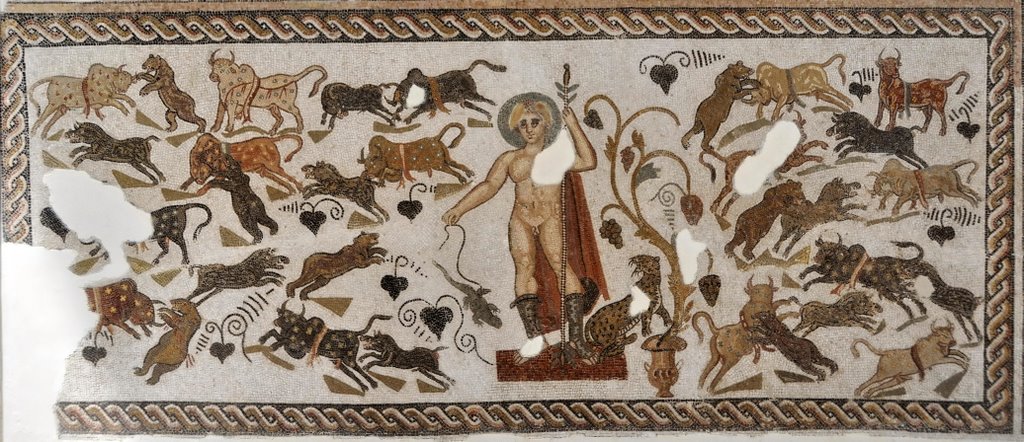
Bardo Museum Mosaic
(Note: This piece was also published at Foreign Policy In Focus)
______________________
1._____________________
“He couldn’t hurt a bird.”
Well maybe “he” couldn’t. After all, a mother knows her son. But over a short period of less than a year, he changed, didn’t he? And then he could, and did…and it wasn’t birds he hurt but people he killed. Thus spoke Yassine Al-Abidi’s mother shortly after her son, who had just participated in the mass murder of foreign tourists, had died in a shoot out with Tunisian security forces at the Bardo Museum in Tunis this past Wednesday (March 18, 2015). The Bardo is a block away from the Tunisian Parliament which was said to be discussing “combating terrorism at the time. Who knows, perhaps her characterization is on the mark, or was, until something obviously in the young man snapped. How else to account for the murderous rampage that followed resulting in the deaths of so many, Al-Abidi’s included.
The Bardo is one of the entire Mediterranean basin’s most important museums, the second only to the Egyptian Museum on the African continent. In a manner similar to how ISIS is systematically and wantonly destroying Syria and Iraq’s Assyrian and Babylonian cultural heritage, more than likely the Bardo itself was a target of this recent Tunisian terrorist attack, having an extensive collection of Tunisia’s rich and diverse cultural history – Carthegenian, Roman, Byzantine and of course Islamic (Arab and Ottoman), French colonial pieces, suggesting that the country’s culture, while today, largely Sunni Islamic, still remains a synthesis of these different traditions, and one that overwhelmingly, the people of Tunisia are quite proud. Particularly considered valuable, is the museum’s sizable collection of Roman-era mosaics covering over 400 years of Roman occupation of the country.
True enough Al-Abidi, like so many other Arab youth, showed few outward signs of hard-line Islamic radicalization. A Tunisian youth with a baccalaureate degree in French and a job as a travel agent, he was an unlikely candidate to become a casual mass killer. Nor could his family understand how it was “that a lively popular youth with a taste for the latest imported clothes could have done such a thing.” Still, Al Abidi’s transformation from what all appearances was a gentle, soft-spoken Tunisian youth to a terrorist who could kill with impunity, appears to follow a pattern of radicalization of many thousands of other Tunisian young men recruited through the country’s mosques who, after a short education/indoctrination, wind up fighting in Syria, Iraq, and Libya.
According to a number of sources, post-Ben Ali Tunisia has been one of the main sources of jihadi recruits – more than 3000 have left to fight particularly in Syria, Iraq and Libya with some 500 having returned to the country, now trained and many battle-hardened from their foreign experience. How many others, like Al-Abidi have slipped across Tunisia’s border into Libya to get military training there is difficult to tell but the-recently-removed-from-power Ennahdha Party had cooperated closely with more radical Salafist elements, permitting them in large measure to take over the mosques and to openly preach their messages of intolerance, hatred and jihad to the country’s largely unemployed youth, ripe for recruiting. Read more…

Najab, Iraq after a 2004 suicide bombing that killed 150. The city remains eleven years later – as one resident related – “little more than a pile of rubble.”
(Note: What follows are a number of student papers from a class I taught “History of the Middle East Since 1800” at the University of Denver – January 5 – March 12, 2015. Among them, were several I considered polished-to-publishable. The assignment was to compare two books on the same subject within the course’s framework. This paper by David Feuerbach compares two books on the impact of the 2003 U.S. led invasion of Iraq, the Second Gulf War. – Naked in Baghdad by Anne Garrels. (Picador: Farrar, Straus and Giroux Publishing Company 2003) and War Without End by Michael Schwartz (Haymarket Books 2008)
Iraq: Aftermath of the 2003 U.S. Led Invasion
by David Feuerbach
Section I
Both Naked in Baghdad and War Without End provide very interesting perspectives regarding the Iraq War. Naked in Baghdad by Anne Garrels, provides her experience in Iraq in the months leading up to the war, her experience during the initial invasion, and her experience during the beginning of the occupation. In her description of Iraq in the months just before the U.S. invasion, we see the tyranny of the Hussein Regime and the fear it created. In her interviews with the Iraqi people, she notes that everyone is afraid to speak out against Saddam Hussein for fear of being imprisoned or killed. She also has to deal with the tyranny of the regime herself, as she has to hire a “minder” to accompany her everywhere to ensure that she is not uncovering too much. We also see that despite the hatred and fear of Saddam Hussein, many people are worried about what a U.S. invasion will bring. “He hates the regime, but he is scared to death that what might follow could be worse” (Garrels, 44).
Her book then describes her experience during the invasion. She describes the U.S. bombing campaign, which the U.S. labels as “shock and awe.” We get a chance to see the damage that this campaign has on the lives of the civilians. She describes the destruction, the horrible living conditions, and the constant danger that the Iraqi civilians are forced to endure. She then depicts the scene in Iraq when Baghdad falls to U.S. soldiers. Many Iraqis who had been hiding from the tyranny of Hussein their whole lives demonstrate against the fallen regime, tearing down statues and posters.
Garrels then describes the situation on the ground a few months after the regime has fallen. Resistance has begun to build against the U.S. occupation. The real reasons for the U.S. occupation have been solidified in the minds of the people, the military campaign has become more brutal, and the economic situation in the country has become unbearable. She describes how the situation during the occupation has become far worse than the situation during the Hussein regime. Read more…

World proven oil reserves
(Note: What follows are a number of student papers from a class I taught “History of the Middle East Since 1800” at the University of Denver – January 5 – March 12, 2015. Among them, were several I considered polished-to-publishable. The assignment was to compare two books on the same subject within the course’s framework. This paper by Madelaine Momot compares two books on the geo-politics of energy – Rising Powers, Shrinking Planet: The New Geopolitics of Energy – byMichael Klare, Metropolitan Books, 2008 and The New Energy Crisis: Climate, Economics, and Geopolitics – by Jean-Marie Chevalier, Palgrave MacMillan, 2009.)
The Conflict of Energy and Politics
by Madelaine Momot
Over the past few centuries the world has advanced in immeasurable ways. While this progression has had many benefits, it has created one major consequence. The world is running out of energy sources while simultaneously harming the environment and damaging political relationships across the globe. The globalized world is facing an enormous energy crisis today. It is proving to be so complex and multi faceted, that finding a plausible solution that will lead to the beneficial development of every country is looking more and more unlikely. It is just recently that economists, politicians, and environmentalists have come together and noticed that there is a substantial problem, and current actions are only bringing a cataclysmic time closer and closer. With every country in the world involved in energy on some level, albeit using it at different speeds and efficiencies, it is difficult to align each state towards solving this issue tat will ultimately bring a form of destruction to all involved if not worked on immediately and cooperatively.
Regions across the world are searching for or finding new energy reserves, leading them towards profits, but also causing many political and long run economic collapses. Countries, specifically in the Middle East, have such power in reserves and prices of fossil fuel energies, that the rest of the world is forced to wait for their next move, as economy’s have become so reliant in energy. Wealthy powerful nations are plagued by their needy relationship to foreign oil and energy or the profits that sales bring in, while poor or unstable nations are being taken advantage of and exploited, left with nothing. Africa has been exploited for it natural resources, and relations with MENA have seemed to have only worsened over the past decade. With ever changing prices and limited resources, energy is one of the most important issues of our time as it has a direct influence on politics, the economy, and the climate. Focusing on these factors, the books “Rising Powers, Shrinking Plant: The New Geopolitics of Energy” by Michael Klare and “The New Energy Crisis: Climate, Economics, and Geopolitics” by Jean-Marie Chevalier examine the economic causations and possible political outcomes of our energy filled world. Conflict and tensions are arising as the new energy crisis promises social and financial repercussions.
Section I
While both books focus were written within a year of each other and focus on the same topic, the new energy crisis, Klare and Chevalier take slightly different approaches in the way they present the information. Additionally, the concentration of regions and attention to politics vs. economics varies between the two books. Klare starts his Book “Rising Powers Shrinking Planet”, by describing how states have been altered over the past 100 years. He explains that as industry has boomed around the world, the needs of a country have drastically changed. In order to keep an economy and businesses running, the Westernized advanced world needs petroleum. This has led to fierce competition in which the fight for control of energy is becoming more intense. Countries are divided into “energy surplus and energy deficient nations” (Klare 14). The idea behind this is that in the new international energy order, a “nations rank will increasingly be determined by the vastness of its oil and gas reserves” (14). Read more…
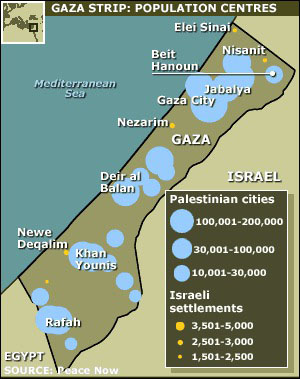
Gaza
(note: I read Uri Avnery’s columns about as much as I read anyone’s. I like the way he writes – it is relaxed, yet at the same time hard-hitting. He is funny and almost always draws on historical analogy and does so accurately. His take on Netanyahu’s speech before Congress has all of Avnery’s usual qualities. When I grow up I hope to be able to write like Avnery does. He is a part of a dying breed – a truly secular, progressive Israeli in a country that has been turning to the right politically and becoming dominated by Jewish religious orthodox fanatics. His commitment to a genuine peace with the Palestinians remains, despite all odds against it, solid as it has been since the end of the 1967 war, now almost a half century in the past.
That said, what was the purpose of House Speaker John Boehner divisive invite to the Israeli Prime Minister? The following were involved: 1. to build opposition to a possible agreement between the U.S. and Iran on Iran’s nuclear energy development policy. Yes, there are others involved in the negotiations, but it is essentially a U.S.-Iranian political wrestling match. 2. To use the speech to call for great increases in U.S. military spending as John McCain called for immediately after Netanyahu left the country. McCain called for a $50 billion increase in U.S. military spending, perhaps his price tag for supporting a U.S.-Iranian nuclear deal?
As someone who is more often than not critical of Obama’s foreign policy, especially as it concerns the Middle East, I would cite three moments where his choices were sound among the many where they weren’t:
- His refusal, despite pressure from then Secretary of State Hillary Clinton, to support Tunisia’s Zine Ben Ali and Egypt’s Hosni Mubarket, both long time U.S. allies, when they were about to be overthrown in early 2011.
- His refusal in September, 2013 to invade military force against Syria after chemical weapons were used in that country. To date we still don’t know who was responsible although the weight of the evidence have seen suggests it was the rebels, not the Assad government. The pressure to attack came from the usual neo-conservative wing of the U.S. power structure partnering with misguided liberal and left elements supporting military intervention for humanitarian purposes – not just an oxymoron, but a provocative, aggressive, nonsensical form of logic.
- The Obama Administration’s continued negotiations with Iran currently taking place and which will reach a climax, one way or another shortly. Although throughout these negotiations, the U.S. negotiators have “continued to move the goal posts”, the negotiations continue. If they succeed they would be among Obama’s greatest foreign policy achievements, and frankly, probably his only foreign policy achievement of any significance.
And it would be a constructive agreement, with positive consequences, opening up deepening U.S. Iranian cooperation in Syria, Iraq, Afghanistan – where U.S. and Iranian interests are not that far apart. It could also provide weight to more serious negotiations concerning Israeli-Palestinian peacemaking. Israel and Saudi Arabia would have to adjust. That would be their problem. Time for the U.S. to think of the broader interests of both the country (U.S.A) and the world. )
_____________________________
Uri Avnery
March 7, 2015
The Speech
SUDDENLY IT reminded me of something.
I was watching The Speech by Binyamin Netanyahu before the Congress of the United States. Row upon row of men in suits (and the occasional woman), jumping up and down, up and down, applauding wildly, shouting approval.
It was the shouting that did it. Where had I heard that before?
And then it came back to me. It was another parliament in the mid-1930s. The Leader was speaking. Rows upon rows of Reichstag members were listening raptly. Every few minutes they jumped up and shouted their approval.
Of course, the Congress of the United States of America is no Reichstag. Members wear dark suits, not brown shirts. They do not shout “Heil” but something unintelligible. Yet the sound of the shouting had the same effect. Rather shocking. Read more…
Local Boulder, Colorado Boy Makes Media Splash as Islamic Blogger in Istanbul…Strange, No?..

Long’s Iris Gardens – Boulder
(Note: This was also published at Foreign Policy In Focus)
Boulder Colorado
Gotta love it and I do – although it’s kind of an American Disney World – Mountains, Boulder Creek that I used to tube down on hot summer days 45 years ago with Michael Neuschatz, one of the best public libraries anywhere and of course the University of Colorado with its library and (to my tastes anyhow) stunning location. There’s also the Rocky Mountain Peace and Justice Center – one of the few locally grown and subsidized independent peace centers in the country, founded by, among others, LeRoy Moore who remains, now in his early 80s, one of the foremost authorities on the nuclear arms race, nuclear weapons, etc and David Barsamian, founder of Alternative Radio, with worldwide listener-ship. Then there is the Boulder Farmers’ Market – admittedly a bit pricey – but still, one of the better places to get locally grown organic food in the state, one of the founders of which was one Lowell Fey, my father-in-law. In an attempt to lower its carbon emissions, Boulder is also leading the country as a municipality intent on buying back, re-introducing into the public sphere its energy company from XCel Energy.
There is that “other Boulder” though – gotta wonder about it and I do. There has long been another side, a shady side to Boulder. Boulder is a place where middle, working class and poor have long been driven out by out-of-control development, a lot of high finance money looking for a scenic home. It is also here that Soldier of Fortune Magazine – one of the scummiest publications known to humanity – was published and where its publisher, Robert K. Brown, a strange dude indeed, lives, and still holds court. For years, another first class provocateur posing as a leftist, Ward Churchill, lived here as well, successfully inciting an untold number of guilt-ridden trust-fund white radicals and other misguided souls to commit factional acts of political stupidity for several decades. Not to mention The Rocky Flats Nuclear Weapons Plant. Yes, due to a massive peace movement, the place was raided – only time in U.S. History one federal agency (the FBI) raided another (the Energy Dept) the place has been closed down for decades…but the plutonium in the ground with Denver downwind from the place will poison the Front Range Environment for tens of millennia. No, it’s not in Boulder, but pretty close with many of the plants employees at the time living there.
Shannon Morris Becomes Shadid King Bolsen
Now as proof that Boulder can still produce some of the strangest in the tradition of Brown and Churchill, enter one Shadid King Bolsen whom in another life was named Shannon Morris before he changed his name and converted to Islam. Bolsen was highlighted in a Page 1, New York Times news feature today (Saturday, February 28, 2015). The story raises many questions about Bolsen, and perhaps also about The New York Times (ie – why would they interview him?) Read more…

The Hoegh Osaka, stranded off of Southhampton, UK
Just a month ago, in January, the Hoegh Osaka vehicle carrier was purposely run aground on a sandbank near Southhampton, UK in an effort to prevent it from capsizing after listing (tilting side to side) violently at sea. It was carrying $53 million worth of luxury cars, all destined for the Middle East. The haul included 1,200 Jaguar sports cars and Land Rover 4x4s, 65 BMW Minis, 105 JCB diggers and a single Rolls-Royce Wraith – alone worth an estimated £260,000 (or about $400,000). Although the cars were salvaged in generally good condition the manufacturer scrapped them fearing potential legal action in the event of future road accidents.
A few months prior, in September, 2014 two container vessels collided heading south into the Red Sea just outside the southern gates of the Suez Canal. As shown on video tape, the German-flagged 8,749-TEU (TEUs = Twenty foot Equivalent Units) Hapag-Lloyd container vessel MV Colombo Express suddenly veered left and east ramming into the Singaporean-flagged MV Maersk Tanjong halting traffic in the canal for three hours. Three containers from the Colombo Express were knocked into the sea. One of the containers was recovered but the fate of other two is not clear. It is possible that the Colombo Express’s “finely tuned hydraulic system” which controls the rudder, failed, causing the accident. Read more…
Arctic Sailings…The Northeast Passage
Ah, for just one time I would take the Northwest Passage
To find the hand of Franklin reaching for the Beaufort Sea;
Tracing one warm line through a land so wide and savage
And make a Northwest Passage to the sea.Westward from the Davis Strait ’tis there ’twas said to lie
The sea route to the Orient for which so many died;
Seeking gold and glory, leaving weathered, broken bones
And a long-forgotten lonely cairn of stones.Two verses from The Northwest Passage by Stan Rogers

The Yong Sheng, Chinese container ship that made the historic journey from Dalian, China to Rotterdam Netherlands across the Northeast Passage in 35 days, cutting two weeks off the usual path through the Suez Canal by two weeks
The Northeast Passage
“The Northwest Passage” sung by Canadian bard Stan Rogers – wordsmith and folksinger who was every bit Bob Dylan’s match and, in my immodest opinion, far better – is a song about a famous Canadian explorer, John Franklin, who, like many before and some afterwards tried to cross the Canadian Arctic by ship to establish a shorter maritime route between Europe and Asia. Franklin failed. In 1843, he and his entire crew perished from starvation, hypothermia, tuberculosis, lead poisoning and scurvy.
Rogers’ version is a hauntingly beautiful of that journey. Franklin’s effort, truth be known, was not at all unique. Many others died trying to establish a maritime route across the Arctic north of Canada in order to avoid the much longer and dangerous journey around Cape Horn and the tip of South America. Not only where there more than likely hundreds of failed attempts to carve out a similar northern route, but beginning in the 1500s already there were also efforts, especially from Europe also to pioneer a northeast passage, from the Atlantic Coast north to Barentz Sea and from their east across the Arctic Ocean north of Russia to the Pacific and to Asia. These efforts, history suggests, to cross from Europe to China across Russia’s northern tier, are nearly 1000 years old, with Russian sailors attempting to bridge the gap – and pushing further and further east in their efforts – as early as the 11th century (the 1000’s) but with no breakthrough to the east.
Similar efforts were intensified by European maritime powers – the English, Dutch, Danish and Norwegian – in their mad scramble to find a shorter way the Asia’s Chinese, Japanese, Korean and Indonesian riches. While the Europeans had finally got to Asia by rounding the Cape of Good Hope at the southern tip of Africa, the journey was both extremely long – 7050 miles – and dangerous. Yet no one succeeded for a variety of reasons – the weather being the primary one, but also Russian resistance to European competition came into play as well. However, it was only in 1878 that Finnish–Swedish explorer Nordenskiöld made the first complete passage of the North East Passage from west to east, in the Vega expedition with Lieutenant Louis Palander of the Swedish Royal Navy in command. Nordenskiöld showed such a journey was technically possible, and yet even in an age of increasingly sophisticated ice-breakers to show the way, there has been little to no traffic across this northern route, until recently, when a combination of stronger steel ship hulls and global warming have made the journey more practicable. Read more…
Auschwitz Seventy Years After Liberation

IG Farben Synthetic Rubber Factory, Auschwitz – Monowitz-Buna
History Moves On..Sort of…
It was 70 years ago, late January, 1945. I was on the scene, then 2 and a half months old but far away and safe. Not so many cousins of both my parents, caught in the grip of the Nazi war machine, turned into ashes in concentration camps and mobile killing vans, their bones turned to power that was recycled as fertilizer.
Now 70 years on, the suffering and death in the Auschwitz death camp is commemorated. Several hundred of the few survivors made the painful journey back to the camp, among them Jews, Poles Russians. But European politics blocked others. Vladimir Putin, Russia’s President, was not invited. It was a Polish decision “coordinated with the U.S. government” not to invite him although it was Soviet troops that liberated the camp on January 27, 1944. Putin took this rejection as “as an unforgivable slight that undermines the Russian narrative of the war and Fascism. Read more…
Ebola – The Blame Game: W.H.O. Chastized For Failing To Respond: Criticism of I.M.F. Structural Adjustment Policies Deflected
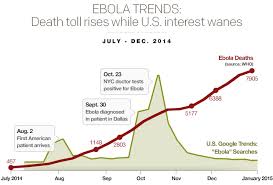
Ebola Trends: Death Toll Rises While U.S. Interest Wanes
(Note: This also appears at Foreign Policy In Focus)
Ebola is back in the news in Colorado and shortly hereafter I would speculate nationally.
A Denverite recently returned from West Africa countries affected by the ebola outbreak is being tested for the virus at the Denver Medical Center, one of the country’s 29 public health laboratories authorized to do ebola testing by the Center for Disease Control. The patient whose identity is being withheld, is considered low risk but is being held in a designated in patient unit any way as a precaution. Dr. Connie Price, the hospital’s chief of infectious diseases noted that “infection with the virus has not been confirmed.” Ebola symptoms may appear anytime between 2 and 21 days after initial infection. They include muscle pain, fever, diarrhea,vomiting, weakness, lack of appetite and abdominal pain.
Given the fact that the patient shows no symptoms as of yet, isolated in a medical ward monitoring his/her condition repeatedly there is a good chance that should the person actually be infected that the virus will be stopped in its tracks through early intervention. Early intervention appears to be one of the key elements in reversing ebola’s deadly course.
Before the recent mid-term November elections here in the United States, ebola was news both its reality in West Africa, its threat here in the USA and elsewhere. But since the election results were in, it has all but disappeared from the news, despite the fact that ebola continues to infect more people and take its growing share of victims in Guinea, Liberia and Sierra Leone. It is only at such times, when the specter of the ebola outbreak touches lives of people here in the United States, that the issue is re-ignited in the media here. Otherwise, the infection working its way through West Africa’s population – a terribly painful if not horrible way to die – hardly makes it into the media despite its cruel consequences .
To devote so much attention to ebola’s course in one place, and so little in another part of the world smacks of a pattern of discrimination. If that isn’t racism, then what is? Read more…
Shipwrecks 2014
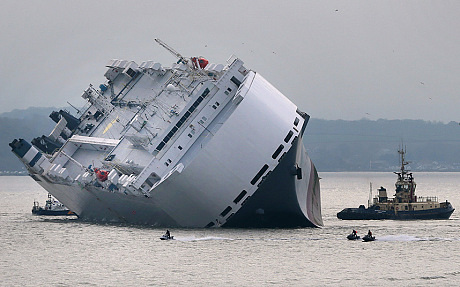
Höegh , Osaka, Japanese ship, registered in Singapore, run aground off the English coast on its way to Germany
My unofficial count – 107 ships sank last year. This according to Wikipedia’s “List of Shipwrecks in 2014”. In includes “all ships sunk, foundered, grounded, or otherwise lost during 2014.”
Already in 2015 four ships have gone down, among them the Sea Merchant, a cargo ship, sailing under a Tanzanian flag that was carrying 20,000 sacks of cement sank off Lobo, Batangas, Philippines after encountering rough seas and strong winds. Of her crew, 1 was killed and 19 survived. The Bulk Jupiter, a Bahamas registered cargo ship sank off Vũng Tàu, Vietnam with one survivor and the loss of her nineteen other crew members. It was carrying 46,400 tons of “iron ores from Malaysia to China.” The same day, January 2, a 2500 ton Cyprus registered ship, The Cemfjord – with a decidedly Scandinavian name – capsized in the North Sea off the coast of Caithness, United Kingdom. It was carrying cement. As of this writing, its crew of eight has gone missing and is feared dead. The next day, yesterday, January 3, the Japanese sounding Höegh , Osaka, a car transporter, but registered in Singapore, ran aground on the Bramble Bank in “the Solent”, a strait that separates the Isle of Wight from mainland England. Its crew of 25 were rescued by helicopter by the British coastguard.
A rather inauspicious maritime start for 2015. Read more…
From Whence The Ebola Virus?
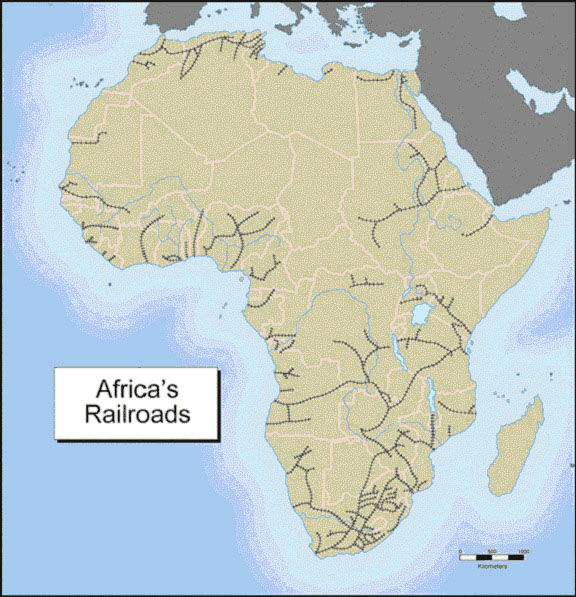 ____________________________
The allegations by Francis Boyle, legal expert on Biological and Chemical Warfare, that Ebola strain killing thousands of West Africans and infecting tens of thousands more is man-made in U.S. biological warfare laboratories should be the subject of a Congressional investigation. The further question emerges: What is going on in those laboratories?
____________________________
Ebola Spreads, U.S. Republicans Could Care Less Now That The Mid-Term Election Season Is Finished.
According to the World Health Organization’s latest statistics (December 30, 2014), the current outbreak of the ebola virus has now infected more than 20,000 people, almost all of them in three West African countries neighboring one another: Guinea, Liberia, Sierra Leone. Of those infected close to 7900 have died. The figures of the infected and resulting deaths continue to rise at an alarming rate. Far from having run its course, the epidemic continues to spread, trapping more victims in its wake. While there have past ebola outbreaks, virtually all in equatorial Africa, this latest one has spread to more people and taken more victims than all of the others combined.
In the run-up of the recent 2014 mid-term elections here in the United States, the Republicans made a great deal of noise critical of the Obama Administration’s handling of the crisis. Most of these criticisms were part of a campaign to whip up fear. It worked, the Republicans did rather well. Other than a la “Shock Doctrine” how might the crisis be used to spread neo-liberal economic policies, Africans suffering and dying does not interest them anymore now that the election season is over. Nor does the international effort to stem its spread. Read more…
Tunisia, A Country Skating On Thin Ice, Chooses A President
 (Also posted at Foreign Policy In Focus)
Tunisian Elections: An IMF Austerity Victory?
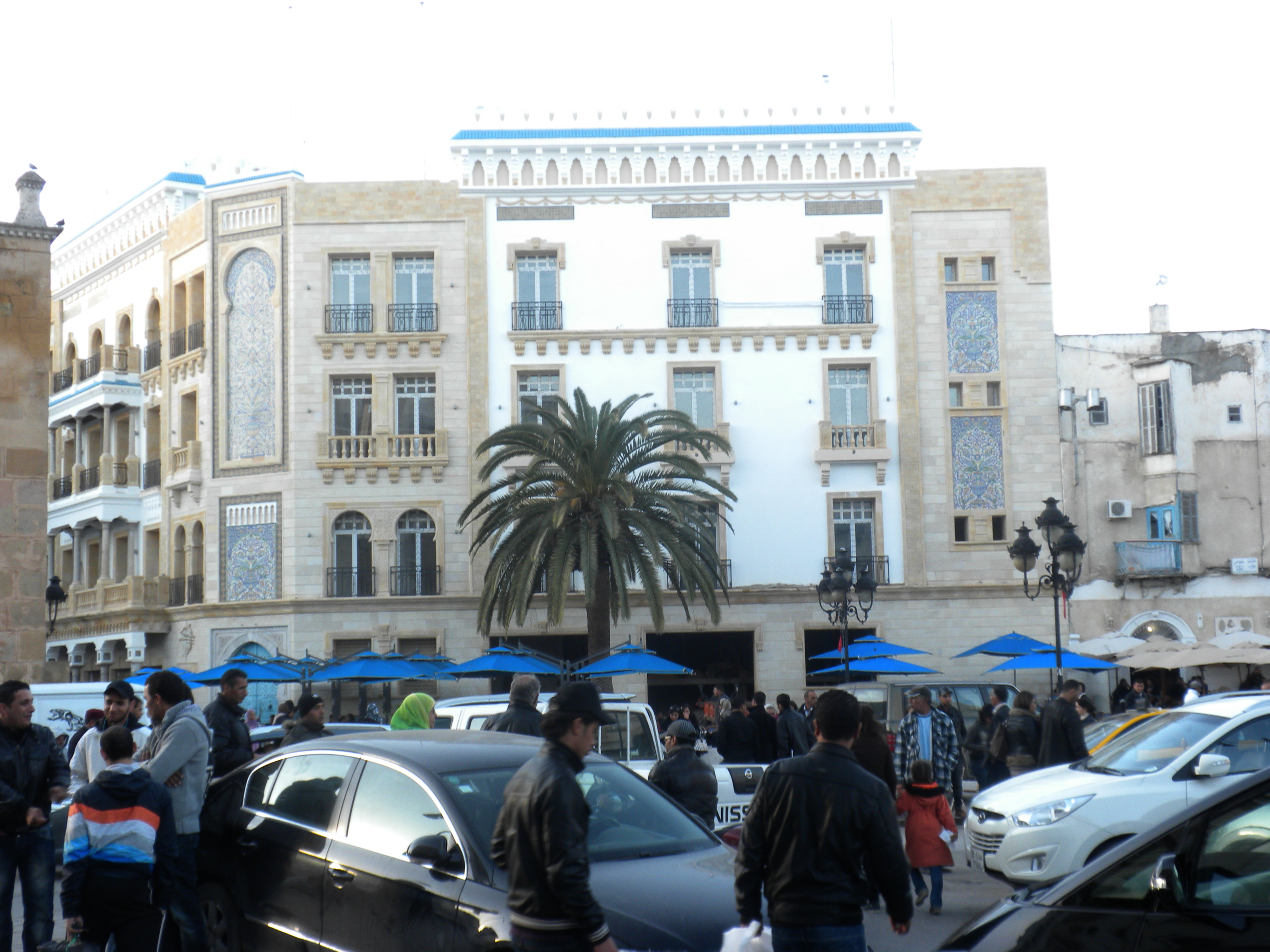
Beja Caid Essebsi was elected president of Tunisia in the country’s first free presidential elections since its 1956 independence. He won a clear majority , some 55% of the vote to Moncef Marzouki’s 45% in a run off election with 60% of eligible voters going to the polls. Essebsi’s ability to play down his connection to the Ben Ali regime – in which he served and to amplify his connection to the country’s generally acknowledged founder and first president – Habib Bourguiba. Immediately after the results were finalized, both Washington and Paris expressed their satisfaction with the results.
The Obama Administration is hoping that now that the elections are over the political parties of the two candidates will join forces, creating a conservative political coalition that can push an IMF austerity program (in exchange for a loan) through the new parliament, the main foci of which are to pry open the country’s growing energy sector to foreign companies and to lift the subsidies on fuel and electricity. Essebsi might have won the popular vote, but one has to wonder if the real winner is not the IMF austerity program (which by the way both candidates supported – and didn’t talk much about during the campaign). Will the political alliance Washington and Paris are nudging the two conservative parties to forge come together? Will it be enough to ram through the IMF austerity program through the Tunisian legislature? Or will the popular movement be able to resist what amounts to as yet another all out offensive against their country by international capital? Read more…
Burkina Faso – Following In Tunisia’s Footsteps

Burkina Faso’s burgeoning gold mine sector, in part exploited by foreign mining companies, many of them Canadian, in part by what is referred to as “artisanal” mining in which child labor, despite being against the law, is rampant
How do I feel by the end of the day?
(Are you sad because you’re on your own?)
No I get by with a little help from my friends
Mm I get high with a little help from my friends
Mm going to try with a little help from my friends
Lyrics from the Beatles Song, “With A Little Help From My Friends”
_________________________
Blaise Compaore: another skunk falls from power…
It all came to a head this past fall.
When “Francafrique’s”(1) man in Africa, Blaise Compaore tried to amend the Burkinan constitution to run for a fifth term, to retain his 27 year hold on power, people, many of them the country’s youth, poured into the streets of the country’s Ouagadougo and in other cities in a national movement of opposition. The country has a long history of social movements standing up for economic and political reform. The events in Burkina Faso are reminiscent of those in Tunisia. At the time that Zine Ben Ali was forced to flee Tunis, he also was trying to engineer a way to change the Tunisian constitution, not so much to personally remain in power personally but to open the doors for a presidential bid by his wife, the infamous (at least for Tunisians) Leila Trabelsi and her greedy siblings.
The Burkina Faso – Tunisia example does not end there.
On October 30, 2014, Burkina Faso’s National Assembly was set to vote an amendment to the constitution permitting Compaore to remain in the presidency. As in Tunisia in late 2010, in Burkina Faso, a public outcry and youth led massive street demonstrations first aired their grievances but within days quickly morphed into one calling for Compaore to step down and leave the country. As in Tunisia, the target of the demonstrations were the symbols of power: the National Assembly, the office of the president (which was set ablaze), foreign-owned and operated gold mines, the residences of high-ranking officials,the Ford concession (in which the president’s brother, François Compaoré had interests, the offices of the president’s political party, the Congress for Democracy and Progress. Thirty demonstrators were killed by the military before the latter, changed sides and tilted their support towards removing Compaore. Again as in Tunisia (and a few months later, Egypt) the calls from the streets for Compaore to step down had the support of the country’s military elites, most of whom refused to carry out Compaore’s orders to crush the demonstrations.(2)
As in Tunisia, it was the socio-economic crisis caused by decades of Compaore policies which ultimately led the country to rebel against his rule. Like Zine Ben Ali, Blaise Compaore was devoted student of World Bank and International Monetary fund structural adjustment programs which increased the country’s overall poverty by cutting government budgets, social programs, subsidies for food and medicine but did enrich those close to the president. With their insider knowledge and political support many of these were able to cash in on the sale of state assets for their own private, dominate the country’s foreign economic concessions, etc., again tendencies that reached criminal proportions in Tunisia. In the same manner that World Bank measurements on Tunisia in 2010 seemed to suggest a healthy economy, but hid a growing gap between rich and poor, so it is in Burkina Faso. The formal statistics indicated good per capita GNP growth (7%) but hid the growing economic disparities between the small circle of Burkinan rich and a growing number of impoverished,
Further, Compaore’s exit from Burkina Faso was greased by both by France and the United States, neither of which, until the advent of the Arab Spring, have had much of a tradition of supporting radical social change in the Third World as Algeria, Vietnam, Chile, Madagascar, Cambodia and dozens of other interventions amply demonstrate. Interestingly, rather than supporting Compaore’s extended tenure in power, both the world’s greatest military power, even if in decline, the United States and its strategic sidekick of late, France,(remember Libya, Mali, Central African Republic) together, discouraged Compaore from clinging to power. As, obviously with a little help from friends, Ben Ali and his entourage found sanctuary in U.S. ally Saudi Arabia, so Compaore too, got by with a little help from his friends. He was, as Anne Frintz notes in an article in the December issue of Le Monde Diplomatique, removed from Burkina Faso in a helicopter provided by the French government and given refuge in French ally Côte d’Ivoire (Ivory Coast). Read more…
Ebola – The Epidemic Is Far From Over

Kono Province, Sierra Leone, where the ebola virus epidemic has intensified. Home of diamond mining the region was heavily fought over and looted in that country’s ten-year Civil War which went on for 11 years (1991-2002) and left more than 50,000 dead. Kenema Province where the ebola virus exploded early on in the epidemic’s most recent outbreak was the site of a U.S. government biological weapons laboratory run by researchers from Tulane University and the Army Medical Research Institute of Infectious Diseases (AMRIID) at Ft. Detrick, Maryland. The Sierra Leone government ordered the lab closed and moved, in large measure in response to local suspicions that the lab might have been in some way responsible for the Ebola outbreak
_____________________________
(Note: This also appeared at Foreign Policy In Focus)
_____________________________
1. It ain’t over by a long shot. Far from it.
Now that the election season in the United States is over, and conservative Republicans and their right-wing talk show hosts on FOX news and the like can no longer stoke up fear on the issue, the West Africa ebola epidemic, which is getting worse, has essentially all but disappeared from the news here in the United States.
It ain’t over by a long shot. Far from it. The most recent news remains troubling. As an NPR news story noted, “New cases continue to rise exponentially.”
According to the latest reports, the ebola virus death toll in West Africa is now approaching 6,600 with an estimated 18,000 people reported cases. After claiming that the virus had been brought under control at least in Liberia and Guinea, now it appears to be gaining strength again in Sierra Leone where the government is reporting more than 100 new cases a day. The latest known outbreak has taken place in the rural areas of Kono, the country’s most eastern province just on the border with Guinea. In the past few days (December 13, 2014) “at least 87 people had died and been hastily buried, often without the precautions needed to stop the corpses from infecting the living”.
World Health Organization (WHO) spokeswoman, Winnie Romeril, indicated the situation was getting worse with the sick and dying flooding the district’s one small health facility, its staff exhausted from overwork. If not contained, early dire estimates suggested that the current outbreak could affect as many as 1.4 million West Africans before it runs its course. The economic costs both already suffered and those forecast are on a very large-scale. According to the Financial Times (Dec 12, 2014), the virus has already cost these three affected countries some $3-4 billion. That is just the beginning. An earlier World Bank estimate concluded that the total negative financial impact could hit has high as $32.6 billion.
Home to some 365,000 people, in part because it is rich in diamonds, Kono Province was among the regions hardest hit by Sierra Leone’s recently ended civil war during which time it was heavily fought over and looted. Although the home of many ethnic groups, “Kono” is both the name of the district and of a major ethnic group that resides in the region. The Kono, who have their own language, are mainly diamond miners and farmers. Besides mining alluvial diamonds, they grow rice, cassava, corn, beans, groundnuts, sweet potato, peppers, cassava leaf, greens, potato leaf etc as their main crops, along with banana, pineapple and plantain, and cash crops such as cocoa, coffee and kola nut.Its population dropped to its present figure from more than 600,000 prior to the outbreak of fighting. Read more…
 View from the Left Bank: Rob Prince's Blog