Iran, US and the Nuclear Agreement
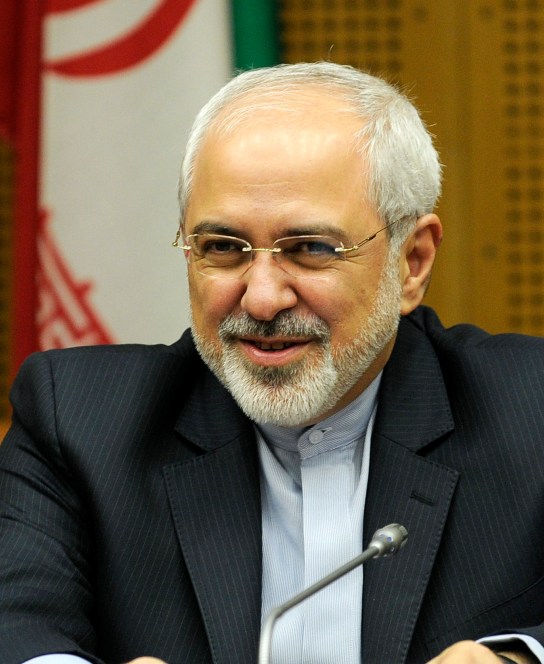
Mohammad Javad Zarif
by Ibrahim Kazerooni and Rob Prince
The recent information on short-term agreement in the Iranian nuclear issue is welcomed news that present unique and unprecedented opportunities for all parties involved. The least we can hope at this stage is that there is an encouraging shift in the US’s approach to Iranian nuclear issue from the rigid ideological to a more realistic position. President Barack Obama’s commitment to veto any Congressional legislation that might intensify sanctions against Iran in the next six months is a refreshing development that helps add momentum to the success of these negotiations.
A brief history of how this saga began would be helpful in understanding the positions taken by all parties in these long and arduous negotiations.
The history of Iran’s nuclear research and development began with the bilateral agreements between Iran and the US in mid-1960. Tehran Nuclear Research Center (TNRC), founded in 1967, housed at Tehran University, and run by the Atomic Energy Organization of Iran (AEOI) had a 5-MW nuclear research reactor, supplied by the US in that year. Iran signed the NPT on July 1, 1968 and after ratification of the Treaty by the Iranian parliament (Majlis), the Treaty went into effect on March 5, 1970. The Shah asked for and received assurances from the US that Iran would be given help and assistance to build as many as 20 nuclear reactors. He was encouraged by the US to expand Iran’s non-oil energy base and supported by a study by the influential Stanford Research Institute that concluded that Iran would need an electrical capacity of about 20,000-MW by the year 1990.
The Shah’s government awarded a contract to Kraftwerk Union (a subsidiary of Siemens) of (West) Germany at the time, to construct two Siemens 1,200-megawatt nuclear reactors at Bushehr and the work began in 1974. In 1975, MIT (Massachusetts Institute of Technology) signed a contract with the AEOI for providing training for the first cadre of Iranian nuclear engineers. In the mid-1970s with the French assistance, the Nuclear Technology Center at Isfahan was founded in order to provide training for the personnel that would be working with the Bushehr reactors. In 1974, Iranian government signed a contract with the French company Framatome to build two 950 MW pressurized reactors close to the Iraqi border near Ahwaz. Read more…
Russia and the Arabs by Yevgeny Primakov – Some Initial Thoughts
 Just finished Primakov’s `Russia and the Arabs’ – recommend it highly. Of course, it should be entitled `The Soviet Union and the Arabs’ as the book is mostly about the Soviet Union’s post World War II relations with the Arab countries and Israel. The last section does include post Soviet relations, most especially with Saddam Hussein’s Iraq before `the fall’.
It is written by the man – had he been more subservient to that drunken idiot Boris Yelstin – more than likely would have succeeded Yelstin as Russian president. But Primakov would not promise to pardon Yelstin for having very nearly destroyed the Russian social fabric during the decade of the 1990s when, in the aftermath of the collapse of Communism, the country nearly imploded. Vladimir Putin on the other hand, was more than willing to make such a compromise with ethics and decency, and so was given the nod. Putin followed in Yelstin’s steps; Primakov was cast aside forever. Difficult to tell how much or even if a Primakov presidency would have made much of a difference and anyway, the issue is today academic.
Over the years, Primakov’s analyses always stood out to my mind to be a number of notches better that the usual low-grade factional Soviet rhetoric. To my thinking – and I have followed Soviet Middle East policy rather closely for the past half century – Primakov’s analysis was always crisp, and intelligent; he explained Middle East politics on a more profound level than most. I am not surprised to read that on occasion he was in trouble with his more dogmatic superiors in Moscow for painting honest pictures that conflicted with their ideologically narrow view of the region. Read more…
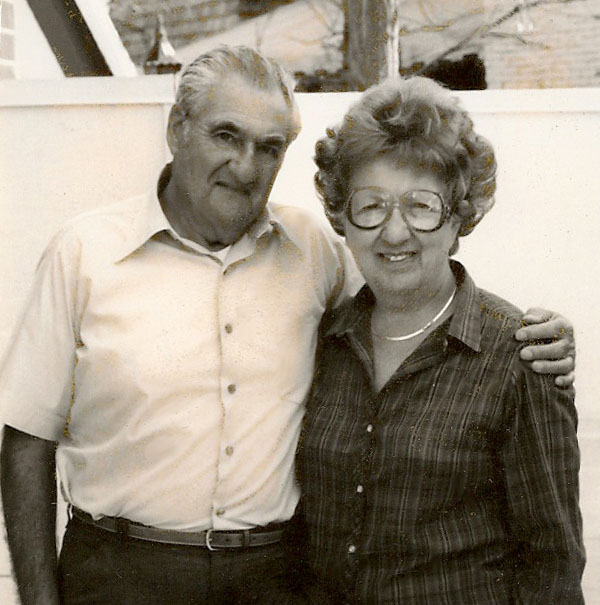
Rudy and Betty Schware – February, 1986
(The following is the piece that Gene Deikman wrote for Rudy’s Memorial [which took place, if I remember correctly, in 1995 or 6]. Rudy Schware was a very good friend of mine. I spoke at the memorial too but Deikman gave a good deal more texture to Rudy’s life. Deikman was a long time progressive Denver lawyer. If I remember correctly, he was hauled before the House of un-American Activities Committee and refused to testify. PS. Thanks to Henry Feldman and Doug Vaughan for reminding me of this statement)
“We will never see his like again”… Read more…
Tiguentourine (In Amenas), Algiers and Washington – A Year Later.

Habib Souaidia, author of “La Sale Guerre”; whose analysis of the Tiguentourine attack proved to be deadly accurate
(note: This also appeared at Counterpunch)
1. With Washington and London by his side “in spirit” – Bouteflika initiates one of the biggest purges in modern Algerian history
A year after the attack on the Tiguentourine natural gas processing complex, in In-Amenas commune within the Illizi Province of Southeastern Algeria, the consequences of those events are still reverberating.
Under intense pressure from the United States, Great Britain and Norway the Algerian government has been forced to make major concessions to international oil companies. Tiguerntourine is run jointly by British Petroleum (BP), Statoil (the Norwegian state oil company) in conjunction with the Algerian government’s energy company, Sonatrach
According to an open letter written by Hocine Malti, a former Sonatrach vice president and author of a major work on the Algerian energy industry, after having conducted their own investigation of the incident, the Americans and British pressed the Algerian government to undertake a major purge of high ranking military and security personnel responsible for insuring security at Algerian oil and gas facilities. Read more…
Sonatrach: Algeria’s Energy Company, 50 Years Later by Hocine Malti

Hocine Malti
(Note: What follows is an English translation of an open letter [original in French] to the Algerian people reflecting on the 50th anniversary of the founding of Sonatrach, the Algerian energy company. This article also appears at Foreign Policy In Focus)
Sonatrach: Algeria’s Energy Company, 50 Years Later[1] by Hocine Malti[2]
December 25, 2013
In a few days, Sonatrach, the Algerian energy company, will celebrate its 50th anniversary. I am not sure how to begin reflecting upon its half century of history. Should 31 December [2013] be cause for celebration? Or should it be more somberly noted that on that date, the national oil company marked its 50th year of existence. A celebration usually includes a formal ceremony that takes place in an atmosphere of joy, if not jubilation.
Does such an atmosphere exist today in Sonatrach or even in Algeria? Obviously not! Read more…
Eugene Rogan Speaking On His Book: The Arabs: A History
 Below are links that together encompass a talk of about an hour divided in six ten minute segments – Rogan speaks of his book, The Arabs, A History – which I consider one of the better histories of the Arab World. Yet to be frank, I was somewhat disappointed with his remarks in the video presented below – especially the flippant manner in which he describes Iran (in Part Two I believe). Books like this are important yet frustrating; important because the material is covered honestly and in a readable fashion; frustrating because the book covers so much territory, making it difficult to absorb.
The information the book is well presented as well as the political basis for much of what has transpired; this already makes to book very useful as there is little of that in English (that is decent in my mind). It is all written clearly, succinctly. There is much excellent use of Arab sources, both old and contemporary, which already separates this book out from so many others and puts it well above the crowd.
The problem is that for a novice – for which the book is meant – it is probably too much information, information overload. Still how else can one learn about the complex history of the Middle East (or anywhere else) unless one dives into the subject? And this book is as good as any to start the process. And if the reader forgets most of it, still, it can be later used as a source of reference.
Let me give you one brief example of how this works for me.
I was especially interested in the discussions leading to the Camp David Accords of 1979 (rather late in the book). I was among the few that publicly criticized the accords at the time – a rather unpopular position to take. Rogan’s analysis is no different from what I argued 35 years ago. Rogan’s discussion of Camp David hits on the basics, and does so well enough, accurately enough. But what struck me was his discussion of the lead up to that event – the fiscal crisis in Egypt that pushed Sadat at the time to attack Libya in an attempt to confiscate that country’s oil to pay Egypt’s bills. I had forgotten that little episode…a kind of prelude to Saddam Hussein attacking Kuwait in 1990 for the same reason.
There are so many little pearls like this in Rogan. He is a very thorough, careful researcher and has made a great deal of sense out of many aspects of Middle Eastern history that for Americans in any case, are quite confusing. A much clearer outline of events with tidbits of analysis comes through, most of it quite invaluable. I would say that the history up through the 1982 Israeli invasion of Lebanon is solid as is the tortured story of Israeli-Palestinian unsuccessful peacemaking and negotiations. The lead up to the U.S.-led invasion of Iraq, and the impact of that invasion on Iraq, the Middle East and U.S. policy is a bit thin as is the analysis of the deeper causes of the U.S. War on Terrorism.
Rogan is trying to be `balanced’ in his approach and to a large measure he succeeds; add to this that the man obviously has a deep understanding of Middle East history which is unusual and refreshing. All this makes the book a most valuable read. But as I came to the end of the book (today, Saturday, January 25, 2014) I was still left with a kind of uneasy feeling that something important was left out of the narrative. Certainly part of it is a result of his attempt to put together so much history in a little less that 500 pages.
Robert Fisk’s attempt to do likewise, The Great War For Civilization (and actually deal with a narrower historic framework) lasts a whopping 1000+ pages. In the modern period, Fisk and Rogan cover much the same material. Fisk’s take is more analytical; Rogan’s more descriptive. But my main concern/criticism of Rogan is elsewhere: although he makes comments from time to time concerning the U.S. role, he really fails to describe or explain very much the huge U.S. military build up in the region, its political impact.
Rogan hardly speaks of U.S.-Israeli strategic relations, the unending overwhelming supply of U.S. weapons, weapons technology to Israel, and hardly explores the strategic alliance between the two countries nor the aggravating consequence of this particular political marriage. He doesn’t seem to want to get into that subject very much. This leaves a hole in the narrative and ultimately the reader’s understanding of the region. In this respect, while he gives the official pretexts for U.S. military intervention in Iraq, Afghanistan or Israeli military strikes against its neighbors he seems to avoid the deeper logic involved in this behavior.
I’m not trying to be picky here – addressing these subjects is key to understanding the underlying tensions in the region. Still, a book worth reading, valuable history, will serve as a useful reference in years to come.
Ariel Sharon Dies After Eight Years in a Coma
Jim Wall on Ariel Sharon…
by James M. Wall
Ariel Sharon died January 11, 2014, eight years and one week after he suffered a stroke January 4, 2006. At the time of his stroke, Sharon was the 11th Prime Minister of Israel.
The stroke left him in a permanent, brain dead, vegetative state. It was not the final chapter of life a proud man could have wanted.
A medical blog described Sharon’s final years: “With the help of modern medicine, his body soldiered on. His kidneys no longer worked, and he received dialysis to keep them operating. In 2013, he even underwent surgery to treat an infection related to his kidney failure”.
Deprived of dignity, his body systems sustained by modern technology, Sharon lingered for eight years, largely forgotten by the world. Ramifications of his legacy, however, remain very much alive in Israel. Sharon embodied and acted on the worst elements of intolerance, racism and greed…
View original post 1,666 more words
Netanyahu’s “Shibboleths” Scuttle Peace Talks
by James M. Wall
“No partner for peace” is one of several “shibboleths” Prime Minister Benjamin Netanyahu (right) and his cabinet are now using to scuttle any peace agreement with President Mahmoud Abbas, no matter how often U.S. Secretary of State John Kerry travels to Tel Aviv.
As readers of Judges 12:6 are well aware, pronunciation of the word “shibboleth” is used to separate friends from enemies.
In episode eight of the second season of the television series West Wing, for example, President Josiah Bartlett used “shibboleth” to determine that Chinese immigrants were truly Christian and therefore deserved admission to the U.S. To assert that Israel “has no partner for peace” is a verbal signal, a “shibboleth”, which quickly certifies that the speaker is “with Israel”, without reservations.
When John Kerry returned last week to the Israeli-Palestinian peace talks for his tenth visit, he brought with him a proposal to…
View original post 1,728 more words
The Colorado State Veterans Home at Fitzsimons: A Ten Year, Mismanaged Administrative Disaster. Part One: The `Guv’.
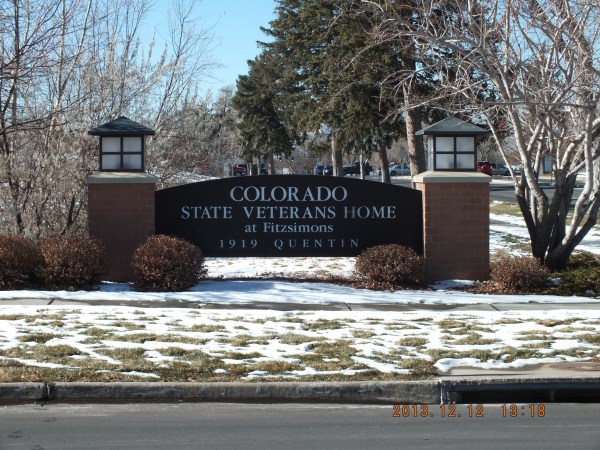
Colorado State Veterans Home at Fitzsimons
Part One of a Series: Between Tragedy and Farce: Governor John Hickenlooper’s Sorry Record with Colorado State Public Employees… .
“A Fish Rots From The Head Down”
At his annual Christmas Party at the Governor’s Mansion, Colorado Governor John Hickenlooper was holding court – as is the tradition – when two employees from the Colorado State Veterans Home at Fitzsimons, both members of the statewide public employee’s union ColoradoWINS, approached him. Giving them his undivided attention for a full 60 seconds, the governor listened as the two did their best to inform him of the hostile work environment at the facility. They warned the governor that, if anything, the situation continues to deteriorate.
Hickenlooper was indeed concerned, not so much with the crisis itself but how such a crisis might effect his election chances. Hickenlooper, caught in the middle! – always trying to put the brakes on those left of him (labor, minorities – ie the main constituency of the Colorado Democratic Party) while fearing those on his right whose financial support he doesn’t want to alienate. Hickenlooper would like to get through the upcoming 2014 election season with his thin Democratic majority in the State legislature intact. He fears “controversy” – and will put off making commitments to constituents as long as possible. This does not bode will for Colorado’s labor movement that would like to see state laws strengthening union and employee rights in both the public and private sectors.
John Hickenlooper and I met once, a memorable experience for neither of us. Read more…
Tunisia – Three Years After Bouazizi…

Amilcar, Tunisia
(note: This piece, edited and improved, appeared at Foreign Policy In Focus and Fair Observer in the UK)
by Rob Prince
1.
About a year ago, in Los Angeles, I asked a Tunisian-Jewish friend, Jaco, his thoughts on the post-Ben Ali Tunisian political situation. He thought about it for a second and summed up the Tunisian reality in two sentences. “Things will get worse. And then they’ll get better”. Nicely put but harder to see the bright future at the end of the rainbow at the moment!
Three years ago, on December 17, 2013, Mohammed Bouazizi immolated himself in Sidi Bouzid, an impoverished town in the Tunisian interior, setting off a social explosion that would first force Zine Ben Ali and his wife Leila Trabelsi from power before expanding to the entire Middle East.
Three years later, the prospects for “a new Tunisia” are somber enough. The talk of Tunisia being “the only successful democratic transition” in the Arab World, or the like, is, unfortunately, more wishful thinking than fact. Democracy – if that is what one can call the tumultuous process of the past three years, hangs on, but only by a thread. Read more…
Mali Timeline…Some Key Dates

Mali – war zones…April 2012
Mali’s Post Independence History Differs Some From other Former French African Colonies
– 1960 – Mali achieves independence. Its first president, Modibo Keita was a fervent promoter of African unity in the early post-colonial period (1960s), but the divergent view of how African unity might proceed kept him from realizing his goal of an economically, socially and politically more unified continent.
– French military presence in Mali has a long, uneven history. After independence, under Keita’s leadership, French military bases in the country were closed.
– Economic difficulties grew over the course of the 1960s as a result of the meager resources available for development at the time. As a result he lost support
– In November, 1968 Keita was overthrown by a military coup led by General Moussa Traoré – with the support of France. Traoré instituted a harsh military dictatorship which prohibited all democratic expression and opposition.
– 1985 – Traoré signs a military cooperation agreement with Paris; but with clauses that limited both the size and scope the French military presence.
– 1991 – popular demonstrations grow – at one, the army fires on demonstrators killing 300. By the end of the year Traoré is overthrown by the military supported by many elements of the population.
– a transitional committee is created, headed by Colonel Amadou Tourmani Touré (known as ATT). Touré organized elections and in
– 1992 – a civilian, Alpha Oumar Konaré. Konaré is the only Malian president to retire (without being overthrown by a coup) after two terms in office in 2002.
– 1992 – a national pact between the Malian government in Bamako and the coordinating committee of Tuareg (Azawad) rebels is signed. France, as in Rwanda – sends a contingent of DAMI (Détachement d’assistance militaire) to Mali.
– this first detachment of DAMI is placed in Sévaré (near Mohti) – in between the conflict zone between the rebels and the national government
– 2 French military officers trained to sections of 40 Malians in counter-insurgency tactics
– late 1990s – military cooperation extended. 2 national administration schools founded (by French in Mali) – ENVER – now with increasing cooperation from the United States – now getting involved under the cover of the struggle against terrorism
– 2002 – Amadou Tourmani Touré returns on the scene and wins elections. He refuses to sign different economic and military accords pressed on him by Paris. It suggests that he never loses his contact with the popular forces in his country. He says close to the very active “Association des Maliens Expulsés.”
– November, 2002 – the US State Department announced that officials from its Office of Counterterrorism had visited Mali and other West African countries to brief governments on the Pan Sahel Initiative
– although he publicly stated that he would be willing to step down after two terms. Unfortunately, his regime was also characterized by extensive corruption with those close to power centers implicated. His rule was also characterized by a history of intimidation and repression of journalists and trade union leaders.
– his 2007 re-election campaign was marked by extensive election fraud, and the result – that he had achieved some 71.20% of the vote was viewed with no small amount of cynicism.
– finally the economic situation in the country was terrible. Mali remained one of the world’s poorest countries, eroded by endemic corruption and incapable of providing even the most basic human services in spite of mineral wealth which made Mali one of the principle gold-producers of the region.
– in the end, Touré had ruled Mali as a French puppet since 2002 and had previously been accused of drug dealing with war lords.
– 2007 – US military “assists” the Malian army in countering a Tuareg revolt led by Ag Bahanga.
– 2007 – 2008 – Annual Flintlock Exercises take place in Mali; see Wikileaks Cable of meeting between US Congressman Jim Marshall and Touré
– 2010 – French hostages seized. France forms a 250 man Malian special forces unit; France asks Mali for “temporary” base rights to fight Islamic terrorism; fearing Islamic retaliation, Amadou Tourmani Touré refuses. As a result,. French special forces are beefed up in Niamey, Niger.
– Amadou Tourmani Touré’s refusal to permit a French military presence is probably a key element in France’s lack of response to his being overthrown in a military coup. France did nothing to prevent it.
– 2012 – the MNLA (Azawad National Liberation Movement) wages war against the central government. Government engages in a half-hearted effort to stem the northern rebellion which grows in scope. It is also a failure for the U.S. military who had trained the Malian military for just such a possibility. Despite the training, Malian soldiers were poorly trained and badly equipped, with many having gone hungry.
– March, 2012 – generals of Mali’s military (green berets) overthrew Amadou Tourmani Touré, inaugurating the National Committee for the Restoration of Democracy and State. The coup was led by Captain Amadou Aya Sanago, who had received six training military missions in the United States. The military led coup was supported by a mass, popular movement called the March 22 Movement led by left-wing deputy Dr. Oumar Mariko.– Many supporters of the coup had demonstrated in support of Muammar Khadaffi during the Libyan War of 2011; they wanted a strong Malian state to defeat what they considered to be a “French conspiracy” to destabilize and re-colonize the mineral rich country, by using jihadist terrorism as a pretext for intervention.
– reaction of the international community to the popularly supported Malian coup was swift and a la Iran – typical. The coup was condemned and sanctions were imposed on Mali; the Community of West African States – ECOWAS, threatened to invade to “restore democracy”.
– this international pressure stymied the efforts of the Malian military to gain control of the situation in the Northern territories. The sanctions halso helped precipitate a humanitarian crisis as Malian goods could not be transported from ports in the Ivory Coast and Guinea.
– all this weakened the country’s defenses enabling the terrorists to capture village after village. In spite of the fact that the international community was fully aware of the advances of the terrorists, it expressed more concern about the “restoration of democracy” than stopping the terrorist advance
– the generals finally ceded to international pressure and agreed to nominate Diocounda Traore – (who has strong ties to NATO) – as interim president. It is Traore who would provide the pretext for the French intervention in a letter sent to the United Nations.
– April 6, 2012 – Tuareg rebels in N. Mali declare independence; announce intention to form a democratic state in Azawad.
– January 2013 – French-led military intervention begins.
– July 20, 2013 – Malian presidential elections take place. – 27 candidates run for office; reports of widespread fraud and irregularities with thousands of NINA (Numero d’identité nationale) voter cards not being delivered to voters. The electoral lists were the same asin 2009, excluding some 300,000 Malians who had come of age. Only 300 vote cards had been distributed to the 730,000 refugees in camps in Burkina Faso, Mauritania, Algeria and Niger. Burkina Faso’s 50,000 Malian refugees received only 30 NINA cards
Mali – A Year After The French-led Military Invasion: Instability and Conflict Continue.

Outside the great and ancient walled city of Timbuktu
(Note: This article is published at Foreign Policy In Focus)
French military in Mali: an enduring presence
December 14, 2013.
A mere nine months after a French-led military intervention supposedly stabilized the country, Mali is once again in turmoil. Despite Paris’ claims that all of its military would leave, more than likely the 1000 remaining French military personnel in Mali are there for `an enduring mission.’
At the same time, at present, momentum for another major French-led military intervention in the Central African Republic will result in more permanent French troops on the ground elsewhere on the continent, joining those already there in Chad, Ivory Coast just to name a few. On the surface, Paris insists it is drawing down its African military presence and it is true few permanent bases now exist. But that is deceptive and essentially for public consumption. Publicly financial considerations are pressuring Paris to draw down its African military presence. But what is happening is more of a re-organization rather than withdrawal. In fact the new French military face in Africa (Libya, Mali, now Central African Republic) might be smaller in size but is in many ways more aggressive and brutal than the old face.
A French re-militarization of Africa, under the well-worn pretext of humanitarian intervention, is in the making. It is of the `meaner-leaner’ variety: fewer permanent French troops on the ground, but infrastructure in place for quick deployments from S. France and off shore air craft carriers, much more extensive use of the French special forces whose activities are more difficult to trace (although not impossible). Taking advantage of hostage crises, domestic tensions in a number of African states (Mali, Central African Republic) and waiting for the moment when French public opinion can be successfully manipulated (not difficult by the way), the French are in the process of perfecting a new style “rapid deployment force” kind of military intervention in Africa: deadly for Africans but quite popular and with broad public support in France itself.
While humanitarian considerations provide the pretext, this new French military sub Saharan African surge is more accurately about protecting France’s access to raw materials and strategic resources on the continent at a time of increased resource wars than about saving African lives or promoting development and democracy. A cynical assessment perhaps, but one which will probably prove to be accurate. Read more…
Good Bye Nelson Mandela…

South Africa – mineral and agricultural wealth (in French)
My gosh, he’s gone, but then he lived – body and soul – for some 23 years after he was freed from a lifetime of incarceration. What a constitution the man must have had, given all the suffering he endured. The man, Nelson Mandela.
In the same way people pass over Martin Luther King Jr.’s criticism of the link between racism at home and U.S. Imperialism abroad, they pass over the fact that Nelson Mandela was decidedly not a pacifist (even though he had such a calm and peaceful looking face!). He was the leader of the armed wing of the African National Congress (A.N.C.)and was arrested, charged and convicted for having participated in armed struggle.
While Israel, during those apartheid days, cooperated with S. African Apartheid to produce joint nuclear explosions, many, many S. African Jews were on the `other side of the fence’ right there with Mandela, members of the A.N.C. and one of the most under-rated and effective Marxist parties of the 20th Century – the South African Communist Party. Besides its impressive political work in its homeland, the South African Communist Party was one of the few communist movements to make an honest and critical assessment of the failures of Soviet Communism; it was so much an integral part of the effort to liberate South Africa from Apartheid, that even today it remains a legal and highly respected part of the political landscape of the country. From what I know Mandela was not a member, but he worked closely with it in the coalition that finally overthrew the racist filth that was Apartheid. Read more…
Walmart: The Face of Capitalism Out of Control…

a Walmart demonstrator, Lakeside, Colorado (just w. of Denver). One of 500 who showed up to protest Walmart’s treatment of its employees; a part of demonstrations nationwide…
Earl Butz: Man of the People.
Forty odd years ago, the nation was blessed with a Secretary of Agriculture named Earl Butz. Butz was a visionary of sorts – not the sort I am particularly interested in, but still. Butz came to us from the great state of Indiana. He grew up in the 1920s when that great state had the nation’s largest Ku Klux Klan contingent of several hundred thousand dues paying members. His lifetime bigoted remarks against Catholics and the pope are very much in line with the KKK’s virulent anti-Catholic views of that decade. His kinship to the KKK (I don’t know if Butz or family members were in it – but his thought patterns resonate with KKK detritus) was expressed in another way. While claiming to represent the small farmer, the “little man”, no man served mega-corporate interests in America as thoroughly and faithfully as Earl Butz, who was, until the day he died, a dyed in the wool reactionary and unrepentant racist. Read more…

photo credit: Marcus Bleasdale
(note: This also appeared at “Africa Calling“ in Great Britain and Foreign Policy In Focus: for what is an EXCELLENT background piece to the overthrow of Bozize, I recommend this one by Alexander Mezyaev)
Central African Republic’s On-going Agony
Khadidha-Aladji-Abdou, pictured left, is only 30 years old, but looks much older, the horrors she has experienced branded not only in her face but in her soul. The picture is graphic, one of many; unfortunately it is accurate.
The caption by her face reads “…[she] saw all of her three children and husband, his second wife and her four children shot dead and herself was shot in the head. She’s the only survivor of that incident. Khadidha-Aladji-Abdou was shot in the back of the neck and left for dead with several other members of her Perhl [ethnic] group.” The Perhl are a small Moslem ethnic group; in all Moslems, who tend to live in the more northern regions of the Central African Republic (C.A.R.), near the Chad border, make up somewhere between 10-20% of the country’s predominantly Christian population.
 View from the Left Bank: Rob Prince's Blog