General Toufik: Algeria’s God
 (note: This piece was written by Jeremy Keenan. It is lifted from two places: Al Jazeera on September 29, 2012 and Le Quotedien D’Algerie which apparently reprinted it today, Sunday, February 17, 2013. It gives a scathing, but to my knowledge, accurate portrait of Algerian General Mohamed Mediene, a close friend and longtime collaborator with the U.S. Pentagon, a place where Mediene happened to be on September 11, 2001 when a terrorist manned commercial airliner slammed into the center of U.S. war planning. Since 9-11 Algeria has been an increasingly important U.S. strategic ally – a relationship I have started to explore in some of these blog entries and will continue to do for some time in the future. Keenan is also the author of The Dark Sahara, which I recommend to anyone interested in deciphering the bizarre world of Saharan politics)
++++++++++++++++++++++++++
by Jeremy Keenan
September 2010 is the 20th anniversary of the world’s longest serving ‘intelligence chief’ taking office. The man in question is General Mohamed ‘Toufik’ Mediène, the director of Algeria’s Département du Renseignement et de la Sécurité (DRS).
He was appointed head of the DRS in September 1990, 15 months before Algeria’s ‘Generals’, or ‘the group’ as they were known at the time, which included Mediène (then a colonel), annulled the elections that would have brought to power the world’s first ever democratically elected Islamic government.
To serve as head of the intelligence and security service of one of the world’s most ruthlessly repressive and corrupt regimes for 20 years is an extraordinary achievement. Felix Dzerzhinsky, the founder of the Cheka and forerunner of the KGB, effectively ‘controlled’ the Soviet Union for nine years (1917-1926); Lavrenti Beria, head of the NKVD, terrorised it for 15 (1938-1953); Hitler’s chief of police, Heinrick Himmler committed suicide after 11 (1934-1945), while General Hendrik van den Bergh ran apartheid South Africa’s Bureau of State Security (BOSS) for 11 years (1969-1980). Mediène has surpassed them all. Read more…
Algérie : lettre ouverte au général de corps d’armée Mohamed « Tewfik » Médiène, Rab Dzayer[1]
Algérie : lettre ouverte au général de corps d’armée Mohamed « Tewfik » Médiène, Rab Dzayer[1]
par Hocine Malti, 16 février 2013

In Amenas Oil and Natural Gas Facility in the S.E. Algerian Sahara
(Note: In English. This is the original open letter written in French by Hocine Malti, author of Histoire Secrete du petrole algerien. Sent to me by the author, it is addressed to Mohamed “Tewfik” Mediene, head of the Algerian security apparatus Le Departement du Renseignement et de la Securite. It regards an investigation of corruption of Algerian officies, a result of Italian-Sonatrach business deals. It accuses Mediene of being willing to sacrifice some middle management types in Sonatrach, the Algerian oil and natural gas company, in order to protect those who have made the main financial killings on such deals, including Mediene himself. As such, it is, to put it bluntly, a courageous letter. Time permitting, I intend to translate and comment upon it in full in the not so distant future.)
+++++++++++++++++++++++++++++++++
Cette fois-ci, ce n’est pas à vos collaborateurs enquêteurs que je m’adresse, mais à vous, patron depuis septembre 1990 du tout puissant DRS (Département du renseignement et de la sécurité), Rab Dzayer, le « Dieu de l’Algérie ». N’est-ce pas ainsi que vous vous êtes présenté un jour de 1999, dans les circonstances que vous savez ? Selon l’adage populaire, « mieux vaut s’adresser au Bon Dieu qu’à ses saints » ; ce que je fais aujourd’hui. Vu que vous êtes en mesure de décider et d’imposer ce que bon vous semble à toute l’Algérie, à tous ses hommes et ses femmes et notamment à toutes ses autorités civiles, militaires, politiques et juridiques, je suis convaincu que vous accorderez des réponses et une suite positives aux questions et requêtes que je m’en vais vous présenter.
Nous venons d’apprendre que, le 10 février 2013, le parquet d’Alger a décidé de lancer une nouvelle enquête sur les affaires de corruption au sein de l’entreprise nationale des hydrocarbures, un dossier qu’il a intitulé « Sonatrach 2 ». Afin de donner l’impression qu’ils étaient à l’écoute de l’opinion publique et ne pas reconnaître qu’ils se sont en réalité trouvés à la traine de leurs collègues italiens, les magistrats algériens ont indiqué dans leur communiqué officiel qu’ils avaient déclenché cette enquête suite aux informations rapportées par la presse nationale. Laquelle n’a fait que reprendre, comme vous le savez, les décisions du parquet de Milan telles que diffusées par les médias italiens. Mais la vérité, nous Algériens, la connaissons : nos magistrats étaient en fait dans l’attente d’instructions de votre part afin d’agir ou d’ignorer la tempête médiatique de ces derniers jours. S’ils ont déclenché cette nouvelle enquête c’est que vous, Rab Dzayer, avez donné votre feu vert. Read more…
Tunisia: The Party’s Over: The Assassination of Chokri Belaid

Besma Belaid, holding a picture of her husband, assassinated in Tunisi, February 6, 2013Tunisia: The Party’s Over…
(Note: This piece appeared as a featured column at Foreign Policy In Focus with a different title (and better edited). Tunisia Boils Over. The piece also appeared in The Eurasian Review.
1. Four shots heard round Tunisia.
`They’ have taken to the streets again in protest, in their tens of thousands, – maybe more – this time to protest a political assassination and the general state into which the country has fallen. Once again their anger has overcome their fear. Their sense of decency and dignity, that which has propelled them to the streets before, drives them on.
The euphoria that marked the success of the Tunisian revolt, triggering the region-wide Arab Spring has long dissipated. In its place, sharper and meaner domestic struggles over the direction of the country’s future have surfaced. Two years after a united populace essentially expelled dictator Zine Ben Ali, his power-hungry wife, Leila Trabelsi and their families from the country, Tunisia is today a divided country, divided along religious and class lines.
Tensions came to a head last week.
Two years after a united populace essentially expelled dictator, Zine Ben Ali, his power-hungry wife, Leila Trabelsi and their families from the country, Tunisia is today a divided country, divided along religious and class lines.
On the morning of Wednesday, February 6, 2013, Choki Belaid, a leader of a small coalition of leftist/progressive groups, was assassinated in front of his Tunis home by a professional hit squad of three masked men who put four bullets into his head and chest. While condemning the assassination in rather strong terms, at the same time, probably fearing the possibility of a more independent minded alternative, the U.S. State Department expressed their continued support for the current government. Read more…
The Magnificent African Cake – Four Part Series
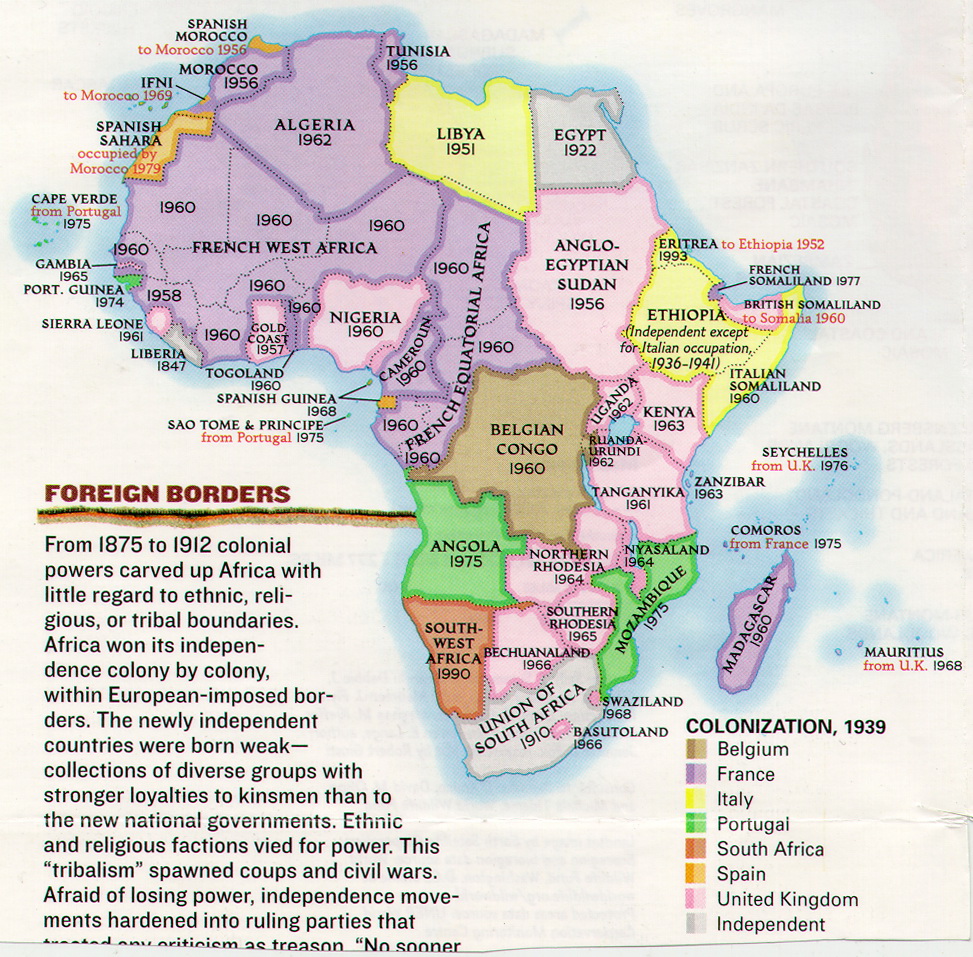
Africa – 1939 – Colonization Map
This four part series is a shorter, stripped down version of an 8 part video (vhs) series that lasts eight hours, done in the late 1980s by Basil Davidson. Here it is boiled down to about an hour. Still, it is excellent.
The Magnificent African Cake – Part One
The Magnificent African Cake – Part Two
The Magnificent African Cake – Part Three
Mali – Rob Prince on the Radio

Azawad – the name the Tuaregs give to themselves to the northern regions of Mali.
Antiwar.com – Scott Horton’s Radio Show. February 5, 2013. (this show goes for about a half hour)
Africa: Rivers of Gold (from the Basil Davidson Series – Africa: Birth of a Continent). It is about Malian history
The In-Amenas Fiasco – Glitch in the Algerian-U.S.-French Security Love Fest : Part Two

The Mali Music Festival … considered `Mali’s Woodstock’
This entry also appears at Foreign Policy In Focus, Algeria Watch and Portside
Note: Part One of the Series
____________________
“There are two kinds of history – the official kind, full of lies, which is taught in schools – history ad usum delphini; and there is secret history – in which we learn the real causes of events – a shameful chronicle”
– Balzac. Les Illusions Perdues
_____________________________________
1. Mali: New Front of the War On Terrorism
No doubt the attack on the In-Ameras oil and gas facility in the Algerian Sahara is related to the events in Mali, where France has just landed troops in an effort to dislarge the Islamic militants who have taken over Mali’s northern regions. What are the pretexts, the deeper logic of the French Malian intervention? One would think that people wouldn’t fall for it yet again: `We’re just sending the troops to protect innocent lives and support democracy’ – humanitarian interventionalism. Kosovo, Iraq, Afghanistan, Libya.
Now add Mali to the list.
But once again, it works like a charm, long enough at least to get French troops on the ground in Mali from whence it will difficult to extract them for some time. It helps to have a weak UN Security Council resolution a la Libya which doesn’t condone sending troops but is vague enough to give a thin veil of legitimacy – the suggestion of international law at work – to cover war crimes. Combine that with some wacko Salafist radicals, a vital element in the mix, who destroy Sufi shrines and rough up women, forcing them, veiled, back in the kitchen without music on the radio and the combustible mix is complete. Read more…
The In-Amenas Fiasco – Glitch in the Algerian-U.S.-French Security Love Fest ; Part One of a series

Algeria – Oil and Gas Pipelines – (In-Amenas circled)
Note: also posted at Algeria Watch and Foreign Policy In Focus
Part Two of the series
_________________
“The best-laid schemes o’ mice an’ men Gang aft agley.” (The best laid plans of mice and men go often awry)
from Robert Burns “To A Mouse On Turning Her Up in her Nest With A Plow. November, 1785″
__________________
One of the largest hostage seizures ever ended with the death of 80 people, many of them foreign workers at Algeria’s natural gas complex at In-Ameras, located nearly 1000 miles from the capitol, Algiers, and less than 70 miles from the Libyan border deep in the Sahara. In the end it was both a human and political fiasco, the regional implications of which are still evolving.
It was supposed to be an impressive show of force, `a message’ of how efficiently the Algerian government could deal with terrorism within its own borders. If Algeria was unwilling to engage militarily in Mali, Algiers would at least show how well it could manage terrorist threats within its boundaries, especially where it counts – its petro-chemical sector. The world’s oil and gas sector could rest easy. Algerian oil and gas is safe from terrorism.
Had it worked out according to plan, Algerian special forces of its fourth military district that includes large slices of the Sahara, would have saved the day. The message to the world in general, but to the United States and France in particular, would have been, should have been: Algeria can handle domestic terrorism; there is no need for Algeria to get embroiled in Mali by sending troops that would be coordinating with the French and American militaries.
But in ways to be discussed in later sections of the series, something went a-foul, the whole thing backfired terribly, and continues to. Read more…
Tunisia: Two years On; The Crisis Deepens

Amilcar, Tunisia : December, 2011
Note: This piece also has appeared at Foreign Policy In Focus, Nawaat.org and Portside.
_______________
Tunisia: Two years On; The Crisis Deepens…
The signs are everywhere `Place Janvier 14’, `Ave. Janvier 14’ etc. More often than not they replaced `Place Ben Ali’ and did so within hours after the announcement that his rule had ended.
On January 14, 2011 – a mere two years ago – Tunisian President Zine Ben Ali, his wife Leila Trabelsi and other family members boarded a jet plane that, after being refused landing rights in Paris and Rome, eventually landed in Saudi Arabia. The Ben Ali’s only found refuge in conservative Saudi Arabia, that over the years has housed an odd assortment of other political detritus, deposed corrupt and repressive overthrown African leaders from Idi Amin toMengistu Haili Mariam.
Considerable debate continues as to the nature of Ben Ali’s flight, and perhaps more importantly, where the two extended family clans squirreled away some $17 billion – we’ll never know the exact sum – of the country’s wealth to Swiss, Finnish, Austria, Channel Islands, the UAE and Canadian banks. Some speculate that Ben Ali planned only to accompany is family to safety and to return to Tunis that night. Others suggest he knew he would never return and that he was lucky to escape with his life and a hefty bank account. Read more…
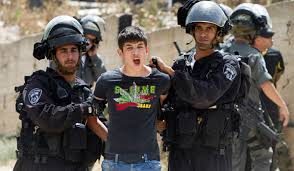
16 year old West Bank Palestinian youth arrested by Israeli military for peacefully protesting the Israeli attack on Gaza last fall.
Note: Those who follow U.S. Middle East Policy are aware of the controversy surrounding the nomination of former Nebraska U.S. Senator Chuck Nagel as Secretary of Defense. Those opposed include many pro-Netanyahu American Jewish organizations, idiot neo-conservatives like John Bolton. Some liberal folk in the peace movement – including the liberal Jewish Organization J-Street – have come out in support of the Hagel nomination. Although watching the process from far-off Colorado, I believe that Hagel will get the nomination and that the opposition to him is little more than noxious fumes. I am not particularly for Hagel’s nomination, but not against it either. He will not stray very far from the main lines of U.S. foreign policy in the Middle East, either on Iran or Israel-Palestine despite Zionist hystronics to the contrary. Hagel will simply be a bit less stupid, a bit less willing to go to war than some of his predecessors. Of course that is saying something. I suppose we, the American people, should be happy and grab on to every peace oriented crumb thrown our way.
As he has often done in the past – I am amazed at his repeatedly accurate assessments – Uri Avnery, that old Israeli politician-turned-peace activist – hits the nail on the head, both in terms of what is going on in Israel and in the USA concerning this latest lover’s spat. And as usual, he is one Israeli who never fails to mention the need for justice for the Palestinians and how it enters into the political equation. Below, are Avnery’s remarks in full:
_________________________
Avnery on Hagel
January 12, 2013
Welcome, Chuck!
I FIND Chuck Hagel eminently likeable. I am not quite certain why.
Perhaps it’s his war record. He was decorated for valor in the Vietnam War (which I detested). He was a mere sergeant. Since I was a mere corporal in our 1948 war, I find it elating to see a non-commissioned officer become Minister of Defense.
Like so many veterans who have seen war from close up (myself included), he has become an enemy of war. Wonderful.
NOW Hagel is violently attacked by all the neocon warmongers, almost none of whom has ever heard a bullet whistle in the wars to which they sent others, and the combined political regiments of the American Jewish establishment. Read more…

L’Histoire secrete du petrole algerien
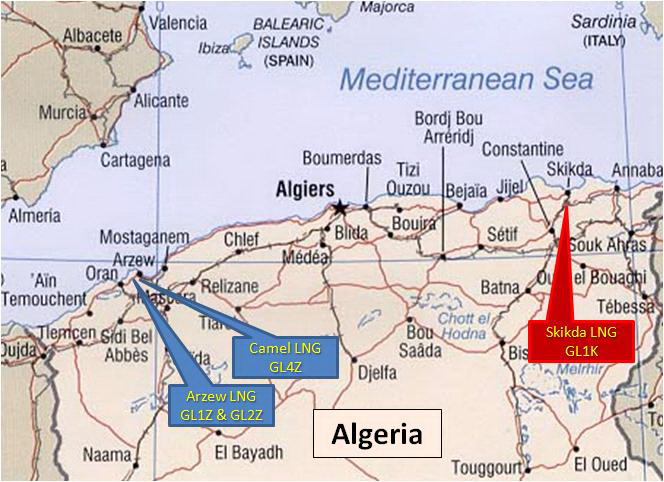
Algeria – Oil pipelines
(note: this excellent series on the history of Algerian oil is in French. It is based upon an interview with Hocine Malti, author of L’Histoire secrete du petrole algerien)
An interview with Hocine Malti (also in French) entitled
ps. I will summarize the content in English in a later blog entry
Tunisia: Siliana and the Heritage of Farhat Hached Sixty Years After His Assassination

Djamila Chaari, daughter of Ferhat Hached, laying a wreath at his grave last year at a commemoration of his assassination.
(Note: This also appears at Foreign Policy In Focus, Open Democracy and the award winning Tunisian website Nawaat.org)
1. Siliana and the Farhad Hached Legacy
Sixty years ago on this date, December 5, 1952, Farhat Hached, legitimately considered the key founder and father of the independent Tunisian trade union movement was assassinated by agents of French colonialism. But the movement that he was so instrumental in creating and shaping, the Union General des Travailleurs Tunisien (UGTT) remains vibrant, fighting for workers’ rights, fair wages and social justice today as it did in those now long gone, last dark and painful days of French colonial rule. Nationwide commemorative activities were planned to mark the occasion.
But it is not for nothing that 60 years later, through all of Tunisia’s years as an independent country, through the Bourguiba and Ben Ali’s years, that it has been impossible to snuff out the memory of Farhat Hached. He’s too much a part of his country’s history. Farhat Hached was the son of a fisherman from the Kerkennah islands, 12 miles off the coast of Sfax, a poor island chain, `the periphery of the periphery’. He made history. Sixty years after his’ death, he’s still making it.
There was no better way to celebrate Hached’s heritage than the way it was done in Siliana, Tunisia, a town ninty miles southwest of the capitol Tunis. There for five days, a classically militant Tunisian youth – those same folks whose righteous wrath overthrew the Ben Ali dictatorship two years ago – took to the streets with the local members of the UGTT. For five days tens of thousands of them stood strong in the streets of Siliana, facing down units of the Tunisian military sent by the Ennahdha led government to crush their moment. The military open fired with bird shot, wounding 200 and if the reports are accurate, permanently blinding at least 17 youth. Read more…

A group pf young Tunisians, mostly from the Kerkennah Islands, at the Farhat Hached memorial a year ag0, honoring the memory of the great Tunisian trade unionist assassinated by the French `Red Hand’ (La Main Rouge) paramilitary group in early December 1952. Hached’s daughter, Djemilla, is accepting a t-shirt with Hached’s picture on it.
Birthplace of the Arab Spring; Death bed of Academic Freedom? an interview concerning the persecution of Dr. Habib Kazdaghli, Dean of the University of Tunis’ Manouba Campus’ Faculty of Letters, Arts and Sciences.It appeared in Times Hihger Education in London.
Kazdaghli, who was harassed and physically attacked in his office by two Salafist females, one a student who had been denied entrance to an exam because she was wearing the niqab (full veil), which is against university policy. Although they attack him, it was Kazdaghli who was changed with assaulting them – typical of the way the current laws in Tunisia are being interpreted by the Islamicist dominated transition government. He faces a possible five year prison sentence.
This is a part and parcel of the Salafist effort to re-shape higher education in Tunisia to have a more `Islamicist’ perspective. Such brown shirt tactics are being resisted though.
Agneta Norberg, Long-time Swedish Peace Activist: Sweden and Finland, former `neutral’ countries, are drawn more closely into NATO

Central Finland: Summer Scene – July 20, 2011. Chez Marjut
_________________________________________
Note: In the summer of 2011, Nancy and I visited Finland after an absence of 21 years. Much had changed. The `knock out’ social programs that had characterized our five year stay there with our daughters had eroded some. Recognizing that was saddening. Still much better than anything we have in the US oF A, but it was clear that the glory days of Finnish social democracy are over. The gap between rich and poor, as a result of the country’s partial opening to U.S. style neo-liberal capitalism was evident. More homelessness,whole classes of people (Finnish farmers) thrown into poverty, but also a small core of more super-wealthy Finns. Finland too has its 1%. The gap between rich and poor – as narrow as any in the capitalist world in the 1980s had grown substantially. The Finnish basis of political power within the European Community – one company really – Nokia, has lost some of its momentum, and with that Finnish prestige and influence in the European Union has shrunk some too.
In response to my queries about Finnish security policy, I was repeatedly told by old friends that polls continued to indicate that more than 70% of Finns opposed the country drawing too close to NATO and giving up it history role – adapted with striking speed after the Battle of Stalingrad turned the tide of WW2 – of neutrality. Finland had just fared well economically as a bridge between East and West, but it was also a principled foreign policy that gave the Finns a respected voice in both the USSR and Western Europe. But if Finns in their majority still probably hold to such views, the Finnish government and military find themselves moving more and more into NATO’s orbit. These economic and security trends apply equally for Sweden as for Finland, and perhaps even more. Read more…
Israeli-Palestinian Cease Fire Seems To Be Holding: Calls for Comprehensive Peace Negotiations Abound

Unending expropriation of Palestinian lands by Israel since 1948
(Note: This piece at appeared at Open Democracy and Foreign Policy In Focus)
1. Whatever It Is Called – Operation Pillar o f Clouds, or Perhaps, More Accurately, `Operation Killing Hope’ …It Failed
The end of the latest U.S. supported Israeli air and sea war against Gaza has triggered a global call for immediate comprehensive peace negotiations that would include an end to the Israeli occupation of Palestinian territories seized in 1967, the creation of a viable Palestinian state in the West Bank and Gaza with its capitol in East Jerusalem and security guarantees for Israel within its pre-June 1967 borders. Not exactly a new framework, but one that is viable, that will end – or certainly seriously reduce – the cycle of violence, and that will produce a peace with justice.
There might be a cease fire, broadly welcomed, but little momentum to follow up on it with a serious peace process yet despite the appeals. In the end, either the Israelis and Palestinians will move towards peace or towards another round of war. There is no in between. Nor will the window for peace making be open forever.
A global consensus supporting the above framework is still broadly supported. But given U.S. virtually blind support for Israel since 1967 – but most especially in Israel’s three recent wars (2006 Lebanon invasion, 2008 Gaza invasion, 2012 air and naval assault on Gaza), it becomes increasingly difficult, if not impossible, for the United States to claim its position as a unbiased broker in such a process. It will take some doing therefore, not only to get Israel to the negotiating table, but to get the United States to play a more constructive role in such a process. Still there is a ray of hope. Isn’t it time to draw the logical conclusion: that military solutions have run their course and will, in the future, fail and that the conflict between Israel and Palestine can only be resolved politically, through a negotiated settlement based on United Nations resolutions. Read more…
 View from the Left Bank: Rob Prince's Blog
