Israel-Palestine…What To Read…

October 1973 – Denver, Colorado demonstration calls for the U.S. to Recognize the Palestine Liberation Organization and for a cut in U.S. military aid to Israel
I am often asked how do I keep up with the developments in Israel-Palestine? Frankly, I don’t, can’t. The flood of events, articles, developments are more than I can handle. Every few months or so though, I read through the latest literature, get yet another depressing sense of how more settlements are being built in the West Bank and E. Jerusalem, how Gaza remains – as a colleague of mine at the University of Denver put it – `an open air prison’, how the beaches and night clubs in Tel Aviv are packed, its citizens oblivious and generally completely uninterested in the sufferings of their Palestinian neighbors on the other side of the wall, or locked into Gaza, how Israel is being more integrated into U.S. – NATO regional plans. It is always – and I mean always – depressing, depressing because the prospect of some kind of genuine peace between the Israeli and Palestinian peoples grows dimmer and dimmer as the mantra of `let’s get the peace talks going’ continues.
Following a time honored tradition, other than talking about peace, the U.S. does nothing of substance to pressure Israel to negotiate seriously with the Palestinians, the Obama Administration continues to arm Israel with the more sophisticated weaponry and communication systems in our arsenal. Rather than (politically) kicking Binjimin Netanyahu in his tootsies for prodding the U.S. to attack Iran, the Obama Administration does nothing serious to counter the war talk. and indeed, behind the scenes, is plotting with the Israelis. Very dangerous. Israeli society lurches to the right, its peace movement, valiant (people like Avnery, Jeff Halper, Menachem Klein) but increasingly isolated. Meanwhile the Occupation deepens. Settlement building goes on unabated as does the targeting and imprisonment of Palestinians. Read more…

Hallinan on Alex Cockburn…

I was looking for a photo of Cockburn that approximates the man I saw in Coilorado two years ago.
“His words fell like rain on the dry desert plain, precious and so quickly gone”
– Kate Wolf, Eyes of a Painter.
Conn `Ringo’ Hallinan writing about Alex Cockburn. If I remember correctly, Ringo knew Alex rather well.
This is a beautiful and accurate tribute.
Alexander Cockburn 6/6/41-7/20/12
Aug. 3, 201Alexander Cockburn June 6, 1941-July 20, 2012
For Chaos heard his voice: him all his Traine
Follow’d in the bright procession to behold
Creation, and the wonders of his might.
–Paradise Lost, John Milton
It was fitting that writer and critic Alexander Cockburn’s funeral should include a passage from Milton. For more than 50 years, Cockburn combined polished, erudite writing with fierce political insight in the tradition of the great 17thcentury English polemicist. Cockburn died July 20 in Germany at age 71, following a two-year struggle with cancer. He was buried July 28 in his beloved Petrolia, Ca.
It is hard to sum up his career because it was catholic in true meaning of that word: all embracing. He wrote for newspapers in England, New York’s Village Voice, the Wall Street Journal, and the Nation, and, along with Jeffery St. Clair, founded the investigative publication, CounterPunch. For more than 50 years, Cockburn was a relentless critic of U.S. foreign policy, opposing the Yugoslav War, the wars in Afghanistan and Iraq, and the recent war in Libya. (for the whole piece, click here)
Tennessee follows Louisiana into the evolutionary depths…
 1. Leakey’s Evolutionary Optimism
Sometime in the next 15-30 years, he claims, “skeptism over human evolution will soon be history”. “He” is Richard Leakey, son of the two great – if eclectic – human fossil hunters and human evolutionary theorists, Louis and Mary Leakey. Richard Leakey is no slouch himself when it comes to finding major human fossil finds. A 1.6 million year old nearly complete skeleton of a 9 to 12 year complete skeleton called `Turkana Boy’, discovered in 1984 by a Kenyan member of his team, Kamoya Kimeu, is only one of the many breath-taking hominid discoveries the Leakey team has unearthed. There are many others.
Still given the sorry state of the public discussion over Human Evolution these days, it’s hard to believe that Leakey’s optimistic hypothesis will strike a chord here in the United States where the discussions – be they political, cultural or religious – have been drifting right for the past three decades at least.
Leakey is optimistic that the veracity of human evolution will eventually overcome Christian, Islamic and Jewish fundamentalist hostility, that the facts will win out against `The Word’. He bases his optimism upon the dramatic increase in the fossil evidence for human evolution that has accumulated over the past 70 years, since the end of World War II. The number and variety of pre-human and early human fossil finds has exploded to such a degree that today the `data base’ is both extensive – actually going back some seven million years – and convincing. Add to the picture the increasing sophistication of dating methods, DNA analyses and the scientific basis for a transition from some kind of prehistoric 8-12 million year old ape-like creatures to modern humanity comes more clearly into focus. Read more…
Resources on Iran’s Nuclear Program and Israel’s Bomb
Resources on Iran’s Nuclear Program & Israel’s Bomb

Hiroshima Memorial. August 6, 1987, 42 years after the first atomic bomb exploded on a human population
(These materials were prepared by LeRoy Moore, a founder of the Rocky Mountain Peace and Justice Center, for a presentation at the University of Denver’s Korbel School of International Studies in May, 2012)
Iran’s Nuclear Program
- Tabassum Zakaria and Mark Hosenball, “Special Report: Intel shows Iran nuclear threat not imminent.” Reuters, March 23, 2012.
- Frank Brodhead’s Iran War Weekly.
- Institute for Science and International Security. This site includes extensive archive, including its very extensive recent report, Preventing Iran From Getting Nuclear Weapons: Constraining Its Future Nuclear Options. By David Albright, Paul Brannan, Andrea Striker, Chirstina Walrond and Houston Wood.
- Iran’s Nuclear Sites
- Jonathan Schell, “Thinking the Unthinkable on Iran”. The Nation, April 23, 2012.
- Steve Coll, “Will Iran Get That Bomb?” New York Review. May 23, 2012.
- Global Research, Canada. (Go to this site and look up Iran)
- World Nuclear Organization. (on uranium enrichment)
Israel’s Bomb
- Seymour M. Hersh, The Samson Option: Israel’s Nuclear Arsenal and American Foreign Policy. (NY: Random House, 1991)
- MSNBC’s detailed map of Israel’s nuclear weapon’s facilities.
- Federation of American Scientists’ Guide To Israel’s Nuclear Weapons Program.
- Avner Cohen and William Burr, “Israel crosses the threshold” Bulletin of the Atomic Scientists (May-June 2006)
- Warner D. Farr, U.S. Army, “The Third Temple’s Holy of Holies: Israel’s Nuclear Weapons (9-99). “
- John Steinbach, “Israeli Weapons of Mass Destruction, a Threat to Peace.” (3-02)
- Meiron Jones, “Britain’s dirty secret,” . New Statesman . (March 13, 2006)
- The Nuclear Weapons Archive.
- Michael Karpin, The Bomb in the Basement: How Israel Went Nuclear and What That Means for the World. (NY: Simon and Schuster, 2006) – a justification of Israel’s nuclear bomb program by an Israeli citizen
Tunisia: Culture Wars – 2: Salafists Run Amok – The Case of Habib Kazdaghli, University of Tunis-Manouba, Dean

The Tunis Souk
Note: This series, of which Part Two is below, is dedicated to the memory and contribution of Alexander Cockburn who just passed away. This piece was also published at Open Democracy, a British based website
Part One of the Series
____________________
1.
Until late last November, when a Salafist storm broke out at the University of Tunis’s Manouba Campus, Habib Kazdaghli, the dean of the Faculty of Lettres, Arts and Sciences, was living a generally quiet life as the dean of the faculty of Letters, Arts and Humanities. But since late last November, much has changed both for Kazdaghli and the university at Manouba.
Kazdaghli is currently the defendant in a law suit and forced to face charges stemming from an incident earlier this year, in March, in which he slapped to female students, both wearing full veils (nijab in Arabic – pronounced neekab with a strong `k’; the niqab is a full veil except for a narrow slit at eye level) who had barged uninvited into his office, had roughed him up and were destroying his papers. Originally charged with simple assault and facing 15 days in prison, on July 5, Kazdaghli’s case was postponed until October 25, but the charge was changed to `violence committed by an official while carrying out his duties which could result in a five year prison sentence. Read more…
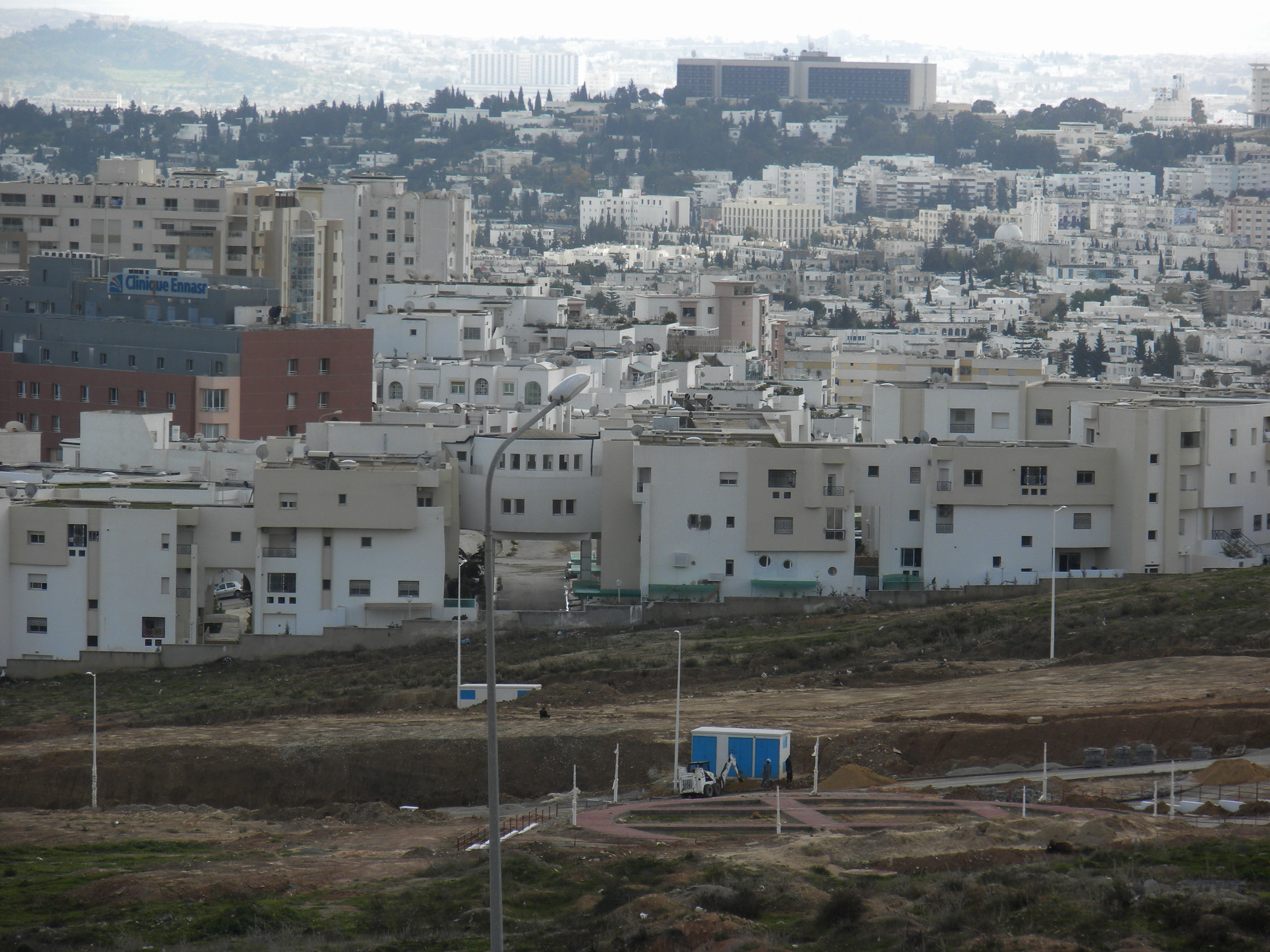 Note: This series, of which Part One is below, is dedicated to the memory and contribution of Alexander Cockburn who just passed away.
This piece also appeared in Foreign Policy In Focus
Part Two of the series
________________________
1.
October of last year, Tunisia held national elections for a `constituent assembly’ – a legislative body mandated to re-write the Tunisian constitution for the post Ben Ali era. The Ennahdha (Renaissance) Party, an Islamic Party cruelly and unfairly repressed for decades under the Ben Ali regime gained 41% of the vote, the largest percentage of any political party participating.
While it claims to be in a coalition with two more secular parties, a fact which is technically accurate but politically empty, despite appearances to the contrary, Ennahdha wields the power behind the scenes in the country, in a manner which is virtually undisputed. If the recent Ennahdha congress which drew 30,000 attendees is an accurate measure, all indications are that, despite opposition, it will tighten its grip in the period ahead.
The other two political parties involved in the ruling coalition exist more on paper than in fact; unlike Ennahdha that has a nationwide organization and its eyes and ears everywhere, the other two are essentially Tunis (and a few other metropolitan areas) based. There is organized opposition to some of Ennahdha’s policies, especially its economic policies by the trade union federation, but apart that and a few disparate elements, the opposition is weak, disorganized and with little influence. Ennahdha runs the show.
In certain ways, this fact has already reaped a disturbing political and social harvest.
Despite fine words about the Tunisia’s Arab Spring, since October, the political atmosphere in the country has shifted markedly to the right as a new and hitherto marginal element in Tunisian society has raised what I can only describe as its ugly head: radical Islamic fundamentalism, or as it is also known, Salafism. Salafism’s base in Tunisian society in the past has been narrow to naught. That it should emerge with such force and unchecked violence is the result of a number of factors: the sufferings of Islamicists in Ben Ali’s prisons whose anger has been easily manipulated; some Tunisians trained by fundamentalist militants in Afghanistan and Iraq; some spill over from Libya; U.S. acquiescence. Read more…
The Aurora Tragedy Notes – 1

Aurora, Colorado where the high plains meets suburbia, Rocky Mountains in the back ground. Photo taken from Aurora Praire Walk on November 6, 2011
Aurora, Colorado – for those who don’t know it – is the suburb just east of Denver whose population growth is beginning to rival that of Denver itself. According to the 2010 census, the population stood at 325,000, a figure that is expected to more than double in growth to 685,000 by 2065. The third largest city in Colorado, after Denver and Colorado Springs, its ethnic-class make up is a reflection of the nation as a whole.
Sociologically it’s an interesting place. Its more southerly and south easterly areas are prosperous suburbs while its northern sections are highly diversified with Blacks and Chicanos – many of whom over past decades were driven from Denver itself by the Mile High City’s yuppified renovation – along with Africans from everywhere (Ethiopians, Ghanians, Kenyans, Nigerians), Russia and Ukrainian recent immigrants just to name a few. Many of the region’s Arabic and Persian speaking populations also reside here. Aurora is home to several mosques, Ethiopian and Russian Orthodox Churches as well as the more standard fare variety of Catholic, Protestant and Jewish religious institutions. Read more…
Fey Farm Near Unadilla Nebraska Featured in the Pawnee Republican (Pawnee City, Nebraska)
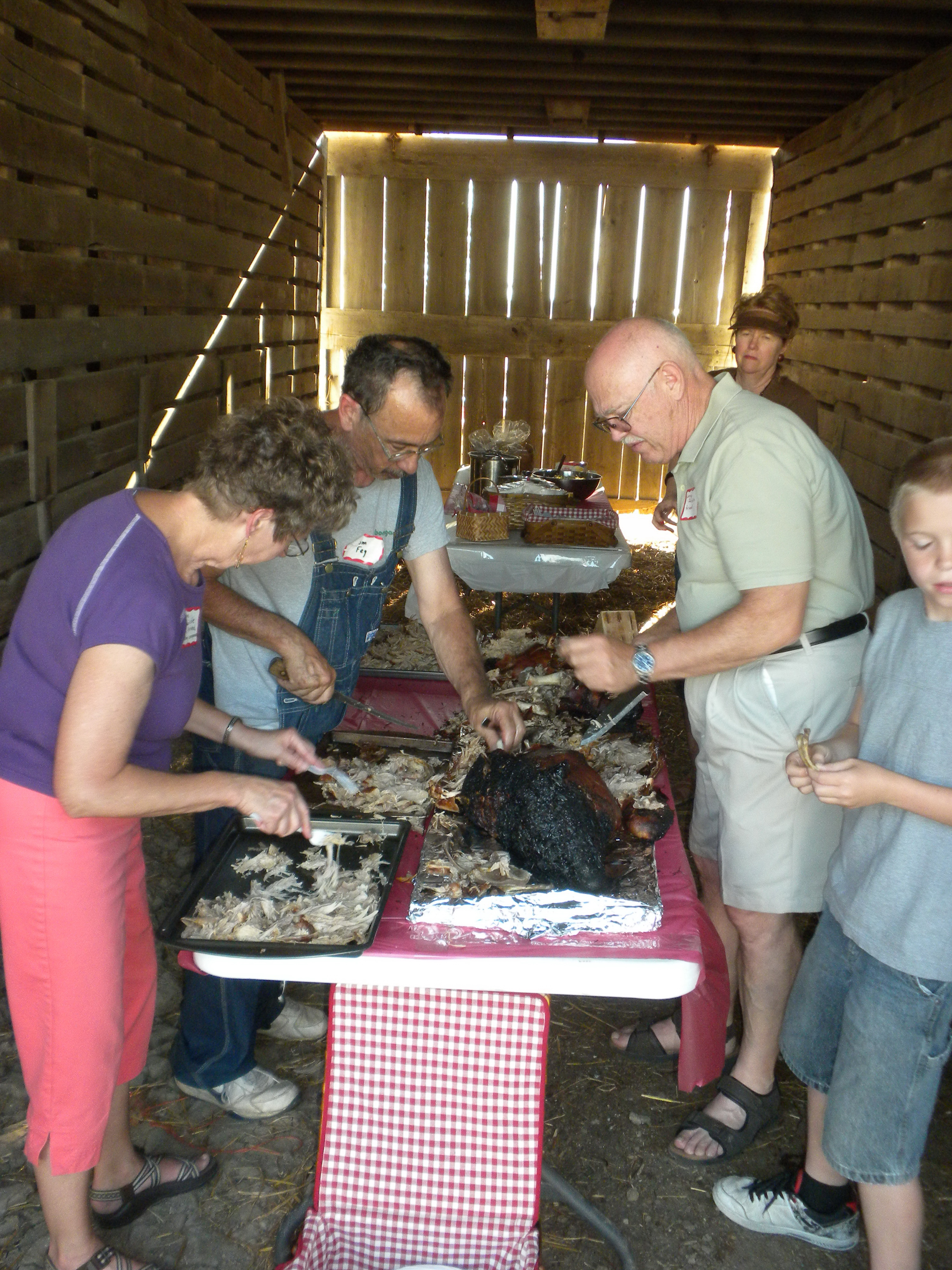 It was one hell of a party… and unbeknownst to those of us who participated, who made the deviled eggs, dug and redug the pit in which the pig was roasted, made the cake, showed the kids the pig’s brains, the event made the media big time. It was covered by Laura Turnbull, writing in the Pawnee Republican (Pawnee City, Nebraska), who along with host Lowell Fey, plays in the world famous Southeast Nebraska Community Band, detailed the evening’s activities in a well written article for all of southeastern Nebraska to consider. (1)
And it was, as Turnbull describes it, a birthday party for a house!
But not just any house…it is the home of the Fey farm built 100 years ago in 1902. It is where Lowell and brother Robert grew up. It sits high on a hill with a southern exposure looking over 20 miles (or more) of green rolling hills, virtually all farmland. The farm is about 4 miles north of Unadilla Nebraska, where Lowell and Robert went to elementary school and attended the local Methodist Church in their youth. (2)
In the Fey family ever since, Lowell Fey has owned the house and the farm for about ten years. When the farm came into his possession, there was some discussion as to what to do with the farmhouse itself. It was rundown and in bad condition. Many were those who
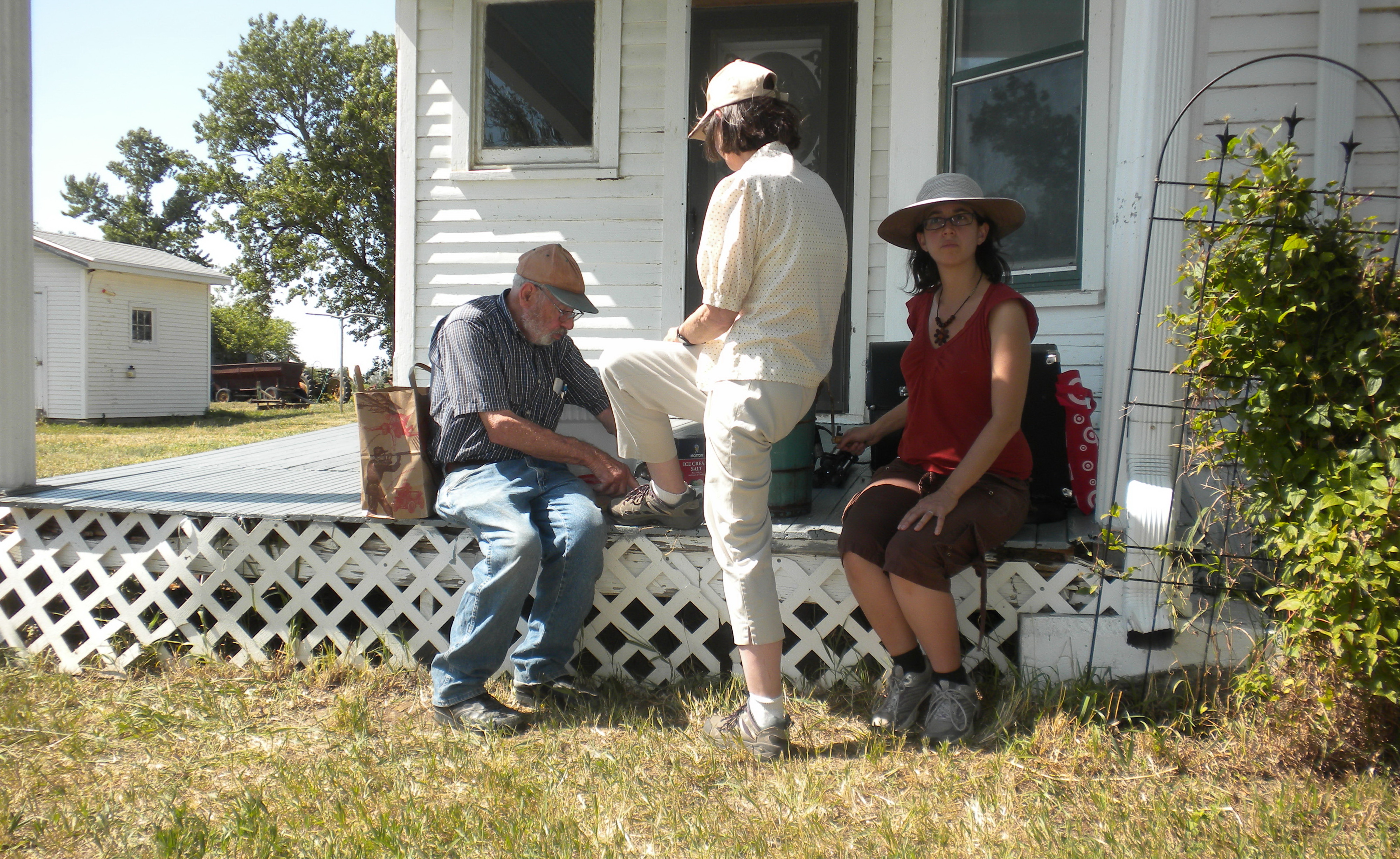
Making ice cream the old fashioned way
argued that the house should be leveled and a new one built in its place. But after poking around a bit, Fey was convinced that the foundation was solid and with a new roof, reworked plumbing, reworked porch and a paint job, the old house could easily last another hundred years. It took several years to finish the repairs, but the finished product is sight to see.
In the meantime, Fey let the land lay fallow for the three years necessary for it to become organically certified. The years since, cattle have grazed upon it, a number of large gardens – large enough to be considered what used to be called `truck farms’ – produced organically certified vegetables. In an area where more and more farms are being turned into condominium project bed room communities for Lincoln and Omaha (both about 35 miles away), the Fey farm is an example of something, if not unique, still increasingly unusual: a farm that actually produces food, and good quality food at that.
I would have made a link to the article, but the Pawnee Republican charges to visit its website..
____________________________________
1. The name `Wherry’ still adorns several buildings in Pawnee City’s downtown area. Native son Kenneth Wherry became a U.S. Senator (1943-1951). He was one of the more stalwart defenders of Joseph McCarthy’s political witchhunt. The collected works of Russ Limbaugh grace a shelf in the home of his descendants where I saw them last summer.
2. Unadilla, Nebraska. In 2010, according to the U.S. census, there were 311 people, 132 households, and 95 families residing in the Wikipedia article referred to as a `village’.

Middle East – Core Countries
by Ibrahim Kazerooni and Rob Prince
Also posted at Foreign Policy In Focus and Stop NATO!
Related Links:
Covering Syria: The Information War (Asia Times. July 12, 2012)
Syrian Opposition: Who’s Doing The Talking (Guardian. July 12, 2012)
U.S. Campaign Against Syria: Years in the Making (Stop NATO, July 28, 2012)
Ibrahim Kazerooni and Rob Prince on KGNU – July 24, 2012
US and Israel Enlist Jihadi Terrorists to Bring Down Syria – August 3, 2012
_________________________________
So what is the Salvador option?
“The Salvador Option” is a “terrorist mode”” of mass killings that was perfected by the US to destabilize regimes that the US saw as threats to its interests. Taught at places like the `School of the Americas’it is employed when other forms of political manipulation fail to produce the desired results. The option works through created and sponsored death squads, with the primary goal of committing slaughter of innocent lives. This triggers world outrage, necessitating intervention by the US under the humanitarian intervention framework. As we state in Part One, this was first applied in El Salvador, in the heyday of resistance against the military dictatorship, resulting in an estimated 75,000 deaths. In Guatemala during the 1980s and 1990s, the number of t hose killed by basically the same option was more than 200,000.
A.
To see how it works, we would like to borrow an analogy from cooking. What are the needed ingredients for this process?
1- Identify a progressive regime that resists US imperialism and hegemony and declare it ‘rogue state’ or ‘access of evil’ etc. Use any expression with a catchy title to engineer the consent of the unsuspected people; it helps if this regime is somewhat authoritarian.
2- Develop a plan and begin the preparations, putting a destabilization expert in charge, normally as ambassador or someone with diplomatic immunity. Read more…
Iran Timeline…

sources: Abrahamian 2008, Ansari 2003
Links:
Paul Rogers: America’s War On Iran: The Plan Revealed from Open Democracy. June 30, 2012
Unarmed and Dangerous: Lay Down Your Arms/Pick Up Your Instruments!…June 30, 2012 1pm – Midnight at the Mercury Cafe, Denver


Gamal Abdul Nasser in law school – 1937
(note: This also appears in Foreign Policy in Focus)
In the past, when he ruled Egypt with an iron hand with ample U.S. encouragement, support and financing, Hosni Mubarek repeatedly used the Islamic fundamentalist threat as blackmail against the Egyptian people, suggesting they only had two choices – either Mubarek or `the people of the book’ – Shari’a. Mubarek put himself forth as the lesser of two evils. He might have been authoritarian and corrupt as hell, but at least didn’t spout the politics of seventh century Islam. This played well enough in both Washington and Tel Aviv.
A year and a half after the Tahir Square uprising, the Egyptian military, the main source of political power in the country for the past sixty years, used its considerable power to offer the Egyptian people the same electoral non-choices they have had in the past. After all was said and done, these recent Egyptian elections mirrored the past: a Mubarek clone facing off against a representative of the Muslim Brotherhood, all other choices – including the possibility of far reaching economic and political change – ruled out. Read more…
North Carolina Senate Republicans Reject Compensating Victims of Eugenic Sterilization

Elaine Riddick – listening to testimony at a North Carolina state legislative hearing
North Carolina’s attempt to make peace with a portion of its racially turbulent and class biased past has come to naught despite the fact that one of the state’s more prestiguous newspapers, the Winston-Salem Journal, has covered the issue extensively in its pages. Ten years ago, in 2002, the paper did a five part, extensive and comprehensive series on the state’s long-time policies and practices of state-directed involuntary sterilization. The echoes from that series are still reverberating.
A recent plan proposed by North Carolina’s Democratic Governor, Beverly Purdue, which would have compensated the state’s victims of involuntary eugenic sterilization, was killed in the state senate by Republican senators. They argued that the state couldn’t afford the $10 million compensation package the governor had tried to write into the state budget. It would have granted the victims $50,000 as well as acknowledging the state’s responsibility in taking `the right to life’ from more than 7.600 victims of the procedure, done without the permission and in many cases without the knowledge of the victims. Of that number, more than 2000 were under the age of 18; a ten year old boy was castrated as a part of the program. (Colorado has its own sordid history with eugenics that will be treated in a later entry.)
One of the victims of the procedure, Elaine Riddick of now of Atlanta – but who grew up in North Carolina – was twice violated, first she was kidnapped, molested and raped at the age of 14, a rape which produced a son; then she was sterilized by the Eugenics Board of North Carolina which argued that she was “feebleminded” and “promiscuous”. The legislation justifying the state’s eugenic sterilization program was struck down by legislation in 2003, but the many victims of the procedure – mostly simply poor people and increasingly since World War II, poor Black women – were never compensated for what were now admittedly crimes committed by the state against its citizenry. “I will die before I let them get away with this”, Riddick is quoted as having told the BBC. (2) Read more…

1916 secret Sykes Picot Agreement which carved up the Middle East between France and Great Britain. Is there another Sykes Picot in the making for Syria and the Middle East today?
Syria, the United States, and the Salvador Option: Part One
(commentary in three parts)
by Ibrahim Kazerooni and Rob Prince
(also posted at Foreign Policy In Focus and US Labor Against War)
Every day the news from Syria is more and more somber as the country and the region continue their journey to unknown and more dangerous realms. Syria appears headed for “beyond explosion”, for implosion and NATO foreign military intervention that could result in unpredictable dangerous consequences.
The most recent news reports are alarming. A curious person asking about the situation would get the following predictable reply: Syria is on the verge of civil war; it is run by a ruthless leader that violates human rights on a biblical scale and needs to be removed so that the `peace loving’ Syrian people can live in harmony and tranquility and it appears the only way to achieve this goal is through yet another NATO-led military `humanitarian’ intervention under the auspices of the United States. Read more…
 View from the Left Bank: Rob Prince's Blog