Flinging prudence – and its neutrality – to the winds, Sweden joins NATO.
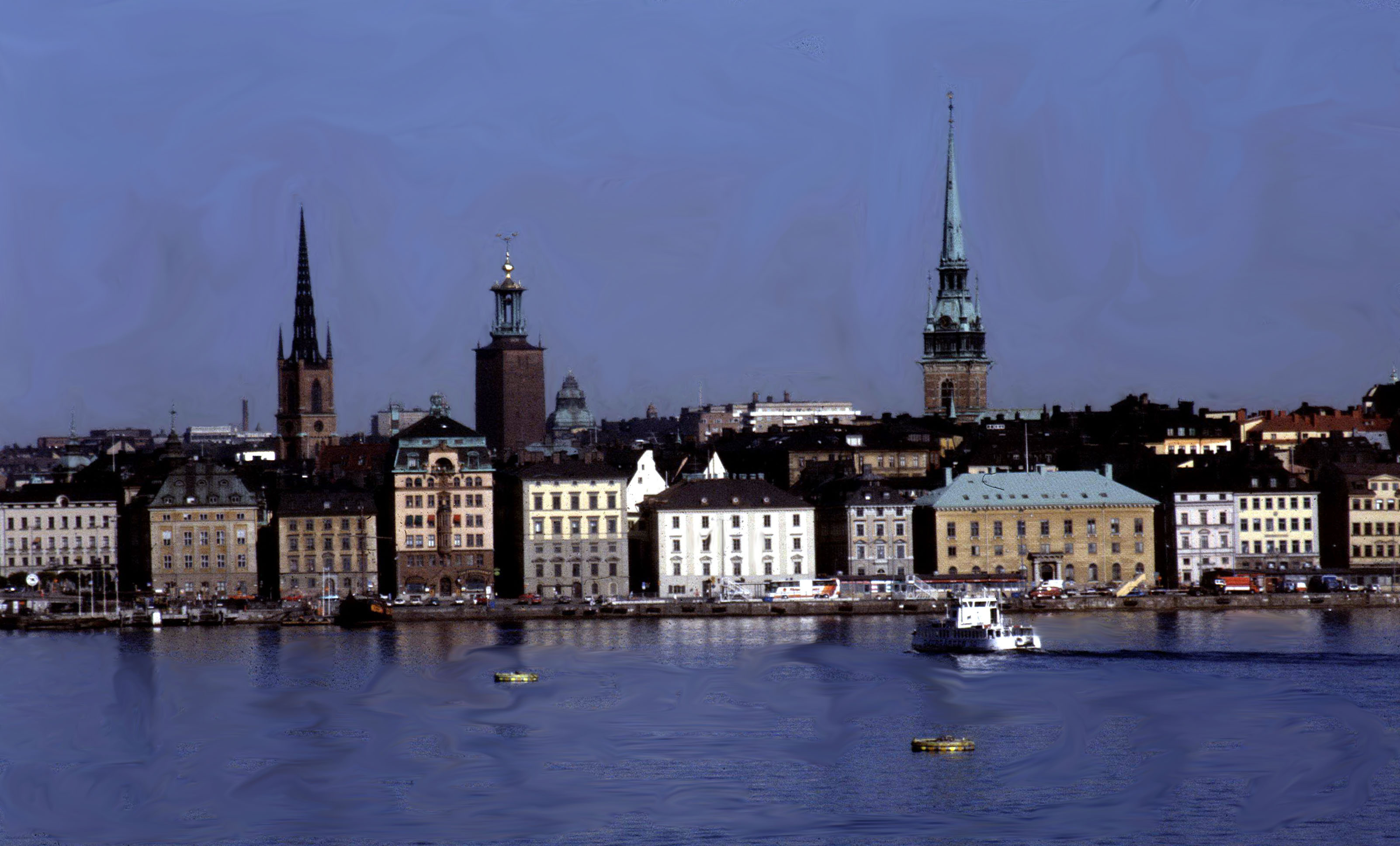
Stockholm, Summer, 1987
_____________________
But look at how dramatically the situation has changed; using the hyped up fear of a Russian military threat as a pretext, these past few years the militarization of the Nordic countries has been nothing short of explosive. Together, Norway, Sweden, and Finland have opened 36 military bases for US forces and weapons. The agreements are bilateral, i.e., between the US and the individual country, and not a NATO agreement.
_____________________
1.
Applying at the same time as Finland, on May 18, 2022, three months after the beginning of Russia’s Special Military Operation in Ukraine, Sweden “enthusiastically” submitted its application for NATO membership. 22 months later, on March 7, 2023 Sweden became a full member of the alliance. In so doing, it gleefully abandonned what sovereignty that remained to it in international affairs, its already greatly weakened “neutrality” and was transformed into a frontline state in any NATO military conflict that might arise with Russia.
There you have it.
Both Sweden and Finland are now are part and parcel of the NATO alliance and all that comes with it: a higher percentage of their GNP for military expenses; less monies for these Nordic countries’ much vaunted, well known extensive social programs which are bound to erode in time; U.S. and NATO military bases along with the accompanying loss of sovereignty that such bases entail, and as a consequence a much more antagonistic and adversarial relationship with its Nordic neighbor Russia. In a country that used to take pride in its anti-war (Vietnam war crimes testimonies) and peace initiatives, today to even use the word “peace” results in labels like “Putin’s mouthpiece”, and the like.
From their actions and public statements, the impression comes through rather strikingly that both countries are preparing for war, that their leaderships have bought into the prevailing russophobia and that the myth of Russian expansionist ambitions towards Western Europe is thriving in both Sweden and Finland.
NATO access was accomplished in a carefully controlled media anti-Russian media blitz, rushed through the Swedish parliament without a referendum vote of the Swedish people, thus avoiding any genuine public discussion of what is a landmark shift in Sweden’s foreign policy and the opposition such a vote might have triggered. Polls taken prior to Russia’s February 2022 incursion into Ukraine suggest that support for NATO entry was lukewarm at best.
In the Finnish case, only around 30% of the population supported joining NATO prior to that date; the same was true for Sweden. According to data from the SOM national survey conducted by the University of Gothenburg, Swedish public support for NATO membership hovered between 20 and 30 percent between 1996 and 2019.
Put another way, up until February 2022, the population of both countries opposed going for NATO membership with a full 70% of their populations saying “No To NATO”. Support for NATO spiked considerably just after Russian troops entered Ukraine. Polls taken in May 2022 suddenly revealed that now 70% of Finns and 58% of Swedes had changed their minds and now supported NATO membership.
Taking advantage of the shift in public opinion, the governments of both countries – a la Naomi Klein’s “shock doctrine” – moved quickly to consolidate their NATO connection at a time that the public feared – illogically – that somehow Finland and Sweden were “next” in line to be attacked by Russia, and further, that Russia had territorial ambitions to gobble up a good deal more of Western Europe.
However, the parallels between Russian military interventions in Georgia and Ukraine with possible military actions targeting Finland and Sweden are weak to non-existent.
- Both Ukraine and Georgia were part and parcel of the former Soviet Union while neither Finland nor Sweden were.
- The Russian-speaking populations of both Ukraine and Georgia have become the targets of ethnic discrimination in part because of their past privileged role during the USSR days to the detriment of the indigenous populations; there is nothing close to this situation in either Finland or Sweden
- The anti-Russian campaign in Ukraine, which began with the 2014 Maidan coup by extreme, pro-fascist elements, resulted in a Kiev campaign to ethnically cleanse Russian- speaking Ukrainians in large numbers. Between 2014 and 2022 Kiev launched a war against Donbass Ukrainians which took the lives of some 16,000 people. In 2022, at the time the Russians moved militarily into Ukraine, the Ukrainian government was preparing a major military offensive against the largely Russian-speaking Donbass that had all the hallmarks of a genocide. There was nothing, not a thing, similar to that concerning Russian relations with Finland and Sweden.
Worse, as Finnish economist Tuomas Malinen put it in an interview with Neutrality Studies:
“We have made ourselves a bull’s-eye! It’s the stupidest thing this country has ever done. ”
“There is a kind of complete “switch over” which has happened. Finland has shifted from its status as a neutral state close to Russia. Now we are like a vassal state of the United States. But it’s been a gradual progression that started after the breakup of the Soviet Union in 1991. But it [a connection to Washington] has been pushed quietly under the surface.”
What was true for Finland is equally the case for Sweden.
While it is true that on the parliamentary level, support for NATO admission was overwhelming, it is significant that in neither case was the question of joining NATO brought to the public in the form of a referendum. For such a major shift in policy that would have been appropriate.
Such referendums might have thrown monkey wrenches into the plans that the military of both countries and certain circles of power desperately wanted see come to fruition. In both Sweden and Finland the media and the circles of political power were united in their NATO membership goal, the voice of the people be damned.
And even today, support for NATO membership and the hyped-up fear of Russian military ambitions remains strong.
2.
Between 1610 and 1809 Sweden and Russia fought four wars over control of the Baltic Sea. When that last Russo-Swedish War ended in 1809, essentially with a Russian victory, Sweden, which had controlled Finland for about 500 years, had to abandon it’s eastern neighbor across the Sea of Bothnia to Russia; Finnish history is, literally, Swedish history. There are cemeteries on the Åland Islands where Russian soldiers who fell in those last battles died; a fair number of the gravestones had Jewish stars on them.
A hundred and seventy one years later, traveling through Sweden in the late 1980s, I was struck with how prosperous the country was at the time having been spared the horrors of war that had erupted south of the Nordic countries in the rest of Europe. Not having to rebuild after war as the rest of Europe did repeatedly throughout the 19th and 20th century, Sweden was able to build upon that long period of peace, invest in infrastructure, find its own special niche in the global economy as a very prosperous semi-peripheral center to Europe’s core.
Combine that with the strong social democratic ruling elite for most of the Cold War period with its high taxes and substantial investment in social programs and bingo! – the result – the startling prosperity of most of the period since the end of World War II. No doubt Sweden’s foreign policy of neutrality contributed to this general prosperity. It might sound cliché-ish but I can think of no better example of how peace and prosperity go together than the Swedish example during those two centuries.
But look at how dramatically the situation has changed; using the hyped up fear of a Russian military threat as a pretext, these past few years the militarization of the Nordic countries has been nothing short of explosive. Together, Norway, Sweden, and Finland have opened 36 military bases for US forces and weapons. The agreements are bilateral, i.e., between the US and the individual country, and not a NATO agreement.
The question of the placement of American nuclear weapons in Sweden and Finland has not been regulated through the agreement. The Norwegian agreements do not explicitly ban the placement of such weapons.
- In 2022 the U.S and Norway negotiated a so-called additional agreement on defense cooperation supported by a large majority in the Norwegian parliament The agreement gives the US the right to unimpeded access to four military bases on Norwegian soil. Two of which, Ramsund and Evenes, are in the North.
- In December, 2023, Sweden signed a major military agreement with the United States that was ratified by the Swedish parliament several months later. At the time, it was unclear if Turkey would block Sweden’s NATO entry (which was later lifted). The agreement gives Washington access to 17 Swedish bases. It was the first of its kind agreement; it allows the US to conduct military exercises and refuel its military aircraft and ships in Sweden and “permits the storage of weapons and ammunition at various bases within Sweden.
- A similar agreement was foisted on Finland that was unanimously approved by the Finnish Parliament in early July 2024. It gives Washington access to 15 military bases on Finnish territory that includes the following:
– The U.S. doesn’t have to pay taxes
– U.S. personnel can import and export whatever they want
– They are not under the jurisdiction of Finland. If anyone commits a crime than it’s the U.S. authorities that are responsible
– In these bases, the U.S. personnel can do whatever they want militarily. - Claiming a possible threat of Russian attack, Iceland has also increased its military cooperation with NATO. In the summer of 2023, it welcomed German fighters, US strategic bombers – as well as the commander of both the US Air Forces in Europe and NATO’s Air Command. Currently there are both US B-2 Spirit strategic bombers and around 200 soldiers are currently deployed at Keflavìk Air Station, Iceland as well as an allied radar station at Bolafjall. After a lapse of ten years, the U.S. military is formally back at its Keflavik Naval Base.
3.
The evolution of Sweden’s shift from a relatively neutral country within the context of Cold War Europe to joining NATO did not start in February 2022; it has a much longer, secret, sordid history going back to the early 1990s. I will cover this in a coming blog entry.
Flinging prudence – and its neutrality – to the winds, Sweden joins NATO – Part Two.
___________________
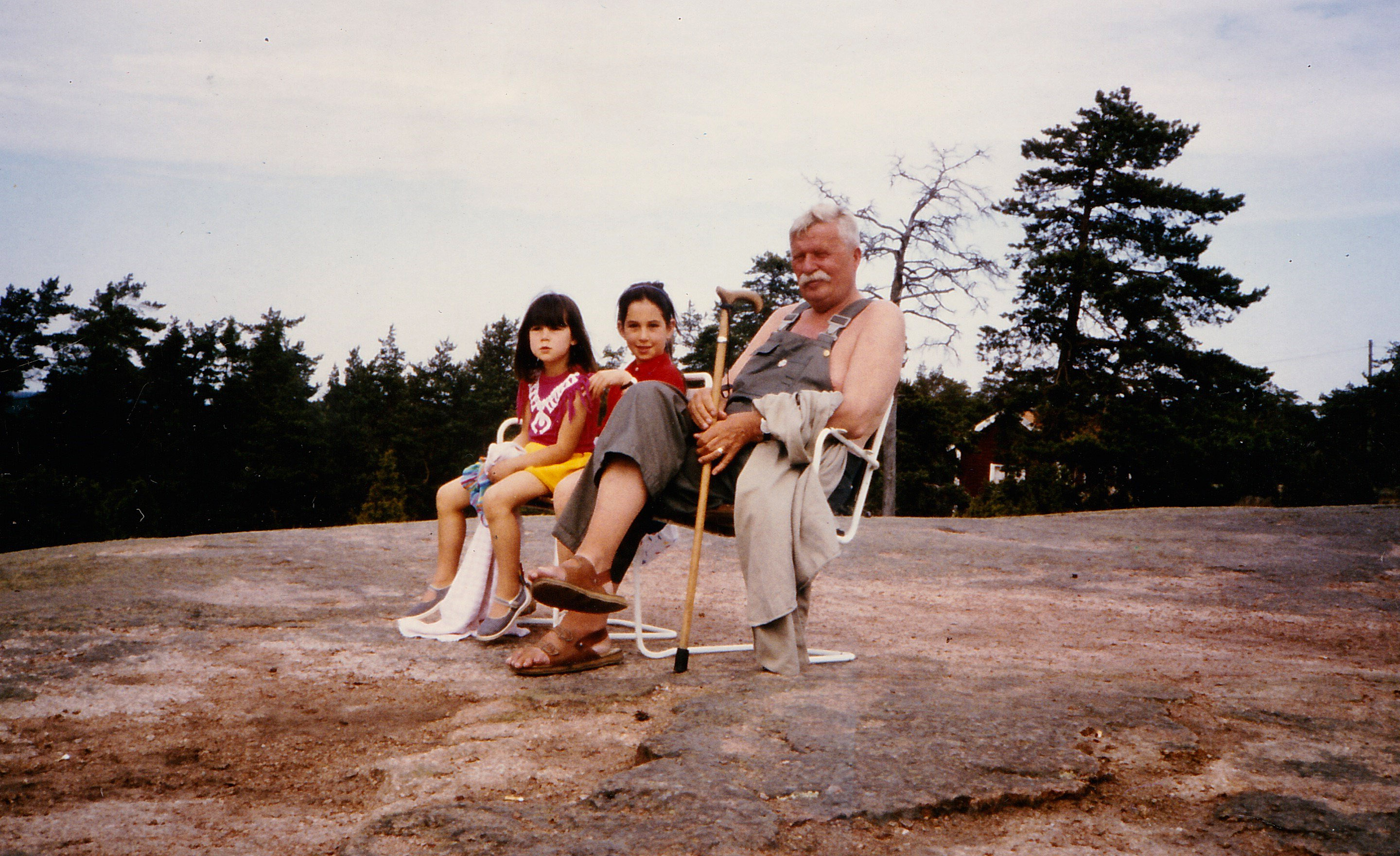
Berra Barden with Molly and Abbie Prince. Åland Islands, Finland. July 1987. Barden was a Swedish cartoonist and life long socialist.


Trackbacks