Skip to content

View from the Left Bank: Rob Prince's Blog

Don't Kvetch, Organize….(OK, you can kvetch a little, but then try to get over it and organize). Ignorance is not bliss: it's just ignorance

  • Home

Brian Becker: McCarthyism Is Back: Together We Can Stop It: Denver, Saturday, September 16, 2023 @ 7 pm – Liberation Center, 3100 Downing. Denver 80206

August 21, 2023
tags: McCarthyism

Leave a comment
from → Uncategorized

Niger 5 – Francafrique: Niger and the emerging “African Spring”?

August 20, 2023
tags: Niger

The great fear in the early 20th century – Still the great fear in the 21st

_____________________________

– “La Françafrique ne se réduisant pas au foucardisme, comment la définir?

Il s’agit, selon nous, d’un système de domination fondé sur une alliance stratégique e asymétrique entre une partie des élites françaises et une partie de leur homologues africaines. Cette alliance, héritée d’une longue histoire coloniale, mêle des mécanismes officiels, connus, visibles, assumés par les États. Et des mécanismes occultes, souvent illégaux, parfois criminels, toujours inavouables. Ces mécanismes, qui se déploient dans unre relative indifférence de l’opinion publique française, permettent à ces élites franco-africaines de s’approprier et de se partages des resources, économiques, mais aussi politiques, au détriment des peuples africans”

Borrel et al: L’Empire Qui Ne Veut Pas Mourir: Une Histoire de la Françafrique. p. 9

– My translation:

“Françafrique cannot be reduced to Foucartism,(1) how, then, to define it?

It is, in our opinion, a system of domination exists based on a strategic and asymmetrical alliance between a part of the French elites and their African counterparts. This alliance, inherited from a long colonial history, combines official, known, visible mechanisms assumed by the States with secret mechanisms, often illegal, sometimes criminal, always unmentionable. These mechanisms, are deployed with a generalized indifference of French public opinion allowing these Franco-African elites to appropriate and share resources, economic, but also political, to the detriment of African peoples.”

_____________________________

ECOWAS. It started as a multistate economic alliance in West Africa but with a little help from Washington and Paris through NATO has morphed into a  military NATO  proxy. Will it invade Niger to restore that country’s deposed, but “duly elected” (perhaps not) president Mohamed Bazoum? Could Niger military resistance – even if assisted by its allies in Burkina Faso and Mali that have promised to come to Niger’s aid? And if ECOWAS – under opposition pressure from its own population as well as those from other West African countries balks on intervention, will France and the United States, either together or alone intervene? Or will the NATO powers limit their opposition to the new Niger government to other forms of hybrid warfare – sanctions (of course, what else?), political and diplomatic isolation, weaponized media coverage?

Or is the world witnessing something else, the full blown emergence of what might be called “the African Spring?” Is it just a rebellion localized to West Africa against 150 years of French exploitatin? Part of an all-African process of change? Or, as I suspect, even changes needed to be understood globally in terms of the emergence of a generally more multipolar world and the continued erosion, tottering of a unipolar, U.S. hegemonic dominated realities? … or all of above?  Read more…

Leave a comment
from → Africa, Francafrique

Scott Ritter: The US Is Caught in a Dilemma with Niger

August 17, 2023
tags: Niger, Sahel, Victoria Nuland

The Rebellious Sahel – An African Spring?

_______________________________________

(note: Scott Ritter, recently booted from YouTube, all his previous interviews deleted, comments on Washington’s “dilemma” – and that it is – with Niger. This article originally appeared at “GlobalResearch” – link just below. rjp)

The US Is Caught in a Dilemma with Niger. Scott Ritter

Washington can’t sever relations with the post-coup government lest it lose the basis for its military presence in the African country

Last week, Acting Deputy Secretary of State for the United States Victoria Nuland made her third visit to Niger in the past two years.

This time, Nuland was in the African country to respond to the July 26 military coup, which saw the ouster of the constitutionally-elected President Mohamed Bazoum by a group of military officers, operating under the umbrella of the newly-formed National Council for the Safeguard of the Homeland, led by the commander of the presidential guard, General Abdourahmane Tchiani, who subsequently declared himself to be the new head of state.

Nuland had sought a meeting with the ousted president, Bazoum, as well as the leader of the new military government, General Tchiani. She was denied both, and instead held a very strained dialogue with Tchiani’s military chief, General Moussa Salaou Barmou, who headed a delegation of lesser officers. Nuland called the talks with Barmou “frank” and “difficult.” What she did not do, however, was call a spade a spade, refusing to label the Nigerien coup a coup, but rather treating it as temporary domestic political mishap which, with a little bit of US-applied pressure from the right source, could be overcome.

The reasoning behind the American game of semantics is that, by law, if the US recognizes the Nigerien coup as a coup, then it must cease all military-to-military interactions between a force of some 1,100 US military personnel currently stationed in Niger, and their Nigerien military counterparts, as well as all other forms of US-funded aid. The law in question, known as Section 7008 (of Public Law 117-328, Division K), specifically states that no funds appropriated by Congress in support of State, Foreign Operations and Related Programs (SFOPS) “shall be obligated or expended to finance directly any assistance to the government of any country whose duly elected head of government is deposed by military coup d’état or decree.”

At Least Five Members of Niger Junta Were Trained by the US

During her 2-hour discussions with the Tchiani government delegation, Nuland made it clear that while US relations were currently suspended, they were not permanently halted. In a post-meeting video press conference, Nuland emphasized the consequences of the failure to return President Bazoum to power with General Barmou, a Nigerien special forces officer who had been trained at US military schools and had extensive interaction with US military trainers in Niger. Barmou’s personal experience with the US military is in many ways the personification of a relationship that today serves as the foundation of America’s military presence and mission in West Africa.

The US, France, and other European partners have been engaged in a years-long campaign, together with their West African partners, to combat Islamic extremism in the Sahel region of Africa. Niger, which hosts two major US bases, one outside the Nigerien capital of Niamey known as Base 101, and a second, Air Base 201, in Agadez – a city located on the southern edge of the Sahara. Both bases support US intelligence, surveillance, and reconnaissance (ISR) operations conducted by MQ-9 Reaper drones and fixed-wing aircraft flown by a Joint Special Operations Aviation Detachment, as well as other US military operations, including military airlift and special forces training detachments (France also maintains a significant military presence in Niger, numbering over 1,000, and there are several hundred other military personnel from a variety of European Union (EU) nations.

With the collapse of the US, French, EU, and United Nations military presence in neighboring Mali, and in the aftermath of a military coup in Chad, Niger has emerged as the last remaining bastion of the US-led anti-terrorism effort in the Sahel. If the US were to cut relations with Niger because of the coup, there would be no Western-oriented anti-terrorism efforts remaining to counter the threat of Al Qaeda and Islamic State terrorism in the region.

From Washington’s perspective, the greatest threat that would emerge from any break in the military-to-military assistance between the US and Niger is not the potential spread of Islamic fundamentalist-inspired terrorism, but rather Russian influence, especially in the form of military security support allegedly provided by Wagner Group, a private military company whose African operations appear to operate in sync with Russian foreign policy objectives (neither the Kremlin nor the Tchiani government has commented on the reports of Wagner activities in Niger).

Prior to last month’s Russian-African Summit, Prigozhin had met with Wagner forces who had relocated to Belarus in the aftermath of the abortive June 23-24 insurrection – which resulted in halting Wagner operations in Donbass – during which he emphasized the importance Africa would play in future Wagner activities. Wagner’s presence has been reported in several African countries, including the Central African Republic, Libya, and Mali. Members of the senior leadership of the Nigerien coup have reportedly met with Wagner officials in Mali, to discuss security cooperation between Wagner and Niger. During her meeting with the Nigerien coup government, Victoria Nuland singled out the potential deployment of Wagner into Niger as a worrisome development and indicated that she pressed upon her Nigerien counterparts her assessment regarding the detrimental role played by Wagner regarding African security. The reported meeting between Wagner and Niger representatives indicates that Nuland’s message did not resonate with her Nigerien hosts.

The US appears to be caught in the horns of a dilemma, trying to balance a desire to maintain relations with a nation whose government cannot legally receive US aid, and the consequences that would accrue if US-Niger relations were severed, as required by Section 7008. There is an option that neither Nuland nor her boss, Secretary of State Antony Blinken, have yet given voice to. In early 2003, the US Congress amended Section 7008 to provide for the Secretary of State to seek a waiver on the grounds of the “national security interests of the United States.”

There are two major obstacles for the US when it comes to any such waiver. First is the amount of political capital that the US has expended in trying to return President Bazoum to power – to reverse now would be the kind of nod to Realpolitik that the Biden administration is loath to do. Second is the fact that Niger, having evaluated its options going forward, may no longer be interested in maintaining the close relations it previously enjoyed with the US. Niger, like Mali, Burkina Faso, and Guinea before it, has thrown off the mantle of its post-colonial relationship with France, a relationship that was closely linked with US national security policy in West Africa and the Sahel. The clock is ticking on the fate of US-Niger relations, and there seems to be little Victoria Nuland or any American official can do to change the outcome.

*

Scott Ritter is a former US Marine Corps intelligence officer and author of ‘Disarmament in the Time of Perestroika: Arms Control and the End of the Soviet Union.’ He served in the Soviet Union as an inspector implementing the INF Treaty, in General Schwarzkopf’s staff during the Gulf War, and from 1991-1998 as a UN weapons inspector.
2 Comments
from → Africa, Francafrique

International Press Review – August 8, 2023

August 13, 2023

https://robertjprince.net/wp-content/uploads/2023/08/ipr-august-8.mp3


Every month our news review team reviews news from around the world, giving the listeners a perspective of international news not often heard in the corporate mainstream media. Host: Jim Nelson, Contributors: Yukari Miyamae, Joseph Juhasz, Ibrahim Kazerooni, Doug Vaughan

1 Comment
from → Uncategorized

Guest Blogger: Tim Shorrock – The Nagasaki Bomb and the Division of Korea

August 10, 2023
tags: Korea, Tim Shorrock
  • Tim ShorrockTIM SHORROCK
  • AUGUST 9, 2023
  • HIDDEN HISTORY, KOREA

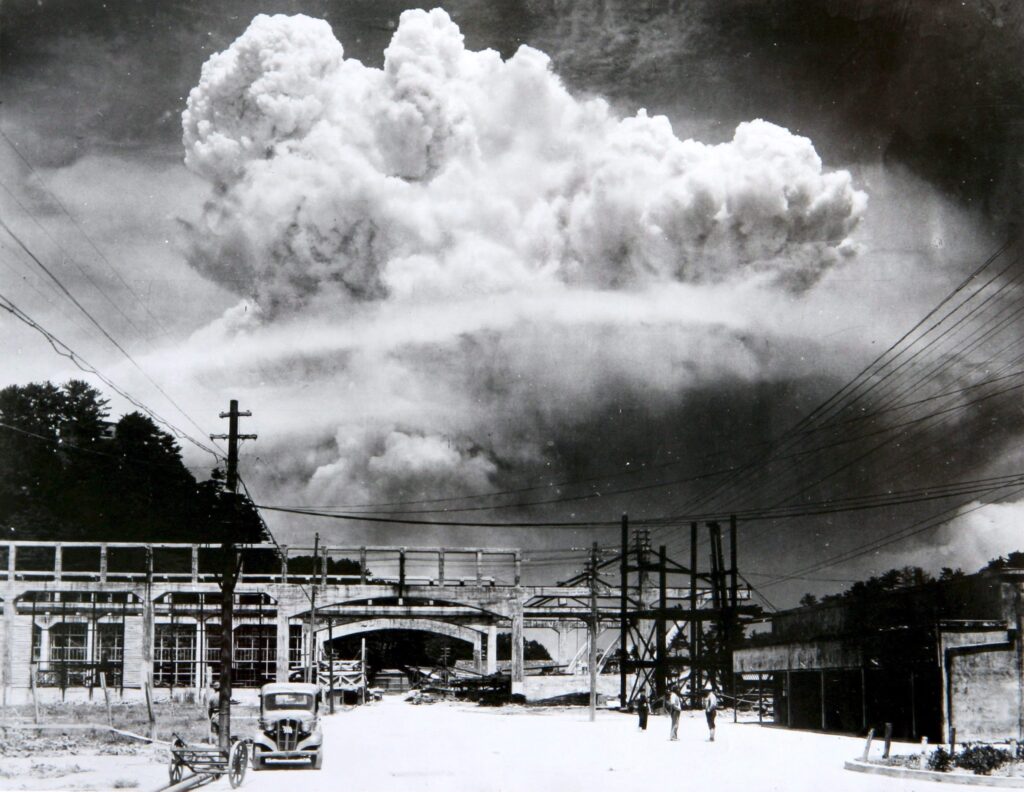
Just after midnight on August 10, 1945, barely 24 hours after a U.S. Air Force B-29 obliterated Nagasaki with the world’s first plutonium bomb. John J. McCloy, a longtime fixer in Washington and chairman of President Truman’s State-War-Navy Coordinating Committee (SWNCC), dispatched two aides to a basement office at the White House annex on an urgent mission.

With Imperial Japan about to submit to Truman’s ultimatum for an unconditional surrender, McCloy’s War Department needed to send a general order to Japan’s High Command that would define the zones in Korea, Japan’s colony since 1910, where the United States, the USSR and other wartime allies would accept Tokyo’s capitulation.

By previous agreement with the United States at Yalta, Joseph Stalin’s Red Army had entered the war in the Far East on August 8th, and was now chasing Japan’s powerful Kwangtung Army out of Manchuria. The Russian offense, dubbed “August Storm,” involved nearly 1.6 million battle-tested troops buttressed by the Soviet Pacific Fleet. They were determined to “purge the Russian Far East and nearby areas” of the Japanese presence and ensure a Soviet role in Japan’s surrender. That meant clearing the over one million soldiers Japan had deployed in Manchuria, Korea, southern Sakhalin, and the Kuril Islands.

But the Russian advance unfolded faster than anyone in Washington had anticipated. As they watched from afar, Truman’s advisers feared these Soviet forces could soon occupy all of Korea. From Moscow, diplomat and railroad magnate W. Averell Harriman urged Truman to use U.S. forces to “occupy as much of Korea and Manchuria as possible.” Declassified documents would later reveal that U.S. officials were petrified that the Soviets would be accompanied by thousands of hardened Korean fighters and revolutionaries who had taken up arms against the Japanese in Manchuria. Read more…

1 Comment
from → Uncategorized

The McCollum Bill – H.R. 3103: Bill Analysis: Supporting the Human Rights of Palestinians

August 10, 2023
tags: H. R. 3103, Rep Betty McCollum

(The main barrier for the bill  described below getting passed by Congress can be summed up in one word: AIPAC. We will continue with our efforts to get Congress to implement it. RJP)

Friends Committee on National Legislation
Lobbying with Quakers

Bill Analysis: Supporting the Human Rights of Palestinians
H.R. 3103

By Hassan El-Tayyab | July 5, 2023

photo credit: Markus Vilijasalo / Flickr

The Defending the Human Rights of Palestinian Children and Families Living Under Israeli Military Occupation Act, H.R. 3103, introduced by Rep. Betty McCollum (MN-04), seeks to protect Palestinian human rights and ensure no U.S. taxpayer funds are used to support abusive practices in the occupied territories.

H.R. 3103 is an urgently needed step toward ending U.S. complicity in ongoing, systemic injustices inflicted on Palestinians. The bill explicitly acknowledges and condemns the ill-treatment Palestinian children and families face, declaring these practices to be contrary to “the values of the American people” and efforts to promote dignity for both Palestinians and Israelis.

If passed, H.R. 3103 would prohibit any U.S. foreign assistance from being used to support the following:

The Military Detention of Children

American taxpayer dollars should not be used to support the military detention of children anywhere—whether at the U.S.-Mexico border or abroad. The Israeli military has violated the rights of Palestinian children for many years, and these violations have continued unabated.

Defense for Children International Palestine (DCIP) gathered affidavits from 766 West Bank children detained by Israeli forces from the West Bank between 2016 and 2022. They concluded that 75% of the children experienced physical violence while in custody.

Home Demolitions

In the past year, Israel has further accelerated its longstanding and unlawful practice of demolishing Palestinian homes in the occupied territories. According to a report by the United Nations Office for the Coordination of Humanitarian Affairs (OCHA), between April 2021 and March 2023, Israeli authorities demolished or seized 1,840 Palestinian structures in the West Bank, including East Jerusalem. As a result, approximately 2,170 individuals, including 1,104 Palestinian children, have been displaced.

In March 2023, OCHA also reported that 58 schools in the West Bank, which 6,500 children attend, are subject to demolition orders issued by Israeli authorities. Demolitions clearly and deliberately undermine the prospects for a just and lasting peace between Israel and the Palestinians and create oppressive conditions that leave Palestinians with no choice but to leave their homes and lands.

Annexation

The unilateral annexation of any parts of the occupied territories constitutes a grave violation of international law. It could irreparably damage the prospects for a resolution to the Israeli-Palestinian conflict.

Annexation will only deepen inequality, injustice, and conflict. Under its new government, led by Prime Minister Benjamin Netanyahu, Israel has increased the pace of illegal settlements in the West Bank, furthering the annexation of Palestinian territory.

H.R. 3103: An Important Step

In addition to prohibiting U.S. funds from being used to support abusive practices against Palestinians, H.R. 3103 enhances transparency and accountability by requiring the Department of State to either certify that no U.S. funds are being used for prohibited purposes or issue a report to Congress detailing any violations by the Israeli government. These reports would serve as an essential foundation for future efforts to protect and promote the rights of Palestine.

Congress should send a strong message: U.S. funds will not support the military detention and mistreatment of children, the destruction of family homes and schools, and the further annexation of Palestinian land. By cosponsoring H.R. 3103, members of Congress can align U.S. assistance with American values and international law.

1 Comment
from → Palestine

Niger – 5: In Niger, Washington Implements “the Ethiopian Model” – or tries to.

August 8, 2023

Among those in the photo: Dawit Agonafer, Nebiyu Asfaw, Nahome Yifru (and yours truly)

Taste of Ethiopia 2023 – Denver, Colorado; Attempts to disrupt Eritrean Celebrations in Seattle, Toronto and Stockholm fail miserably

Here in Colorado, the first “Taste of Ethiopia” event since the advent of COVID took place this past Saturday, August 5 in Montbello. It was a wonderful day of culture (dancing, singing, speeches. food, booths selling all kinds of things from the Horn of Africa) and a “ton” of people, overwhelming Ethiopian. A few politicos – Governor Polis, new Denver Mayor Michael Johnson – both Democrats – spent time there as did Republican Aurora Mayor Mike Coffman. The latter, who has shown consistent support for Colorado’s Ethiopian Community – much more than any Democrat, is highly respected – if not loved – among a broad base of Colorado Ethiopians.

As I have some dear Ethiopian friends, several of whom invited me to attend I went too. Through the good auspices of the friends in this photo, I was able to meet dozens of local Ethiopians and talk to them briefly about their lives here in the USA and the situation back in Ethiopia which concerns them all. Given how tense Ethiopia is this days I was worried that those tensions might spill over here, but at least at “Taste of Ethiopia” all was calm, the mood completely relaxed, even mellow. This was not the case of big celebrations of Eritreans, fellow Horn of Africa folk, in Seattle, Toronto and Stockholm where thugs unsuccessfully tried to disrupt similar festive events. Eritrean participants pointed the finger of responsibility to Washington’s Horn of Africa proxies, supporters of the Tigre People’s Liberation Front (TPLF), those who were swept from power in Ethiopia in 2018-2020 and who were militarily defeated by a combined Ethiopian-Eritrean military offensive. The TPLF was then saved from being completely suppressed and “knocked out of the ball game” by Washington’s intervention.

Frank and difficult talks. “Daughter of Hillary” gives Niger military an ultimatum.

What is happening in Niger? Who is the leader who was deposed? Who was he replaced with and why?

As Break Through News’ Eugene Puryear put it:

“I think that when we look at what’s happening in Niger … the best way to actually describe what’s taking place is a social explosion, the accumulated contradictions of the extreme poverty of Niger … we’re talking about a country where roughly 43% of people are living on less than $1.90 a day … also in the context of a challenging security situation – not just in Niger, but really, you know relatedly across the entire Sahel, the uptick of terrorist activity over the past several years has even been less intense than perhaps, let’s say, Mali and Burkina Faso, but nonetheless it’s been very significant, very intense and that has also been a factor in what is moving forward (ie. – the coup). And then on top of that there are the immediate proximate causes: the poverty of Niger, the security crisis that’s  happening in the Sahel are overlaid over the top of the fact that in general, Africa as a continent is at quite an inflection point in terms of a generation of people, the youngest continent – something like 70% of the African population is under the age of 35. In Niger, half of the population is under the age of 15. … There is a generation of people who don’t want to live in poverty, marginalization and humiliation

The West’s “man” in Niger was overthrown, Mohammed Bazoum, a pliant proxy of both the United States and France who permitted American and French military bases, one of the largest (U.S.) drone bases in the world, was critical of his neighbors in Burkina Faso and Mali for improving relations with Russia and was alleged to have been exceedingly corrupt along with his cortege of advisors and ministers. Yes it was a coup of a elected president but the movement that swept him and his team from power, the coup, has widespread popular support in the country especially among the country’s burgeoning youth.

The tensions over such an ECOWAS invasion of Niger – at the best of Washington and Paris – remain high, after the visit of U.S. Under Secretary of State Victoria Nuland to Niamey, Niger’s capitol, yesterday. Unlike in Kiev a decade agom in Kiev, this time Nuland did not come offering cookies to give to coup supporters . Nuland,  “daughter of Hillary Clinton, ” “daughter of Madelaine Albright”, held what she described as “frank and difficult talks” with the Nigerien military. No cookies this time, instead in a classic imperial voice, an ultimatum. “Frank and difficult talks” as Nuland put it does not suggest a successful meeting. Representing both the United States and France, Nuland demanded military coup leaders in Niger step down  and return the country’s deposed president, Mohammed Bazoum, another Western proxy, to power. That the coup leaders appear very popular among the Niger masses was, as is usually the case, irrelevant to Nuland and the State Department. Read more…

Leave a comment
from → Africa, Francafrique

Press Release: CFJ-Colorado condemns the recent Israeli attack on the Palestinian town of Beit Ummar, West Bank, Occupied Palestine.

August 7, 2023
tags: Beit Ummar, Center for Freedom and Justice - Colorado, Palestine

Center for Freedom and Justice – Beit Ummar, Palestine

Center for Freedom and Justice – Colorado
P.O. Box 12235
Denver, Colorado 80212
USA

CFJ Colorado – Saving Beit Ummar

Press Release: CFJ-Colorado condemns the recent August 3, 2023 Israeli attack on the Palestinian town of Beit Ummar, West Bank, Occupied Palestine.

As a part of its overall campaign to continue to build settlements in the West Bank and to treat Gaza as an open air concentration camp, on August 3, 2023, Israeli Defense Forces invaded and attacked the town of Beit Ummar (near Hebron, in the West Bank), this in an email from Bessam Adi, Executive Director of the Center for Freedom and Justice, Beit Ummar, Palestine.

As reported to us by eyewitnesses in Beit Ummar, the attack on the town targeted 14 young men, including freed prisoners, wounded and children. The town’s population was assaulted with rubber bullets and tear gas. Many were injured.

Sizeable IDF forces along with so-called border guards that included dozens of military vehicles attacked most of the neighborhoods of Beit Ummar at dawn (on August 4). The occupation soldiers stormed dozens of citizens’ homes, which soldiers raided and searched. The operation resulted in the arrest of 14 young men, including freed and wounded prisoners and children, among them: Wahib Abd al-Jawad Khalil, 14 years old, Ahmad Karim Muhammad Khalil, 17 years old, Hasan Waleed Jamal Musif Sabarneh, 18 years old, Muhammad Nizam al-Khalil, 21 years old, Abdullah Muhammad Khalil Sabarneh, 23 years old, Alaa Ghazi Mufleh Ordinary, 22 years old, Qassam Ghazi Muflih Ordinary, 17 years old, Muhammad Mahmoud Bahar, 26 years old Mahdi Muhammad Hammad Abu Mariya, 18 years old. Two other young men received foot wounds from rubber bullets; there were several cases of suffocation that also resulted. The wounded were treated in the field during the clashes that took place in the Al-Ain Triangle of the town.

Later IDF military force withdrew to Etzion Camp, north of Beit Ummar.

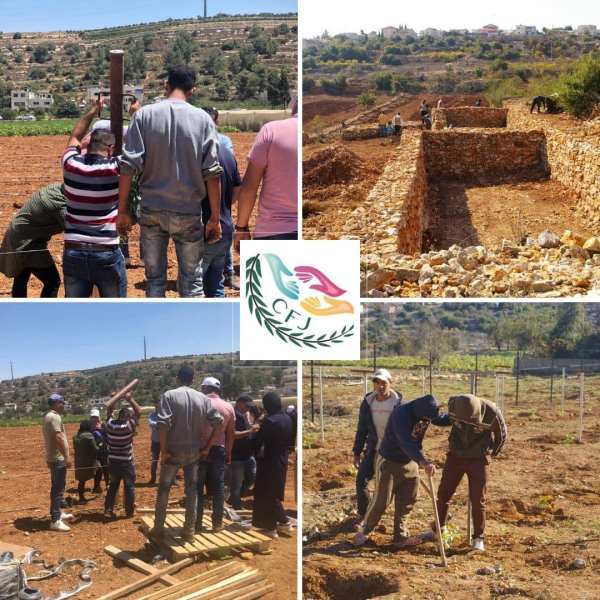
The Center for Freedom and Justice – Colorado – engaged in an informal sister city “people-to-people” project with the Center for Freedom and Justice in Beit Ummar. The “Center” in Beit Ummar is a registered civic association engaged in infrastructural projects in the town, among them a Women’s Market, the development of an organic farming project, the preservation and increased productivity of Palestinian farmlands neighboring the town just to name a few. We, in Colorado, now in our sixth year continue to publicize and support these projects, trying to help Palestinians insure that life for their community is both liveable and prosperous in a situation of military occupation and extreme repression by the Israeli authorities.

We at the Center for Freedom and Justice – Colorado
– condemn this Israeli assault on the Palestinian town of Beit Ummar, one of many IDF incursions into Palestinian villages, towns and cities.
– call for an end to the current Israeli campaign of repression against all Palestinian regions and for an end to the Israeli military occupation, the longest military occupation of foreign territory in the past century
– for a diplomatic process that will provide a permanent solution to the Israeli-Palestinian crisis.

We call on the Colorado Congressional Delegation to investigate the Israeli attack on Beit Ummar
and that the Colorado members of Congress support H.R. 3103 “Defending the Human Rights of Palestinian Children and Families Living Under Israeli Military Occupation. They should join the 29 current co-sponsors of the bill.

Help by making a tax deductible contribution to our work

For CFJ-Colorado:

Gary Anderson – gary4wtr@yahoo.com
Rob Prince – robertjprince@gmail.com

Leave a comment
from → Palestine

No More Hiroshima’s, No More Project Plowshares, No More Project Rulisons!

August 6, 2023
tags: Oppenheimer Movie, Project Rio Blanco, Project Rulison

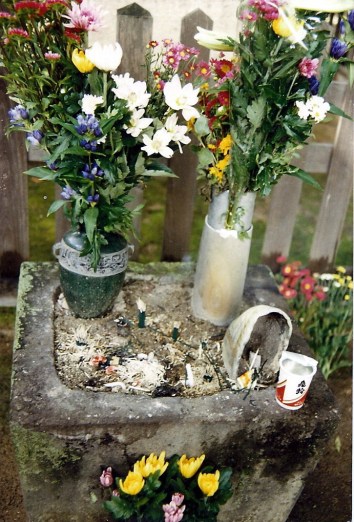
Hiroshima, Shrine for the victims. August 6, 1987

No more Hiroshima’s, No more Project Plowshares, No more Project Rulisons!

I hope people go see the film “Oppenheimer” – a long somewhat tortured visual partial biography of Robert Oppenheimer who shepherded the creation of the atomic bomb at Los Alamos. I have read valid criticisms of the movie – how it focuses too much on Oppenheimer’s personal life – making it just one more American personal melodrama – and not enough on the horrific impact of the bomb, what it did to the people of Hiroshima and Nagasaki, what it has done since to “downwinders” the world over, on the Pacific Islands, in the areas surrounding the Nevada test site, in the Algerian Sahara where France did its first tests, in Kazakhstan and near the Urals where the Soviets tested, etc. And then there is the film’s merciless length, more than three hours. Who is going to sit through that? And in my case I saw the film with Nancy and a few dear friends in a mega theater in Aurora Colorado, appropriately enough, the same theater where in August 2012, a f@#king idiot named James Holmes, masked and dressed tactical clothes entered the theater set off tear gas grenades and shot into the audience with multiple firearms. Twelve people were killed and 70 others were injured, 58 of them from gunfire. Just the right place to see a film about government sponsored mass murder.

Despite its warts, “Oppenheimer” is very much worth seeing

After “the war” – the way my generation often refers to WW2 – as if it was the only war that ever happened in all of history – as the Soviets also detonated their version of a nuclear weapon – the President Eisenhower, worried that the American people and those of the rest of the world might get “the wrong idea” about nuclear weapons. He thought the public should “embrace them” so to speak and suggesting that instead of “instruments” or “devices” of mass murder, that nuclear weapons have a positive role to play in promoting human progress, that they could be used to build tunnels through mountains, excavate land to be used for ports, for mining, or, my favorite one, could be a cheaper way to either expand the Panama Canal or build a wider one for the bigger tankers to come that were having difficulty getting through the Panama Canal as it then existed. And nuclear weapons could also be used – get this – for what today is referred to as “fracking” – ie, breaking through deep underground rock to create cavities into which, from the many blast created fissures, natural gas would flow, filling the cavity with a commercially viable product that could be used to as a source of heat energy in American kitchens.

This dark, fanciful, chilling idea not had only a name – Project Plowshares – but a whole sordid history, that included a number of “near projects” (a plan to build a port in northern Alaska), talk that went through several stages to widen the Panama Canal as noted above and the actual detonation of several nuclear bombs – one in New Mexico, two in the Colorado mountains (Project Rulison, Project Rio Blanco) the goal of which was an early version of fracking – using nuclear weapons for mining natural gas in the Rockies. The New Mexico and Colorado detonations all led to escapes of radioactive materials, the natural gas produced was toxic – or feared toxic enough that no city, no even one of the country’s most corrupt, Los Angeles, refused to purchase it. But those blasts were just a prelude to the big one – a plan to detonate more than 200 nuclear weapons in the Wyoming coal fields for natural gas production. If in other ways, Jimmy Carter was a disappointing president whose aspirations for cutting the military budget in fact of a close to all powerful military industrial complex went nowhere, still Carter, mercifully, killed the program, saving the state of Wyoming for the likes of Dick Cheney and his foreign policy cabal.

The scientific mastermind, social midget of the program, who lobbied for Project Plowshares and became its most ardent defender was none other than Edward Teller, “the father of the H-bomb” whose role in developing the atomic bomb is, generally speaking, accurately portrayed in “Oppenheimer”. Turns out his effort to “beautify” nuclear weapons as cheap material for construction projects and mining went nowhere. And yet today, there are Dr. Strangeloves,  intellectual offspring of Edward Teller and Curtis “bomb ’em back to the stone age” LeMay. Not only are such nutcases still around, but they have enough influence to push through legislation for a $ 2 trillion modernization of Washington’s nuclear arsenal pushing the Russians, Chinese and those other countries to do likewise. While Climate Change certainly is a danger to life on earth, the danger of nuclear war is right up there as well. But who gives a shit? Where is the awareness of the nuclear war danger, here in the USA, in the rest of the world?

It is rare that mention of Project Rulison and even more so, Project Rio Blanco (where two atomic bombs were detonated) are a part of the public debate in here in Colorado although in response to the movie “Oppenheimer” a decent piece commemorating Project Rulison appeared in Westword written by Scott Yates. Four years ago, a number of us – actually four of us – who had participated in the protest to prevent the Rulison nuclear blast from taking place – two of whom were present a mile from the site when the blast occurred – Chester McQueary and Melinda Dell Fitting – went back to the blast site to commemorate the protest, and to mourn the detonation. Project Rulison – A Blast from the Past – Another Project Plowshares Debacle. Four Protesters and a documentary Film Crew Return to the Scene of the Crime. Scott Yates asked me in an email if the film of this event was ever made. I am not sure, but I don’t think so. I would hope that one day soon, one will be made. For the moment, we’ll have to manage with “Oppenheimer”.

No more Hiroshima’s, No more Project Plowshares, No more Project Rulisons!

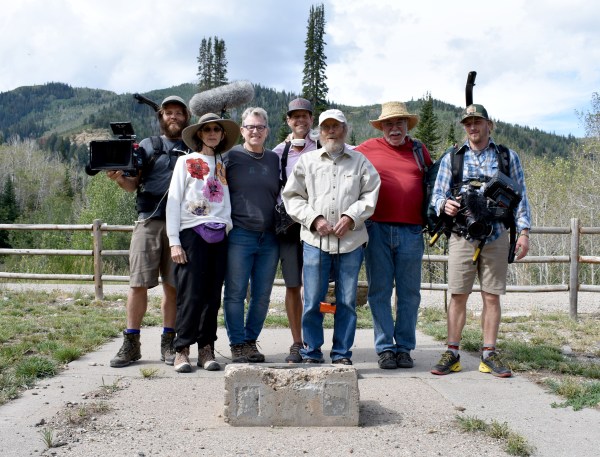
Protesters at the Rulison nuclear blast site, Ground Zero, along with the documentary film makers from Project Boom. They are making a documentary about Project Plowshares and Rulison in particular. Nancy Fey in white sweatshirt with flowers. On her right Melinda Dell Fitting. Front and center in light long sleeve shirt, Chester McQueary and to his right in the red t-shirt, yours truly, Rob Prince.

1 Comment
from → Nuclear Weapons

Niger – 4: Sasha Breger (again!) – Niger, uranium and the politics of empire

August 4, 2023
tags: Sasha Breger Bush
(“For one shining moment” Sasha Breger Bush and I shared an “academic platform,” I guess we can call it, at the University of Denver’s Korbel School of International Studies. She has since gone on to become a tenured prof at the University of Colorado – Denver. RJP)

IPE with SBBAugust 4, 2023: Global News Roundup

Niger, uranium, and the politics of empire

SASHA BREGER BUSH
AUG 4, 2023
Share

The Global News Roundup collects news stories from entirely international (non-US) media sources on variety of pressing global issues and events.

News out of Niger over the past two weeks opens a window into two, overlapping dynamics currently working to reshape the global economy. First, a mercantilist  economic system is emerging as the international balance of power shifts from a US-dominated system toward a more multipolar system in which power is shared more equally among a greater number of rival states. In the Roundup from April 28 about trade wars and economic weapons, I noted: “Lately, governments are rushing to implement new kinds of economic policies, ones that involve heavier regulation of global trade and finance and that benefit themselves and their allies at the expense of their rivals and enemies. In the history of global capitalism, this kind of system—called a “mercantilist” global economy—is the rule, not the exception.” Commodities markets have been an important arena for economic warfare over the past couple of years, for example with US and EU sanctions on Russian natural gas, Chinese bans on exports of rare earth metals to the US, and with Ukrainian wheat and the Black Sea Grain Deal from which Russia recently withdrew.

In Niger’s case, the new government is using its natural resources, and France’s reliance on those resources, as a tool to push back on and reshape its relationship with its former colonizer and the EU more generally. For their part, the US and EU are vying with Russia for influence in west Africa and access to Niger’s resources, and both “sides” have insinuated they may resort to military force in an attempt to resolve the matter.

Second, a lot of countries in Latin America, the Middle East, Africa, and Asia—many of them former Western colonies—have grown more powerful in recent decades and are actively rejecting and pushing back against Western power. In some cases, smaller nations with less power are joining forces and working together to pursue mutual, anti-imperial interests. Among other recent examples, I’ve discussed this issue in terms of Saudi Arabia’s pushback against the US (here), Brazil’s stance against the Ukraine war and pushback against “Washington Consensus” development policies (here and here), El Salvador’s defiance of the IMF and adoption of Bitcoin as legal tender (here), and the delegation of six African countries working together to push the US and Europe to negotiate peace in Ukraine (here).

In Niger, not only is the new government challenging its exploitative and highly unequal relationship with France, but the junta has received strong support from governments in neighboring countries Mali and Burkina Faso, both also former French colonies. Meanwhile, the deposed president has garnered the support of other west African nations, including Nigeria, which are outraged by the overthrow of a pro-Western and democratically elected leader .

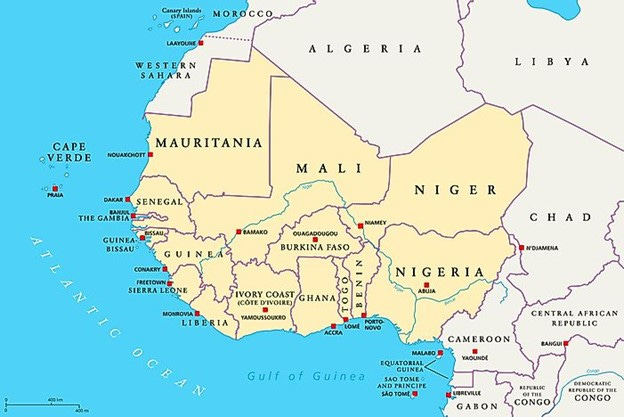
Niger is a land-locked country in west Africa, bordering the Sahara Desert. It has a population of about 25 million, average life expectancy around 61 years, real GDP per capita of about US$550 per year, and an extreme poverty rate of 42% (data sources: here and here). The map below shows the nations of west Africa.

(Image: Map of west Africa, from World Atlas, here).

The French empire began systematically colonizing west Africa in the late 19th century, competing for resources and territory with the British and Portuguese empires which also had footholds in the region. Economic historian L.S. Stavrianos notes how quickly the European powers worked to annex and divvy up the continent during this period, in what he calls “the greatest land grab in history”: “In 1879 the only colonies in Africa were those of France in Algeria and Senegal, of Britain along the Gold Cost and at the Cape, and of Portugal in Angola and Mozambique. By 1914 the entire continent had been partitioned, except for Ethiopia and Liberia” (Stavrianos, Global Rift, 1981, p. 282).

French colonial holdings in Africa by the WWI period were extensive, including in North Africa (Tunisia, Algeria, Morocco), west Africa (including modern-day Niger, Mali, Mauritania, Senegal, Guinea, Burkina Faso, Cote d’Ivoire, Togo, and Benin), central Africa (Republic of Congo), and east Africa (Djibouti and Madagascar). Niger formally became a French colony in 1922.

As with most other imperial enterprises, gaining cheap and steady access to Africa’s natural resources was a major motivation for colonization, from gold and aluminum to cocoa, coffee, and cotton. Uranium, a radioactive metal used to power nuclear reactors and make weapons (among other applications), was first discovered in Niger in 1957, three years before it won its independence from France.

Commercial production began in 1971, dominated by the French mining firm Orano (formerly named Areva). Today, Niger is the world’s 7th largest uranium producer (it has the highest-grade ore among African producers). Orano and Niger’s state-owned Sopamin jointly own and operate a large open-pit mine near the town of Arlit, an industrial center in the north-central part of the country. It is the only active mine, though there are two additional inactive sites also owned by Orano. While the French dominate uranium production and trade out of Niger, Canada-based GoviEx Uranium has an 80% stake in a new mine project that is permitted for development, with plans in place to develop the site. Niger also has substantial gold reserves, with mining operations beginning in the early 2000s, as well as oil reserves. China, with Canada, also has substantial investments in gold, and China has further invested in oil production.

Writing for Venture Africa, Suotunimi Orufa notes how central especially uranium and gold are to Niger’s economy, as well as how important Niger’s uranium is for France: “Uranium and gold are two of Niger’s most significant exports, accounting for 40% and 20% of its total exports respectively. According to the International Atomic Energy Agency, Niger earned about $300 million from uranium exports in 2019, which represented about 5% of its government revenue. As of 2021, Niger still produced 311,110 tonnes of uranium, which accounted for over 5% of world uranium output. Most of this uranium was exported to France.” The Lebanese outlet Al Mayadeen further notes that, based on 2021 data, Niger is the largest supplier of uranium to the EU. Another report confirmed that Niger supplied 25% of the EU’s uranium in 2021 and that 35% of all uranium used in French nuclear reactors came from Niger in 2020. France derives about 70% of its electricity from nuclear energy.

On Wednesday July 26, the day before the Russia-Africa summit began in St. Petersburg, there was a military coup in Niger. Niger’s President Mohamed Bazoum was taken and is still being held prisoner by the presidential guard with the military’s backing. The new government suspended the constitution and on Friday the 28th, General Abdourahamane Tchiani—who has the support and backing of the Russian government as well as the Russian mercenary company Wagner—declared himself head of a new interim government. The Brussels Signal reported that, “On July 30, angry protesters waving Russian flags gathered outside the French Embassy in Niger’s capital Niamey. Demonstrators chanted anti-French slogans and demanded the closure of foreign bases in Niger. A number of them tried to break into the building and were pictured smashing windows.” Russia has been steadily expanding its economic and military presence Africa in recent years.

On Monday the 31st, General Tchiani announced the suspension of all uranium and gold exports to France: “The decision…is seen as a way of asserting Niger’s sovereignty and challenging France’s influence and interests in the region.” The website for France’s Ministry for Europe and Foreign Affairs documented the following short Q&A with the press on July 31:

Q– : Today, Niger stated that they will stop exporting uranium and gold to France. What is Paris’ reaction to this decision? Does this situation fall under the category of “any attack against France and its interests” mentioned by the Elysée yesterday and might it be followed by a response from France?

A– :There are no French companies operating gold mines in Niger. Regarding uranium, we have an extremely diverse supply and Niger only makes up 4% of global production.

Le Monde reported on the 31st that Orano’s normal operations had not been disrupted at the mine near Arlit, though it had “activated a crisis unit to watch over its uranium mines”.

(Interesting media note: I found repeated confirmation of the uranium and gold trade suspension across a variety of media outlets from Africa, Europe, and elsewhere, including the admission above from an official French government website. See here, here, here, here and here. However, Reuters issued a “fact check” on August 2nd denying the suspension and then ran another piece in which EU officials denied any risk to EU energy supplies “if” Niger were to cut supplies, implying they had not yet done so. Hmm….)

The coup was quickly condemned by the US, Canada, the UK and EU, as well as by ECOWAS (Economic Community of West African States, of which Niger is a member) and the AU (African Union, which has 55 member states from Africa). All demanded that President Bazoum be immediately released and restored to the presidency. France, the EU, and the UK suspended development aid and budget support to Niger on Saturday. ECOWAS imposed sanctions on Niger on Sunday, and Nigeria cut off electricity exports to Niger on Wednesday as part of the ECOWAS sanctions package. The IMF is further slow playing a loan disbursement that was approved for Niger in early July. The US has not yet suspended aid, nor has Canada, but both warned they could do so in the future. (This timeline from Al Jazeera is helpful).

A report from The Guardian on Wednesday was entitled, “Military intervention in Niger is ‘last resort’, says west African bloc”, referring to ECOWAS. Yesterday, Russian news agency TASS volleyed back:

The initiative to conduct a military operation in Niger, where rebel presidential guards ousted head of state Mohamed Bazoum in late July, is being spearheaded by France and Nigeria…

Niger is crucial to France as it is a source of almost 20% of uranium fuel for its nuclear power plants. Niger hosts a large French Air Force base and a contingent of about 1,500 troops. After the withdrawal of its army units from Mali and Burkina Faso, Paris hates the idea that it may suffer another setback and beat a hasty retreat again – this time from Niger. In that case the only large French contingent in the region will be the one in Chad, but from there it will be difficult to intervene in Mali, Burkina Faso, Niger and other countries of the Sahel zone…In fact, Niger is now the West’s main support base in the Sahel, as there are also two US military bases in that country.

Niger’s coup is the latest in a string of political upheavals in west Africa, including military coups in Mali (in 2020) and Burkina Faso (in 2021), both of which ushered into power anti-French and pro-Russian juntas. According to Al Jazeera, the governments of Mali and Burkina Faso this week warned “that any military intervention against last week’s coup leaders in Niger would be considered a “declaration of war” against their nations.” Last week, Yevgeny Prighozin told a news outlet in Cameroon that Wagner was ready to increase its presence in Africa.

In other radioactive news, Japanese restaurants and eateries in China are preparing for tough business conditions following reductions in Chinese seafood imports from Japan and the Chinese government’s recent decision to perform more safety checks on imports. Japan has been approved by international agencies and is preparing to release treated radioactive water from the damaged Fukushima nuclear plant into the Pacific Ocean. While Japanese officials say the water is “purified”, the Chinese government fears it is “contaminated”. There is widespread concern about Japan’s plan on both sides of the Pacific, which is a major source for seafood globally and an important ecosystem, including extensive reefs that support a wide variety of plant and animal species.

Things I’m keeping an eye on:

1.     EU-Latin America relations: Last week the Community of Latin American and Caribbean States (CELAC) had its first meeting with EU officials since 2015, with the EU seeking to increase Latin American energy and resource exports to Europe and to counter China’s expansion in the region. While some reports indicated progress on “green energy” partnerships, Mena FN reported that the meeting was full of disagreement and was “nearly derailed over the EU’s embrace of controversial opposition figures from Venezuela, Cuba, and Nicaragua. A European Parliament resolution passed days before the start of the summit criticized the Cuban government for alleged human rights abuses and called for political exclusion of various countries.”

2.     The US economy: It’s been a bumpy couple of weeks for the US financial system. Kansas-based Heartland Tri-State Bank was closed by regulators last week, the 5th US bank to be shuttered by the FDIC this year. This week, on Tuesday, Fitch, the prominent ratings agency, downgraded US Government debt to AA+ from AAA, putting the US “in level with the likes of New Zealand, Austria and Canada, below countries such as Denmark and Luxembourg, and within touching distance of France, Ireland and Czechia”, reported the Financial Times, continuing on to note that “In Fitch’s view, there has been a steady deterioration in standards of governance over the last 20 years, including on fiscal and debt matters…”. Then, on Thursday, Fitch additionally downgraded other kinds of debt, including some municipal housing bonds secured by mortgage backed securities issued by Ginne Mae/Fannie Mae/Freddie Mac, debts that are “directly tied to the creditworthiness of the United States or its related entities.” For context, see here for my recent article on the Whole World Debt Crisis.

3.     Ukraine war: More peace plan ideas keep surfacing. This time, the US is organizing a peace summit with Saudi Arabia to which Russia is not invited, but which China will attend. The summit will be held this weekend, August 5-6.

Share

Thanks for reading IPE with SBB! Subscribe for free to receive new posts and support my work.

Subscribe

IPE with SBB

Read more…

2 Comments
from → Global Economy

Taste of Ethiopia 2023 – Saturday, August 5, 2023 10 am – 9 pm

August 4, 2023
tags: Taste of Ethiopia

Skip to content

Taste of Ethiopia

Taste of Ethiopia

Colorado
  • About
  • Headlines
  • Images
  • Contact

Taste of Ethiopia 2023

Expand your horizon, travel the world without leaving Colorado.

2023 APPLICATIONS


Since 2013 

Once a year Colorado goes Ethiopian! The 9th annual Taste of Ethiopia Festival will make its highly anticipated return on August 5th this year. This cherished event has remained steadfast, except during the challenging times of COVID. It serves as a heartfelt tribute to Colorado’s second-largest immigrant population, celebrating the rich Ethiopian culture.

Join us on August 5th at Parkfield Lake Park for one of a kind experience of unique Ethiopian food, music, arts, crafts and more. Come Taste the Food, Taste the Culture, and Taste the Love!

FREE ADMISSION!

Screen Shot 2023-06-25 at 1.39.04 PM
image000000
Screen Shot 2023-08-04 at 11.59.38 AM
image000001

Video Player

00:00
04:59
20729080_1851033041892354_6725586173462699017_o

9NEWS

“Denver is mad for Ethiopian food. The huge demand for Ethiopian food led to the creation of the Taste of Ethiopia Festival.”

Learn More

1

2023 Applications

We’re thrilled about your interest in participating as a vendor, sponsor, graduate, or volunteer!

Learn More

FB_IMG_1564537194693001

Upcoming Events

We look forward to celebrating our up and coming event with you. This is everything you need to know about The Taste of Ethiopia.

Learn More

KGNU did an interview  on Taste of Ethiopia – the station “gets a point” for the coverage, but …. why didn’t they interview an Ethiopian. The interview hardly mentions the festival and what it was about, instead it gives voice to a non-Ethiopian volunteer. Nice person, ok, glad she is an enthusiastic volunteer, but …  KGNU – you can do better next time!

CONTACT

  • Email
    tasteofethiopiafestival@gmail.com
  • Phone
    (303) 731-6173
  • Address
    15555 E 53rd Ave, Denver, Co 80239
  • Facebook
Copyright © 2023 Taste of Ethiopia — Lyrical WordPress theme by GoDaddy
Leave a comment
from → Colorado, Ethiopia

Niger – 3: New Global Flashpoint between Multipolar and Unipolar Worlds: West Africa

August 3, 2023
tags: ECOWAS, Niger

West Africa: New Global Flashpoint for War? 

There is growing concerns that a new flashpoint in the tug of war between the old and the new – the unipolar world headed up by the United States and NATO and the emerging multipolar world in which China, Russia and in general the BRICS country –  has emerged in West Africa. The danger that the region could explode into warfare, with Nigeria this time playing the role of Washington and Paris’s proxy, is indeed real, if not imminent, at least as it appears at the moment.

As detailed in a fine article at People’s Dispatch,(1) a Marxist source of some quality, Vijay Prashad and Kambale Musavuli describe the beginning of the military coup in the Sahel region of Africa, former french colony which, even since independence, has maintained a stranglehold on Niger’s economy and political system:

“The coup in Niger follows coups in Mali, Burkina Faso, and Guinea. Each of these was led by military officers angered by the presence of French and US troops and by economic crises inflicted on their countries”

“At 3 a.m. on July 26, 2023, the presidential guard detained President Mohamed Bazoum in Niamey, the capital of Niger. Troops, led by Brigadier General Abdourahmane Tchiani closed the country’s borders and declared a curfew. The coup d’état was immediately condemned by the Economic Community of West African States, (ECOWAS) by the African Union, and by the European Union. Both France and the United States—which have military bases in Niger—said that they were watching the situation closely. A tussle between the Army—which claimed to be pro-Bazoum—and the presidential guard threatened the capital, but it soon fizzled out.”

While international public opinion appears to have clear condemned the coup – including remarks made by Russia and China –  still, opposition to any Western military intervention to bring deposed President Mohamed Bazoum back to power is, outside, the U.S. and France, thin to nonexistent. The map above exemplifies how the regional divisions are breaking down. The four countries that have experienced nationalist military coups are pretty much standing together in solidarity with Niger. The leadership of Mali and Burkina Faso has gone so far as to promise military solidarity should Niger be attacked.

In a statement to the people of Niger, coup leader Gen. Abdourahmane Tchiani warned his constituents of the hard times ahead:

“We therefore call on the people of Niger as a whole and their unity to defeat all those who want to inflict unspeakable suffering on our hard-working populations and destabilize our country”.

In response to the intimidation heaped on it, the full court hybrid warfare press being put in place by the U.S. and France, Niger’s coup leaders announced that they have nullified a number of current military agreements with France,  that they have “ended” the diplomatic missions of their country’s ambassadors with France, the United States, Nigeria and Togo. It is possible that current realities will force both U.S. and French troops to leave the country; something that would be a serious blow to both. They, the coup leaders, also pledge to respond “immediately” to any aggression against their country by ECOMAS. They have also banned two French media outlets – RFI (Radio France Internationale) and France 24, upsetting the French authorities that much more.

In a similar move, Niger ally, the President of Burkina Faso ordered the expulsion of a Canadian mining company from the country and the confiscation of 200 kilograms of gold.

Read more…

Leave a comment
from → Africa, Francafrique

Niger – 2: People’s Dispatch: Vijay Prashad, Kambale Musavuli. Niger is the fourth country in the Sahel to experience an anti-Western coup

August 2, 2023
tags: Niger

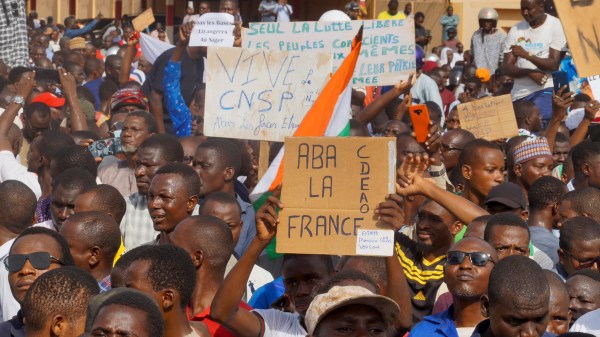
The people of Niger speak: Protesters hold signs in support of the CNSP (military coup leaders) and against France

________________________________

The coup in Niger follows similar coups in Mali (August 2020 and May 2021) and Burkina Faso (January 2022 and September 2022), and Guinea (September 2021). Each of these coups was led by military officers angered by the presence of French and U.S. troops and by the permanent economic crises inflicted on their countries. This region of Africa—the Sahel—has faced a cascade of crises: the desiccation of the land due to the climate catastrophe, the rise of Islamic militancy due to the 2011 NATO war in Libya, the increase in smuggling networks to traffic weapons, humans, and drugs across the desert, the appropriation of natural resources—including uranium and gold—by Western companies that have simply not paid adequately for these riches, and the entrenchment of Western military forces through the construction of bases and the operation of these armies with impunity

________________________________

People’s Dispatch

Niger is the fourth country in the Sahel to experience an anti-Western coup

August 01, 2023 by Vijay Prashad, Kambale Musavuli

The coup in Niger follows coups in Mali, Burkina Faso, and Guinea. Each of these was led by military officers angered by the presence of French and US troops and by economic crises inflicted on their countries

Protesters in Niger hold signs in support of the CNSP and against France

At 3 a.m. on July 26, 2023, the presidential guard detained President Mohamed Bazoum in Niamey, the capital of Niger. Troops, led by Brigadier General Abdourahmane Tchiani closed the country’s borders and declared a curfew. The coup d’état was immediately condemned by the Economic Community of West African States, by the African Union, and by the European Union. Both France and the United States—which have military bases in Niger—said that they were watching the situation closely. A tussle between the Army—which claimed to be pro-Bazoum—and the presidential guard threatened the capital, but it soon fizzled out. On July 27, General Abdou Sidikou Issa of the army released a statement saying that he would accept the situation to “avoid a deadly confrontation between the different forces which… could cause a bloodbath.” Brigadier General Tchiani went on television on July 28 to announce that he was the new president of the National Council for the Safeguard of the Homeland (Conseil National pour la Sauvegarde de la Patrie or CNSP).

The coup in Niger follows similar coups in Mali (August 2020 and May 2021) and Burkina Faso (January 2022 and September 2022), and Guinea (September 2021). Each of these coups was led by military officers angered by the presence of French and U.S. troops and by the permanent economic crises inflicted on their countries. This region of Africa—the Sahel—has faced a cascade of crises: the desiccation of the land due to the climate catastrophe, the rise of Islamic militancy due to the 2011 NATO war in Libya, the increase in smuggling networks to traffic weapons, humans, and drugs across the desert, the appropriation of natural resources—including uranium and gold—by Western companies that have simply not paid adequately for these riches, and the entrenchment of Western military forces through the construction of bases and the operation of these armies with impunity.

Two days after the coup, the CNSP announced the names of the 10 officers who lead the CNSP. They come from the entire range of the armed forces, from the army (General Mohamed Toumba) to the Air Force (Colonel Major Amadou Abouramane) to the national police (Deputy General Manager Assahaba Ebankawel). It is by now clear that one of the most influential members of the CNSP is General Salifou Mody, former chief of staff of the military and leader in the Supreme Council for the Restoration of Democracy, which led the February 2010 coup against President Mamadou Tandja and which governed Niger until Bazoum’s predecessor Mahamadou Issoufou won the 2011 presidential election. It was during Issoufou’s time in office that the United States government built the world’s largest drone base in Agadez and that the French special forces garrisoned the city of Irlit on behalf of the uranium mining company Orano (formerly a part of Areva).

It is important to note that General Salifou Mody is perceived as an influential member of CNSP given his influence in the army and his international contacts. On February 28, 2023, Mody met with the United States Chairman of the Joint Chiefs of Staff General Mark Milley during the African Chiefs of Defense Conference in Rome to discuss “regional stability, including counterterrorism cooperation and the continued fight against violent extremism in the region.” On March 9, Mody visited Mali to meet with Colonel Assimi Goïta and the Chief of Staff of the Malian army General Oumar Diarra to strengthen military cooperation between Niger and Mali. A few days later on March 16, U.S. Secretary of State Antony Blinken visited Niger to meet with Bazoum. In what many in Niger perceived as a sidelining of Mody, he was appointed on June 1 as the Nigerien ambassador to the United Arab Emirates. Mody, it is said in Niamey, is the voice in the ear of Brigadier General Tchiani, the titular head of state. Read more…

Leave a comment
from → Africa, Francafrique

Niger -1 : Background to the current military coup: “Françafrique: A brief history of a scandalous word”

July 31, 2023
tags: Boubacar Boris Diop, Niger

Niger surrounded by Nigeria, Burkina Faso, Mali, Algeria, Libya, Chad and an insy-tinsy bit of Cameroon.

__________________________________

(Note: It is possible that as I write this that Washington is putting considerable pressure on Nigeria to invade Niger to end the military coup which has ended the rule of Mohamed Bazoom, France’s latest proxy in Niamey, from power.

There are fewer better examples of neo-Colonialism anywhere in the world – not merely in Africa – than the resource rich African country of Niger. A former French colony which gained its nominal independence  from France in 1960, through the mechanism known as Francafrique, it has remained in a French vise grip ever since. It is this neo-colonial system that the Niger military is attempting to overthrow and sweep from power

Senegalese novelist  Boubacar Boris Diop explains Francafrique harshly but accurately in a recent article from New African, which I republish below in its entirety.  This artile will  be followed by a series of articles on the Niger coup its consequences which could embroil all of Africa. RJP)

__________________________________

Françafrique: A brief history of a scandalous word

Written byBoubacar Boris Diop
  • PublishedMarch 23, 2018
A Janus-faced entity – one African, the other French – Françafrique is the ultimate symbol of a confiscated, perverted sovereignty. This singular coinage perfectly illustrates France’s dogged refusal to decolonise. And as Senegalese novelist Boubacar Boris Diop notes, as such it continues to beget little monsters.

Intellectuals from countries like Nigeria, Kenya or Mozambique may not be familiar with the composite neologism Françafrique. It’s not only because it’s a French invention. Actually, Françafrique refers to a unique and absolutely fascinating political phenomenon: the continuous subjugation of supposedly sovereign African states – Côte d’Ivoire, Senegal, Gabon, to name a few – by their former colonial master, in this case France.

The process started in the mid-fifties and early sixties, when defeats in Indochina and then in Algeria persuaded Paris that it was wiser to grant nominal independence to its colonies in Sub-Saharan African while keeping a tight rein on them. Gradually, the French Empire switched from brutal overseer to absentee landlord.

The word Françafrique itself has met with a fate most bizarre. It is readily associated with François Xavier Verschave, a brilliantly lucid French intellectual who dedicated most of his life to exposing France’s rollback and nullification of African independences through foul neocolonial schemes.

Although I co-authored Négrophobie with him and Odile Tobner, we never met in person. Verschave died from cancer in June 2005, just five days after our book was released. But I knew he was so reviled by the elites of his country that for decades moneyed intellectuals, newspaper hitmen and digital media hacks from all quarters feigned to ignore his existence, to the point of never mentioning the portmanteau word he coined, i.e., Françafrique.

This hardly mattered to Verschave. Undaunted, he kept on exposing unpleasant truths, claiming loud and clear that Françafrique is “the longest scandal of the Fifth Republic.’’  Verschave was not just another disgruntled intellectual descrying a conspiracy, but a relentless file-comber. His flawless arguments were therefore backed by well-documented facts and figures, and “well-sourced” quotes. Thus, for several years he painstakingly took apart, piece by piece, joint by joint, the mechanisms of Françafrique.

The word Françafrique itself has met with a fate most bizarre. It is readily associated with François Xavier Verschave, a brilliantly lucid French intellectual who dedicated most of his life to exposing France’s rollback and nullification of African independences through foul neocolonial schemes.

On the one hand, African heads of state were handpicked by Paris, after two “ job interviews,” first with Jacques Foccart, General de Gaulle’s trusted advisor on African matters, then with de Gaulle himself, if the first screening was conclusive. Nothing was ever said on record, of course, but the African president thus “elected” was neither foolish nor foolhardy, and knew what was expected of him: to put the resources of his country at France’s disposal and routinely vote alongside the latter at the UN.

To put it bluntly, this politician should never forget that he was nothing but a puppet, or that he must consider a foreign country’s interests before taking any decision or signing any bill. This approach is how France has maintained, since the sixties and up to the present day, its status as a “world power” wielding a modicum of clout, and feels more… independent vis-à-vis its powerful American ally! As long as the terms of this “gentlemen’s agreement” are complied with, the African president can toss his political opponents to the sharptoothed, flesh-hungry crocodiles frothing in his private pond, crown himself emperor, embezzle and deposit billions in Swiss accounts, all without fearing the slightest rebuke. In any case, the well-oiled engine runs only through back channels and shady networks.

Huge, eye-popping bonanzas are shared among African and French leaders, money that the beleaguered economies of poor countries can ill-afford to lose. True, de Gaulle and Foccart, men of integrity who acted out of a keen sense of patriotism, never coveted, let alone profited from this neocolonial treasure-trove, but the same cannot be said of their successors. Three examples, among countless others, will be enough to make the point: Bokassa’s diamonds; the ELF Affair; and the notorious Robert Bourgi scandal. The latter, a French lawyer of Lebanese descent, who had served for decades as an errand boy for Françafrique’s marquee figures, decided suddenly in September 2011 to tell the Journal du dimanche how he used to carry from Abidjan, Libreville or Brazzaville briefcases stuffed with millions of francs he gave at the Elysée to Jacques Chirac, adding even in this interview: “I saw Chirac and Dominique de Villepin count the money in front of me.’’ In any other European country such revelations would have resulted in a huge political earthquake. In France, nothing happened at all.

All this proves, beyond reasonable doubt, that some French presidents have shamelessly enriched themselves through such shenanigans. But Françafrique also entails more sinister aspects, like an orgy of political violence. For the truth is, Paris does not shy away from eliminating those who stand in the way, nor from intervening militarily, with boots on the ground if necessary, when popular revolts go overboard or when an unauthorised military coup threatens to put one of its precious stooges out of power.

“I saw Chirac and Dominique de Villepin count the money in front of me.’’ In any other European country such revelations would have resulted in a huge political earthquake. In France, nothing happened at all. All this proves, beyond reasonable doubt, that some French presidents have shamelessly enriched themselves through such shenanigans. But Françafrique also entails more sinister aspects.

I won’t say that ordinary French citizens underwrite what their politicians are doing in Africa: they know how this neocolonial system can be unfair and even criminal but they are also convinced that, without France’s involvement, the situation in its former colonies would be much worse. To be frank, the meek silence of Francophone African intellectuals is the main reason why French public opinion thinks there is nothing wrong with Françafrique.

Verschave’s chief contribution is to have connected the dots between all these loose ends, between seemingly unrelated political events in Africa and tabloid infotainment, so that the public is enlightened as to what and who is behind all this. Ultimately, his dogged adversarial journalism has helped him to prevail against all odds, to the extent that ordinary language has adopted the neologism he forged.

The clearest indicator of this moral victory is that his enemies, such as Stephen Smith, the racist author of Négrologie, are trying to deny him ownership of the term, claiming htat it was Houphouët-Boigny who invented it. They are beating a dead horse, and throwing bones to the pundits for pointless debates and endless media trivia. In actual fact, the Ivorian politician purported to highlight the osmosis between France and former African colonies.

However, the funniest thing occurred when chroniclers who have denied the reality of Françafrique for decades, hastened to pronounce it dead as soon as Nicolas Sarkozy arrived on the scene.

Yet it was Sarkozy who ordered his military to use their tanks to dislodge Gbagbo, the elected Ivorian president, from his palace. Why? Because he was suspected by Paris of being increasingly defiant. Unlike Alassane Dramane Ouattara and Guillaume Soro to whom he was turned over by French soldiers.

Further, all that has been done and said by French authorities in the wake of the so-called “Arab Spring’’ – the infamous assassination of Gaddafi in Libya and the occupation of Mali – is consistent with the political rationale behind Françafrique.

France also heavily weighing in on the Gabonese presidential election that took place on 28 August. As it is, the system has strongly adjusted itself to the new multicentric geopolitical environment, and is therefore still very much in place. As Brecht said of Nazism after 1945, “the bitch is still in heat.”

A Janus-faced entity – one African, the other French – Françafrique is the ultimate symbol of a confiscated, perverted sovereignty. Worse still, it is currently begetting little monsters, as one speaks, every now and then, such as Chinafrique and even Canadafrique. Nevertheless, this singular coinage perfectly illustrates France’s dogged refusal to decolonise, and that’s why it is in that country, and nowhere else, that it rings true.

There are many signs that the situation is changing. France is no longer the great world power she used to be three decades ago, when Paris could easily topple an African head of state without too much fuss. Now, she needs the “approval’’of the UN – and the money – to do so. Moreover, most of the new African leaders were born after these strange “independences’’ their fathers threw so cowardly to the dogs. Even though many of these young presidents still have a slave mentality vis-à-vis Paris, some of them refuse to act as its obedient lackeys.

Ironically, these “resisters” are the ones who will, at last, decolonise France, a country still haunted by its colonial past –  tragicomically at times.

Niger – the history of its borders in French

1 Comment
from → Africa, Francafrique

International Press Review – July 11, 2023

July 29, 2023

https://robertjprince.net/wp-content/uploads/2023/07/inr-july-2023.mp3
2 Comments
from → Uncategorized
« Older Entries
Newer Entries »
  • Colorado Progressive Jewish News

    • About the Publisher
    • Guestbook
    • Home
    • Past Issues
    • Rob Prince's blogs – CPJN Blog
    • Rob Prince\’s Blog
  • Links

    • 40 Maps That Explain The Middle East
    • Adrienne Harber – Remembering Adrienne Harber
    • African Arguments
    • Afrique en lutte
    • Algeria Watch (in French)
    • Algeria Watch Info
    • American Committee for East-West Accord
    • Audubon Bird Guide
    • Better World Books
    • Birdcasts
    • Birding Colorado
    • Birds In Focus
    • Bretton Woods Project
    • Center For Disease Control
    • Coffee Heretic – Mark Overly of Kaladi's in Denver
    • Colorado Avian Research and Rehabilitation Center
    • Conn Hallinan's Dispatches From The Edge
    • Coronavirus Update
    • Counterpunch
    • Cultural Equity – Blues and Folk on Line. Work of Alan Lomax
    • David Rumsey Historical Map Collection
    • Democracy Now!
    • Denver Area Pollution Readings
    • Denver Public Library – Canopy
    • Economic Update With Richard Wolff
    • Executed Today
    • FAO – Stats
    • Food Safety News
    • FranceCulture
    • Free Images
    • French Key Board
    • French Revolution Digital Archive
    • French-English/English-French Dictionary
    • Friends of the Congo
    • Geopolitical Monitor
    • GoCaptain!
    • Google Translate
    • Harissa.com (website for North African Jewry)
    • Helsinki Times
    • High Country News
    • History Blog
    • Hocine Malti's Blog (on Algerian Energy and Politics)
    • Ibrahim Kazerooni's Blog
    • IMF Monitor
    • Industri-ALL (a site about mining unions worldwide
    • Intercept
    • Jewish Voice For Peace
    • Kapitalis (Tunisian website in French and Arabic)
    • Kefteji (fine blog on developments in Tunisia)
    • Lapham's Quarterly
    • Le Monde Diplomatique – English
    • Le Monde/Afrique
    • Library of Congress – Maps
    • Long War Journal
    • Loonwatch
    • MediaPart
    • Middle East Eye
    • Migrants At Sea
    • Migration Policy Institute
    • Mondo Weiss
    • Mortgage Fraud Blog Website
    • Nation
    • National Catholic Reporter
    • Nawaat.Org (Award winning Tunisian alternative website)
    • No To NATO
    • No Way To Treat A Child – Israel's Arrest, Imprisonment, Torture of Palestinian Children
    • Norman Finkelstein's Website
    • North Denver News
    • Nuevas cartegrafias de la energia (The Geography of Energy by Dr. Aurelia Mane Estrada)
    • Observatoire Tunisien de l'Economie
    • OPride (Oromo, Ethiopian website)
    • Ottoman Imperial Archives
    • Pan African News Wire
    • Panama Papers
    • Public Policy Polling
    • Radio Garden
    • Real News
    • Real News – Economy
    • Resistance News Unfiltered
    • Rocky Mountain Peace and Justice Center, Boulder, Colorado
    • RT News
    • Russian Writers Ranked
    • Savitsky Collection
    • Seven Stretches
    • Shipwreck Log
    • Statista
    • Stocker Photos
    • Stop NATO
    • Sugarbeet Grower
    • Survie (English edition of French website)
    • Talk To Action
    • TomDispatch (News and Analysis, Good Stuff on Foreign Policy)
    • UN News
    • UNICEF
    • Union of Concerned Scientists
    • United Nations Development Program
    • United Nations Office On Drugs and Crime
    • United Nations World Food Program
    • United States Drug Enforcement Administration
    • Uprising With Sonali
    • Wikileaks
    • World Resources Institute
  • Recent Posts

    • Tuberculosis: The Plague That Won’t Die (from the New York Review of Books)
    • UFCW Statement on Tyson Foods Lexington Nebraska Closing.
    • Tyson Foods Pulls Out of Lexington Nebraska Meatpacking Plant; 3200 Employees Thrown to the Wolves
    • Under The Bombs, a film by Philippe Aractingi
    • ProPublica on the dangers of a major Bird Flu recurrence. (1 of 2)
    • Water Struggles: Save The Colorado:States Argue About Who Gets to Drain The Colorado River While Tribes Grant It “Personhood”
    • Warren Buffett, the “Oracle of Omaha” on U.S-China/Russia Economic Competition and Trumpty Dumpty’s Legal Havoc
    • New Bird Flu strain infects/hospitalizes a Washington state resident – L.A. Times
    • “American mediocrity goes mainstream—Western media reunites with reality after China pushes the rare earth button”. Sasha Breger Bush: October 29, 2025: Global News Roundup:
    • Nonbreeding White-faced Ibis. Quivira National Wildlife Preserve. Stafford County, KS. September 30, 2025
  • Blog Archives

    • December 2025
    • November 2025
    • October 2025
    • September 2025
    • August 2025
    • July 2025
    • June 2025
    • May 2025
    • April 2025
    • March 2025
    • February 2025
    • January 2025
    • December 2024
    • November 2024
    • October 2024
    • September 2024
    • August 2024
    • July 2024
    • June 2024
    • May 2024
    • April 2024
    • March 2024
    • February 2024
    • January 2024
    • December 2023
    • November 2023
    • October 2023
    • September 2023
    • August 2023
    • July 2023
    • June 2023
    • May 2023
    • April 2023
    • March 2023
    • February 2023
    • January 2023
    • December 2022
    • November 2022
    • October 2022
    • September 2022
    • August 2022
    • July 2022
    • June 2022
    • May 2022
    • April 2022
    • March 2022
    • February 2022
    • January 2022
    • December 2021
    • November 2021
    • October 2021
    • September 2021
    • August 2021
    • July 2021
    • June 2021
    • May 2021
    • April 2021
    • March 2021
    • February 2021
    • January 2021
    • December 2020
    • November 2020
    • October 2020
    • September 2020
    • August 2020
    • July 2020
    • June 2020
    • May 2020
    • April 2020
    • March 2020
    • February 2020
    • January 2020
    • December 2019
    • November 2019
    • October 2019
    • September 2019
    • August 2019
    • July 2019
    • June 2019
    • May 2019
    • April 2019
    • March 2019
    • February 2019
    • January 2019
    • December 2018
    • November 2018
    • October 2018
    • September 2018
    • August 2018
    • July 2018
    • June 2018
    • May 2018
    • April 2018
    • March 2018
    • February 2018
    • January 2018
    • December 2017
    • November 2017
    • October 2017
    • September 2017
    • August 2017
    • July 2017
    • June 2017
    • May 2017
    • April 2017
    • March 2017
    • February 2017
    • January 2017
    • December 2016
    • November 2016
    • October 2016
    • September 2016
    • August 2016
    • July 2016
    • June 2016
    • May 2016
    • April 2016
    • March 2016
    • February 2016
    • January 2016
    • December 2015
    • November 2015
    • October 2015
    • September 2015
    • August 2015
    • July 2015
    • June 2015
    • May 2015
    • April 2015
    • March 2015
    • February 2015
    • January 2015
    • December 2014
    • November 2014
    • October 2014
    • September 2014
    • August 2014
    • July 2014
    • June 2014
    • May 2014
    • April 2014
    • March 2014
    • February 2014
    • January 2014
    • December 2013
    • November 2013
    • October 2013
    • September 2013
    • August 2013
    • July 2013
    • June 2013
    • May 2013
    • April 2013
    • March 2013
    • February 2013
    • January 2013
    • December 2012
    • November 2012
    • October 2012
    • September 2012
    • August 2012
    • July 2012
    • June 2012
    • May 2012
    • April 2012
    • March 2012
    • February 2012
    • January 2012
    • December 2011
    • November 2011
    • October 2011
    • September 2011
    • August 2011
    • July 2011
    • June 2011
    • May 2011
    • April 2011
    • March 2011
    • February 2011
    • January 2011
    • December 2010
    • November 2010
    • October 2010
    • September 2010
    • August 2010
    • July 2010
    • June 2010
    • May 2010
    • April 2010
    • March 2010
    • February 2010
    • January 2010
    • December 2009
    • November 2009
    • October 2009
    • September 2009
    • August 2009
    • May 2009
    • April 2009
    • March 2009
    • February 2009
    • January 2009
    • November 2008
    • October 2008
    • September 2008
    • August 2008
    • July 2008
    • June 2008
    • May 2008
    • April 2008
    • March 2008
    • February 2008
    • January 2008
    • November 2007
    • October 2007
    • September 2007
    • August 2007
    • July 2007
    • June 2007
  • ADL Afghanistan AIPAC Alan Gilbert Al Qaeda Andrew Romanoff Angela Davis Anti Defamation League Avnery Axis of Resistance Barack Obama Ben Ali Benjamin Netanyahu Bernie Sanders Bill Ritter Bush Administration Colorado Colorado Senate Condoleeza Rice Conn Hallinan Democratic Party Denver Diana De Gette Donald Trump Ennahdha Euro-Med Human Rights Monitor Front Range Jewish Voice For Peace Gaza Goldstone Report Grand Ethiopian Renaissance Dam Hezbollah Hillary Clinton Hiroshima history Ibrahim Kazerooni Imam Ibrahim Kazerooni IMF Iran Iran Nuclear Deal Iraq Israel JCPOA Jewish Voice For Peace John Hagee John Hickenlooper Joint Comprehensive Plan of Action Ken Gordon Ken Salazar KGNU - Hemispheres - Middle East Dialogues Larry Mizel Lebanon Libya Michael Bennet Mike Miles NATO Niger Obama Palestine Palestinians PERA Project Plowshares Project Rulison Robert Gates Robert Merle Rob Prince Saudi Arabia Silverado Bank Steve Farber Syria The Caesar Act Tunisia University of Denver Vietnam Yemen Zine Ben Ali
  • Enter your email address to subscribe to this blog and receive notifications of new posts by email.

    Join 200 other subscribers
  • CPJN Blog RSS Feed

    • RSS - Posts

View from the Left Bank: Rob Prince's Blog
  • Subscribe Subscribed
    • View from the Left Bank: Rob Prince's Blog
    • Join 200 other subscribers
    • Already have a WordPress.com account? Log in now.
    • View from the Left Bank: Rob Prince's Blog
    • Subscribe Subscribed
    • Sign up
    • Log in
    • Report this content
    • View site in Reader
    • Manage subscriptions
    • Collapse this bar
 

Loading Comments...