Skip to content

Evergreen Cemetery October 2016 – A Poem by Phil Woods

October 9, 2016
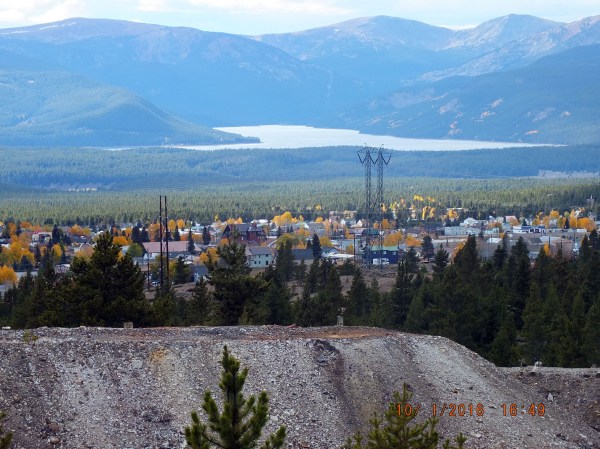
Leadville from the Emmet Mine, looking west.

Leadville from the Emmet Mine, looking west.

EVERGREEN CEMETERY OCTOBER 2016

On Saturday we remembered

Irish miners buried
In a nearby meadow. Pines

growing among their sunken

outlines. Average age, twenty-three.

Most nameless. No marker.

A tiny wooden one empty

after years of rain & snow.

Worked like ants in high

mountain tunnels. Many

from played out copper

region of southwest Ireland.

This day warm enough for

short sleeves. Pleasant.

This morning Leadville

reported a low of fourteen.

That’s what it would have

been like back then.

These old sharp & rounded

peaks have seen it all.

You have to stay in silence

with them to hear

their prayers.

"Finntown" remains; possibly what was a sauna, a part of the small community of Finnish miners who lived among the Aspens by the Emmet mine in the 1880s, 1890s

“Finntown” remains; possibly what was a sauna, a part of the small community of Finnish miners who lived among the Aspens by the Emmet mine in the 1880s, 1890s

_________

(photos by Rob Prince)


Carole Askinaze, College Classmate (St. Lawrence University – 1966), Life Long Friend Dies.

October 9, 2016
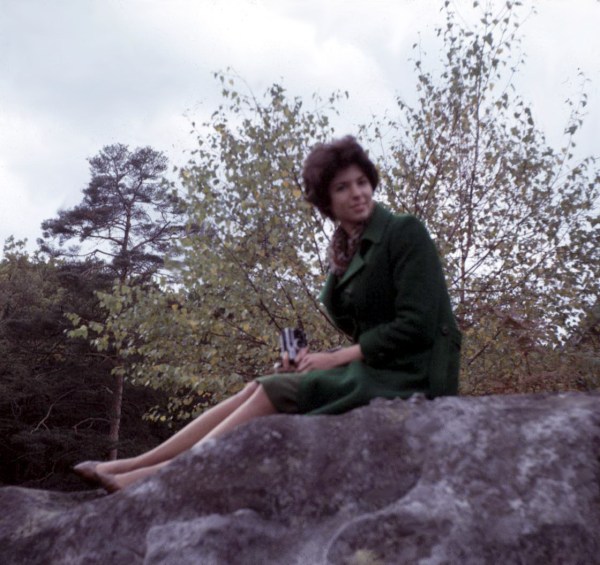
Carole Askinaze, October, 1964, near Fountainbleau, France.

Carole Askinaze, October, 1964, near Fountainbleau, France.

Carole Ashkinaze Kay, 71: Loved journalism, civil rights, husband

by David Abete for the AJC

Carole Ashkinaze was raised by her parents to believe she had a choice of two mutually exclusive paths in life: She could have purpose, or she could have love. In the end, she achieved both – but at widely separated times.

“She divided her life into two chapters,” said Rabbi Peter S. Berg of The Temple in Atlanta. In Chapter One, she was an award-winning journalist – earning a Pulitzer Prize for investigative reporting just a few years out of college – and an advocate for human rights. She was the first woman to serve on The Atlanta Journal-Constitution’s editorial board, and a friend of such prominent leaders as President Jimmy Carter.

“In Chapter Two, she found love,” Berg said. “Just as journalism was her passion in the first part of her life, her husband Irv was her passion in the second.” She was 63 when she and Irving Kay were married.

Carole Ashkinaze Kay, 71, of Sandy Springs, died Sept. 19 at Hospice Atlanta after a five-year battle with gastric cancer. Her funeral was Tuesday at The Temple. Berg delivered the eulogy. Dressler’s Jewish Funeral Care handled the arrangements.

Irving Kay said his wife was devoted to her work, “especially for the causes of women and civil liberties” in the 1970s and ‘80s, “and our relationship. Those were the two great passions of her life.”

She always wanted to be a journalist, he said. “The story I heard was, when she went to summer camp – she was maybe 10 years old – they put her in charge of the mimeograph machine and the camp newspaper, and that’s how it all got started.”
Read more…

War With Syria: Washington’s Political “Hail Mary”

October 9, 2016
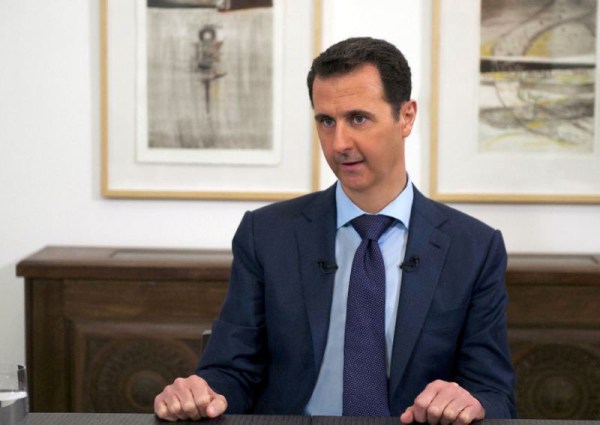
Bashar el Assad: Syria's twice elected president; vilified by Washington , he retains the support of the Syrian people in their struggle against foreign trained, armed and paid for mercenaries which Washington refers to as "the moderate opposition"

Bashar el Assad: Syria’s twice elected president; vilified by Washington, still, he retains the support of the Syrian people in their struggle against foreign trained, armed and paid for mercenaries which Washington refers to as “the moderate opposition.” Over the course of the past five years, his base of support in Syria has grown substantially, and that of his Islamic fundamentalist opponents narrowed to naught. Without the support ISIS, Al Nusra, etc get from U.S. allies, and ultimately Washington, their movement would collapse.

Time for the people of this country – and the world – to take to the streets, call their Congressmen, do whatever it takes to prevent Washington from going to war. Again. Dust off your “demonstration shoes” – or get a new pair, take out your “No To War,” “No More Middle East U.S. Military Interventions” or “No Military, Only Political Solutions To Syria” signs to build the peace movement once again. Make “peace not war” an issue in the presidential campaign.

“No Fly Zones,” more U.S. troops on the ground, arming what amounts to ISIS like thugs, either indirectly or directly all indicate a “ramping up” of U.S. military policy in Syria just at the moment when ISIS, Nusra and the like are facing imminent defeat in the Aleppo region. The news blackout of the Turkish purge, giving Turkey “the green light” to invade N. Turkey (without which Turkey wouldn’t be there),  are the first steps of Washington’s plans to divide Syria into enclaves, nothing else.

The war in Syria has left hundreds of thousands dead, at least four million people displaced as refugees. It is a war that, repeatedly, many have argued there are no military, only political solutions. But the Obama Administration and whomever follows him in office, appear intent on aggravating the military situation rather than accepting a political solution based on the current realities on the ground. In so doing Washington is playing a dangerous game that now threatens to escalate into a much more dangerous regional situation that could involved direct U.S. Russian military confrontation.

With few cards left in their hand to play concerning Syria, in what might be considered a military “Hail Mary” gesture, Washington has reverted to intensified militarization of the conflict. This revived military muscle-flexing brings with it  the threat of a more aggressive U.S.-Russian confrontation in the making, with all that it suggests. So here we are again, like Berlin or the Cuban missile crisis, eyeball to eyeball now with post-Soviet Russia in a “game” that is not a game in which the stakes now go far beyond the long-suffering but still standing Syria. Pursuing such a policy will inevitably lead to greater  regional destabilization in a region already reeling from Washington’s wars in Afghanistan, Iraq, Libya, Israel’s continued occupation of Palestinian territories, Saudi Arabia’s war against Yemen. Read more…

Hallowed Ground, A Poem by Phil Woods

October 6, 2016
Evergreen Cemetery: mounds on the ground are unmarked graves of between 1500 and 2000 people buried in the 1880s, 1890s. It is estimated that three quarters of these are of Irish miners, average age 23 years.

Evergreen Cemetery Leadville: mounds on the ground are unmarked graves of between 1500 and 2000 people buried in the 1880s, 1890s. In some places evergreen trees are growing atop the largely uncared-for graves. It is estimated that three quarters of these are of Irish miners who worked the area’s silver mines, average age 23 years.

HALLOWED GROUND

Stare at sunken Irish graves unmarked in Leadville’s Evergreen Commentary.

The bagpipe has stopped playing.The folk singer has ended her warm up song.

The stories are so moving,colorful, funny & tragic of equal measure.

I recall being at the Little Big Horn.

We like to call battlefields—hallowed ground.

At one time Leadville was forty thousand —eighty percent Irish. Mostly lead & silver miners making three dollars a day at ten thousand feet.

Too broke to put up a tombstone. Dying like flies in their twenties. Dying as infants, mothers in childbirth.

My friend Jim Walsh, says they would come out of the heat of the mines in winter & have their sweat soaked clothes freeze right to their skin like being armored in ice. Pneumonia,

TB, influenza, no wonder these survivors of the famine, maybe two thousand died & now lie in sunken, forgotten graves in a high alpine meadow with old pine growing in amongst their spent bones.

Yes, hallowed ground, not of military battle, but fierce class war.

Once again saying the history of America can never be told by Disney.

The strike leader—Michael Mooney—had the audacity to say he & his owned a corner of our flag because they sweated & bleed for it.

That is why it is a sacred place to begin to understand the heart breaking truth about this land of promise & betrayal.

__________

photos by Rob Prince


former Denver City Auditor, Dennis Gallagher addressing an audience at Everygreen Cemetery in Leadville, Colorado, where, on October 3, 2016, those present held a wake for those 1500 to 2000 buried in unmarked graves, some three-fourths of them estimated to have been Irish miners, average age 23. Gallagher's remarks were genuinely touching.

former Denver City Auditor, Dennis Gallagher addressing an audience at Everygreen Cemetery in Leadville, Colorado, where, on October 3, 2016, those present held a wake for those 1500 to 2000 buried in unmarked graves, some three-fourths of them estimated to have been Irish miners, average age 23. Gallagher’s remarks were genuinely touching.


Muslim Press Interview With Rob Prince: Post “Coup” Turkey

October 4, 2016

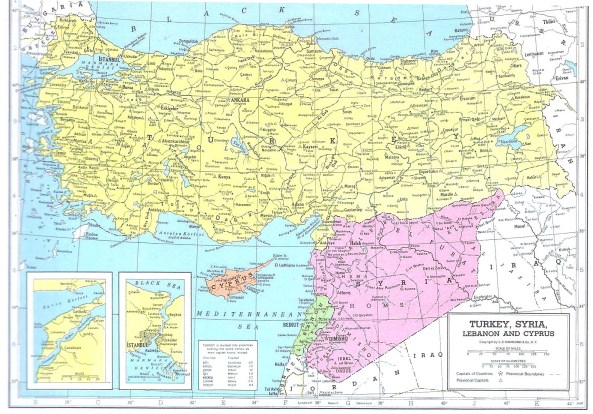
turkey-syria-lebanon-cyprus-map-1949

Interview with Rob Prince, Senior Lecturer (Retired) University of Denver Korbel School of International Studies  by Muslim Press. September 30, 2016

Mohammad Homaeefar, Muslim Press: Where do you think the post-coup Turkey is headed?

Rob Prince: To give the situation a regional context of sorts, my starting point for the events in Turkey, the “so-called” coup, is the deteriorating situation of U.S.-Turkish (and other) allies fighting in Syria in the hopes of bringing down the government of Hafez Assad. Since the aid to Assad from Iran, Russia and Hezbollah has stepped up, the situation on the ground has increasingly isolated the so-called rebels (some of them are rebels, most of them are outside mercenaries from Tunisia, Libya, ISIS, etc). This has created a political crisis for Turkey which has been one of the main, if not the main conduit for troops, supplies arms to the rebels. As the Syrian situation deteriorated, events boomeranged in Turkey itself – the bombings, etc.

Add to this that Turkey’s economic situation, which had greatly benefited from the US-European sanctions against Iran. Now that those sanctions have been, at least in part lifted, investment flows are dramatically shifting away from Turkey to Iran creating economic tensions for Ankara. As the combination of the political and economic tensions continued to mount, Turkey’s President Erdogan found himself increasingly cornered and in need of some kind of dramatic action. So like the Saudis and Israelis of late, Erdogan’s Turkey is falling back on a kind of xenophobic nationalism as a way to consolidate his base of support. Read more…

Dan Cetinich: Gone But Not Forgotten

October 3, 2016
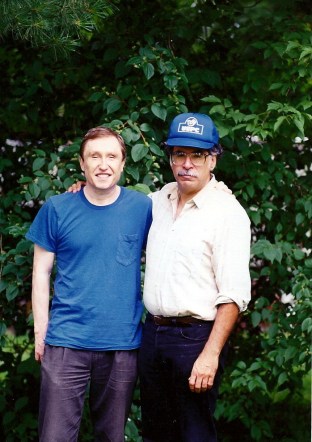
Dan Cetinich and me, July, 1994 in Rutland, Vermont

Dan Cetinich and me, July, 1994 in Rutland, Vermont

Daniel Frank Cetinich – May 5, 2015

Daniel Cetinich, 72, author, historian and retired City College Instructor, died at home of pancreatic cancer. Born to Palma and George Cetinich in Portland, OR, he was a graduate of USF and SFSU, and a long-time resident of Berkeley. He was a Peace Corps teacher in Tunisia in the 1960’s. He had an exceptional mind and a lifelong interest in politics and world culture. Just months before his passing he published his first novel, Paris Illusions. He is survived by his wife of 40 years, Dana Bass, his son, Aaron Bass-Cetinich(Cartitiane Malheiros), granddaughter Ella, brother George Cetinich(Maria), sisters Frances Cetinich and Jacqueline Shook(Robert) and many nieces and nephews. He was preceded in death by his parents and his sister Rosemary Farac(William).

Published in San Francisco Chronicle on May 15, 2015- See more at: http://www.legacy.com/obituaries/sfgate/obituary.aspx?n=daniel-cetinich&pid=174850028#sthash.Zdbsaviv.dpuf


________________________

A Wonderful Friend

The above is Dan’s obituary just after his death in May, 2015. I had meant to write something about my dear departed friend but apparently whatever it was got lost in the shuffle so to speak. I know he would forgive me for only getting around to it now. Even though we rarely saw each other since the mid 1970s, he was such an integral part of my life – and I of his that – like a few other dearly departed fast friends – that it is impossible to forget him, nor do I try. To have had friends like Dan Cetinich, Scott Keating, Jack Galvin, all dead but not forgotten…I have been pretty lucky. We all grew together, stumbled and got back on our feet together, personally, intellectually, politically. It might not sound credible, but after our common experiences, the fact that we hardly saw one another “in the flesh” hardly mattered. We’d left our marks on one another, they were deep; Dan was foremost among them

Everyone should have a friend like Dan Cetinich in their lives

Dan and I met in Peace Corps in Tunisia. Read more…

Support Protesters At Standing Rock, North Dakota

September 28, 2016
Casey Camp-Horinek of the Ponca Nation of Oklahoma with sons Mekasi left and Jeff right. Cowboy and Indian Alliance. Washington D.C. April 22-27 2014. A coalition of cowboys, ranchers, farmers, and native americans from the Ogalla region opposed to the proposed Keystone Pipeline.

Casey Camp-Horinek of the Ponca Nation of Oklahoma with sons Mekasi left and Jeff right. Cowboy and Indian Alliance. Washington D.C. April 22-27 2014.

On the right is Jeff Camp. He and brother Mekasi are on both sides of their mother, Casey Camp-Horinek. In this photo taken two years ago in Washington DC, they are protesting the since-rejected Keystone-XL pipeline that would have bisected the United States from the Canadian shale fields to Houston. Had it been constructed it would have passed within a few miles of my in-law’s property in the town of Western, Nebraska. Nebraska farmers, ranchers and Native Americans, many working in conjunction with a grassroots advocacy organization called “Bold Nebraska” defeated this proposal, finally rejected by the Obama Administration in November, 2015.

The Camps, Jeff, Mekasi and mother Casey, were active and in the center of that movement. They are among the “long-distance runners” so to speak, of the movement for Native American rights with roots of activism, struggle dating back to the American Indian Movement occupation of Wounded Knee in the early 1970s, and before.  Read more…

The Iran Nuclear Deal…One Year Later: Interview with Ibrahim Kazerooni and Rob Prince. KGNU, Boulder. “Hemispheres Program – Middle East Dialogues.” Tues, August, 30, 2016. Part Two

September 19, 2016
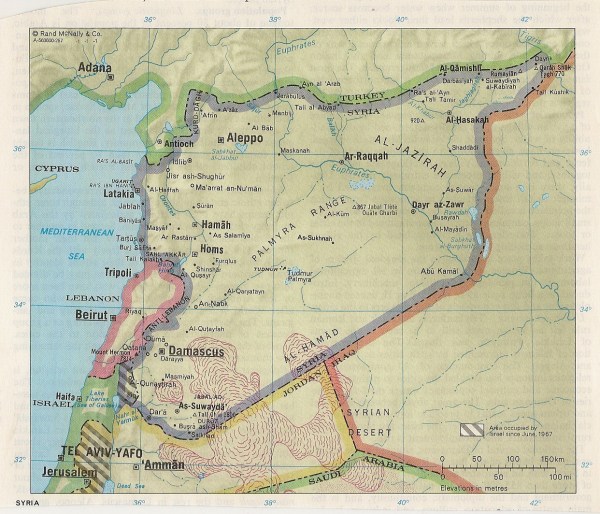
Syria...still one country after all the bloodshed. U.S. plans to dismember it a la Iraq and Libya are failing.

Syria…still one country after all the bloodshed. U.S. plans to dismember it a la Iraq and Libya are failing.

Part One

More on the Iranian Nuclear Deal

Ibrahim Kazerooni (Continued): The Iranians are now becoming more and more militant when it comes to their support for Syria. They are aware of the failure of the Saudis in Yemen and other places, (which I am sure, Rob, you will be addressing later in the program) – this Saudi failure has weakened their regional position. Whether it is practical or principled, the Turks are trying to move closer to what is called “the axis of Resistance” to a degree. Although one needs to explain, if that is the case, how on earth can they justify the occupation of northern Syria.

But Iran’s position has hardened not only in their giving more and more support to the Syrian government. The Russians are doing likewise and now the Chinese are coming in to provide the Syrian government maximum support. For the first time since 1949 the Iranians have allowed Russia to use its territory for the fight against ISIS [in Syria], to bring in their long-range planes.

To add insult to injury to the United States, the Iraqis have allowed the Russians to do the same thing. So this alliance has created this unique dynamic and I believe it’s the first time since the Islamic Revolution (1979) in which any foreign country has been allowed access to military bases in Iran for the sake of fighting with ISIS so that now an alliance is being formed against the axis of the United States which includes Saudi Arabia, the Israelis and Turks on the north. The Qataris are at this point, out of the picture.

If you look at the comments made a number of countries, the Chinese and others , they have clearly indicated that they are “in” (in the alliance with Syria, Iran, Russia..). Somehow the Chinese are trying to retaliate against the United States for the Chinese concern regarding U.S. interference in the disputes over islands in the South China Sea and so are killing two birds with one stone. China is supporting Syria, strengthening it against the United States and NATO’s joint position. At the same time they are creating an alliance that the Turks, Saudi Arabia, United States and their allies find themselves increasingly marginalized in the Middle East in terms of Syria. Read more…

Where The Antelope Play…or Played

September 15, 2016
Abandonned adobe general store at Ocate, New Mexico

Abandoned adobe general store at Ocate, New Mexico; the front might be sagging, but the adobe walls are in very good shape, something that cannot be done without a great deal of continued care, attention…

Getting To Mora, New Mexico

There are several ways to get to Mora, New Mexico from the north, three principle ones. There is a highway that goes south through the mountains on U.S. 285. Reaching Rancho de Taos, turn left on to State Highway 518; spectacular I am told. Or traveling down I-25 across Raton Pass, one can either exit at Wagon Mound, or, a bit further on, at Watrous. The route from Wagon Mound, State Highway 442, passes through Ocate, Ojo Felix and La Cueva, there meeting up with State Highway 518 five miles from Mora. Leaving I-25 at Watrous, the road goes along the Mora River Valley past Golondrinas on State Highway 161 before connection to 518 a few miles south of La Cueva. From Watrous, the same Highway 161, a curious U-shaped road, one can also get to Fort Union National Monument, a poorly known, historically significant national monument that used to provision all the U.S. forts in the western region for decades in the 19th century.

For people unfamiliar with this part of New Mexico, both roads to Mora through Wagon Mound or Watrous cut through breathtaking scenery. On the Mora-Watrous road, which we took returning to Denver from Mora, we saw a herd of domesticated bison just before Golondrinas on Highway 161. On our way to Mora, especially between Wagon Mound and Ocate, there were antelope, a lot of antelope. We stopped counting after having sighted more than forty. They tended to congregate in small groups, four or five, a few individual stragglers here and there – sprinkled mostly to the north of Highway 442 for miles on end – as our Mora host and Denver neighbor, Sandy Garcia, had predicted. Read more…

Moral Combat: Good and Evil in World War II by Michael Burleigh, Some Thoughts

September 9, 2016
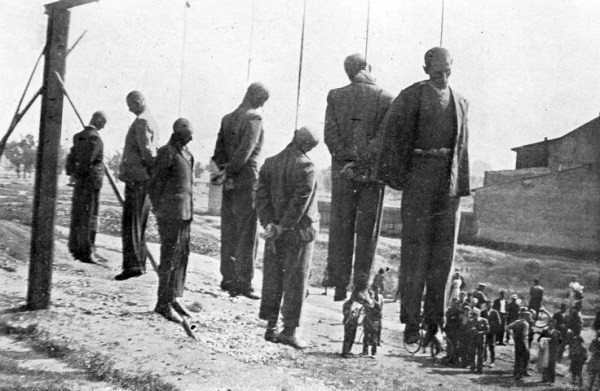
Polish hostages hanged by the Nazis near the Płaszów-Prokocim train station in Crakow, Poland, June 26, 1942. Burleigh's descriptions of the Nazi onslaught in Poland is one of the best, if most painful, chapters of "Moral Combat"

Polish hostages hanged by the Nazis near the Płaszów-Prokocim train station in Crakow, Poland, June 26, 1942. Burleigh’s descriptions of the Nazi onslaught in Poland is one of the best, if most painful, chapters of “Moral Combat”

For some, reading about World War II is “old hat.” What more can be learned? It could be just the opposite. I find that particular war a laboratory of the human experience in all its aspects, what humans are capable of unfortunately ; I continue to read and reflect upon that experience even more today than I did when I was young. To that end, I just finished reading Michael Burleigh’s “Moral Combat” last night, read cover to cover. I finished the last page with mixed emotions. Although the book’s sub-title is “Good and Evil in World War 11; there is very little “good” and mostly “evil” in this text, suggesting rather vividly that ours (humanity), is not a particularly “nice” species, one which, having destroyed so much of the natural world – with gusto even –  gives increasing indications of being its own  undoing.

On the one hand, Moral Combat is about as accurate a description of the horrors of WW2 as one can find…excellent discussions on all kinds of morbid things – Allied bombings, the Nazi invasion of Poland, what was going in Italy, the einsatzgruppens in Poland and Lithuania (who killed my relatives in Bialystok, Grodno, Prienai and Vilnius), the resistance movements, the fate of Eastern European Jews, Stalins pre-war and war excesses. His apologist portrait of Churchill, a man who had much reason to be immodest about, is interesting, but self-serving, that of Mussolini very well done. I suppose, Englishman that Burleigh is, the contrast between the two leaders should not be so surprising. Read more…

The Colorado State Veterans Home at Fitzsimons: A Long Term Mismanaged Administrative Disaster: Part Two: “The Hot Mess” and Fitz’s Health Inspection “Tags”

September 8, 2016

2013-12-12-colorado-state-veterans-home-2“The great (those in power) commit almost as many shameful acts as the outcasts of society, but they commit them in the dark, and make a parade of their virtues- and so they remain great! The little men hide their virtues, and expose their miseries for all to see – and so they are despised.”
Balzac – Lost Illusions.

Oversight.

Although other departments of the Colorado Department of Human Services (DHS) have gotten media attention as a result of system-wide mismanagement, for the most part, the Colorado Veterans Community Living Center at Fitzsimons (CVCLC), nicknamed “Fitz”, has not, or hardly. Curious. Curious because over the last several years the place has been mired troubles. These have included chronic employee and management turn over; employees placed on administrative leave on questionable if not fictitious grounds; a system of administrative spying on employees and residents; an attempt “to purge” at least one resident critical of how the facility was run; and what many employees described as “an atmosphere of fear” (and some still do) despite recent improvements.

How and why it was all done remains a murky process in a state-run institution that should be open to public scrutiny.

There was also a concerted attempt to destroy the union at the facility, a branch of the state employees union, Colorado WINS. This union-busting campaign was engineered by since-fired Human Services Administrator, Vicky Manley and her hand-picked administrative pit bull, Debbie Blanc (also relieved of her duties at DHS). This campaign was initiated despite the fact that the union and the state government have, overall, a good cooperative relationship in an “employee-management cooperation” in the facility. Read more…

The Iran Nuclear Deal…One Year Later: Interview with Ibrahim Kazerooni and Rob Prince. KGNU, Boulder. “Hemispheres Program.” Tues, August, 30, 2016. Part One

August 31, 2016
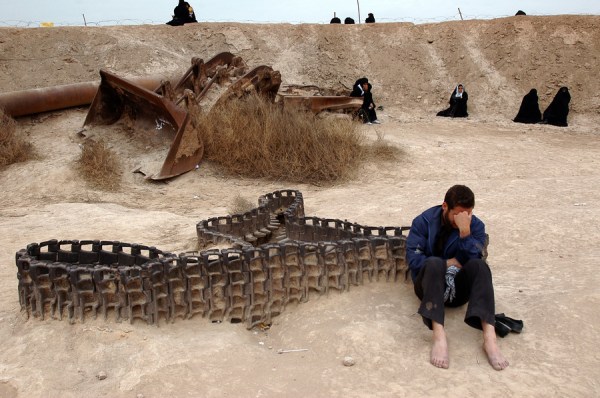
Here in the United States the horror of it all is often ignored. Here a barefooted young man, a member of the 'Baseej' militia, cries while sitting at a broken caterpillar track at the Talaiye war front. Some of the war pilgrims walk barefoot to the front lines in order not to step on any possible grave of a dead soldier with their boots. Every year hundreds of thousand Iranians visit the fronts of the Iran -Iraq war (1980-1988) during their New Year (Noruz) holiday, in the last week of March. This trip is called ' Rahian-e Noor', or, Caravan of Light. Coming August 2008 it will be 20 years ago that a ceasefire between the two countries was signed. The death toll, overall, was an estimated 1 million for Iran and 250,000-500,000 for Iraq. During that war the United States armed Iraq hoping that the two Middle East nations would destroy one another. Unable to destroy the Islamic Revolution in Iran itself, the United States egged on Saddam Hussein to try to do it 

Here in the United States the horror of it all is often ignored. Every year hundreds of thousand Iranians visit the fronts of the Iran -Iraq war (1980-1988) during their New Year (Noruz) holiday, in the last week of March. This trip is called ‘ Rahian-e Noor’, or, Caravan of Light. In August 2018 it will be 30 years ago that a ceasefire between the two countries was signed. The death toll, overall, was an estimated 1 million for Iran and 250,000-500,000 for Iraq. During that war the United States armed Iraq hoping that the two Middle East nations would destroy one another.

Jim Nelson: I’m just going to give a brief introduction, highlighting the topics we’ll be discussing this evening. Later in the program we’ll be looking at the events in Yemen, a somewhat neglected subject in the mainstream media although not on this program. Recently, it has returned to the news, not as much as it should be. Before that we’ll look at Syria and Turkey and the current issues involved, the recent Turkish military incursion into northern Syria, included. But first we’re going to look at the Iran Nuclear Deal, now a year after it was finalized.

Rob Prince: Introduction

Tonight we want to discuss a number of recent events, as usual, try to put them into historical perspective and give some sense as to where the region seems to be heading.

As we went into the dynamics of the Turkish coup last month, we want to begin by stepping back a moment and look at what has transpired – how the United States, the European Union, Iran, Russia have – or have not – kept their parts of what is mistakenly referred to as “the Iran Nuclear Deal” – mistakenly because it not only concerned Iran’s nuclear program but also the lifting of economic embargos against that the country

We’ll return to the Turkish events shortly thereafter and address a number of questions:

– A month later, what are the consequences of the so-called Turkish coup – what has happened to all those people who were purged?

– Is Turkey involved in what might be called “a geo-political shift towards Iran and Russia, or to the contrary is its Syrian policy essentially “on course” with US – NATO plans?

Finally we’ll look at the failure of the Saudi war against Yemen and the current possibilites for resolving that conflict Read more…

Allenspark Meadow Mountain Cafe and The Wild Turkeys at Rocky Mountain National Park

August 22, 2016
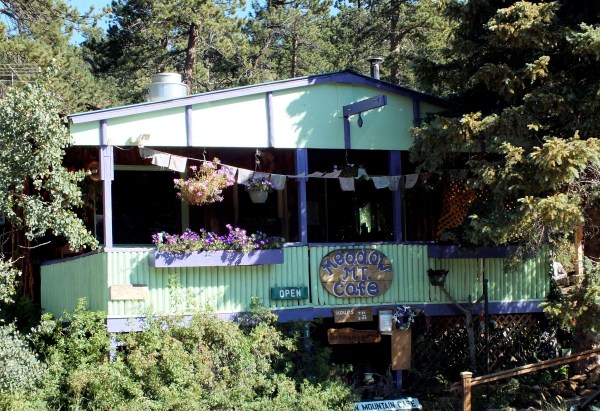
Meadow Mountain Cafe, Allenspark, Colorado

Meadow Mountain Cafe, Allenspark, Colorado

It was just this past Saturday, August 19.

I dropped Nancy off at her all-day recorder workshop at the Allenspark art gallery right on Highway 7, 16 miles or so south of Estes Park and headed directly to the Meadow Mountain Cafe in town. At 9 am the place was packed but someone sitting by himself let me join him at his table. The redness in his face suggested a lifetime of booze, although he appeared sober; no breath wreaking of alcohol to ruin breakfast; mercifully he permitted me to sit at his table as long as we didn’t have to talk, which suited me fine. After a short time, he got up to leave..and kept getting up and up and up. Sitting I hadn’t noticed his 6’7″ towering figure.

Our agreed nonverbal table sharing didn’t prevent him from sharing his thoughts with others in this pleasant but somewhat cramped space that made up the interior of the restaurant. There was also a lovely patio, but it was too chilly out to enjoy it. From his conversation with the other clientele, my table mate, a Colorado Paul Bunyan, appeared to be something of a local, the “locals’ in Allenspark being mostly prosperous people from Texas and Oklahoma who have purchased mountain homes that for the most part, they visit for a few weeks in the summer. At least that is what the supersized SUVs and Hummers sitting outside the restaurant suggested.

The conversation flitted from one subject to another. It began interestingly enough. Read more…

Turkey In Crisis: Repress Everyone, Reconcile With Russia and Iran, Recognize Assad?

August 16, 2016

Turkish Peace Activist, academic, Esra Mungan

Turkish Peace Activist, academic, Esra Mungan, arrested in March, 2016, along with Dr. Muzaffar Kaya and Associate Professor Kivanc for protesting Erdogan’s repression of Turkish Kurds.


1.

In March of this year (2016), some months before the start of the current Great Purge three Turkish academics held a press conference in Istanbul, four days after which they were arrested and charged with supporting terrorism for calling for a negotiated peaceful settlement of Turkey’s differences with the Kurds living largely in the country’s southeast regions.

The three were a part of a Turkish-Kurdish peace initiative, a petition signed quickly after it was initiated by 1100 Turkish academics and several hundred Western intellectuals, including linguist Noam Chomsky. The three were victims of Turkey’s Stalinist-like effort to rid its body of politic of the supporters of Fetullah Gulen and pretty much anyone else standing in the way of Tayyif Erdogan’s increasingly narrow and bigoted version of Turkish nationalism.

Associate Professor Kivanç (Minar Sinan Fine Arts University, Mathematics), Assistant Professor Esra Mungan (Boğaziçi University, Psychology) and Dr. Muzaffar Kaya (fired as a consequence of the academics’ statement from Nişantanşi University, History), representing Academics For Peace, were into custody on charges of “making terrorist propaganda” after calling for “an end to violence between government forces and Kurdish separatists in Turkey’s southeast. Read more…

Turkey and Syria After The Failed Attempted Turkish Coup: Interview with Ibrahim Kazerooni and Rob Prince. KGNU, Boulder. “Hemispheres Program.” Tues, July, 28, 2016. Part Two

August 14, 2016
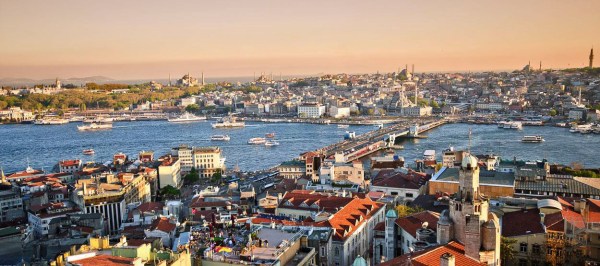
Istanbul

Istanbul

(This, and the entry that precedes it, are Parts One and Two of an hour-long interview done on KGNU radio/Boulder Colorado by Ibrahim Kazerooni and Rob Prince. It is a part of a series that KGNU has run with them for five years. The entire program runs close to an hour. Part Two is below.)

Interview continued…

Rob Prince: Now let’s return to Turkey. I want to put its current position within a regional perspective but briefly so that we can concentrate on Turkey’s role in Syria.

First of all what we are seeing in terms of the aftermath of the failed Turkish coup is a certain distancing, it seems, of Turkey from NATO and the United States, although how far is not clear and there are those “red lines” referred to earlier. Turkey is no long begging “please let us into the European Union instead it is looking both east and more towards its own region, the Middle East and the Turkish speaking zones of Central Asia. That seems clear.

Ibrahim Kazerooni: That’s one school of thought.

Rob Prince: Yes, it seems complicated for Turkey to simply walk away from NATO and the United States, as if they could walk away from the military base at Incirlik after more than half a century. That seems to be one of the red lines that certainly would be difficult for Turkey to cross. Read more…