The Magaziners and Prenskys Come to America – 1

Louis (Leizer) and Molly (later Malvina) Magaziner. 1910 photo
1.
By 1910 both my paternal and material grandparents had arrived in the United States.
The 1910 census has the Magaziner family living in Brooklyn at 114 Boerum St, not far from the Williamsburg Bridge. Julius’ occupation at the time is “brick layer.” (He would do other kinds of work, including decorative masonry and cleaning out steel mills before dying in 1924 in Brooklyn from having drunk poisoned prohibition era alcohol that he wsa in the habit of sipping to fortify himself from the cold before heading off the work.
Julius Magaziner was my maternal grandfather.
The family included his wife Sarah and three children. ”Leizer’s name has been Americanized to “Louis”; a sister, Molly (later Malvina) joined her brother along with a third sibling, named in the census as “Willie” (Uncle Bill). A few years into their “American experience” Yiddish was still the family’s first language.
Although arriving in the USA without knowing English, besides Yiddish, Sarah Magaziner spoke six other languages (Russian, Polish, German, Lithuanian, Swedish, Ukrainian), twenty four years later, Sarah Magaziner, the family name shortened to “Magazine”, would take a course at Erasmus High School on Flatbush Ave. in Brooklyn to improve her English. The notebooks of her English lesson, along with a copy of a letter written in English to her son Joseph remain as evidence of that effort.
Both the Magaziners and Prenskys had traveled a long, well worn path to get to Brooklyn. (Here I’ll detail more of the Magaziner journey, in a later entry I’ll focus on the Prenskys.) Along with his wife Sarah and son Leizer, Julius Magaziner participated in the greatest wave of immigration that the United State experienced in its history. Between 1880 and 1920, a time of the country’s post Civil War rapid industrialization, the United States received more than 20 million immigrants, the majority of the arrivals from Central, Eastern and Southern Europe, among them over 2 million Jews. While many of them concentrated in New York City, all in all they sprinkled throughout the United States, including in Colorado where I now reside.
As a part of this immigration wave, during the first decade of the twentieth century, all four of my grand parents immigrated to the United States from “the Pale”, then a western extension of the Russian Empire in central Europe, today divided between Poland, Belarus, Lithuania, Ukraine, Russia and Moldavia. Jude, Sarah and Leizer Magaziner, as well as Abraham Prensky (from Grodno) and Molly Jackson (from Vilnius), all four of my grand parents were a part of this great migration, now more than a century old. At least parts of their journeys are documented in ship’s manifests, immigrantion and census documents.
The period from the 1880s through the end of World War 2 in I945 was one of great instability and war in Central Europe. It would culminate in the horrors of that war – the Nazi attempt to exterminate the Jews, Slavic peoples (Poles, Russians, etc), physically and mentally handicapped, Gypsies and people on the political left – Communists, Socialists and religious liberals. That part of their history – the final horrible cataclysm of Nazi violence – is well known.
124 years before World War One, this region would be sliced up and partitioned between three countries – the Austro-Hungarian Empire, the Russian Empire and what until 1871 was Prussia but became Germany. In the late 18th century, between 1772 and 1795 the heartland of this region, Poland, was partitioned three times, freezing the existence of the Polish nation until the last days of World War One when, like a phoenix, it rose again from the ashes of that war.
From the late 1790s then, Jews, broadly speaking who had been a part of the Polish-Lithuanian Commonwealth now found themselves living within the frontiers of the Russian Empire (for the most part) dominated religiously by the Russian Orthodox Church, the anti-Semitism of which has always been a defining factor of the religion. Life for the Jews in this area included geographic, social and political restrictions and as thne 19th century progressed an increasing wave of Russian-government promoted anti-Jewish violence.
The collapse of these empires at the end of World War One and the subsequent geographic and political restructuring of the region into a constellation of small states was a clumsy, violent process. A series of narronwly defined ethnic-based states emerged that proved generally intolerant to all who didn’t fit the narrow ethnic definiton of citizenry. Not only the Jews, but virtually all the ethnic groups sprinkled through the region found themselves caught up in the maelstrom.
2.
On November 29, 1904, Jude Magaziner stepped off of a local ferry on the southern tip of Manhattan from Ellis Island where he had been process and admitted to the United States. Magaziner, who would change is first name to Julius soon thereafter, had traveled from Grodno, at the time at the western end of the Russian empire, then to Rotterdam, Netherlands where he boarded an ocean liner ferrying immigrants from Europe to the United States, the SS Statendam.
According to the Statendam’s ship manifest, a framed copy of which hangs in our living room, “Magaziner, from Russia,” nationality written as “Hebrew”, entered the United States with $7 in his pocket. The manifest claimed that he had never been in prison, was neither a polygamist nor an anarchist; it was also claimed he was in good health and was not deformed or crippled. Magaziner was headed to the home of his uncle, one Nacham Goldstein, who lived in an apartment on East 99th St. Magaziner’s stated profession was “laborer,” which he was until, 1924, when he died after three days in torturous pain, poisoned by Prohibition era alcohol that he would drink before heading out to work on cold New York winter mornings.
Family “lore” tells a different, improbable – at least according to the documents – version, that Sarah and son Leizer (along with another son who died on the ship) did board the Westernland, that they were rejected at Ellis Island because of an eye infection that apparently Grandma Sarah had and forced back to Europe where, it took several years and a certain sejour in Sweden, before Sarah and Leizer could successfully cross. The documents do not verify this version however.
Although she arrived three years later through a border crossing from Canada at Vermont, the cross Atlantic odyessy of Sarah Magaziner, his wife, is documented as well.
She would follow in 1907 along with one son, Leizer, whose American name would become Louis. According to records, their journey was more difficult than Julius Magaziner’s. There is a record from early September of 1907, of the two being rejected from a Philadelphia bound ship, the Westernland from Liverpool, crossed off the passenger list, with their names crossed out and the word “rejected” clearly stated to the right of their names. Reason for the rejection was not given. The date on the file is September 11, 1907. Still, a record of her history was retained by the ship. It records her being thirty years old at the time (September, 1907), stating that she was from “Bialosk, Russia” (Bialystok), that she had resided in London for six months prior to sailing. A person described as “friend”, one J. Berger from “Bieldstock, Russia” (another misspelling of Bialystok) in the same document is listed. Further, she was planning to meet her husband, M. Magaziner who at the time was residing at 287 – 9 – Henry St, near downtown Brooklyn.
Still, soon thereafter Sarah and Leizer were able to make the crossing. We know this from several other documents.
A second document explains how Sarah and Leizer Magaziner crossed to North America. It is entitled “US Border Crossing from Canada to U.S. 1895-1960 for Sarah Magaziner List or Manifest of Alien Passengers Applying For Residency to the United States From A Contiguous Country.” This document states that she and Leizer Magaziner traveled on an Allen Line steam ship, entering Canada at Halifax sometime in early October, 1907, and then headed for Montreal. From there, with Leizer, she took a train south, crossing into the U.S.A at St. Albans, Vermont before descending to Boston.
Although the exact date of the entry is not clear, on Page 62 # 2 of that document in October of 1907, that they crossed the border into the United States from Canada at the St. Albans, Vermont, a main entry point, before descending to Boston and from there New York City. It gives other interesting details that her father’s name is Benji (I assume Benjamin) Waszinki (also spelled Wyschinski, Wyshensky, Wischisky, etc). Her mother’s name is illegible
This document states the misspelling of her name as “Maguziner.” According to the record the date was October, 1907. It goes on to list that she is going to join her husband, Julius Magaziner at 287 Henry St. New York who is listed as Leizer’s father. It lists Leizer has having been born in Grodno. From Montreal she and Leizer Magaziner took a train south into the United States. It crossed the border at St. Albans, Vermont, where her entry into the country was registered on “The List or Manifest of Alien Passengers Applying for Admission to the United States From Foreign Contiguous Territory.” Her nationality (country from whence she was a citizen) was “Russia”, her “Race” or “People” – Hebrew. It is listed that she is from Grodno and gives a not very clear name and complete address of Benji Wychinski, from Grodno, Russia, who is also listed as Leizer’s grandfather.
And so it began.
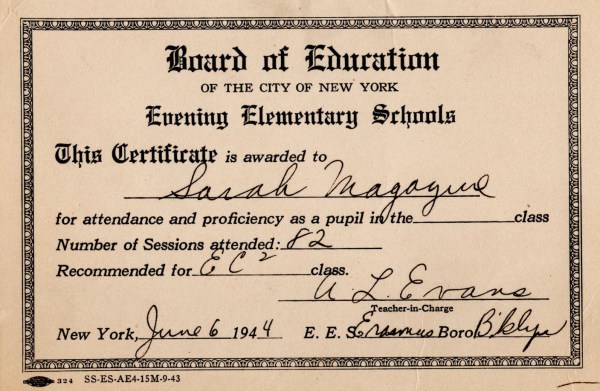
1944 English proficiency certificate of Sarah Magazine who took an evening course in English at Erasmus High School (from where Bernie Sanders graduated). 82 sessions. She told her children she was “visiting a friend.”

Bye Bye Donald
“Four Years of Trump’s Middle East Policy: Waste Deep in the Big Muddy and the Big Fool Said To Push On” Tuesday, October 27, 2020 @ 6-7pm MST, KGNU: Hemispheres, Middle East Dialogues, hosted by Jim Nelson. Transcript, Part One (edited).
_________________________________________________________
There is something beyond these events that we need to keep in mind and that is the most pronounced difference between 2016 and today is that the United States is hardly a player diplomatically in resolving any of the regional conflicts. Peace making and influence has shifted dramatically these last four years to the Russians and Chinese … whether it’s Syria, Iraq, Iran – now the tension between Azerbaijan and Armenia over Nagorno Karabah – the Trump Administration is nowhere.
In the past, global power that could bring forces together – now finished. That influence has all but evaporated.
– Rob Prince –
During the Trump years, we have seen nothing in the Middle East over the past four years other than war, violence and one attempt after another – actually one failed attempt after another – of regime change.
Where it concerns the Middle East, first we have to accept that the United States is in decline, going downhill. One day we hope to have an opportunity – if we have a chance perhaps tonight – we will discuss the ideas of Ibn Khaldun, especially his notion of the cyclical theory of empire – the rise and fall of great civilizations, an apt theory applied to the United States today. The United States is nowhere to be seen in the Middle East; they have to accept the consequences of their failure and try to do something about it.
– Ibrahim Kazerooni –
_________________________________________________________
Rob Prince: A couple of more comments about the last four years.
As Ibrahim noted, referring specifically to the Middle East, we didn’t expect much and we didn’t get much.
Frankly there was no progress – none – towards peace in the region. The last four years are characterized by instability and war in the Middle East. Where you started — story of nov 2016 – before we say any thing – this was our prediction – turned out close to accurate.. these four years – nothing but war, violence, racism xenophobia
Most of the deals that Trump has cut are mostly concerned with weapons’ sales, weapons sales to whomever. Just short term profit considerations; no thought whatsoever to long term consequences. Looking more closely at where we were in 2016 and where we are now in the Middle East . US had limited options or choices in the Middle East.. Its options are limited to – military activity for regime change and sanctions/embargo.
– Every attempt for regime change has failed
– There are uprisings against US through out the region, regular missile attacks on U.S. bases as a result of the assassination of Qassim Suleimani, so much so that Secretary of State, Mike Pompeo threatened the Iraqis with sanctions
– Afghanistan – nothing US can do – they have to leave…
– U.S. has lost the war in Syria but refuses to leave. Washington is reduced to stealing Syria oil from the NE, burning wheat fields – on top of sanctions
– War in Yemen continues – U.S support of Saudi-U.A.E genocide there
No progress – to the contrary – the opposite towards ending the Israeli Occupation of Palestinian territories. Trump has given Israel more political gifts than any other president.
There is something beyond these events that we need to keep in mind and that is the most pronounced difference between 2016 and today is that the United States is hardly a player diplomatically in resolving any of the regional conflicts. Peace making and influence has shifted dramatically these last four years to the Russians and Chinese … whether it’s Syria, Iraq, Iran – now the tension between Azerbaijan and Armenia over Nagorno Karabah – the Trump Administration is nowhere.
In the past, global power that could bring forces together – now finished. That influence has all but evaporated.
Jim Nelson: When we were talking about Egyptian threats to bomb the Great Ethiopian Renaissance Dam, you mentioned how previously the United States would have played a role in coming to some kind of compromise resolution between these two countries whose lifeline in the Nile River. Instead, now Trump openly encourages Egypt to bomb Ethiopia. That’s his contribution to “resolving conflict?” Read more…

Two versions of the same U.S. Middle Eastern foreign policy
____________________________________________________________________
Our assessment in 2016 and our prediction was correct. We didn’t expect much at that time (in terms of changes in U.S. Middle East policies) – or we didn’t anticipate much – and we didn’t get much.
Ibrahim Kazerooni
I want to add a few observations about this recent announcement – orchestrated by the Trump Administration – that Sudan and Israel will enter into full diplomatic relations. Announcing this deal to the world, Trump added some gratuitous comments about the breakdown of Egyptian-Ethiopian negotiations over the opening of the Great Ethiopian Renaissance Dam.
Trump’s contribution to international diplomacy is a public call on Egypt to bomb Ethiopia! – Not only that, he went to say that Egypt should have bombed Ethiopia earlier!
Rob Prince
______________________________________________________________________
“Four Years of Trump’s Middle East Policy: Waste Deep in the Big Muddy and the Big Fool Said To Push On” ” Tuesday, October 27, 2020 @ 6-7pm MST, KGNU: Hemispheres, Middle East Dialogues, hosted by Jim Nelson. Transcript, Part One.
KGNU – Middle East Dialogues – October 27, 2020
Jim Nelson: Good evening and thanks for tuning into Hemispheres. I’m your host Jim Nelson; Thanks for tuning into listener sponsored community sponsored radio – KGNU – Boulder, Denver and Ft. Collins, and at www.kgnu.org.
This evening we’re going to continue our Middle East dialogues. As always the two gentlemen who join us in those dialogues are Ibrahim Kazerooni and Rob Prince. (Kazerooni and Prince are introduced).
Let’s begin with a quick synapsis of what will be discussed this evening. We’re going to discuss U.S. policy in the Middle East – or lack thereof – over the past 3 ½ – 4 years during the Trump presidency.
As part of his “legacy”
– Trump moved the U.S. Embassy to Jerusalem
– He ordered the assassination of Iranian Revolutionary Guard Genearl Qassim Suleimani
– He helped engineer the opening of formal relations between Israel and the United Arab Emirates, and just last week Sudan.
That said, Trump did not over a specific policy vision for U.S. Middle East relations.
He did claim he would withdraw troops from the region. I’ll turn it over to you two
Rob Prince: Concerning the troop withdrawals, he reassigned them Jim; they never really left.
OK, I’ll start off.
Here were are a week before this big election and just before this particular program I happen to have noticed a cartoon/photo on social media.
It is divided in two sections, in both of which there is what appears to be a B-52 bombers, both dropping a slew of bombs.
– In the upper section bomber is dropping its bombs. The caption underneat under it says “Republicans.”
– Lower down is another B-52 – on the front near the cockput it says “Black Lives Matters”, behind the wings it says “Yes, She Can” and on the tail it has the rainbow emblem of the gay rights movement… it too is dropping bombs. The caption underneath this one says “Democrats.”
Here we have in one photo a metaphor of U.S. foreign policy, U.S. Middle East policy: despite their differences on domestic policy, both Dems and Republican strategic approach to foreign policy remains pretty much the same. It is a bipartisan foreign policy – and has been since the end of World War II. That needs to be kept in mind when thinking about the differences between Donald Trump and Joe Biden.
Ibrahim, concerning U.S. Middle East policy – where were we four years ago, where are we now. Read more…
Year of the Plague 29 – NY Times Columnist Paul Krugman on a Biden Victory Next week… Interesting Insights…

Homelessness – Denver, Colorado
__________________________________________________
… Other countries probably won’t rush to confront a Biden administration. There might even be a sort of global honeymoon, as the world breathes a sigh of relief.
But the loss of trust in America will gradually have a corrosive effect. A trade expert once said to me that the great danger, if America turns protectionist, wouldn’t be retaliation, it would be emulation: If we ignore the rules, other countries will follow our example. The same will be true on other fronts. There will be more economic and military bullying of small countries by their larger neighbors. There will be more blatant election-rigging in nominally democratic nations.
In other words, even if Trump goes, the world will become a more dangerous, less fair place than it was, because everyone will wonder and worry whether the United States has become the kind of country where such things can happen again.
__________________________________________________
Krugman the contrarian..
Paul Krugman, New York Times columnist on economic affairs and Nobel Prize laureate, today is a knowledgeable and to my view thoughtful, if mainstream critic of neo-liberalism – for those unfamiliar with the term – the kind of economic chaos pursued by Reagan, Bush father and son and now with a vengeance, by Trump.
Earlier in his career, this was not the case although it’s not worth the time or effort to explore his “transition” or “epithany”. Whatever.
I read him regularly now and think the everyone, regardless of their politics would be wise to do so. His explanations of economic processes, the current situation are clear, objective, fact-based and a helpful guild to understanding what is going on in the U.S. (and world economy). Of course reading Richard Wolff, David Harvey too every morning – or every other morning helps round out the picture, both of whom I recommend highly, Wolff especially.
That said, here in America foreign policy usual takes a back seat to domestic issues in national politics… and at present, even domestic issues, economics unfortunately takes a back seat to personality descriptions, attacks. This particular presidential election is one so vapid of issues as have been reduced to little more than a soap opera.
In the piece below Krugman argues that should Biden win the presidency next week that the main consequence of these four years of the Trump presidency will not be on the domestic front. He speculates that much of the dismantling of regulatory bodies, the taxation system which overly favors the .001% etc, will be partially reinstituted, that the Coronavirus pandemic will be handled less recklessly and with greater national coordination, etc. – although rightwing violence will probably be around for a while. Read more…

Statue of Tunisian born historian and sociologist Ibn Khaldun in downtown Tunis. (1332-1406). He wrote a penetrating analysis of the rise and fall of civilizations… something still relevant today. Photo taken in December, 2011 just after the fall and expulsion of the Ben Ali government, thus the tank and barbed wire.
_____________________________________________________________
Audio: “.
Jim Nelson interviews Ibrahim Kazerooni and Rob Prince.
What has the Trump Administration accomplished in the Middle East in four years?
We expected little and we got less. Listen to a detailed discussion.
As the ad for the program noted:
Tonight on Hemispheres the Middle East Dialogues continues with Ibrahim Kazerooni and Rob Prince. This evening Ibrahim and Rob will discuss what the last four years of Trump foreign policy in the Middle East has brought to the region. Kazerooni and Prince four years ago predicted that the Trump administration’s Middle East policy would be characterized with a lack of vision and really don’t expect much improvement over the Obama adminstration policy. Well, four years later every U.S. led (or orchestrated) attempt at regime change has failed; there are uprisings against the U.S. military presence and U.S policy throughout the region and U.S. influence as a hegemonic power in the region has tanked as never before. Where is U.S. Middle East foreign policy headed now? A new renaissance? Prince and Kazerooni will probe the role of Turkey, which has emerged, along with traditional U.S. allies Israel, Saudi Arabia and Egypt as a key regional player in Syria, Libya and now in Central Asia as well; and don’t forget how Russia playing a larger role in the region. That’s tonight on Hemispheres.
And that essentially describes what the program covered.
Trump’s latest gaff – more or less predicting – if not encouraging – Egypt to bomb Ethiopians Great Ethiopian Renaisssance Dam. Colorado Protests

Taste of Ethiopia – August, 2019 – Aurora, Colorado
_______________________________________________
Colorado Ethiopians Celebrate Collapse of Hailemariam Desalegn Dictatorship – 1
Ethiopia and the U.S. Geo-Politics in the Horn of Africa – Fifth of a Series.
The Grand Ethiopian Renaissance Dam: Ethiopia’s Pride, Egypt’s Albatross
_______________________________________________
The wrecklessness of Trump’s remarks – treating a major U.S. African ally so rudely – has triggered a landslide of Ethiopian Community voters to come out and vote against Trump, both in Colorado and nationally. Reports from members of Ethiopian friends in the Denver area tell of Ethiopians taking photos of lines of people waiting to vote, many of them Ethiopian. The whole community has been motiviated, including Ethiopians here in the USA that have never voted; they are asking for ballots and for help to fill them out.
_______________________________________________
Once again Donald Trump engaged in his daily ritual of foot-in-mouth disease. He all but encouraged Egypt to bomb Ethiopia’s Grand Ethiopian Renaissance Dam essentially stating that it is inevitable that this will happen – and that it probably should have happened earlier.
The wrecklessness of Trump’s remarks – treating a major U.S. African ally so rudely – has triggered a landslide of Ethiopian Community voters to come out and vote against Trump, both in Colorado and nationally. Reports from members of Ethiopian friends in the Denver area tell of Ethiopians taking photos of lines of people waiting to vote, many of them Ethiopian. The whole community has been motiviated, including Ethiopians here in the USA that have never voted; they are asking for ballots and for help to fill them out.
The Grand Ethiopian Renaissance Dam (GERD), situated in western Ethiopia on the Blue Nile River, has been contentious ever since Ethiopia broke ground on the project in 2011. The dam which has taken nearly a decade to build is seen as essential to Ethiopia economic take off as a regional powerhouse. Besides regulating water flows during flooding seasons, when fully functioning it would provide enough electricity to power Ethiopians industrial aspiration and greatly extend electrical power use, thus modernization, throughout the country. At the same time, Egypt and Sudan view the dam’s completion as a threat to its vital water supplies. 97% percent of Egypt’s water flow comes from the Nile.
Needless to say, some kind of negotiated arrangement between the countries on the Nile Basin, but particularly Egypt, Sudan and Ethiopia is in order given the dam’s construction but to date negotiations held in Washington and later headed up by South Africa have not produced the needed compromise settlement. Despite the failure to reach an agreement, in July, Ethiopia said that it would soon start filling the reservoir, while Egypt has repeatedly warned against any unilateral action without a prior tripartite agreement. Egypt has threatened to take military action.
Trump’s entry into the fray, once again, only makes matters worse; he certainly completely undermined Washington’s image as “an honest broker” between two of Washington’s important African allies and greatly undermined any future possibility that Washington will be able to bring the two parties together – yet another U.S. foreign policy gaff, if not failure. Read more…
Two versions of the same U.S. Middle Eastern foreign policy
“Four Years of Trump’s Middle East Policy: Waste Deep in the Big Muddy and the Big Fool Said To Push On” ” Tuesday, October 27, 2020 @ 6-7pm MST, KGNU: Hemispheres, Middle East Dialogues, hosted by Jim Nelson.
Waste Deep In the Big Muddy – a Pete Seeger song about the Vietnam War, apropos to the U.S. quagmire in the Middle East
Four years ago on this program, Hemispheres: Middle East Dialogues, we predicted that the Trump Administration’s Middle East policy would be characterized with a lack of vision, more
In a nutshell don’t expect much improvement and four years later, we can say, we didn’t much… there was no overall improvement. Not only that but that the next four years until now the Middle East would continue to experience little more than war, violence, racism and xenophobia.
Four years later every U.S. led (or orchestrated) attempt at regime change has failed; there are uprisings against the U.S. military presence and U.S policy throughout the region and U.S. influence as a hegemonic power in the region has tanked as never before.
Where is U.S. Middle East foreign policy today headed? A new renaissance? or further down the tubes?
As a part of this we’ll probe the role of Turkey, which has emerged – along with traditional U.S. allies of Israel, Saudi Arabia and Egypt as a key regional player in Syria, Libya and now in Central Asia… Although wherever it turns, the limits of its power and influence are exposed once again.
Here this and more, Tuesday evening 6-7 pm MST, 1390 am 88.5 FM in Denver-Boulder area and streaming at http://www.kgnu.org.
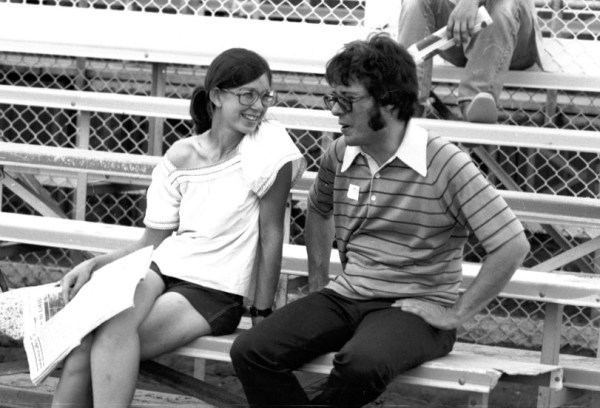
September, 1979, Nancy and Danny. Adams County Blue Grass Festival. Molly, all of 2 years of age was there too somewhere.
_____________________________________
____________________________________
Everyone should have a friend like Danny Graul.
He made it to seventy on his birthday, August 17 and then two months more. He had wanted to do that. He also asked to see our grandson, Teddy and one day just before he slid into unconsciousness I managed to bring Teddy by – a 17 month old little boy trying to figure out what he was looking at but Teddy responded when Danny said “Hi Teddy” and then “thanks Rob” to me. The beginning and the end of life…
At 10:48 this morning the hospice nurse Blanche stopped the oxygen to Danny’s system. He was still breathing with difficulty, gasping for air. Both of his sisters, Eileen and Sherry were present along with brother-in-law Roger. His housemate, Jennifer Norton, whose care and affection had extended Danny’s life for who knows how long was present too, along with Nancy who stopped by briefly and me. Another life-long friend, Becker, was nearby, concerned about COVID-19, but there in spirit.
As the oxygen tube was removed from his nose Miles Davis’s music was playing in the background with Davis’s biography on the shelf nearby. As family and friends grew in the apartment where Danny lay dying, I figured it was time to say good bye to Danny, kiss his forehead one last time, whisper that we love him and make my exit. Too many people were accumulating in the room in these COVID-19 days. Besides, when people begin talking all this nonsense of his “going on to meet his maker”, “God will take care of him” my stomach starts to churn, I feel like I’m suffocating and before I say what’s on my mind, … time to leave, which I did.
That he lasted as long as he did with all that put into his body and the ways he abused it for most of his life is a testament to his strong constitution. A first class juvenile delinquent, drug addict in his youth, his addictive personality remained a part of his being his whole life. He never really shook it but the focused changed from drugs to sports, jazz and more than anything else movies. Much healthier. If there were an olympic medal for movie going, Danny and his companero of decades, Becker, would be right up there for the gold medal. He’d see a film and – if it had some political impact – would just about insist that I go see with him and that we talk about it afterwards.
And he owned a used book store, Black and Red up in Arvada around 80th and Wadsworth, a successful one.
Well it was more than a used book store as it sold videos, records, cd’s as well as fancy games the names of which I can’t remember and never cared to join in with.. Occasionally he’d buy up rather special collections and thinking because I read a lot I could help him price them… which of course I couldn’t. It’s one thing to read a lot and quite another to know the business of books, of which I was, and remain mostly ignorant. But like the movie going, it was his way of involving me, of not letting our friendship die. In the end I think we both knew what it was about… just maintaining our friendship.
Black and Red was a successful used bookstore in an era where used book stores were dying on the vine, and Danny was a big reason for its success, his personal touch, his warmth, his virtual universal empathy for anyone down and out and despite growing up in a family well endowed financially and himself materially well off, if not spoiled, he never lost his sympathy for the working class and the poor; he deeply hated racism, homophobia, sexism in all its forms – although he ran into all three regularly. Of course being one of the most disorganized people I have ever come across it’s hard to believe that he ran a successful business – but he did, thanks competent store managers who kept the place in order. But he was key to its success.
Danny had so many insecurities… and once a person got to know him it was pretty clear that he was most of his life “an easy touch.” The number of people who milked him for money, drugs and other favors – who took advantage of his good nature – are well known, if not legendary. It took him most of his life to understand that hard lesson: one doesn’t buy friendship, even if one craves it.
There is one woman whom on his behalf I would like to personally strangle for the way she systematically ripped him off big time… we all know who she is – and she knows we know. But then, I’m a pacifist and I can’t even go kneecap her. There’s the fact that it was his struggle, not mine and even those of us who were his good friends knew – and told him repeatedly – that we couldn’t fight his battles for him, only give him advice that he agreed with but never took because it hurt too much. That said, it was his insecurities and his sense of honesty about them, the way he could let them all hang out, discuss them – that drew me to him for the 47 or 48 years of our friendship, a man whose mother once told him that she cursed the day he was born – something that wounded him deeply his whole life. I knew that I had most of the same insecurities Danny expressed, perhaps a little more manageable, but really not much. He wasn’t just “my friend” but our friend – Nancy cared for Danny, loved him as much as I do.
Jack Galvin, Scottie Keating, Joe Grindon, now Danny Graul – a Jewish kid’s “recovering” Catholic friends! How I loved each of them. How fortunate I have been to have had them in my life.
Turkish regime recruits Daesh terrorists to take revenge on its political opponents

Stockholm, SANA- Swedish Nordic Monitor website revealed new evidence on the Turkish regime’s close association with terrorist organizations, …
Turkish regime recruits Daesh terrorists to take revenge on its political opponents
Now the Calwood Fire moving into Lyons, Colorado Area
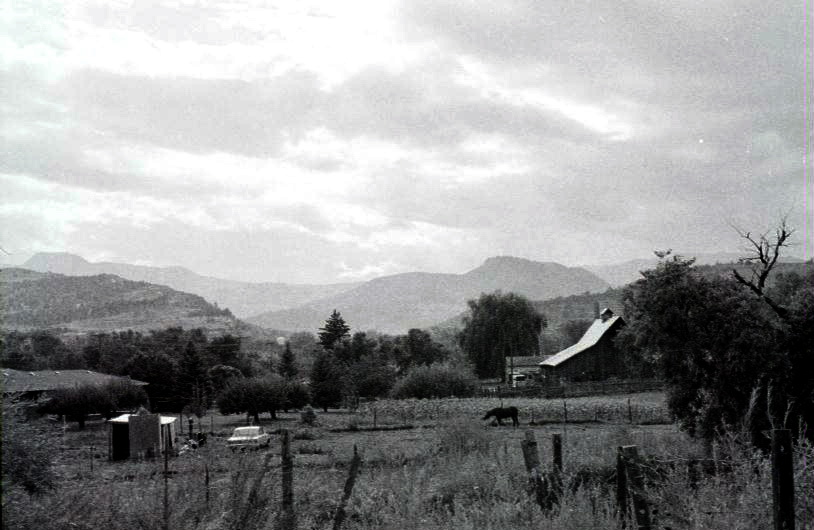
View from the Fey Lyons farm in 1972, Stonebridge Farm as it named. The mountains in the background are aflame today. The Feys (my inlaws) had a farm outside of town for many years.
Both sides of the Rockies from the Colorado Front Range north of Boulder to western end of the Rockies just east of Salt Lake – fires everywhere.
One of the places now under fire alert is Lyons Colorado – a few miles outside of which – where Nancy and siblings grew up… where we spent so much time over the years, where our 1975 wedding reception was held in field along the property’s west ditch. The farm, Stonebridge Farm, could be on the fire’s path from what I can tell.
At one point last night, the fire jumped to the east of Highway 36 towards Longmont, the north-south road between Boulder and Longmont, but firefighters were able to neutralize it.
As of this morning: Road Closures according to the Boulder Office of Emergency Preparedness.
- Olde Stage @ Lee Hill Drive
- Lee Hill Drive @ Lefthand Canyon Drive
- Broadway @ US 36
- Neva Road @ US 36
- Nelson Road @ US 36
- St. Vrain @ US 36
- Hygiene Road @ US 36
- Overland Road @ CR 87
- Overland Road @ Peak To Peak Highway (CO 72)
- Lefthand Canyon Drive @ James Canyon Drive
- Peak To Peak Highway (CO 72) @ CO 7
- South St. Vrain @ Old South St. Vrain
- Lefthand Canyon Drive @ US 36
- US 36 @ CO 66
Our Bowl 1924-1999
you were there
when we needed you
that’s more than I can say for most people
an original
75 years – came with the house, they say
now you sit in the alley
waiting
for that great toilet reaper
to sweep you and those 75 biodegradable years away
i try to imagine
what you went through
and what went through you
Rob Prince – 1999
(a poem – I guess you can call it that – I found among old papers)
Roxborough State Park – Front Range Colorado Gem
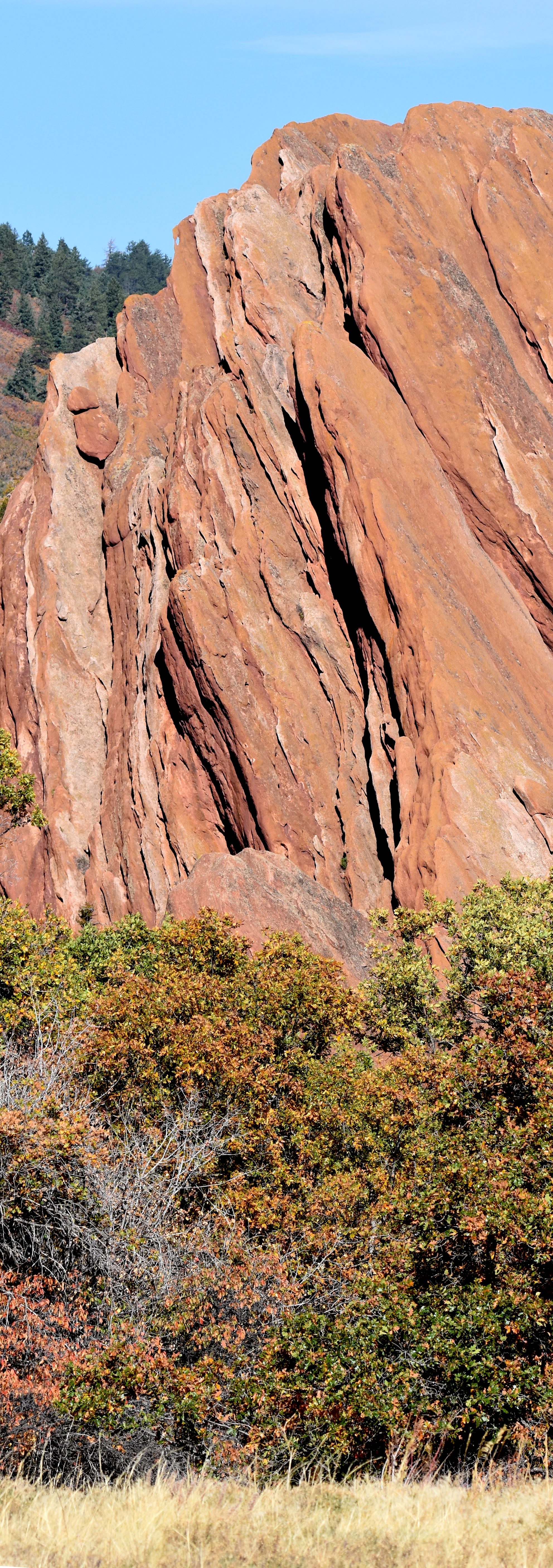
Roxborough’s 300-million-year-old red sandstone Fountain Formations that tilt at a 60 degree angle
From our home in Northwest Denver, Roxborough State Park is some 35 miles away, south past the Chatfield Dam and onto North Rampart Road. When I first came to Colorado 51 years past, there was “nothing” out there, that is to say a few ranches along the edge of the mountains reaching out onto the High Plains. Now it’s a different story with the development cancer extending to the edge of the park. That the park itself didn’t get gobbled up in some development scheme is about as close to a miracle that I can think of. Visiting Roxborough anytime of year is worth the effort, but to do so on a mild and sunny day in early October with the trees and bushes turning different shades of green, brown, yellow and red only adds to the experience.
There must be a story behind its preservation that I’ll unearth one day. Whatever, it is, among the state’s natural wonders, or what hasn’t been developed, mined, fracked or nuclear bombed (Project Rulison, Rio Blanco), radiated for milleneum’s to come (Rocky Flats) or otherwise poisoned by unchecked development or breathtakingly stupid or dangerous federal projects (Rocky Flats, Rocky Mountain Arsenal)as of yet.
It takes close to an hour to get there, a fact which has discouraged us from spending more time at Roxborough then we have. Last time we had hiked this park, I got some decent shots of a spotted towhee. Hoping to repeat that, or find another bird not common in northwest Denver, I brought my monster lens (150-600 mm), but on that score came up short as we saw very few birds of any variety, and those we did see were too far away to photograph. A group of 4-5 Stellar Jays crossed our path at a distance and a circling red-tailed hawk looked promising. Took a dozen of it but only one or two were not blurry. That”s how it goes photographing brids. Sometimes you win (rarely), sometimes you lose (mostly) but the fact that the photos are digital and not film based, softens the blow. Anyhow, frustration and disappointment come with the hobby
Birds might have been scarce but the geological history of the place – if you follow the guide book or have a basic knowledge of the place – makes up for it. Read more…
Syria ravaged by new forest fires, people trapped in burning homes, children displaced
Syria ravaged by new forest fires, people trapped in burning homes, children displaced
Syria ravaged by new forest fires, people trapped in burning homes, children displaced
Turkey’s Well-Earned Bitterness…but
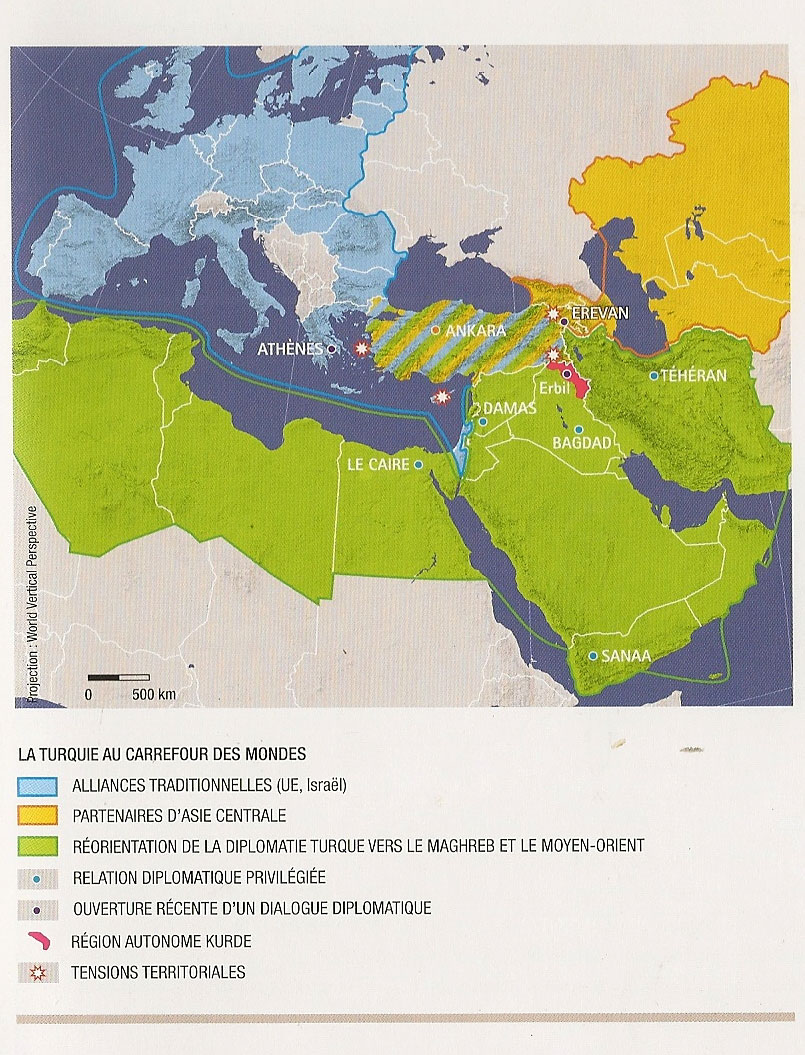
Turkey – a global crossroad
___________________________________________________
Be that as it may, Turkey has emerged as “a player” seeking a more pronounced place in the Mediterranean sun. Needless to say, finding a way either through force, diplomacy or some combination thereof, to partake of the region’s far from exhausted energy wealth is a high priority. Although for the most part I am critical of Turkey’s current role in the region – in Syria, Iraq, Libya and now Azerbaijan-Armenia- the question still emerges: why shouldn’t Turkey, with its population of 85 million and its rich history in the region, enjoy more regional influence?
It is rather a question of how they go about it.
There are certain realities, lessons from History that it appears not to have appreciated, primary among them are two: 1. The Ottoman Empire is dead and will not be resurrected; using that imagry might play well domestically but throughout the region, especially in the Arab World, it is a reminder of a long rejected colonial heritage. 2. The geo-political realities of the region (the roles of Iran, Israel, Russia, China, Greece and even NATO) severely limit its possible use of force. It needs another modus vivendi more heavily based on trade, diplomacy.
___________________________________________________
Turkey wants its share of the eastern Mediterranean’s wealth from natural gas and oil, from which it has been excluded for the past hundred years sincce the collapse of the Ottoman Empire. Tayyip Erdogan’s narrow ethnic nationalism and regional ambitions are linked to regaining its position of influence lost when the Ottoman Empire turned to dust.
Ankara’s historic bitterness is deep and well founded – but misdirected.
Turkey has been – since the collapse of the Ottoman Empire – the target of imperialist intrigue starting with the Treaty of Sevres – a failed attempt to partition the country – to its subservient role in NATO and its mistreatment by the European Union. This explains in part – and not in small part – its current aggressive politics – its scramble to become a regional more decisive regional power.
Broader geo-political shifts are also at play.
With the collapse of the USSR thirty years ago the glue that kept certain regional competitors – Turkey, Israel, Iran, Saudi Arabia – connected in an anti-communist uneasy alliance has broken down. U. S. influence and prestige – and with it American ability to dictate policy has lost some of its edge as well. Into this growing power vacuum, regional players see an opportunity to – within certain limits – maximize their regional influence.
Turkey’s initial attempts at geographic expansionism have run into a buzz saw of its own making, its biggest blunder – and failed gamble – its support, encouragement of foreign takfiri mercenaries in Syria and its failed attempt to participate, along with other countries and under U.S. direction, in the abortive effort to partition Syria. Its goal of taking a chunk out of northern Iraq – in the cynical name of self-defense, will, likewise prove unsuccessful.
Following a similar trajectory, its effort to gain a foothold in Libya where the oil and natural gas wealth is considerable, has stalled. Not sure that Tayyip Erdogan understands – but he seems to – that in a Turkish military confrontation with Egypt (supported by the Saudi’s, U.A.E. and probably Israel) that Ankara at best, will get a terrible bruising and at worse suffer a decisive defeat. Read more…
Hundreds of Sudanese troops enter Saudi Arabia en route to Yemen: Report
Hundreds of Sudanese troops enter Saudi Arabia en route to Yemen: Report
 View from the Left Bank: Rob Prince's Blog