The Two Sided Love Affair: United States and Algeria Anti-Terrorism Cooperation in Africa
______________________________________________
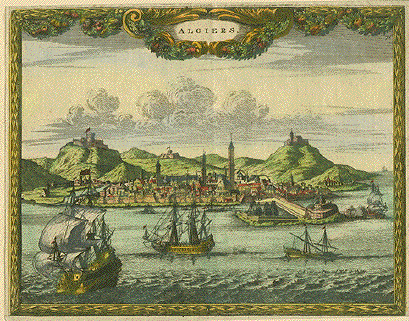
Algiers as it appeared in a painting in 1690
Daniel Benjamin in Algiers
At about the time that the United States, the European Union and NATO were putting the final touches on their not-so `humanitarian’ interventionalism in Libya, U.S. Middle East policy was developing along quite different lines in Algeria.
On March 4-7, in Algiers, the United States and Algeria formed what both countries are referring to as `a new contact group’ for counter-terrorism collaboration, cementing even further a decade of close intelligence and military cooperation between the two countries.
Underlining the importance of the security arrangement, the United States sent Daniel Benjamin, the U.S. State Department’s Coordinator for Counter Terrorism, to attend. The Algerian side was represented by Algerian presidential advisor, Kamel Rezzag Bara.
At a press conference Benjamin welcomed `the inaugural meeting of the bilateral contact group,’. He asserted the U.S. intended to work with Algeria to `counter groups that seek to launch attacks against innocents’. The crusader bombast and confrontational style of the Bush years has been replaced by a much softer touch stylistically at least. Poised, cutting a handsome `Kennedy-like’ image, Benjamin chose his words carefully. Read more…
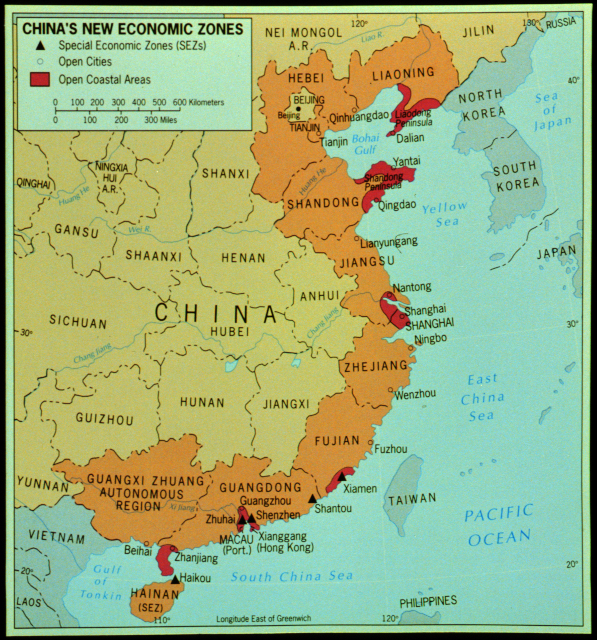
China Series on `Real Economy’
Sami Ben Gharbia, publisher of Nawaat.org accepting the Index on Censorship Media Award
note: this is an update: October 20, 2011.
It appears that Khadaffi has been killed in the fighting around Sirte. As is usual when the news just breaks, there are conflicting stories at this time and it will take a few days to confirm what actually happened. That said, politically Mohammar Khadaffi has been dead since the people of Libya took to the streets in March to condemn his forty year iron-fisted rule. Khadaffi’s role in the modern history of the Middle East is complex (see below). That said, I want to think about his legacy a little more before commenting upon it. My main interest is to tease out what his death contributes to the processes unfolding in the Middle East at the moment.
As it seems that this particular blog entry is getting an inordinate number of hits today, I thought I might simply let readers know that it was written several months ago – published rather widely at the time. Rereading it, my take isn’t all that inaccurate, but it needs updating, something that will be done rather soon. But for starters, I suggest you read Horace Campbell’s The Death of Khadaffi which puts the situation in a more sober light than many commentators are suggesting.
_________________________
“Waist deep in the Big Muddy
And the big fool says to push on.
Waist deep! Neck deep! Soon even a
Tall man’ll be over his head, we’re
Waist deep in the Big Muddy!
And the big fool says to push on!”
Song written and performed by Pete Seeger about another Big Muddy…
___________________
Humanitarian (?) Interventionalism in Libya

Sarkozy to Khadaffi: Well, I'm going to have to start my re-election campaign by bombing you, you know, play the old human rights card, but don't take it personally
So now add Libya to the Middle Eastern/South Asian countries where the United States is up to its waist militarily. The mainstream media calls this the third, U.S. military intervention in the region, with Iraq (2003) and Afghanistan (2001, 2009) being the other two. But it leaves out the growing U.S. military presence and `not-so-secret’ war in Yemen and the deepening U.S. led intervention in Somalia, bringing the total to at least five.
Nor does it count the recent intensification of security cooperation with Algeria inaugurated in Algiers on March 3-4 with the presence of Daniel Benjamin, Coordinator for Counter Terrorism for the State Department. That agreement covers territory over a swatch from Algeria to Nigeria, two of the continents most prolific oil and gas producers. Then there’s Pakistan which we’re doing a good job blowing apart, not exactly in the Middle East, but no need to be stingy in our definition. Take your pick – 3, 5 or something approaching 10 countries?
So…waist deep in the Big Muddy?
And now Libya. And we’ve only just begun. Read more…
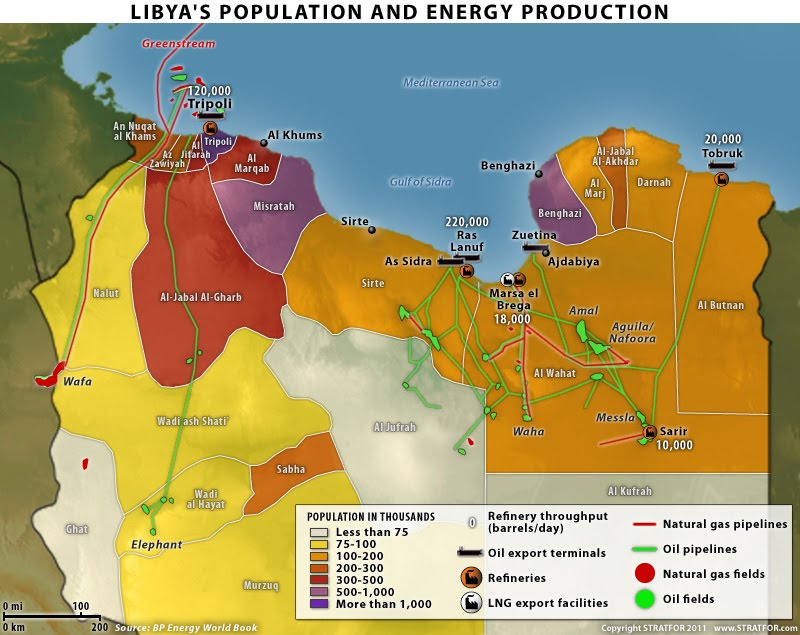
Libyan Oil and Population Map
Fukushima Disaster: World Energy Crisis Intensifies, Little Serious Concern for Alternative Energy Possibilities

In that historic year, 1989, Japanese director Shohei Imamura made `Black Rain’ (note: not the film with Michael Douglas), a film about life in the Hiroshima region of Japan in the aftermath of the U.S. nuclear bombing near the end of World War II. The protagonists were not in Hiroshima at the time of the nuclear blast, but in a boat not far away where `black rain’ – radioactively contaminated moisture – fell on them.
The film explores how Hiroshima survivors tried to deal with radiation sickness. 44 years, tens of thousands of nuclear weapons and several thousand nuclear power plants after the fact, we know little more now than we did then how to treat the condition. As it did in both Hiroshima and Nagasaki in August of 1945, once again black rain is falling on Japan, this time from continuing collapse of the nuclear power complex in Fukushima in the aftermath of the worse earthquake in Japanese recorded history. Japanese have been warned to stay indoors to avoid radiation, especially during rain storms.
For the past half a century, the world has been living with a lie – one dangerous to all life on earth – that while nuclear weapons are `dangerous’, nuclear power is `controlled’ and `safe’. As if Three Mile Island and Chernobyl weren’t enough, the nuclear accident unfolding at the Fukushima Daiichu nuclear power complex in Japan has pretty much destroyed the myth of safe nuclear power. Nuclear power provides some one third of all the country’s energy needs. As the radiation from the tsunami triggered accident spreads across Japan and, soon far beyond, the dangers of the stuff, long pooh-poohed as little more than pacifist hysteria by those in industry itself, become chillingly clear. Turns out those anti-nuclear activists whose influence has waned since the end of the Cold War know what they are talking about. Read more…
Libya: The Prospect of War by Paul Rogers

Middle East, North Africa Oil and Gas deposits
(note: I have been reading the stuff that Paul Rogers writes from sometime, mostly on the `Open Democracy‘ website. Here is his analysis on the prospect of war – meaning foreign intervention in the civil war in Libya. Classic Rogers piece, he is careful not to over-predict, but he does give a thorough [well for a short piece] and useful piece on the military, economic and political issues involved. )
The conflict in Libya is taking on the character of a civil war as Muammar Gaddafi’s regime recovers from its earlier reversals and consolidates its forces. Its substantial support is concentrated mainly in western Libya, especially around the greater Tripoli area which has nearly one-third of the country’s 6 million population (see Alison Pargeter, “Libya: a hard road ahead“, 8 March 2011).
The course of the conflict as it enters this new phase will depend largely on the regime’s strategy over the next week. Gaddafi’s success requires the effective deployment of his military and paramilitary forces, by no means all of which are reliable. In addition, the escalation of conflict inside Libya raises the possibility of external military intervention. These two issues – the internal war, and the influence of outside powers – will be considered in turn. (To continue reading: click here)
________________
Links:
CBS Poll: Where Is Tunis?
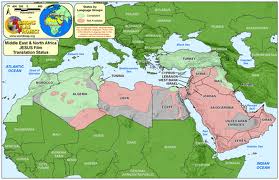
North Africa: Tunisia is between Algeria and Libya
On January 27-31, after weeks of Tunisia being in the news and several days after the “Jasmine Revolution” succeeded in deposing Ben Ali, CBS conducted a nationwide poll asking people to identify where Tunis was located. The good news is that 57 percent knew it was somewhere on the African continent. However, the other answers were as follows:
South America 8%;
South Pacific 8%;
Caribbean5%;
Australia 2%:
Don’t Know 21%
One can only hope that the 43% who got the answer wrong don’t vote.
Thanks to Phil Jones of `Friends of Tunisia’ for providing this info. (rjp)
US and NATO Prepare For War With Libya?
________________________________

USS Kearsarge: U.S. warships gathering on the island of Crete, not far from Libyan coast
Note: For some time now, perhaps two years, I have been reading the material put out by Rick Rozoff on his website `Stop NATO’. There is a link to that site on the right. The material is consistently – so consistently that I don’t really know how he manages to do it – of a high quality. Carefully researched with articles from what I would call `the best of google’. Not only does he shepherd a large and interesting assortment of articles, but he has consistently put them together in a coherent fashion, which is yet something else.
The media has been suggesting that the Obama Administration is shying from military action against Khadaffi. Rozoff presents a more somber scenario but he presents what I think of as convincing evidence. In the piece below, he predicts that the U.S. and NATO are heading for war with Libya. A few minutes ago I read that Khadaffi has already announced that he will fight back if attacked. He considers the establishment of a no-fly zone itself as a declaration of war and, as U.S. Secretary of Defense Robert Gates argued just last week that a no-fly zone is a form of war, Khadaffi has a point. So as Rozoff explains below, the U.S. and NATO appear to be moving in the direction of military confrontation and Khadaffi, figuring (and I think correctly) that he has nothing to lose and a world of oil wells to hold on to if he fights back, will respond in kind. So a dangerous moment for the whole world is in the offing. There is a NATO meeting in Brussels in a few days, where a decision to move towards military action could be taken. Cheers. rjp
_________________________________
Point of No Return: The U.S. and NATO Prepare For War With Libya
by Rick Rozoff

Eastern Mediterranean
March 7 was a pivotal moment in plans by Western powers to launch military operations against Libya.
After meeting with Australian Prime Minister Julia Gillard in Washington, President Barack Obama stated “we’ve got NATO, as we speak, consulting in Brussels around a wide range of potential options, including potential military options, in response to the violence that continues to take place inside of Libya.”
In an interview she gave to The Australian newspaper immediately before her departure for the U.S., Gillard stated that she supported the “US placing more military forces on Australian soil if it believes this is necessary in the light of the growing might of China and India.” Her government is also on record as backing military action in Libya.
On the same day North Atlantic Treaty Organization Secretary General Anders Fogh Rasmussen held a press conference at the military bloc’s headquarters in Brussels and while formally disavowing plans to intervene in the North African nation said that “as a defence Alliance and a security organisation, it is our job to conduct prudent planning for any eventuality. (to continue, click here)
Michael Moore in Madison Wisconsin – March 5, 2011

The Oil Crisis To Come…

Masjid-i-Sulieman, Iran. Site of first Middle East oil well. Iran, 1908
1.
The echoes of the Middle East region-wide revolt are about to be felt worldwide.
As I write, the Egyptian authorities have fired on and killed protesters in Cairo; in Tunisia angry crowds will not be satisfied until all members of the former Ben Ali regime step down. In Bahrain, Iraq, Oman, Yemen the voice of the people gets louder, more insistent to sweep away the old. In Algeria the regime braces itself for the next round of social explosions knowing that it has done little since the end of that country’s cruel civil war to improve socio-economic conditions. In Libya, Khadaffi and his sons commit war crimes in an attempt to hold on to that country’s oil wealth.
Meanwhile U.S. warships move into position off of Crete, easy striking distance from Libya. The pressures to intervene militarily are growing, originating from this country’s ultra-right (Lieberman, Bolton, Wolfowitz – the gang that brought us the wars in Iraq and Afghanistan). Then there is Saudi Arabia… Read more…
Voices of Change in the Arab World, Israel
I will be posting a number of pieces that look at/probe the revolutionary moment taking place in the Arab world. This first piece by Mustapha Barghouti is quite profound. I am not surprised that it comes from a Palestinian who puts the protests region-wide in perspective. Uri Avnery `speaks to me’ as do few other Israelis and repeatedly at that.
Will post a few others in the weeks to come.

Mustapha Bargouti
Mustapha Bargouti – Palestine and the Revolution: Lessons From Egypt

Uri Avnery
Uri Avnery – Wrong Side
Algeria: Khadaffi’s Ace In The Hole?
(note: This piece appears on `Counterpunch’ [March 2, 2011] and on the blog `Free Thought Manifesto’ [March 13, 2011])
At this moment when it appears that Muammar Khadaffi’s days in power are numbered, the Libyan leader has made it clear repeatedly that he will stay and fight. So far he has. His domestic support is evaporating around him, leaders of the country’s 140 tribes siding with the rebels, military units siding with the rebellion in larger and larger numbers, air force pilots and naval vessels defecting to Malta. Much of his government, other than his sons, has abandonned him as well.
What is left?
Those heavily armed private militias controlled by his sons? The army of mercenaries from sub-Saharan Africa? Some Mirage jet fighter planes with, until now, pilots less than willing to bomb rebel strongholds? All that is true. Yet while the U.S. and Europe work to isolate Khadaffi, he is not completely alone and without allies.

Algeria. The military dictatorship - for that is what it is - is in trouble
Libya appears more and more headed for civil war. Given his ever shrinking domestic base, one has to wonder how it is that Khadaffi can appear so defiant? It might come from the fact that he is not entirely isolated and alone. Indeed, the support that Khadaffi is garnering has stiffened the colonel’s backbone.
Khadaffi has the support of at least one important regional ally, the Algerian government, which has both militarily and diplomatically thrown it full (and substantial) weight behind his effort to retain power. In so doing, it would appear that Algeria, which has long cooperated with the US and NATO on its North and Sub-Saharan Africa anti-terrorism policies, is breaking ranks to protect its regime’s very survival. Read more…
Whither The Arab Awakening …
- If you can’t beat `em’, smother `em’ with a bear hug…

Libyans demanding Khadaffi step down
While no doubt the United States is quite nervous about where all the Middle East protests are headed – the unknown factor rattles the stock market and oil prices – the Obama Administration, not without internal divisions, has, grudgingly, accepted the need for some change – democratization and shifts in economic policy – in the region.
It is tactically clever (and realistic) to ride the wave – rather than oppose it outright. Those discredited dictators – the Mubaraks, Ben Alis, – around whom the United States has built and cultivated its post World War II Middle East policy, have moved from `category asset’ to `down-right-liability’. For the moment, let’s bypass the question of whether this new moral epithany results from `a position of principle’ or rather, simply a response to the flow of events that the Obama Administration neither expected nor for which it was prepared. Read more…
 View from the Left Bank: Rob Prince's Blog