Breaching The Gaza Wall: Two Articles:
(note: It was not tens of thousands as the BBC newscaster said tonight but 350,000 – or more – Palestinians, trapped in Gaza in a modern sequel of the seige of the Warsaw Ghetto, or Leninigrad – who broke through more than a wall of cement and barbed wire and poured into Egypt to taste an ever so brief moment of freedom. It was perhaps the most intelligent thing Hamas (if it was indeed Hamas) has organized since seizing power in Gaza – massive peaceful civil disobedience to draw attention to nothing short of a crime against humanity committed by Israel – and supported to the hilt by the Bush Administration – against the Palestinian people in Gaza, victims of one of the most chilling examples of collective punishment since World War II, and this unfolding for months before the eyes of an uncaring hostile world. With this peaceful, mass mobilization to tearh down the Gaza wall, once again the Palestinian people – for a moment at least – took their destiny in their own hands, far more effectively than lobbing a thousand katusha missiles into Israel.
And what now?
1. Tear down all the walls – that are suffocating both Gaza and the West Bank
2. Israel should open negotiation with all the Palestinians – this must included Hamas. The United States should encourage and support the expansion of the negotiating process.
3. There is no military solution that is in the interest of either people.
The alternative – which I expect – is yet another horrific wave of repression against Gaza Palestinians. But this need not be.
Below are two statements – one by the national office of the Anti-Defamation League. The ADL’s statement is one of the more startling examples of selective memory I have seen for some time. Israel right or wrong (mostly the latter) no matter what. You’d think that it was the Palestinians who are occupying Israel and laying seige on Tel Aviv and not the contrary! Not a shred of sympathy, human compassion for the the Palestinians. I’ve seen a similar one from Barack Obama – pathetic – and although I haven’t seen what Hillary Clinton’s campaign is saying, I would be most surprised if it were any different from Obama’s. Nothing, no political expediency, no humanitarian concern for innocent Israelis (we are all concerned about them too) – can justify these kind of rationalizations for Israeli injustices, for what the current Israeli government is doing to Palestinians in Gaza and the West Bank with full support of the Bush Administration – without which this strange and awful dance of human suffering would not be possible
Indeed the sense comes through that Bush gave Olmert the green light to tighten the screws on Gaza during his recent Middle East trip. And now Condoleeza Rice – whose legacy in the Middle East can be summed up by her encouragement to Israel two years ago to continue the war in Lebanon `to create a new Middle East’, now this same diplomat who, from the first day she became Secrertary of State, really hasn’t had a clue as to how end the conflict in Iraq, how to address the Israeli-Palestinian conflict, this same graduate of the University of Denver where her father was once a dean, calls on Israel and Egypt to once again tighten the Gaza screws ….
The second statement is, once again, by Uri Avnery – a different kind of Israeli – whose voice will continue to resonate long after the likes of Abe Foxman, Ehud Olmert George Bush and Condoleeza Rice have left the scene. Two profoundly different Jewish voices, on that recognizes the suffering of others, the other, completely tone deaf to the cries of the oppressed.
Read them both.
The Deal: PERA, Governor Ritter, AIPAC and the Legislature (note see Jan 22, 21, 19, 6, 3 for more coverage of this issue)
________________________________________________________________
A deal, made at the end of last week, was announced yesterday, widely reported in the local press. It was between Colorado’s state pension fund (PERA), Governor Ritter, the Jewish Community Relations Council (in which the main moving force seemed to be AIPAC) and some legislators. It would result in PERA scrutinizing companies that have more than $20 million invested in Iran’s energy sector. Under certain conditions future investments in such funds might be divested.
The agreement capped a campaign to get the state legislature to pass a divestment bill that started around six months ago with a bi-partison op ed in the Rocky Mountain News that called on the legislature to mandate PERA to divest from companies doing business with Iran. This initiative – part of a national political agenda spearheaded by AIPAC over the past few years – was in response from a call to the country’s Jewish citizens and organization from Israeli right-wing politican Binjamin Netanyahu. The divestment campaign began by targetting Sudan last year and moved on to Iran in the current legislative session.
Observing this process closely it is interesting how limited is the focus. This divestment campaign doesn’t focus mutual funds themselves, companies that invest in Iran’s energy sector, only state pension funds. As such it turns out to be yet another attack on public employees and public sector financing and as such is an integral part of the Bush Administration’s attempt to weaken and undermine people working in and for government. It is instructive how willing Democrats have been to join their Republican colleagues in what is little more than a political feeding frenzy at the expense of public employees and their retirement funds.
Evaluating The Deal/Sung and Unsung Heroes.
The agreement reached between the PERA board, AIPAC and some state legislators was a compromise, the main results of which were:
it took the issue out of the legislature where it most likely would have been more politicized. The terms imposed on PERA would have been harsher. (there is debate on this point, but I believe it essential). It was wise of the PERA board to limit the damage of the possible divestment legislation
AIPAC and the legislators involved agreed. They’d come under a great deal of public fire. AIPAC especially begins to get uncomfortable when their little operations come under public criticism or media scrutiny as was beginning to happen in this case. They prefer greater anonymity as they know, the more public attention to their politicking, the more like it will result in some kind of blowback. Indeed, AIPAC’s strong arm tactics in pushing this issue left a somewhat bitter taste in the mouths of many members of the PERA community, which some day could backfire.
once the negotiations were `privatized’ so to speak..taken out of the legislative process – the PERA executive director, Meredith Williams, was essentially able, behind closed doors to limit the potential damages to the fund to a certain extent. (more below)
the process was a `real education’ for groups like Friends of PERA and CSREA. Without a struggle they would have gotten nothing. They didn’t get alot out of the deal, but much more than they would have had they simply went to the mountains and gone snowboarding. Their political activism – if they think hard on the lessons – could serve them well in the coming rounds of attacks on PERA, which are almost certain to come, be it from right-wing motivated divestment schemes or neo-con attacks on access to pension fund assets.
for AIPAC and company, it was a `victory’ – once again it showed their considerable political clout on the state level, its ability to forge together a powerful, politically broad based coalition (strange its social chemistry was) and they did achieve some of their goals no doubt. But the victory was more symbolic than real in some respects and they know it. They can toot their horn – another state has gotten on the Iran-Divestment train – but…but…but..it was harder this time than they expected and they got less out of the deal than they wanted.
To elaborate on this last point a bit…(and in so doing I include some of the many thoughtful insights from Cheryl Flagg of Steamboat Springs, with whom I have been in correspondence these past weeks. There are others from Friends of PERA, CSREA whose activism, insights made a big difference. Among them: Cynthia Rutledge, for example, wrote every single legislator. Beverly Lehrer-Brennan took her Jewish heritage and stood up against divestment, offering alternative solutions. Eileen Coffelt from Hayden helped spread the message deeper into the depths of the western slope. Sandy Green and Don Schaefer..all of whom had the infrastructure and the real guts to confront the prodivestment players face to face and mobilize thousands of meetings, e-mails, letters, and phone calls. Plus all the unsung heroes who worked so hard.
AIPAC came out with a victory of `principle’ for sure, the victory being that it got PERA to agree to the principle that Iran should be subject to divestment on political grounds, essentially on a human rights basis. No small feat in principle but less significant in fact. Flagg notes that the process also creates a cottage industry of for divestment, possibly hiring more staff, buying more lists, using more staff time for analysis and decision making. She also points out that, as far as she can tell, the agreement is open ended. It has no sunset clause stating at which point all this activity and divestment will cease. It seems the only way a country has been removed from the State Department’s terrorist list (and thus as a subject for divestment) is to be invaded, like Iraq. That said, she says the final Iran Divestment Policy adopted by PERA is still a huge relief and everyone’s efforts should be applauded.
__________________________________________________________________________
It seems the only way a country has been removed from the State Department’s terrorist list (and thus as a subject for divestment) is to be invaded, like Iraq.
___________________________________________________________________________
Limits of AIPAC’s Victory
The key to understanding the limits of AIPAC’s victory is what it had to give up to PERA in return: the right to monitor the entire divestment process. It is PERA and not the legislature (and certainly not AIPAC or any other outside body) that has the sole responsibility for determining what companies are investing in Iran’s energy sector and also what to do about it. As written the new policy explicitly makes `fiduciary responsibility’ the primary factor in determining whether PERA should or shouldn’t divest from a company. ie. if a possible divestment would hurt the fund, it does not have to do it. I would expect (we’ll see) that this will result in some Iran-related divestments but actually very few and rather small ones whose impact on the fund will be minor and whose impact on Iran will something close to non-existent. (this last point was well understood by even a number of strong Zionist supporter friends of mine underlining the largely political rather than economic impact of this initiative, at least here in Colorado)
Comparing this Iran-divestment agreement with the Sudan divestment passed by the state legislature in the last session, Flagg wisely notes, there are some protections built into the current agreement that gives more PERA stakeholder protection. The agreement speaks of possible ( not mandatory) divestment based upon fiduciary rather than political concern. It calls for taking into consideration `the availability of alternative direct investment providing similar diversity and return expectations. Failing such conditions, divestment is not required. The Sudan divestment bill passed in the last legislative session had none of these protective clause
Colorado AIPAC: Key Player
As it came together nationally – it was far more than some little Colorado hatched scheme – it brought together that bizarre but temporarily cohesive coalition of liberal Jewish organizations (AIPAC) with Christian fundamentalists, Iraq war hawks, Bush neo-cons – that narrow, but politically powerful band within the country’s political spectrum of those hoping to extend the war in Iraq to Iran. Although the press reports formerly refer to the Jewish Community Relations Council as spearheading this effort in Colorado’ Jewish Community – which is technically true, it is AIPAC, a Council member, that directed the legislative drive. In a number of public meetings, emails and the like, PERA leaders and legislators specifically mention negotiating with AIPAC.
This bizarre band of brothers and sisters together has considerable political clout on local levels. Before Colorado’s deal was reached, Iran divestment bills had passed in New Jersey, California and Florida (where the pension funds are much larger than Colorado’s $40 billion fund). Some moves in the direction of divestment also took place in Missouri, Texas and several other states.
Governor on Board
Colorado’s Governor Bill Ritter helped shepard the deal and his office was involved in encouraging the Iran-divestment momentum. Ritter explained his support for the deal arguing that Iran should be punished as `the leading state supporter of terrorism’ . Ritter has accepted line hook and sinker that Iran is supplying Iraq with the roadside bombs that are killing and wounding American military in Iraq. On a trip to Iraq in December he met with two officers in the military, Steve Ward and Joe Rice, both of whom, state legislators here in Colorado, would have sponsored the Iran-divestment resolution. They seemed to have convinced Ritter of the Iran connection to Iraqi road side bombs (ied’s as they are referred to).
In other words, although the logic, excuse for the US military occupation has shifted dramatically over the years since the invasion as each claimed pretext gets undermined and collapses, Ritter is willing to accept the current rationales as gospel truth, this despite the fact that neither accusation has been proven. Far more basic – he accepts the legitimacy of US occupation of Iraq – that has resulted in something close to a million deaths by some sources and the creation of 6 million refugees (4.5 million who fled the country, 1.5 million internal). No surprise here, he is simply following the line of the Democratic Leadership Council whose members in Colorado pretty much control the party.
The Hidden Lobby: The PERA Pensioners
What is missing from the news stories – at least the 4 or 5 – accounts that I read, all not bad by the way in some ways – is what forced the process out of the legislature in the first place: The Iran divestment bill ran into sharp, one might even describe it as `fierce’ resistance from PERA recipients themselves. The fund represents close to 400,000 present and past state employees of whom 75,000 (including me) receive retirement benefits. Having had a broad based and poorly conceived Sudan-divestment scheme essentially forced down their throats in the legislatures last session, with the initiation of a second divestment scheme targeting Iran, pensioners began to wonder where the divestment steam roller would go next, undermining the fiduciary stability of the fund.
Besides Iran is not Sudan.
Perhaps not genocide, but crimes against humanity have been committed in Sudan. One can accuse Iran’s President Ahmadinejab of anti-Jewish, anti-Israel rhetoric – and true enough, there are valid and serious criticisms of the country’s human rights record, but the genocide label just doesn’t stick with Iran. Most serious human rights organizations, despite their criticisms of Irans policies towards gays, secular elements, consider the human rights situation in Iran actually considerably better than what exists in Saudi Arabia or Iraq. Besides, the campaign to vilify Iran, to magnify its human rights short-comings bears many similarities to what happened in the US media prior to the US invasion of Iraq where Saddam Hussein was compared to Hitler and his regime to Nazi Germany. The `it’s 1939 all over again’ logic is a sure sign that the US is targeting a country for war or major military attack.
Organized in two groups – the Friends of PERA and the Colorado State Retired Educators Association, pensioners opposed the proposed Iran-divestment legislation as soon as the initiative became public. They mobilized their forces all over the state – it was quite an energetic and from what I can tell unprecedented lobbying effort that caught the legislators by surprise (some of which is described below: Jan 22, 19, 6, 3). Not accustomed to this level of resistance – legislators responded with avoidance (Ken Gordon), insipid arguments (Romanoff), insults and insipid arguments (Rice and Penry), …that is to say with their usual gutter level of political opportunism. They began to get nervous that an open and much media publicized fight over the legislation would hurt their already not particularly healthy images.
Josh Penry (R-Fruita) seems particularly upset that a compromise has been reached and continues to threaten to introduce legislation despite the compromise agreement, this despite the fact that he received over 1000 emails from constituents opposed to the whole idea of Iran-divestment. The compromise policy deprived him of a cause celebre, a political he probably hoped to ride to higher office. He can’t seem to give up the issue that most thought resolved last week.
Had PERA participants not launched their opposition movement, the result could have been worse. No, it would have been worse.
Bill Ritter: Closet Progressive? Governor Gives Public Employees the Right To Bargain Collectively, Conservatives Howl In Pain
(Part Three)
A Hypothesis of the Crisis…or Thanks Jimmy Hoffa Wherever You Are
When Governor Bill Ritter vetoed a revised Colorado Labor Peace Act nine months ago that would have granted public sector employees collective bargaining rights, protests were triggered both state and nationwide. On the national level the AFL-CIO floated the idea of changing the venue of the August 2008 Democratic Party convention. After that idea was dropped, Teamster President James R. Hoffa, son of `the disappeared one’, suggested that the convention just might be the site of major labor demonstrations in protest of Ritter’s actions. He was quoted as saying demonstrations might `blow up’ at the convention, a comment that it appears, some Colorado Dems took to heart.
There must have been some intensive lobbying done to get the AFL-CIO to back down from changing the convention venue and although a variety of forces in the Democratic Party were involved, seeing the forced relocation as the kind of humiliation that could effect the results in November, it wouldn’t be surprising that a number of local players with national ties were right in the midst of it all – especially those who would love convention center, hotel, restaurant and bar income as well as those who for political reasons wanted to showcase the city and thus highlight their own national image.
Among those who would fit comfortably into that category are Mayor John Hickenlooper and Denver Democratic Party don’s Norm Brownstein and Steve Farber, the latter two with decades-close ties to the Clintons. The Clintons will be undoubtedly entering very friendly territory when they arrive in Denver for the convention. It is not unrealistic to suggest that they lobbied the national AFL-CIO to tone down their criticism of Ritter so as to not piss on the Brownstein-Farber national political parade. But Hoffa’s vague threat to jiggle the Democratic apple cart still hung over the process as Hoffa has a reputation of being a man of his word.
That the August convention considerations were indeed a factor comes through clearly in today’s (Nov. 5) Denver Post which in a more restrained, but still hostile manner, kept the story on p.1. If this hypothesis is correct – the pressure was on for the Governor Ritter to somehow soften the union opposition and neutralize the situation some, hoping to improve the convention atmosphere and to dispell the very accurate notion before the nation that Colorado is an anti-union state. At a certain point such perceptions dampen interest in businesses moving here and in Colorado’s goal, far from realized, to become a major national convention center.
Something had to be done to revise and at least slightly improve Colorado’s anti-union image (while retaining the essence). Of course it is ironic but not surprising that Hickenlooper, Brownstein and Farber were in there lobbying the governor to veto the amended Colorado Labor Peace Act in the first place. Meanwhile the governor was still smarting from the political damage that the veto had cost him (as mentioned in an earlier blog) and looking for a way to re-establish some connection with his labor base but to do so with the least political damage to his business supporters.
Unfortunately (at least unfortunately for the governor), he can’t have it both ways…
The result of all this was his executive order last Friday.
Less Than Meets The Eye
If one studies Ritter’s executive order closely, there is, unquestionably, less there than meets the eye.
1. While permitting public employees to form unions the order prohibits strike actions, collective bargaining or resolving disputes through binding arbitration. That doesn’t leave much for Colorado public sector unions to do other than go skiing in the mountains.
2. The way that the order is written, it gives the governor pretty much `supreme authority’ to determine whether or not public employees get the raises they are asking for.
3. Since it comes as an executive order and not through the legislative process, the impact of the executive order could be limited to Ritter’s term in office and could easily be reversed by the next governor as Richard Lamm accurately points out in today’s paper.
That public employee union reps have been calling their members (one of which includes my wife) to suggest that a great victory has been won comes off as more hyperbole. It was somewhat irritating to be treated essentially as schmucks by these union reps, many of whom are little more than cheerleaders for this or that union. It’s not quite nonsense, but what public employess got out of this deal is not much and, as suggested above, very well might be temporary. It will be interesting to see if the order lasts much past the convention.
What seems to have happened is that the governor came up with a plan to offer public employees the smallest amount of progress possible – ie – the right to organize but not to enjoy the same rights as other unions and that when all is said and done there is alot more symbol here than substance. But then if the hypothesis presented here is correct – that is exactly what Ritter hoped to achieve.
Ok. so, in fact, the whole thing amounts to peanuts, maybe less.
Then why support it?
There are a number of reasons:
1. The whole issue raises the the question of the shabby treatment of state public sector employees whose salaries and working conditions – despite what the local press says – have long been in need of improvement. They’ve gotten nothing from two Democratic governors (Lamm and Romer) in the same way that as Denver city employees have gotten litte and not expect much more from Mayor John Hickenlooper
2. The very fact that public employees have earned the right to organize means, as Richard Lamm rightly (I hate to admit) points out, that it is likely that some of their wage and working condition demands will be met even without the right to strike. A mechanism has been set up to increase their collective imput into the process. Besides there are other kinds of actions that can be taken short of striking…just watch how the police and firefighter unions have functioned under similar restrictions
3. Unquestionably, increased union membership will increase the clout of the Democratic Party in the future. If union numbers grow, the main political beneficiaries will be the Democrats, that for some time in the future.
Let’s Not Be Schmucks About It
Of course, the key thing here is simply not to proceed like schmucks, to think that labor (and thus all of us) has won a great victory. We also have to keep in mind that because this executive order is so fragile that labor will have to fight hard simply to retain the small gains it has made in this situation. And it has been some time in Colorado since labor – as a movement, as a class, has fought for its own self interest with the same shrewdness and persistence as do those in power.
So…let’s see what happens.
Will the media attacks against Ritter’s executive order let up or intensify? Will the modest gains public sector labor has made be only a pre-convention pr stunt or something more permanent. And, will Ritter, stuck between a rock and hard place, show he has some principle and backbone, or will his commitment to public employees be temporary and tactical.
And…let’s see what part of this hypothesis hold
Two Responses to Blog on Ritter’s Executive Order Permitting Public Sector Collective Bargaining in Colorado
1.
I was as amazed as you that Ritter actually did the right thing. Now I think he needs our support. Have you seen the insane editorial on the front page of the Denver Post? I just sent this letter to the Open Forum:
As a long-time subscriber to the Denver Post, I am shocked at the unprofessionalism of your running an ill-reasoned, front-page editorial dooming Bill Ritter’s governorship in perpetuity because he chose to give state workers bargaining rights. In this country, the rights of workers–that is, of some 80-90 percent of the able adult population–have been eroded to the point that a man or woman can work 40 hours a week and still be unable to afford the bare necessities of life. Thanks to decades of Republican control, Colorado has long been a profoundly anti-labor state, in which employees could be fired at the whim of employers. Now a small segment of the workforce has gained one tiny sliver of opportunity, and the Republican-big-business right stages a full-bore, hold-our-breath-until-we-turn-blue temper tantrum, complete with a rant in the Denver Post worthy of Bill O’Reilly himself. For heaven’s sake, grow up.
2.
Thanks for the blog entry on Gov. Ritter and the flak about his latest actions on unions for state workers. My husband and I have been following this issue with great interest. It is not surprising that business interests in the state are raking the Governor over the coals for his moderate support of labor unions. We have been union supporters for a long time, and fully realize the role that union organizers and activists have played in this country, not just in
instituting basic rights for working people, but also in supporting civil rights and other progressive activities.
Bill Ritter: Closet Progressive? Governor Gives Public Employees the Right To Bargain Collectively, Conservatives Howl In Pain
(Part Two) – Reflections on Colorado Labor History
Without having lived here in Colorado for a very, very long time, one would hardly know that this was a state where, many weapons systems ago, a powerful union movement existed whose influence was felt socially and politically throughout the state. From what I can tell, the union movement – and its contribution to social justice – real if mostly remote – is far from the thinking of most peace activists. They don’t have a clue how to approach it or understand its great potential.
Let’s just put it this way: when the union movement was strong in Colorado and the nation, its strength and organizing skill were heavily reflected in both the peace and civil rights movements. Further, I would argue, that until the union movement begins to reach its untapped potential, peace and civil rights movements will remain largely narrow and with moderate influence over the nation’s political and social direction. Nor will the integration – increased cooperation between unions and other social movements be easily achieved – but it is a goal to aspire to. Don’t forget that Martin Luther King Jr. was assassinated just at the time when he was moving in the direction of bringing together three movements – civil rights, peace and labor – into one united force. While needless to say I can’t prove it, as he approached that synthesis he was gunned down. I believe that is why he was assassinated. No one in this country has come close since.
Of course you can take this for what it’s worth (or not worth) from a (mostly) unrepentant `old leftist’. So a smile crosses my face when the rumblings of `things past’ seem to be coming back to the surface once again. Or perhaps it is simply wishful thinking. Time will tell.
Picture of Labor’s Past
Among those unions whose clout was especially strong in this state were the United Mine Mill and Smelter Union (which merged with the United Steel Workers of America), the United Food and Commercial Workers Union now representing mostly retail workers at Safeway and King Soopers (that engulfed the meatpacker’s union) but half a century was based largely in the meat packing industry around Greeley (and to a lesser extent in northeast Denver). After cruel, even gargantuan struggles in the states mines that included both the Ludlow and Columbine (near Lafayette) massacres, the United Mine Workers of America also established a strong presence too. For a number of decades the Oil, Chemical and Atomic Workers’ Union, based in Denver, also had some influence. Other unions in the construction trades, education had their moment as well.
By the mid 1960s Colorado’s labor movement’s power had ebbed although it still produced the likes of Herrick Roth, president of the state federation whose clear stand against the Vietnam War cost him his position as George Meany put the state’s labor federation `under trusteeship’ giving Roth who had headed the Colorado Federation of Teachers a classic Cold War boot. The McCarthy Era (late 1940s to about 1960) purged much of the old left leadership many of whom were Communists, socialists, anarchists and other sundry left elements. They were often replaced by union bureaucrat types with diminished social consciences (if any), penchants for careerism, noses that could smell left challenges a mile (or more) away.
The `Great Shriveling’ Begins
Never a big center of basic industry in any case, in tandem with national trends, Colorado’s union movement shriveled to next to naught from the 1970s onward. Like elsewhere the decline was the result of a number of factors – the beginning of outsourcing of local industry to foreign lands to benefit from cheaper labor, the shifts in the overall economy to some degree away from manufacturing, the general increase in wages in the post World War II period which led some workers to believe, wrongly it turns out, that with or without unions their wages would increase, the sluggishness of the unions themselves and their failure to read both the national and global trends that were undermining their position.
The percentage of the state’s work force in unions, never that great to begin with, shrank even further and has hardly recovered. Organizing – actually building unions – was often pushed a side for largely ineffectual lobbying efforts. Legal restrictions on union organizing multiplied. Labor Day – the annual show of labor strength degenerated into little more than annual picnic and food-fair pig out in downtown Denver (similar to what happened to Mexican Independence Day and Cinco de Mayo), shorn of virtually any political content, and Bill Owens – neo-con extraordinaire – became the state’s governor.
In some of the bigger unions that survived (to remain un-named) nepotism reigns to this day with union presidents giving their largely incompetent sons $75,000 a year organizing jobs. While once a force in the peace movement, for much of the post war era, unions played a mostly reactionary role. Nothing typifies this better than the contribution of Jim Kelly, president of the Rocky Flats Nuclear Weapons Facility USWA local who was nothing less than a rightwing watchdog of the military interests in the state and strong supporters of the US war in Vietnam. Within the state labor federation as a whole Kelly wielded a good deal of influence. For years he argued that the plant was safe from radiation and played the role of an enforcer – silencing those in the Rocky Flats work force that dared speak out against the growing number of safety and environmental infractions. Before he died though of cancer contracted from working in the plutonium polluted plant, Kelly had something of an epithany and actually befriended a few of the local anti-nuclear movement leaders. Still…
Not a pretty record is it? And certainly it is selective. There were `moments’… – the boycott of Coors beer (I still won’t drink that piss) after William Coors made racist remarks in the late 1970s, the occasional resilence of teachers of the Colorado Education Association, OCAW’s strong campaigns against corporate chemical pollution, the movement to organize largely undocumented Mexican farm workers in the state’s fields. In the Denver metro area some of the construction unions had entered into sweet heart deals with developers that have endured and at least assured their futures economically.
If you think as a result of this description that I am `anti-labor’ or `anti-union’….no, this is not the case. I’d just like to see the union movement cleaned up – purged of its old boy elements that still dominate – and of course democratized. That process has begun (sort of) and hopefully it will pick up steam in the years ahead.
It is also easy, given this description, which I believe accurate, to write the labor off as some kind of political dinosaur, long obsolete and with virtually no influence. Nothing could be further from the truth. Ask any candidate for office – Democrat or Republican. Yes, the labor movement is undoubtedly, a shadow of its former self in Colorado, but then, careful examination suggests it casts a rather long shadow, still has a good deal of clout and despite its weakened state still, it seems, strikes a certain discordant note among Colorado’s free market bards.
A Bad Union Better Than None At All?
A friend, long gone, Paul Bates of Ft. Collins, once put it this way when I was complaining about general political ineptness of Colorado unions in the early 1980s, `Rob, even a bad union is better than none at all’. It did take a while to appreciate the wisdom of that remark but I believe it contains a kernel of truth. What is interesting is that even its shrunken and largely de-politicized state, Colorado unions retain a wealth of grass roots power and despite themselves sometimes, something of a social conscience. This manifests itself in a number of ways:
1. Without a doubt, the union movement in the state is still probably the largest organized constituency of any social force in Colorado politics even in its reduced form
2. It remains a highly disciplined movement that can – when it wants or finds it necessary – still mobilize politically as well as group. A sense of its residual power came through in the last few elections. Any honest Dem (there are a few) would admit that Colorado labor made a decisive difference, if not the decisive difference in the historic shift which brought Democrats in control of both houses in Colorado. Labor support is not always enough to win elections, but it’s near impossible to win without them.
3. The actual working conditions of the Colorado working class vary enormously, but for many – especially those working part time, in places like Macdonalds or Walmart, or in many areas of the health care industry wages and working conditions are very poor indeed. Say what you want, without unions or other employee organizations, labor is left to accept the `good will’ of management. As it has all along, this situation forces labor to – sooner or later – to stand for and fight for the living and working conditions of its workers.
4. The labor movement – while still needing what we might call a `cultural revolution’ – has shed itself of its most backward, downright reactionary, corrupt elements in Colorado – those beholdened to former AFL-CIO president George Meany.
While the local papers are howling about Governor Ritter’s executive order to give collective bargaining rights to unions, I am quite pleased with and supportive of the development. I’ll detail some of the order’s short comings in the next day or two, but I understand the Denver Post’s pain. Ritter’s order creates an environment in which, despite limitations, the union movement in this state can grow again. And it is this more than the fact that public employees might now have limited collective bargaining rights that so frightens the state’s conservatives. But then where profit is involved, or especially where profits are involved, they’ve always been easily frightened.
__________________________________________________________
Bill Ritter: Closet Progressive? Governor Gives Public Employees the Right To Bargain Collectively, Conservatives Howl In Pain
(Part One)
Nine months ago, in one of his first acts after getting elected, Colorado Governor Bill Ritter, under pressure from business interests and those lowlifes called `new Democrats’ vetoed an amendment to the Colorado Labor Peace Act which would have granted collective bargaining rights to the state’s 30,000 public employees (one of whom happens to be my wife).
That the pressure to veto from Colorado’s business community was intense can be seen from the fact that Ritter did this after having previously encouraged the Democratically controlled state legislature to pass such legislation. Among those lobbying Ritter to veto the bill at the time were Denver’s Mayor John Hickenlooper who despite a somewhat liberal surface gloss is consistently anti-labor, especially when it has to do with anything involving unions. Hickenlooper was joined by a cacophony of financial, business, developer interests for whom the simple mention of the term `collective bargaining’ – one of the tamer forms of class struggle – spells imminent doom, nothing less.
A friend and former student who worked in Ritter’s campaign explained to me – rather unconvincingly I might add – that Ritter `had to do this’ and that labor’s demands were `unreasonable.’ My own interpretation was that Ritter had simply underestimated the state’s anti-labor bias and when faced with strong and predictable opposition from business elements, simply buckled and turned on one of his main pillars of support, the labor movement, without which it is fairly obvious, he would not have been elected in the first place, nor will he be re-elected in the future. He was caught between his constituency and his political future.
`The Great Tradition’
And I thought of how Ritter’s knifing of labor was not an isolated incident. To the contrary he had become a part of `a grand tradition’ of Democratic Party governors (and Denver mayors) who rode to power on a progressive wave – be it environmental or pro-labor – only turn away from their liberal roots under the pressure of developers, oil and gas sharks, beer manufacturers, military contractors and Colorado Springs based Christian fundamentalist types – that is the usual assortment of corporate and financial detritus who run the state. Liberals and progressives actually have a pretty good record of getting good people elected to office, but a dismal one in keeping their nose to the grindstone once the corporate lobbyists get hold of them.
Long before telling the elderly they have a `duty to die’ (he’s getting old, will he fulfill his `duty’?) and going on his anti-immigration jihad to try to win conservative support for a presidential bid, Dick Lamm had ridden a wave of environmental activism to the governorship in his public opposition to Project Rulison (go to Blog Archives 2 for late September and early October) and the proposed Olympics being held in Colorado. To one degree or another – Denver Mayors Federico Pena and Wellington Webb – both themselves products of the state’s civil rights movement – purged their initial progressive staffs and replaced them with those more amenable to developer interests (building DIA, developing Stapleton, etc).
With an eye on getting re-elected, they made their peace with power, and did so quickly, quickly forgetting from whence they had come. Occasionally, when it suited them, they’d cynically roll out their progressive credentials of days and struggles long gone. Roy Romer was no better and spent most of his time as governor chastising anything left of center as he pushed the state to help push through the Denver International Airport project. DIA was a developers wet dream, but probably will remain a Colorado taxpayer nightmare for some time into the future.
By the way there is a film adaptation of all this, John Sayles Silver City, which captures the essence of the state’s politics rather well (besides being extremely funny and well done and having a few of my friends and acquaintances as extras). So does Robert Redford’s The Milagro Bean Field War even if it took place in neighboring New Mexico and that in the movie `the people’ rather than the developers unrealistically won.
Of course, to be balanced, let us not forget that the Republican contribution to the state gubernatorial office, a former oil and gas lobbyist, Bill Owens, never had any hesitations or crises de coeur about representing the state’s working people or reigning in oil and gas drillers or developers. He was truly one of them.
Ritter: Cut Out of the Same Lamm-Romer Unsavory Mold?
So why should Bill Ritter have been any different from Lamm and Romer? Or more accurately, how could he be? The pattern was well established after all. That assortment of labor, women, environmentalists, teachers and civil rights activists that have formed the electoral base of the great liberal democratic victories in the state had become so accustomed to being shunted aside and taken for granted once their candidates were safely in office would have experienced something approaching lethal culture shock had Ritter actually delivered on his campaign promises. Apparently getting to power and ruling are not quite the same thing.
Ritter gave all appearances of being cut out of the same unsavory mold as those who came before and the question in my mind wasn’t how but when he would screw the constituency that had so faithfully elected him. And of course the state’s labor movement has become so used to electing people to local, state and national office who then turn around and screw them royally that they might not have even noticed that once again they had been betrayed.
My own admittedly cynical bent towards Ritter was in no way moderated by the facts:
1. that as Denver District Attorney he had never, not once, prosecuted a Denver police officer for excessive use of force although many incidents of police brutality took place while he was in office, especially against people of color. Had he cut some deal with the police?
2. that I saw his open opposition to abortion rights as that great political sport of simply pandering to the Christian right
3 . that much as Bill Clinton (and others had done) he could parade his more liberal wife, a former Peace Corps volunteer before the voters to suggest he is more liberal than he is in actuality
Frankly Bill Ritter did not appear particularly interesting candidate for governor. I can assure you there was no `Ritter For Governor’ on my front lawn. He seemed symbolic, once again, of all that is wrong, short-sighted and opportunistic in the state’s Democratic Party – a perfect candidate to fight the state party’s politics by the way – but, no Mike Miles.
`Some Things That Are Too Bad To Be True, Aren’t’
Still, I was impressed that he could act with such impunity against a key constituency, one whose demands, when carefully analyzed, are moderate and mainstream at best: the right to organize public sector unions. Ritter might be able to betray them now, but how could he expect any support from them in a re-election bid only three years down the road, I wondered? It was his seeming willingness to simply brush aside his labor constituency and move on to cozying up to the state’s corporate lobbyists that came off as especially brazen. But, inversing an expression I often heard from my mother – `some things too bad to be true, aren’t’.
I do not know the back room political dynamics which caused Ritter to reverse his decision and issue his executive order giving state employees the right to bargain collectively. Perhaps some zealous reporter from Westword or Al Lewis of the Denver Post (whose column is generally worth reading) can shed some light on the governor’s change of heart. Ritter’s action did seriously dent my theory that the man is little more than yet another right winger with liberal trappings who has taken his party and the state electorate for yet another ride to nowhere.
Indeed, even before Ritter revised his position on public employee collective bargaining, he had already undermined my image of him by challenging the state’s oil and gas industry. In a move that heard oil and gas circles moan with pain he seriously reworked the bylaws of the state agency granting leases to oil and gas companies. The Colorado Oil and Gas Conservation Commission (scroll to late Sept, early Oct blog entries) was previously made up of 7 member, 5 of whom, thanks to Bill Owens, were from the oil and gas industry itself.
The State legislature passed and Bill Ritter signed (and encouraged) a bill upping the number of commission members to 9, reducing the (more obvious) oil and gas members to 3 and mandating that other members come from relevant state agencies and environmentally oriented professional circles.
This is not the Bill Ritter I knew and had felt little more than contempt for. Worse, nor could I explain his actions on purely opportunistic grounds. Much as I hate to admit it, some political principle, some mild sense of concern for the common good was involved here. Worse yet, it took a bit of political courage. Oil and Gas interests in this state, as people might imagine, are rather influential behind-the-scenes players
It was the first time since following Ritter’s political career here that I could – admittedly grudgingly – grant him any modicum of respect. It was the first time in a long time that Colorado governor had, in an unambiguous manner, stood up to some of the more powerful – and more ruthless – corporate interests. He had actually put people before profits, very unusual for a Democrat (once they are elected that is). While the full affect of this change is still not clear, it was, a step in the right direction and one that could save the state from significant environmental damage..
Then on Friday afternoon (Nov. 2) at 3 pm, Ritter did it again (put people before profits) when by by executive order, he gave state employees the right to bargain collectively (with certain caveats: penalties for strikes, no binding arbitration, no closed shops). While the essence of the proposal is quite modest, if the local press is any indication, the order has already caused a serious uproar in conservative and business circles and I would be among many of those `new Democrats’.
It is something, but what does it all mean? I’ll look at the governor’s executive order and its implications (and limits) in greater detail later this week. .
_________________________________________________________
Unrepentant But Haunted by Hiroshima:

Hiroshima – August, 1987
The Passing of Paul Tibbets – Enola Gay Captain – Dropped the Hiroshima Bomb
Like an unrepentant Nazi, Paul Tibbets, captain of the `Enola Gay’, the specially equipped B-29 bomber that dropped the first atomic bomb on Hiroshimia, died at the age of 92. Obituaries appeared all over the world including a very good one in the Los Angeles Times (Nov. 2). Till the end, he was proud he did his job `well’.
Appropriately, this week a delegation of two Hiroshima survivors spoke throughout the front range of Colorado about that day 62 years ago when their city was obliterated by the first nuclear bomb dropped specifically on human beings opening the nuclear age. Susumu Yoneda and Yukio Yohioda spoke to a startled audience, some of whom were in tears, detailing the grim horrors of August 6, 1945 in Hiroshima and how it was, that miraculously, they lived to tell the tale.
It was a little bit different `being on the ground’ that day than flying by at 45,000 feet dropping the bomb and watching the mushroom cloud spiral to the heavens a few seconds later (see Oct. 31 entry of the blog)
The shadow of Hiroshima hung over Tibbets to the end. He worried that his passing would trigger anti-war demonstrations and requested that no funeral be held. For similar reasons he requested that no grave stone with his name on it be constructed and that his ashes be scattered over the North Atlantic Ocean. (Why the North Atlantic one must wonder).
Tibbets was specially appointed to head the Hiroshima bombing mission, a mission for which the crew trained for 11 months before the attack. `My job in brief, was to wage atomic war’ he wrote in his book `The Flight of the Enola Gay’ (1989). Tibbets changed the airplane’s name to the `Enola Gay’ after his mother, a touching gesture indeed.
The preparations included hundreds of mock-up runs over the Mohave Desert and the Salton Sea, the test bombs being full sized replicas of `the real thing’ (minus their nuclear warhead). According to the LA Times piece, on one run, the Enola Gay accidentally dropped an a-bomb replica too soon, narrowly missing Calipatria California. It dug a 10′ hole but failed to explode. Bulldozers were rushed in erase evidence of the accident.
Then on August 6, 1945 at 17 seconds after 8:15 on a hot sunny morning, the Enola Gay dropped the 9,700 pound atomic weaponed named `Little Boy’ on Hiroshima. It exploded 1800 feet above the ground creating an inverted `V’ downward spray effect. The temperature at the core of the explosion was 50 million degrees (farhenheit). Three days later another bomb was dropped over the southern Japanese city of Nagasaki where the Spanish and Dutch used to trade with Japan for centuries. Unlike the Hiroshima bomb, the Nagasaki nuclear bomb was a plutonium based bomb. Both cities were leveled. The full casualty rate will never be known (if one takes into consideration those who died of radiation sickness and different forms of radiation- stimulated cancer, deaths that continue until the present), but certainly the figure is upwards of half a million and possibly far more than that.
Far less known was that at the time, the US military possessed two more bombs which they were very anxious to drop. The Japanese surrender precluded dropping these on Japan. But shortly after the war they too were denotated in the Pacific in the presence of US naval personnel who were forced to do military maneuvres, some within a mile of the blasts, to see how the military could function under conditions of nuclear war (apparently they could not function very well). Many of these US military personnel, several thousand of them in all, were among the first nuclear guinea pigs. Like the Japanese victims, many of these Americans developed strange forms of cancer that killed them. They too are hibakshas. They formed an organization to lobby for special veterans benefits `Sundowners’, a branch of which existed in Colorado – at least until about a decade ago.
The shadow of Hiroshima followed Tibbets all his life (as one might expect). He spent the next twenty years in the military but was purposely kept in low profile positions. In 1965 his appointment to the U.S. Military Supply Mission in India was cancelled when the India new media found out and ran stories calling him `the world’s greatest killer’. This was enough to have the State Department recall him to Washington and to shut down the entire mission.
At least in certain more militarized and conservative circles, Tibbets made many public appearances. One of them was in 1976, when he outdid himself a bit. He piloted a restored B-29 that dropped a simulated, miniature atomic bomb at an air show in Texas, `complete with a little mushroom cloud’. Tibbets did not seem to understand why the Japanese might consider such a gesture offensive and called their angry reaction `ridiculous’, but it is reported that US government officials apologized.
If the Holocaust is remembered – memorialized and institutionalized with the opening of the Holocaust Museum in Washington DC – the bombings of Hiroshima and Nagasaki have received a far more muted fate. For the 50th anniversary of the Hiroshima bombing, August, 1995, the Smithsonian Institute’s National Air and Space Museum displayed a part of the Enola Gay. They hoped to do a series of historical and educational forums about the Hiroshima and Nagasaki blasts. The proposed program, which had some national support, ran into a buzz saw of opposition though from veterans groups and members of Congress who thought it showed too much sympathy for the Japanese at the expense of the United States. First the exhibit was scaled down and then removed. Later, in 2003, the Enola Gay was put on display at the museum’s Seven F. Udvar-Hazy Center near Washington Dulles International Airport.
My own concern is not so much about Mr. Tibbets, but that the memory of Hiroshima and Nagasaki is fading and as it does, the public is being once again worked to accept the possibility of using nukes, most specifically against Iran.
For a while there, it seemed the knowledge of the horror created in these two cities, helped hold back the nuclear weapons tide and stayed the hand of leaders of nuclear weapons powers from using the deadly things. Solid research suggests a very eerie picture, that on many occasions since Hiroshima and Nagasaki, `the nuclear option’ was seriously considered. Much has been written on how close we (we = the world) got unleashing nukes once again. In 1987 Michio Kaku and Daniel Axelrod published To Win a Nuclear War: The Pentagon’s Secret War Plans detailing many of the close brushes with nuclear war, many of them in the Middle East. Still worth the read.
Tibbets was a proto type of what this country has produced and continues to produce – technically competent people with no understanding of history, and worse, no soul. And if there is an afterlife for him, I hope the spirits of the victims of Hiroshima and Nagasaki follow him wherever he might travel in the universe from here to eternity.
This from Claire Ryder:
Democrats Stand Back as War Funding Continues
http://www.truthout.org/docs_2006/110207J.shtml
Truthout’s Maya Schenwar reports: “In the next few days, a Congressional conference conference committee will likely pass the largest defense spending bill in the history of the United States. Despite Democratic lawmakers’ promises to stop issuing blank checks for war, the bill does not call for the withdrawal of troops from Iraq or Afghanistan, nor does it prevent military action against Iran.”
A few comments.
This bill is important for a number of reasons.
– It gives clear evidence of how little – despite comments to the contrary – that the US Congress has changed its position on the Iraq war,
– it also shows the economic priorities for the next decade: enormous enrichment of military industries, security firms, intelligence agencies and the construction companies that will build and extend US foreign bases abroad. it comes the same week that Chrysler announced that it will layoff 12,000 workers in an auto industry that has long been crippled and behind foreign competitors.
– as for the Dems, like the Republicans, it seems they have no Iraq withdrawal plan. almost all, except Kucinich and a few others, are for tactical pull backs, but stop short of US troops leaving Iraq or dismantling the huge network of permanent US military bases that have been built there since the 2003 invasion. the plans are for the Occupation to continue for years.
Arguements, like the one I heard a few days ago at forum on whether the US will attack Iran at the Iliff School of Theology – that the US must stay in Iraq for moral and humanitarian reasons to avoid a Rwanda-like situation – simply do not hold water. The longer the US stays in Iraq – having created the instability and national collapse of the country in the first place – the worse will be the situation. And on a human level, how much worse can it get?
Hiroshima Comes To Denver

Ground Zero on August 6, 1945
October 31, 2007
Yesterday two hibakshas (survivors of the atomic blasts) from Hiroshima spoke at the University of Denver where I heard them. They were brought to the university thanks to Dr. Randall Kuhn, director of the Global Health Affairs Certificate Program of the university’s Graduate School of International Studies.
Susumu Yoneda and Yukio.Yoshioka are both from Hiroshima. (click on names to see image – photo credit: Isabella De Aragao)
Yoshioka was sixteen years of age on August 6, 1945 at 8:12 am when the first nuclear bomb exploded 600 meters (approximately 1800′) above the center of downtown Hiroshima. Yoneda was five. Both were within a mile of the blasts epicenter and somehow survived. Yoshioka was in a boat on one of the rivers that flow through Hiroshima. He was initially knocked out by the blast. Yoneda was in a hospital with his mother at the time. The blast leveled the hospital but he and his mother somehow survived in the rubble. A nurse was able to clear away enough debris to free them. A few minutes later the debris burst into flames consuming whomever had survived the blast.
That they are both alive today to tell the tale is something close to a miracle.
Both spoke about the horrors that followed – both immediate and long term – an unending nightmare of unspeakable proportions. It is difficult to sit and listen to all that suffering and it gives but a hint of the horror, the utter devastation and suffering that ensued. Like the other tragedies of World War II, Auschwitz and Buchenwald, the Nazi siege of Leningrad, the SS torture chambers, the fire bombing of Dresden, the Warsaw Uprising of April 1944, the dropping of two atomic bombs on Japan – one on Hiroshima on August 6, 1945, the second on Nagasaki on August 9, 1945 – are hard to conceptualize. Therefore their significance is difficult to appreciate.
Then why do so?
– Because we live in an age of nuclear and other weapons of mass destruction.
– Because since the end of the Cold War, the actual proliferation of nuclear weapons has grown dramatically with no end in sight while the awareness of the danger of a nuclear war has receded from the public consciousness to a significant degree.
– Because the possibility of using nuclear weapons has against Iran to halt its nuclear energy program has been raised by the Bush Administration and supported by Democrats (ie – no option is off the table – this from Hillary Clinton).
– Because the miniaturization of nuclear weapons has developed dramatically in the last 20 years making their use more tempting for some.
– Because the United States, more so than any country in the world, continues to aggressively pursue nuclear superiority (unilaterally abrogating the ABM Treaty, pursuing the nuclearization of space, preparing to install nuclear missiles in Poland and Hungary supposedly to `protect’ Europe from Iran, etc, etc).
– Because many more countries are on the verge of developing nuclear weapons or could very quickly among them Brazil, Argentina, Egypt, Turkey, Japan, S. Korea, Germany just to name a few. Because while it complains of Iran starting a nuclear energy program, Israel says nothing about its own substantial nuclear arsenal.
– Because nuclear war is playing for keeps with the fate of the earth.
– Because in dropping two atomic bombs on Hiroshima and Nagasaki, despite all the rationales offered to defend the decision, the United States committed a crime against humanity, one it is still very much in denial of admitting to.
– Oh yes, and because unbeknownst to some, Colorado in nothing short of a nuclear weapons playground. It still has active nuclear missile silos in the northeast corner of the state north and east of Greeley. For years there was the Rocky Flats Nuclear Weapons facility (just s. of Boulder) where triggers for nuclear weapons were produced until public opinion and an historic peace movement closed it down. There is the Cheyenne Mountain Arsenal outside of Colorado Springs, the `brain center’ for nuclear war, Lockheed Martin down the road from Denver makes missiles that can carry nuclear warheads and then the state is the site of one of the most ill conceived uses of nuclear weapons in the nation’s history: what are referred to `Project Rulison and Project Rio Blanco’ where underground nuclear blasts were conducted in the Colorado mountains to create cavities into which natural gas would seep, the goal being to commerically sell the radioactive natural gas for home and industrial use. Who knows what other nuclear wonders lurk within the state’s bowels? (see the September 28-October 5 entries on this blog)
Yoshioka and Yoneda stuck rather strictly to the grim human consequences of the Hiroshima bombing and, as is their approach, rarely made other political statements.
Yoshioka did come out clearly and unequivocally against reversing Article 9 of the Japanese Constitution, the article which prohibits Japan from expanding its military beyond defensive purposes. In recent years the US has wanted to expand US-Japanese military cooperation in Asia in hopes of putting together – either formally or informally – some kind of anti-Chinese military front, an East Asian updated reworking of the Bagdad Pact (which failed). The recent nuclear agreement with India go in the same direction more or less.
Nuclear Amnesia in the Post Cold War Period
During the Cold War pleas of nuclear disarmament were essentially targeting the US-Soviet nuclear arms race. The collapse of the USSR and the completion of significant – if incomplete – US-Soviet disarmament, due largely to Gorbachev’s efforts were hopeful signs in those days (late 1980s, early 1990s).
But the hopefulness was short- lived and now the nuclear danger is spreading again and like wildfire. The United States and Israel would like us to believe that the greatest current danger comes from Iran’s nuclear energy program despite the fact that Iran has only enriched uranium to the industrial standard of 3-4%, not the 90+% needed for weapons grade material. Nor is there, according to the International Atomic Energy Agency any evidence of an Iranian nuclear weapons program (although it might be possible the Iranians are secretly proceeding in this direction – as virtually every country that has developed nuclear weapons in the past has done).
Whatever Iran is doing it is small potatoes, virtually nothing compared to the nuclearization of the countries surrounding it. Twenty years ago, according to Mordecai Vanunu Israel already had 200 + nuclear weapons. That figure has never been denied by the Israeli government. Since its Dimona nuclear weapons plant has never stopped production, 20 years later the size of the arsenal could be considerably larger. Pakistan and India both have gone nuclear and while China and Russia are `technically’ not Middle Eastern countries, they are not far away. Furthermore, the United States, with its bases and port facilities in the region and in nearby Europe and Diego Garcia (from where it has bombed Afghanistan and could easily bomb Iran), with its floating arsenal in the Mediterranean Sea and Persian Gulf, its Trident submarines lurking around who knows where in the world, is probably the Middle East’s largest nuclear weapons power.
The fact that a prominent Israeli, an editor of Haaretz – has recently called for regional de-nuclearization of the Middle East (including the Israeli arsenal) is a hopeful but essentially isolated sign. Nor is the danger of a nuclear war limited to the Middle East. The possibilities are of other areas of conflict – regional wars, the US use of tactical nukes in its jihad against the Third World – are growing at almost an exponential rate. Bombs using depleted uranium – not true nuclear weapons but still producing large swatches of radioactive contamination – were extensively used in Iraq both in 1991 and during the air attacks accompanying the 2003 invasion.
In these dangerous times the lessons of Hiroshima and Nagasaki appear to have been long forgotten. We should thank Yoshioka and Yoneda for reminding us, regardless how uncomfortable is the experience of listening to their tale of suffering. And I hope they are training another generation of Japanese – children of Hibakshas or Hibaksha II to continue to remind us – us being the world – of our responsibility to rid the world of these horrific human creations, before they destroy us all.
2.Email from a Japanese graduate student, former student of mine, concerning the above event.
“Thank you for bringing your entire class with you to the speech today. Coming from Japan, I believe the use of nuclear weapons should be banned. I feel people who have never exposed to the effects of the weapons or to the experiences of other people who have experienced the effects of the bombs oftentimes think about uses of such weapon without giving too much thoughts to it. I really expected that more people especially Americans would come. I believe they should learn about real effects of nuclear weapons in order to really learn about how ugly wars would be.”
Feedback on interfaith dialogues (on yesterday’s entry)
1. from Hawaii
“I also liked the comments about interfaith dialogue. Such gatherings have begun to give me nausea. I think it’s all the ernestness and sincerety that never seem to go anywhere except to end in a lot of mutual congratulations
about how nice we all are to each other.”
rjp: yes – this is the danger…that such dialogues will degenerate into this kind of hollow structured politeness (that or that they collapse entirely when things don’t go the way one group wants). many have. perhaps if they were more action oriented – around a peace campaign or human rights theme they might be more vibrant. my own experience with them is that they tend to be rather paralyzing and that the paralysis sets in quite quickly. still, they seem to have genuine unrealized potential.
2. from Eugene Fitzpatrick of Denver
Reading the CPJN of 10/29/07 my antenna perked up upon reading that there seemed a dearth of Catholics at the Abrahamic Initiative event of the day before at St. John’s Cathedral. In 2006, at a blatantly Islamophobic talk at the John Paul II Center on South Steele, the Chancellor of the Archdiocese included in his unabashedly racist screed the fact ( and I paraphrase) that they (the leaders of the Archdiocese) deliberately have no truck with the Abrahamic Initiative as the lack of commonality between them (the Muslims) and the Catholics makes dialogue valueless. Having been impressed by the neocon behavior of Chaput and his satraps for some time before this, the comment from Francis Meier (the Chancellor) was a ‘suspicions are confirmed’ moment as one appreciates that not talking with the adversary is one of the more egregious characteristics of the glob of thuggery steering our poor beleaguered ship of state. I haven’t the shadow of a doubt that the Denver Catholic leadership has been orchestrating animus towards the Muslim community for years and with some success for their efforts.
– Gene Fitzpatrick (who has been a Catholic considerably longer than His Royal Worship, Charley C.) –
note: Gene’s comment also appears in the guest book of this website.
3. from an Abrahamic Initiative Participant
I share your disappointment with Nihad Awad’s failure to address Islamophobia in any very direct way, the apparent withdrawal of the Catholic and Jewish voices from the Abrahamic initiative, and how all lose when they do that, but that the process should continue.
4. from a member of Friends of Sabeel
Hi — I agree with Sunday’s presentation. We drove like mad to get there (and even then were a little late.) But I really didn’t hear anything worth the drive — nothing new or helpful.
Denver’s Abrahamic Initiative: Creating Dialogue/Islamophobia and `Islamo-Fascism Week’.
___________________________________________________________________
Yesterday I went to a luncheon at the Denver Country Club (yes, forgive me for slumming – I do it on occasion and find it great fun) and then to St. John’s Cathedral to hear Nihad Awad, Executive Director of the Council on American-Islamic Relations, speak. He was invited to Denver by the Abrahamic Initiative, an interfaith dialogue group based largely at St. Johns. Although essentially secular, I was interested to hear Awad and get a glimpse at how the `dialogue’ promoted by the Abrahamic Initiative is going these days.
I’d attended one of their meetings several years ago where a film was shown of Israeli and Palestinian teenagers getting to know each other that was followed by a panel that included a Christian (Larry Grimm, Presbyterian minister and a friend), Rima Barakat (an organizer for the Palestinian Community) and Jan Cooper-Nadav (a Jewish psychologist) spoke. The Israeli kids later went into the army, the Palestinian teenagers seemed to have joined the resistance, all very depressing but not surprising. Still the fact that they had touched each other’s lives, each other’s humanity suggests – or at least I would like to believe – that somewhere, sometime in the future, if they all haven’t killed each other, that they’ll be among the peace makers. And I hope they will (be among the peace makers that is). The event was attended by a hefty 300-400 people and although I couldn’t tell precisely, it seemed that a goodly number of Christians, Moslems and Jews were in the audience and that in fact, something of an honest, if difficult dialogue took place that day. A climate of mutual respect, understanding seemed to be in the making or at least that is how I saw it. Of course then Israeli war against Lebanon intervened and some of that good will went the way of all flesh. As I hadn’t been back since, I was wonderging about it all, hoping that the `dialogue’ continued and had not broken down.
That was several years ago.
My friend, Imam Ibrahim Kazerooni. is the executive director of the Abrahamic Initiative and it was he that extended the invitation that I attend. We frequently speak (and co-author op eds) together. Actually I am quite supportive of such dialogues (as long as they are not contrived or controlled) although I always wonder where people like myself fit in, those of us who do not fall under the label `children of god’. But trying hard to be flexible, and both interested in the subject matter and curious as to what kind of `dialoguing’ is actually going on and who is doing it, I accepted Ibrahim’s invitation.
The `dialogue’ – at least that portion that I witnessed, was, in most ways, more interesting than Nihad Awad’s remarks which were rather flat (more on that below). If my impression is accurate, today the Abrahamic Initiative is mostly a `Moslem-Christian’ dialogue, or more specifically, a Moslem- Protestant dialogue. As such it seemed quite alive and honest. There were a number of people from both faiths there; they seemed genuinely interested in open discussion with each other. They were people of some prominence within both communities, clearly community leaders and seemed earnest and committed to participating and building bridges. I couldn’t help being moved by this, and for a fleeting movement wished I were more religious so that I could find an excuse to partipate along with them, if only to listen to their concerns and dialogue. It gave a bit of hope.
But Where Are the Catholics and Jews?
There was one Catholic at the luncheon and I apologize for forgetting her name – I am very forgetful of such things these days – but she represented herself as being the local leader of the Sisters of Loretto, the order to which a number of my close friends belong. There didn’t appear to be any others, virtually no one that I could tell from what might be called main-stream Catholic circles.
Very few Jews, hardly any.
But there was a man named Goldberg. As a general rule, it’s safe to say that a Goldberg is rarely a hindu or sufi so I presume he is probably Jewish and ask his apology if instead he turns out to be some kind of wahhabist. He asked what I thought was a very decent question – about how people of different faiths might cooperate on dealing with global issues that threaten humanity – war, the environment, poverty -etc and I thought the answer that he got from Nihad Awad was disappointing. Don’t know if Goldberg is attached to some larger entity. There was another friend, who will remain nameless for the moment, and, yours truly, and it is very questionable what I represent outside of myself (although painful as it might be to some, there’s no denying that I’m Jewish).
But the mainstream and more obvious leaders of the Jewish Community as well as those ideologically tethered to them were absent. Although a few had gotten involved at the outset a few years ago, there was not a rabbi in the room. Gail Kahn, organizer for the American Jewish Committee, had worked with the Abrahamic Initiative for a while but has, I am told, given a resignation in writing. I have my own understanding as to why mainstream Denver Jews are essentially shunning the Abrahamic Initiative (that I won’t go into here, at least not yet), but I think that they are making a mistake to stay away. I don’t need to lecture them on why they should be a part of it. The essence of it is of course, that they tend to hear things that make them feel uncomfortable, especially about the Israeli-Palestinian conflict, that and the fact that there are limits to how and where they can steer the initiative. They would be better off participating, for most of these people have long been in dialogue with Jews and frankly, want to remain so. There reaches a point – and we are there – where one can no longer manage or control the dialogue and subject matter. In any case, the rabbis and the AJC and ADL will do what they will. I hope other, independent Jewish voices, religious and secular, consider joining in.
Nihad Awad and the Council on American Islamic Relations
The invitation extended to Nihad Awad to speak to the Abrahamic Initiative `caused some concerns’ because some of the Initiative’s members didn’t know how he was and what he would say. In the end, the invitation was extended. I attended not so much because of the controversy but because of the subject matter: islamophobia. The country had just come off of a week of activities organized by the David Horowitz Freedom Center `Islamo-Fascism Awareness Week’, or as I like to call it, Horowitz’s Jihad. Horowitz (what can one say anymore about him that has not already been said – an intellectual hatchet man of the extreme right) claims it was a great success with a stable of famous speakers of impeccable credentials fanning out throughout the country. Ann Coulter, James Woolsey (former CIA director, one of the key instigators of the Iraq War), Frank Gaffney (neo-con extraordinaire for decades), Rick Santorum (right wing Republican from Pennsylvania) were all spewing their bigotry throughout the nation. Theirs was, as a college student commented `thinly veiled attempts to demonize and brand a whole community’, actually a whole religion.
But if the United States intends to bomb Iran, including perhaps with nuclear weapons, it is nothing short of `tradition’ to vilify the enemy beforehand, to make the hitler comparison as a prelude to going to war. Indeed, Horowitz, aware of the fact that the nazi-hitler label is not playing so well in Middle America these days, even takes it a step further. In an interview with NPR (why did they give him the time of day? and such respect?) claims that today’s `islamo-fascists’ are `a greater threat than the Nazis, communism or the Civil War’ – the jerk. There were hundreds of events planned, mostly on college campuses with a special emphasis – Horowitz’ little touch no doubt – of targeting Women’s Studies programs for their lack of interest in Horowitz’s jihad. Despite Horowitz’s claims to the contrary, `Islamo-Fascism’ Week (October 22-27) appears to have transpired without making much of a dent here in Colorado. I’m trying to gather information about events that might have taken place on the Front Range, to date I am not aware of any. If any readers are aware of such events I’d appreciate being contacted. (robertjprince@comcast.net)
I was quite interested in what Nihad Awad had to say about all this.
In the end, it really wasn’t much. He hardly talked about Islamophobia other than to make a passing reference to `Islamo-Fascism Awareness Week’ and to, very meekly I might add, call on the Bush Administration not to bomb Iran. He seemed almost embarrassed to talk about either subject in much detail and went on to give a kind of `first generation immmigrant monologue’ about how great and diverse is America which made someone sitting next to me inquire as to what country he was talking about. Awad missed an opportunity to analyze the sources of the current anti-Islamic sentiment in the country which is one of the more virulent forms of racism in the USA today. Nor did he reveal much about either its different manifestations (yes there were a few comments about the portrayal of Moslems in Hollywood, but fleeting comments, hardly developed). Finally he told us nothing about what can be done to counter this explosion of bile and bigotry. Sorry. Wish I could be more positive.
For all that, although I won’t be much of a part of it, I hope that the Abrahamic Initiative can `keep it together’ and continue with the work it is doing to facilitate interfaith dialogue. It remains one of the more honest and vibrant interfaith processes in the region and I believe that good things can and will come of it. And if they find a theological space for those of us of a more secular persuasion, who knows, it could be even more interesting still.
_________________________________________________________________
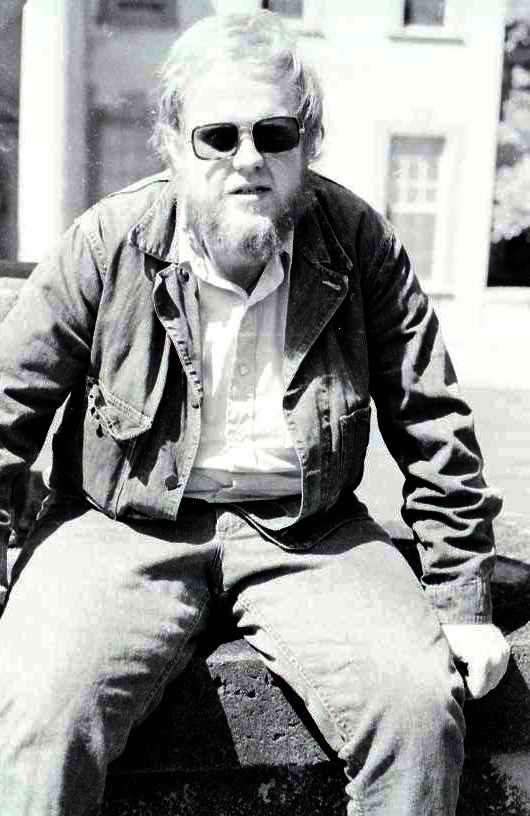
Scott Keating - April, 1974 - Atlanta, Georgia
This seems to be the season of death for me.
First good friend Jack Galvin died in July, then my 98 year old dear Aunt Mal at the end of August, and now, on Sunday evening at 11:35 at the Lutheran Hospital intensive care unit, one Scott Keating, friend and companero of 35 or more years. In their final hospital stay, all three struggled with life, seemed to have experienced a bit of a recovery toward the end, only to suffer an irreversable relapse again, and leave us. A cruel process, to give a hint of hope, just before the end. Jack and Scott were particulary close and I couldn’t help thinking that Scott just `went ahead’ to join Jack to organize that great union in the sky, lobbying so the rest of us might head their way later on. Yesterday some one asked me how I felt. Actually it’s quite simple: it’s like being psychologically amputated.
I am not sure of his age because I never asked him but believe Scott was a mere 56 or 57 years old. He had been ill on and off for some time with his condition slowly but persistently deteriorating in recent years. His father, Paul H. Keating, a former POW in a Nazi concentration camp, was an artist of some repute, a member of a group of post-war (WWII) artists referred to as the `Denver 5′ who had a national reputation a new generation of modern artists. Paul H., who on occasion would come to my classes and tell students of his POW experiences (and his opposition to war) always carried a trade mark milk carton from which he drank to sooth his ulcer. He would also casually – as if 50 students weren’t watching in amazement – smoke (of course it was a `no smoking’ room) and flick the ashes from his cigarette nonchalantly into his pants cuffs. He died maybe 15 years ago the way so many of us fear passing: drunk on a Denver street on a cold winter day. Paul H and Scott’s mom, Pooh (we call her), divorced a long time ago. Pooh remarried a kind and decent man, a solid and lasting second marriage and not a bitter one as some of them can be.
Some years ago Scott developed a `weight problem’, the source of which no one was ever certain, but it appeared to be some kind of glandular condition rather than binge eating or poor diet and his weight shot up to who knows, maybe 450, maybe 500 pounds, maybe more. He struggled with that weight – really did what he could to bring it down, bring it under control, but in the end was unable to. While no doctor, I believe the stresses on his system were simply too much – even for Scott who was strong as an ox, but not quite strong enough to bear all that weight. He’d have these malaria-like attacks, shivers followed by sweating, the cause of which the doctors at Kaiser were never quite able to pinpoint. And he’d be out of commission with that for a week, ten days until the attack passed. He was hospitalized for this on several occasions and as a result, to hear he was back hospitalized didn’t overly concern me. But every day his condition worsened. He’d has some kind of gall bladder infections which could have been surgically drained other than the fact that he was also on the blood-thinner, cumiden making surgery very iffy. The doctors hoped to wait until the cumiden levels in his system dropped before operating. But during the wait the infection spread and poisoned his blood which in turn led to a kidney malfunction and a more general system shut down. There were a few times he gave us hope, has his blood pressure stabilized and his white blood cell count seemed to diminish. But these only proved to be cruel teases and as the weekend drew nearly so did the end of Scott’s life.
I last saw him late on Saturday night for about a half hour along with a few other close friends.
We were all choked up to see Scott laid out – his body attached to a gazillion computerized machines with little graph lines and colored balls dancing up and down on color monitors – all of which seemed completely useless to me. Scott was sedated, I supposed – but am not sure – with heavy doses of morphine. He looked calm and not in pain, although he had suffered heaps in the weeks prior. He did not seem conscious although I am not sure and later, Carol Kreck, one of the friends there with me, related that Scott responded to a question as to whether he was cold and wanted more blankets. So perhaps he heard the words that I whispered in his ear as he lay dying – that friends like Scott come once in a lifetime, are irreplacable, that corny as it seems, and this from one of the most unspiritual – no anti-spiritual – person i Know, myself, that he will live on, live on in the minds and hearts of his friends and that he has long been a part of whomever it is that I am. I spoke to him about two kinds of family – the families we are born into and do not choose – our mothers and fathers, siblings etc…and then the other kind, the family we choose – the network of friends, in our case, cemented forever in a movement for peace, justice and civil rights that we were apart of in the 1960s and early 1970s. Finally I whispered to him that I had always considered him almost family, something close to a `brother-in-law’ anyway since at our wedding he’d gone off and `made out’ – as we used to call it – with one of my sisters. I was so proud of them both! (I won’t tell which one – they were, at the time, both great beauties) and that either sister would have been far luckier to have connected with Scott than the schleps they wound up marrying (although today, at long last, I have an `almost brother-in-law’ as I call him, who is, in every sense of the word, `a good man’). I’d like to believe Scott heard me although I’m not sure. Seven years prior I had had a similar conversation with my father in a Florida hospital where he lay, his body paralyzed, his face frozen from a stroke that soon would end his life, his eyes fixed on the ceiling. Never knew if my words got through then either. Strange feeling, probably for both of us.
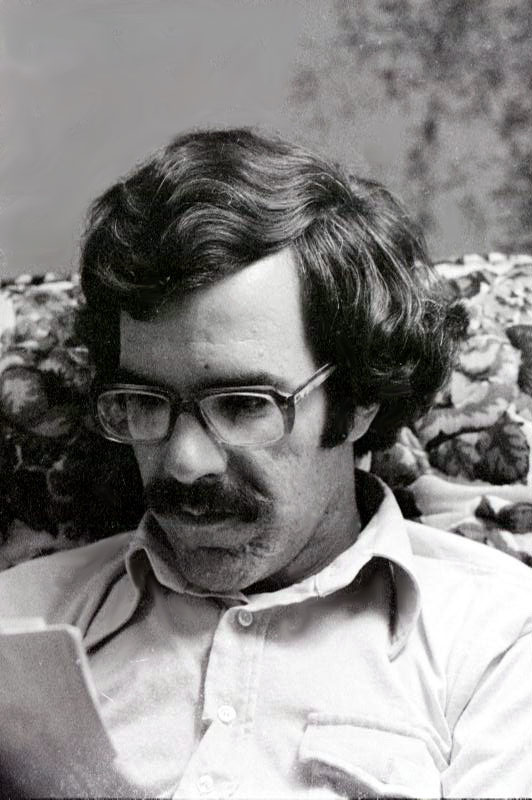
Jack Galvin - October, 1974
Social movements – the ones I have known – produce such a great variety of people. Some of them, quite frankly, are not particularly kind and humane – they are downright nasty, petty and cold – and it is a common trap to think they will be otherwise. But then there were the others: people who were supposed to be socialized to be greedy but are generous; the ones who are trained to be narrow and bigoted – but are neither and have no racist bones to speak of in their body; the ones who probably could have, had they wanted to, been extraordinarily wealthy or powerful but said `fuck it’ to all that. To this day I wonder at their humanity, their talent as organizers, their courage. Social movement do produce such human gems. Scott was one such `gem’. He was also quite frankly, – and I do not use this word lightly – brilliant, with more smarts in his (not so) little pinky than most people have in their heads (as we used to say in Brooklyn). Scott understood people like virtually no one else i know. He was a master psychologist and could penetate virtually everyone’s bullshit (including mine), their seemy side as well as anyone I’ve ever met. With a few questions he could see into a person’s soul. And yet he was kind. He didn’t use his powers of perception to control or hurt people like a number of people I know who think themselves real slick pyschologically (but aren’t). He accepted people with their short comings and in many ways cared for them all the more because of them. He was genuinely gentle.
He reminded me of when we met. I had forgotten and thought it was when he lived in one political commune on 12 and Race in Capital Hill and I lived in another at 24 and Downing near Five Points. But no, we had met in the mountains in the fall of 1970 at an AFSC peace conference. Galvin was there too. The conference featured a Pakistani scholar activist whose name doesn’t ring too many bells today (but whose writings I use in my teaching) Eqbal Ahmad. Shortly thereafter we found ourselves working together in Denver’s anti-war movement and with that movement, finding ourselves heading more and more in a left direction just at about the time the nation as a whole started going the other way! Keating was one of a group of young teenage Catholics, some of whom were rebelling against Catholic school, others coming out of what was one of the more politicized (and integrated) high schools in Denver, East High School. Decades later, these `recovering Catholics’, most of them long atheists, others who had found some alternatives to traditional Catholicism would meet and thoroughly enjoy playing `Catholic Trivial Pursuit’.
The commune movement we were both a part of didn’t last very long. Some communes lasted only a year or two. If I remember correctly, the one I was in lasted a bit more than a year. Scott’s, it seems, lasted somewhat longer. Many of the people coming out of those communes would spend much of the rest of their lives working for civil rights, peace, the labor movement, spawning a whole generation of left organizers and very talented political people. Keating was one of them. Although he had the good sense to never join a cadre organization, he was deeply committed to the values of the 1960s. For a while he worked as an organizer for the National Lawyer’s Guild in the early 1970s. He was a founder of one of the more interesting – and actually one of the few – local institutions that this new generation of leftists spawned – the Radical Information Project. Based mostly on 17th Ave near Clarkson right across the street from what for years was the Folklore Center, it was a central meeting point for many left initiatives in the city for two decades, and as such was also probably one of the most bugged and infiltrated institutions in the city.
When the Denver Police, directed by national intelligence agencies, raided the Crusade For Justice in what was one of the most carefully orchestrated acts of state repression (detailed in Ernesto Vigil’s fine book The Crusade For Justice), Keating understood the political significance of what had happened immediately and helped spearhead the National Lawyers’ Guild defense of tha beseiged organization. He was sharp, intelligent, very, very smart and caring in that work, a fact of which was never forgotten by people who used to be a part of the Crusade. As previously mentioned, Scott had to deal with significant number of assholes, leftwing `jesuits’ and just some downright nasty people. Welcome to the movement! The pay was shit – not even that good – and his reward was to get kicked in balls once a week by the movement people around him, arrogant types who talked tough but in the end weren’t worth a dime, who ranted about being `the vanguard of the proletariat’ and stuff like that although most of them later became mainstream Dems. They were often little more than `Marxist-Leninist’ millionaires, the left wing of the trust fund baby movement. Their stay in the left was temporary and after having done their patriotic duty to help fragment movement of the 1970s and early 1980s beyond repair, they moved on to the bottom of the barrel and wound up stock brokers, shyster lawyers, bankers or worse, state legislators. Eventually Scott did what any sensible human being would do under the circumstances – told them where to get off …and took a job working in auto parts store. I had to deal with some of the same nonsense, and still do, you know the folks to like to impress people that they are `the most radical’ when in the end they were mostly phonies (or agents). But what Scott endured was far worse. It never broke his spirit…but it hurt.
As he had excelled at the National Lawyers Guild, so he did in auto parts (and actually at essentially everything he ever touched). It was a place out on West 44 Ave just past Sheridan. He did so well that he was offered a management position in Houston, but there was a catch – he’d have to move to that pit of oil and gas interests. Too many Bushes in the bushes in Houston. It took him about a nano-second to turn it down. He then drove a cab for more than a decade. It seemed that half the Denver left did in those days and not surprisingly – together they formed a coop and although it didn’t last either, proved to be one of the more interesting experiments in worker self management until it too collapsed. A number of short stories resulted (he wrote fiction and poetry).There was then a spell as an investigator for the Jefferson County D.A. I think he really liked that work, but his boss was a politically ambitious and pompous asshole, a Tom Delay type climbing the social ladder to nowhere – most politically ambitious people are little more than that – – who couldn’t tolerate the fact that Scott was not sufficiently impressed. Scott’s problem was that Scott celebrated `Don’t-Take-Shit-from-Bosses-Day’ all year round. In the end I’m not sure if his boss fired Scott or visa versa. Then he went out on his own. His last venture which lasted also more than a decade was a private investigation firm – Another Source Investigations. In a pretty cut-throat business, he managed to survive and there were a couple of times there that I thought he might really pull it all together and get out of the financial hole he so creatively and systematically had worked himself into. But then his body started rebelling.
Scott would have made an outstanding lawyer and an even better judge. He knew the law intimately, was exceedingly fair and of course I have no doubt he would have defended poor people, minorities and essentially anyone with the ill fortune of getting screwed by the system. I know that he would done so because he was Scott and he understood and had a healthy contempt for greed and naked political power…and this was, along with our love for fine movies, one fo the great bonds we shared. But his life in those years was dedicated to `the movement’ and he never went to law school. I don’t think that he even ever went to college, not for even a semester. Just couldn’t afford it, and although I might be mistaken about this, he also simply didn’t seem to care – as if college would interfer with his education. Nor was there any financial support. His father Paul H. had begun his rather impressive downward spiral. Paul H would die as many of us fear we will. His body was found frozen on the street one winter morning. No financial support there. He left Scott a mixed inheritance – a fascinating personality with an appreciation for art and culture and a slew of unpaid bills.
Through much of the late 1970s and 1980s we didn’t see much of each other although we never really lost contact. His personal life was, well…let’s call it `colorful’. We reconnected – but how I can’t remember – sometime in 1990. I had just returned from five bruising and humbling (at least a little) years in Finland (but as they say that’s another story). He lived in the same neighborhood. We picked up again, older, somewhat more cynical (and thus much funnier and not so pompous). Until the end – the end being two days ago – my favorite moments, precious – nothing less – was just to visit with him. We’d talk for hours, about politics, about some of the pathelogical people he’d run into in his private eye cases, about culture – he was extraordinarily well read and knew art well. He saw where America was going long ago. Together we saw the current darkness descend and pretty much decided years ago, that while we probably couldn’t stop the shift to the right, still, we’d give the bastards a run for their money as long as we were still around and we’d laugh a little along the way. My friend, how i miss you and you’re not dead yet two days.
And the man could cook too. Some of our most intricate discussions were about recipees.
________________________
(note: five years later (march, 2012), i come across an email from tom mutz, now living in Slovenia and enjoying the free medical care there. He d written up a short note about an incident at the University of Denver in 1968, when the protesting students set up a tent city that was taken down by the state patrol, in which he and Scott were involved. They were not D.U. students at the time. As usual, i’d misplaced it, but want to post it now…)
Mutz on Keating…
You probably remember that after the Ohio National Guard murdered the four students at Kent State on May 4th, 1970, college campuses across the country erupted in protest. At the University of Denver protests began on May 6th and by the 8th, the campus was shut down and a tent city/shanty town with 1500 inhabitants had been erected on the lawns just south of Evans Ave. Scott, Mary and I along with others from our various circles (Dick Drennen, Susan Simons, Steve Levine and on and on) got involved with what the students were calling Woodstock West. Lots of good fellowship, decent food, great dope, homemade music and good politics around the fires in the camp. The campers policed themselves and the camp “police” called themselves after Wavy Gravy. The police of the helmeted persuasion moved on the protesters early on the morning of May 11th. Lines of state troopers with two foot long billyclubs sealed off Evans at Race St. and University Blvd while the Denver police began a sweep into the shanty town. Scotty and I were among those who went from tent to shanty waking people up. The cops tore down the tents and knocked over the makeshift shanties. (I have one nice memory of a cop approaching a shanty whose main support was a length of four by four. He took his nightstick in both hands and gave the upright a tremendous clout. The four by was anchored to the ground somehow and it was like smacking a cement post. The cop vibrated away from the shanty). By the evening of the 11th the camp was back up. The police didn’t have the manpower to control the campus as well as catch crooks but the National Guard did. Scott, Mary and I hooked up with the early warning office which was dedicated to letting the campers know when the Guard was coming. On the night of May 11th-12th, Scott, Mary, Susan Grossweiler (mostly along for the company) and I were staked out on the road that runs by the Denver/Globeville National Guard Armory, from which everyone expected the Guard trucks, tanks(?), armored personnel carriers(?), etc(?) to roll. We had scoped out the location of a pay telephone and settled down close enough to the gate to count the vehicles when they set out. This was serious business. No dope in the car, no booze. And no National Guard. I remember a lot of laughing, music on the radio, plenty of heavy dozing and a ridiculous number of cigarettes. We made it home around dawn.
nd the man could cook too. Some of our most intricate discussions were about recipees.
_____________________________________________________________
A few months back, in a moment of psychic confusion, I decided to upgrade my phone service to take advantage of some of the wonders of the modern age. I called my local provider, Comcast, to make the necessary changes. My phone, internet, cable system is not all that complicated, rather simple in the greater scheme of things and I expected the shift to go off smoothly, and hoped it would as Nancy, my wife, a spiritual luddite at heart in the best sense of the term, was not exactly enthralled by my need to remain electronically relevant.
The process was anything but gentle.
It took 3 sub contractors and finally a Comcast technician and three weeks to get the system working again half as well as it had before. During that time there was a 10 day period when we had no phone service at all and during that time two family emergencies (of course) took place that we only heard of belatedly. The last guy, the Comcast technican, had to come back twice on the same day, until the system finally got off the ground. I called the company, demanded we not have to pay a month’s service and got that. It’s worked ok since but the whole thing – combined with the rightwing newscoverage comparable to Fox News – has left a pretty bad taste.
Probably because of all that, it was with some pleasure that I read the following piece in the Washington Post, sent to me by my old Peace Corps Tunisia friend Phil Jones. So it appears – as is the case with so many things – there is a broader context to my situation. First there is the article itself which might be entitled `Hammer in Hand: Stepping Beyond Pacifism’…then there is the website Comcast Must Die – the potential impact of which has hardly been probed. Add to this the fact that compared to internet in Japan, France, Korea and a whole other slew of countries, that offered here in the US of A by Comcast and like-minded vultures is quite mediocre and actually not all that `high speed’.
Immanuel Wallerstein had some interesting reflections on the subject in a recent commentary Commentary No. 219, Oct. 15, 2007 entitled “Japan, the United States, and the World-Economy” in which he points out how US internet service is more expensive and slower.
” The United States at 4.8 was fourteen times slower than Japan and at $3.33 twelve times more expensive. It is piquant to note that France, so frequently scorned in the United States for its economic backwardness, while not up to Japan’s level, was over three times faster than the United States (17.6) and half as expensive ($1.64). ”
Wallerstein explains the dilemma:
“The explanation of this enormous discrepancy is the relation to the capitalist market of enterprises in Japan and in the United States. For Japan to be what the Times calls a “broadband paradise,” Japanese enterprises have had to make heavy investments and give deep discounts to customers. They do this on the theory that disregarding short-term profits and pouring billions into long-term projects will pay off eventually. This was the philosophy that allowed Japan to create one of the two fastest railway lines in the world – the Shinkansen. Its only competitor in this field is France’s TGV. The United States, as everyone knows, has a miserable train system known as Amtrak, which hardly anyone uses and is always losing money.”
“The two crucial differences between Japan and the United States is that U.S. corporate executives are under great pressure to justify any capital expenditures that might eat into this year’s returns, and that the U.S. government is unwilling to give financial incentives to companies to help finance long-term investment.”
“The reasons for both are obvious. U.S. corporations today are dominated by a speculative ethos, in which top personnel turnover is constant and buyouts ever on the horizon. This year’s bottom line is all that matters to a CEO who may not be in a position to profit from next year’s bottom line (not to speak of next decade’s bottom line). And the U.S. government is spending all its money on military investment and tax breaks for the very wealthy. There is nothing left over for long-term capitalist investment. The Japanese are instead investing in a “once-in-a-century transformation,” according to Kazuhiko Ogawa, general manager of the network strategy section at Nippon Telegraph & Telephone.”
It is highly unlikely that Mona-The-Hammer-Shaw has read Wallerstein. But she seems to have learned how to get Comcast’s attention..Read just below from Thursday’s (Oct. 18) Washington Post:
Taking a Whack Against Comcast
Mona Shaw Reached Her Breaking Point, Then for Her Hammer
By Neely Tucker
Washington Post Staff Writer
Thursday, October 18, 2007; C01
Sometimes truly American virtues arise in outlaws who — by dint of heroic but questionable endeavors — display the mettle of the national character.
For instance: The Dillinger Gang, robbing banks (and destroying mortgages) when banks were foreclosing on the poor. Stephanie St. Clair, matron of the numbers racket during the Harlem Renaissance, striking a (dubious) blow for both gender and racial equality. Junior Johnson bootlegging liquor during Prohibition (the benefits of which were self-evident).
Fear not, fellow Americans! In these dark days of war, pestilence and Paris Hilton, a new hero has arisen. She is none other than 75-year-old Mona “The Hammer” Shaw, who took the aforementioned implement to her local Comcast office in Manassas to settle a score, and boy, did she!
This was after the company had scheduled installation of its much ballyhooed “Triple Play” service, which combines phone, cable and Internet services, in Shaw’s brick home in nearby Bristow. But Shaw said they failed to show up on the appointed day, Monday, Aug. 13. They came two days later but left with the job half done. On Friday morning, they cut off all service.
This was the company that has had consumer service problems serious enough to prompt the trade magazine Advertising Age to editorialize that Comcast and other cable providers should spend less on advertising and more on customer service. And has spawned a blog called ComcastMustDie.com that’s filled with posts from angry customers.
So on that Friday, Mona Shaw and her husband, Don, went to the local call center office to complain.
Let’s pick it up, mid-action, according to Shaw:
Mona demands to speak to a manager. A customer service representative says someone will be right with them. Directs them to a bench, outside.
(Remember, it’s mid-August.) Mona and Don sit.
Tick, tick, tick, goes the clock. Sit, sit, sit, go Mona and Don.
For. Two. Hours.
And then — this is the best part — the customer rep leans out the door and says the manager has left for the day.
Thanks for coming!
Oh, the sputtering outrage!
The insulting idea that, as Shaw puts it, “they thought just because we’re old enough to get Social Security that we lack both brains and backbone.”
So, after stewing over it all weekend, on the following Monday, she went downstairs, got Don’s claw hammer and said:
“C’mon, honey, we’re going to Comcast.”
Did you try to stop her, Mr. Shaw?
“Oh no, no,” he says.
Hammer time: Shaw storms in the company’s office.
BAM!
She whacks the keyboard of the customer service rep.
BAM!
Down goes the monitor.
BAM!
She totals the telephone. People scatter, scream, cops show up and what does she do? POW! A parting shot to the phone!
“They cuffed me right then,” she says.
Her take on Comcast: “What a bunch of sub-moronic imbeciles.”
Being a responsible newspaper, we must note that this is a misdemeanor, a crime, a completely inappropriate way of handling a business dispute.
Noted.
Who among us has not longed for a hammer in this age of incompetent “customer service representatives,” of nimrods reading from a script at some 800-number location, of crumbs-in-their-beards plumbing installation people who tell you they’ll grace you with their presence between 12 and 3, only never to show? And you’ll call and call and finally some outsourced representative slings a dart at a calendar and tells you another guy will come back between 10 and 2 next Thursday?
And when this guy comes, pants halfway down his behind, he’ll tell you he brought the wrong part?
And there is nothing, nothing you can do.
Until there! On the horizon! It’s Hammer Woman, avenger of oppressed cable subscribers everywhere! (Cue galloping “Lone Ranger” theme.)
“I scared the tar out of some people, at least,” she says. “It had never occurred to me to take a hammer to a phone company before, but I was just so upset. . . . After I hit the keyboard, I turned to this blonde who had been there the previous Friday, the one who told me to wait for the manager, and I said, ‘ Now do I have your attention?’ ”
It wasn’t all fun.
“My blood pressure went up around my ears. I started hyperventilating. They had to call the rescue squad and put me on a litter.”
By the time it was over, she recalls, there were an ambulance, two police cruisers and a sergeant’s car in the parking lot. Shaw received a three-month suspended sentence for disorderly conduct, a $345 fine in restitution and a year-long restraining order barring her from the Comcast office.
“Truly a unique and inappropriate situation,” says Beth Bacha, a vice president for Comcast. She says company policy forbids disclosure of clients’ records, but did say their files note that the service record wasn’t exactly what Shaw has indicated. Besides, “nothing justifies this sort of dangerous behavior.”
Bacha noted that Comcast has more than 25 million customers, the overwhelming majority of which are very satisfied with their service.
Manassas police spokesman Sgt. Tim Neumann says there have been other police calls to that Comcast office, but he doesn’t know what prompted them.
Bob Garfield, who runs ComcastMustDie.com, wrote last week he was happy the site had become an outlet for “so much deep-seated rage,” but hoped customers would “keep the hammer assaults down to a bare minimum.”
From what we can tell, Mona Shaw is not, actually, a raving lunatic armed with construction tools.
She is a nice lady who lives in a nice house. She and Don are both retired from the Air Force (she was a registered nurse). They have been married 45 years. She is secretary of the local AARP, secretary of a square-dancing club and takes in strays for the local animal shelter (they have seven dogs at the moment). She has a heart condition. She lifts weights at a local gym. The couple attend a Unitarian Universalist church.
Police gave her the hammer back, though she swears she’s content to ride off into the sunset of True Crime Stories in America, never again to go Com-smash-tic on her local cable provider.
She does, however, finally, have phone service.
On Verizon.
Iran In The Crosshairs
A Panel Discussion
Alan Gilbert -University of Denver GSIS
David Goldfischer – University of Denver GSIS
Ibrahim Kazerooni – Imam, Denver Muslim Community
Paul Viotti – University of Denver, GSIS
Ben Cherrington Hall – Cyber Cafe
Wednesday October 31, 2007
5:00 pm
Sponsor: El Grupo
for more information contact Alan Gilbert algilber@du.edu or Rob Prince rprince@du.edu
Marcel Khalife comes to Denver/Dinner with Kathy Kelly/Talking In Evergreen about Iran With Ibrahim
1.
Marcel Khalife gave a concert tonight in Denver at the Oriental Theater not far from our home. Although we were both tired from an intense week of work and extra curricular activities (see below), we went. Khalife might not be a household name in Colorado but is throughout the Arab world, where he is, as was mentioned in Ida Audeh’s introduction, seen like Bob Dylan or Pete Seeger (but with a better voice than either). Son of a Lebanese Maronite fisherman and flutist, he was drawn both to music and left politics early in life. Professionally trained and recognized as a master technician, composer and performer, his music blends classical Arabic themes with jazz, Spanish flamenco music and other western themes in a unique fashion. The result is a stunningly beautiful blend, cosmopolitan in one sense, but in another, one that never strays far from its Arabic roots. One doesn’t need to know the words (although it does help needless to say) to feel the power, sophistication and utter mastery of his art. I kept thinking Nancy might like to leave, not because of the music but because she has to get up at 6 am in the morning. She insisted on staying until the end.
It was mostly a cultural program, and although the music itself putting the poetry of Mahmoud Darwish (great Palestinian poet) to song suggests a tradition in which culture, politics and jazz fused into one. Khalife spoke about being hassled at US immigration because of his skin color and language, and then dedicated a song to the customs officer who tried to intimidate him and his ensemble. I heard a similar story from a Spanish friend who came to teach not long ago. Toward the end Khalife commented upon how he respected the American people but opposed the policies of the Bush Administration – to cheers from the audience – but it was all of a two liner and a prelude to his final number. I thought to myself – yes, that is the way to package a political message: give a fine cultural program – don’t beat people over the head with long speeches (as I tend to do), give a spiffy little punch line and move on.
More, Khalife brought out a community that has been rather quiet, subdued of late – in part because of 9-11 and the repressive atmosphere toward Muslims and Arabs, in part, I suspect anyway, because of the sorry state of the Palestinian movement rife with splits and facing another imminent international charade, posing as a peace conference. Hard not to be cynical about all that. For Khalife they came out, because they love his music which is extraodinary as is the man himself. He represents more than music, but hope, healing, Christian-Moslem solidarity, `a serious and sincere work for those tormented by this [the 1975-1990 Civil War in Lebanon] war as he himself explained. His music was `a sort of balm for these wounds’. Put simply, they love him and that love and his presence here just might help regenerate some local activism.
It is not just in the USA that he adds a political line or two. He and his music have been barred from singing in Tunisia since 2005. In August of that year at a concert in Carthage (where 40 years ago I spent many a fine evening – there and in neighboring Sidi Bou Said), he dedicated a song to the `Arabs imprisoned in Israel and in Arab countries. Tunisia, a US ally in the war on terrorism, has been run by a president, a thug and dictator for nearly 20 years now, Zine el Abidine Ben Ali. In a country where criticizing the head thug is a no-no, the press is muzzled and political activists are thrown in jail, mistreated and tortured, they took Khalife’s comment personally. In a like manner, he has through the years expressed his support and profound sympathy for the plight and struggle of the Palestinians, many of whom he knew from the camps in Lebanon near his childhood home.
Although some Christians in Lebanon for a variety of reasons too complicated to discuss here (but I will in the future), moved sharply to the right during the 1960s and 1970s, some went the other way – toward the left – to marxist movements including Lebanon’s Communist Party. A similar phenomenon took place among the Palestinians with Palestinian Christians, those that were radicalized in any case, embracing either the Democratic Front for the Liberation of Palestine, the Popular Front for the Liberation of Palestine or the Palestinian Communist Party (the wing of the Jordanian CP that broke off after Israel occuped the West Bank and Gaza in 1967). Palestinian Christians envisioned their future in a democratic and secular movement that would ensure their rights as a cultural minority in countries that are predominantly Muslim. Khalife was a part of this historic trend that sees in a secular nationalism a future for, in the case of Lebanon, all of its constituent groups. Still not a bad idea but it’s lost a good deal of appeal in recent years. Still.
The evening was special in other ways. It was not simply that one of the great musicans and humanists of the Arab world was in little Denver, and in our neighborhood to boot, but that his presence brought out the Arab Community of Colorado in larger numbers than I have seen for some time, including and especially a very large contingent of young Palestinians and Lebanese. At first I was a little disappointed that more people from the broader peace movement did not show up, but it turned out that many came, especially people connected in one way or another with the Rocky Mountain Peace and Justice Center in Boulder. One curious pair was Sergio Atallah and Amy Stein. Stein, a new organizer for the Anti Defamation League in Boulder invited Atallah, Palestinian activist (and a personal friend of long standing) to an ADL meeting in Boulder. In return Sergio invited Amy to the Khalife concert. Nice evening.
2.
An Evening with Kathy Kelly, Voices in the Wilderness (Wednes)
Kathy Kelly, radical Catholic peace activist and pacifist is in Denver. She spoke tonight at Regis University. I missed it because of the Marcel Khalife concert. Tomorrow evening she’ll talk at the First Unitarian Church on Hamden and Colorado Blvd. She has had a long connection with Denver peace activists, most especially those who went on a number of delegations to Iraq in the mid and late 1990s and witnessed the debilitating impact of economic sanctions on the Iraqi people in those years. Sanctions like those placed on Iraq from 1991 to 2003 are nothing less than a slow form of genocide. Perhaps as many as 1,000,000 Iraqis died of starvation, malnutrituion, waste conducted diseases like typhoid – a slow, systematic incredibly cruel choking of a nation, reminescent of the Nazi seige of Leningrad (which had the same goal). Her courage, her humanity add an active quality to her pacifism which it is impossible not to respect.
Most of our discussion centered around the degree to which Iraq has been decimated as a country and on the great unspoken human tragedy – the Iraqi refugee problem, rarely raised in the US media. 4.5 million Iraqis that have fled Iraq to neighboring countries (Syria, Jordan, Iran) plus another 1.5 million internal refugees. But fear not because the USA has come to the rescue! 79 Iraqis have been permitted to enter our country. Kelly has spent a good deal of time in Jordan recently, living in the Iraqi refugee communities where the government there refuses them work visas, health and educational facilities. More and more Iraqis in Jordan are simply shunned. So once again (other time being 1948 when 750,000 Palestinians were expelled from their homes as Israel was created) a regional war has created a refugee crisis of mammouth proportions, one that will have long standing if not permanent repercussions. This one is a result of a US invasion and occupation that had nothing to do with democracy and national restruction and everything to do with the privatization of oil and the establishment of permanent military bases. John Bolton, the former US Ambassador to the UN, and permanent diplomatic embarrassment, just blows it all off: the US has no responsibility for the refugee crisis the war created. This is the same Bolton who would have us nuke Iran.
3. An evening in Evergreen with Ibrahim Kazerooni and Rob Prince (Tues)
We were invited by the local peace group and the meeting was at the United Methodist Church just outside of Evergreen. As usual I had a little trouble finding it despite good directions because we were talking too much, but we did get there all the same. We had a division of labor – Ibrahim made the comparisons between the build up before the war with Iraq and the present situation, how the media is playing more or less the same role. I spoke the evolution of the permanent military presence in the region from the Carter Doctrine after the Iranian Revolution of 1979, the creation of the floating army – the Rapid Deployment Force, followed by the establishment of permanent ilitary bases first in Saudi Arabia, then in Qatar, Kuwait, Iraq and in the former central Asian Soviet Republics. We both believe that the Bush Administration intends to attack – bomb – Iran sometime before the elections next November – unless we can somehow mobilize to stop this madness – and that although some of the scenarios appear to have been `adjusted’, they are not more dangerous than they were previously precisely because they seem more palatable. And we spoke about how the Dems are no better than the Republicans on this question.
What was more interesting than our talks (which were ok) were the questions that came from the audience after the talk. Although there were 1 or 2 people in the audience that appeared to have steam coming out of their ears in response to our comments, most of the audience was quite receptive. Someone asked about the current campaign to vilifiy Islam. A second, a woman who identified herself as an active Democrat expressed herself rather sharply against AIPAC’s role in the Democratic Party, thus raising the Israeli-Palestinian issue. A third asked about how we can counter all the media stereotyping of Iran. I found the barb against AIPAC particularly interesting as it did not come from Ibrahim or myself but from the floor. I have no easy answer to how to counter this other than to fight within the Democratic Party for a more balanced, humane platform plank on the issue and challenging the party leadership’s slavish obedience to AIPAC policies (on Israel and Iran). This is not the first time such comments have been raised from the floor suggesting that at least in some quarters of the Democratic Party here in Colorado there are people who understand the Israeli-Palestinian issue and are doing what they can hold the party leadership accountable. They’ve got a long fight on their hands to be sure, but still it seems that there are some changes of public opinion on the ground on this issue.
Much discussion centered around the dilemma being discussed nationally in the peace movement. More than 70% of the American people are against the war, yet the peace movement remains, if not marginal, still not particularly big. How can we tap into more of that 70%? How can we broaden our movement and engage more of the mainstream? Some ideas were thrown around – running peace candidates either inside or outside the Democratic Party, trying to involve people on the local level more, etc especially the year ahead when the national focus will be on Colorado because of the upcoming Democratic Party national convention. It’s not a question of `re-creating 68′ so much as activating for 08. I did have the sense though that this is an audience that will, over the months to come, come up with its own creative solutions.
 View from the Left Bank: Rob Prince's Blog