Sanders’ Nevada Victory – The Re-emergence of a Class Conscious Political Consensus: A Blow Both to Trump and to Identity Politics.

Sanders supporters – overwhelming support in Nevada from Latinos voting their class interests
____________________
A half century ago, the Chicano liberation movement, in which the Denver-based Crusade for Justice, led by Rodolpho ‘Corky’ Gonzalez, was a driving force, based their organizing work around the analysis that the growing Chicano population of the Southwest would, as it grows, become a key political force in the nation’s politics, especially if was able to find common ground with other non-white organized communities in tandem with the non-racist elements of the labor movement.
____________________
1. Nancy “gets things done.”
Yesterday, my wife of 44 years, Nancy, went out to canvas door to door for Bernie Sanders in one of the poorer, working class, heavily Chicano neighborhoods of Denver. As someone once put it, Nancy, the family’s super ego, is a person “who gets things done.” Very true. Plus she did her Bernie campaigning without using the campaign “ap” to which younger canvassers seem addicted.
With “Julian” a young Asian-American freshman at the University of Denver who, with Sanders as a model, wants to pursue a life of public policy. He only eats once a day “because he’s too busy with other things” she worked the Barnum neighborhood on the Saturday afternoon of the Nevada Democratic Party primary.
An Asian-American youth who grew up in part in China and a recently retired white working class retired nurse with family roots in rural Nebraska teamed up garner what support they could for a 79 year old Jewish social democrat whose family hails from the Flatbush neighborhood of Brooklyn New York. Flatbush used to be close to 100% – if not 110% Jewish: today it’s much more Caribbean and Arab. Read more…
Coming Soon In Denver………

No to a Bloomberg Candidacy….

Stop and Frisk – A national case of racial profiling practiced by Michael Bloomberg while NYC mayor
To this date Bloomberg has spent more than $350 million for his campaign. He is willing and can afford to put several billions into it. Over the years Bloomberg has given more than $10 billion to build a political and philanthropical empire. He used that money to suppress voices critical of him:– Moon of Alabama –
The Year of Stalingrad by Alexander Werth – a brief review.
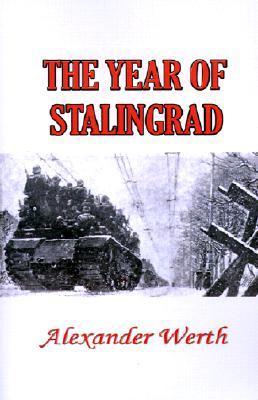 Who reads about WW2 anymore, and if they do, who reads about the war on the eastern front, the Nazi military offensive against the former Soviet Union?
I do and frequently.
There are a number of reasons. First and foremost – it is a personal act of gratitude for what in the USA is often an unappreciated – the Soviet contribution to the defeat of fascism, the monumental effort involved, the oft unappreciated human suffering and sacrifice it entailed. Watching how people react – or don’t – under extreme pressure, crises – has long fascinated me.
Then there is the fact that fascist tendencies have emerged in recent years the world round, including in the USA; important to learn from history fascism’s strange journey, from the environment in which it took birth to how it was defeated. The country where I live seems to be lurching in that direction.
And then there is all this Russia bashing – done frankly even more by the leadership of the Democratic Party than even the Republicans these days. I understand it in many ways (Hillary’s failure to look at her own campaign for its failures, Russia’s refusal to simply implode in the 1990s – and its rebound outside of the influence of Washington). Most importantly there is the growing danger of a U.S.-Russian nuclear confrontation that few take seriously in this country, but I do, very much so. Part of avoiding, preventing such a conflict is to study the period when the U.S. and the U.S.S.R. were actually allies – almost but not quite – friends
Why? Because I still believe that that war, now over 75 years ago, continues to shape the world in which we live, no matter where we live and that the decisive effort to defeat fascism took place, there in places like Stalingrad and Kursk, on Seelow Heights over the Oder River. It ended with the liberation of Berlin, the meeting of US and Soviet troops at Torgau. The sacrifices the Soviets made – in dead, wounded, in the destruction of their country by the Nazis were unequaled.
Besides, the key turning point in WW 2 is where the Nazi armies were put on the defensive was a place then called Stalingrad (today Volgograd) on a bend of the Volga River in southern Russia.
One of the better historians of WW2 on the Eastern Front was British journalist Alexander Werth. His “Russia At War” is outstanding on the whole – despite the fact that he misread the what was Stalin’s massacre of thousands of Polish officers at the forests of Katyn – which was revealed only in the late 1980s – he wasn’t the only one to get that one wrong. But apart that – the ebb and flow of the fighting, the human element – in my view, no one does it better.
Werth – fluent in Russian – was given a great deal of freedom to interview Soviets at all levels of society. He knew the Soviets as few other Westerners did. He wasn’t an apologist – but an observer of a country at war. The Year of Stalingrad – other than its unacceptably small print – is well worth reading in these times.
Hasan Ayoub published at MondoWeiss…
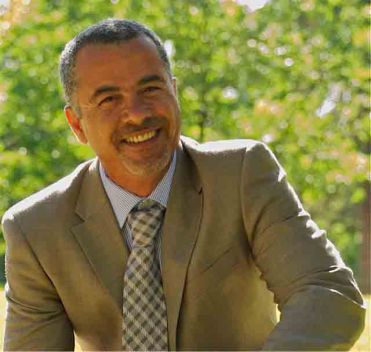
Hasan Ayoub
Note: Hasan Ayoub is currently a visiting professor at the University of Denver’s Korbel School of International Studies, invited by the Center for Middle East Studies there. He is on leave from An-Najah University, Nablus, West Bank Palestine where he is Assistant Professor in the Political Science department. Some years ago he got his doctorate at the same University of Denver’s Korbel School of International Studies. And… he is my friend; it is such a pleasure that he is back among us in Colorado already making his presence and his profound expertise known, both within and beyond academia.
The Deal of the Century Endorses Ethno-Zionist Claims in MondoWeiss..

(Photo by AHMAD AL-RUBAYE / AFP)
KGNU – Hemispheres – Middle East Dialogues – January 28, 2020 – Part 2
(Continued from Part 1)
(At the time of this writing Turkey has threatened to send troops to Syria’s Idlib Province to stop the advance of the Syrian government trops against al Nusra elements still holed up there.)
The (Soleimani) assassination unified both Iranians and Iraqis to drop the focus on anti-corruption issues to focus instead on a single issue – In Iraq it was the call to press the government to get the Americans to leave, to push them out and in Iran to take revenge for the assassination of Qassem Soleimani.
– Ibrahim Kazerooni –
That particular news item, Ibrahim, – Trumps threat to assassinate Abdul Mahdi – was broadly covered in the Middle East but here in the United States virtually uncovered, not covered at all.
Trump threatened two things according to what I read: first he threatened to kill the prime minister directly in a phone conversation. The second threat was to unleash that would bring down the prime minister politically, again suggesting what we have spoken about in the past regarding the underhanded manner in which some of these so-called demonstrations have been instigated.
This is Trumpian politics: you threaten to assassinate even your so-called partners.
– Rob Prince –
Rob Prince: We want to turn now to the consequences of the Soleimani assassination. One of the things we have noted is the number of serious events have taken place over the past month. I want to quickly reiterate some of these events so that we can put together a sequence and then we’re going to zero in on a few of them in more detail.
On January 3, 2020 – right after the new year, the United States, the Trump Administration, assassinated Qassam Soleimani, head of the Iranian Quds Force along with Iraqi military leader Abu Mahdi al Muhandis, Deputy Commander of Iraq’s Popular Mobilization Force (or PMF) – a unit of the Iraqi military and government that played a key role in the defeat of ISIS in Iraq. The main stream media in the USA described the Popular Mobilization Force as “an Iranian-backed military” but actually it was a unit integrated in the Iraqi army itself. Read more…
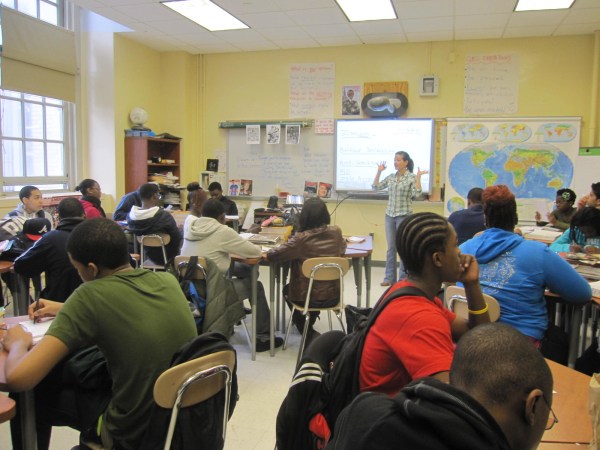
Erasmus High School on Flatbush Ave in Brooklyn, New York today, from whence Bernie Sanders graduated.
“Sanders Wins But He’s Not The Big Story Coming Out of New Hampshire”? …an op ed in the Washington Post today by Jennifer Rubin. Suggestion from the article is that Buttigieg is. Sanders’ victory is played down, Buttigieg’s second place is played up…

Syrian Army Soldier Liberating the Damascus-Aleppo International Highway from ISIS-al Nusra-Turkman Liberation Front mercenary elements
KGNU – Hemispheres – Middle East Dialogues – January 28, 2020 – Part One
____________________
In this first part of our our program, we discuss the consequences of the aftermath of the Qassem Soleimani assassination on the events in Syria, where the Syrian government has begun a full scale offensive to liberate areas of Idlib Province, in the country’s northwest corner near the Turkish border. The Syrian government offensive described here two weeks ago (on January 28, 2020) continues to steam roll onwards with larger and large chunks of Idlib Province being liberated. Today (February 11, 2020) it was announced that the Damascus-Aleppo International Highway passing through Homs, Hama and Idlib has been fully liberated.
____________________
But in the past weeks, in the aftermath of the Soleimani assassination, the Syrian government offensive against ISIS and like elements in Idlib Province has intensified. It appears to be a full scale regional offensive meant to clear out the elements. One reason for this is that Turkey which has supported, funded, armed what is known as the Turkman Liberation Front (or United Turkmen Army) has redeployed large elements of this movement to Libya, weakening the overall strength of this mercenary front to such a degree that the Syrian government felt they could launch an all out offensive which is underway.
– Rob Prince –
____________________
Sooner or later the other terrorist organizations will have no other option other than to go to Turkey or to make a deal (surrender) with the Syrian government. Syrian government helicopters are dropping flyers in terrorist held regions saying they should surrender now, there is no other option; the Syrian army will be coming sooner or later.
So this was the situation. It was an opportune moment. The Turkish government had found a way to remove some of these mercenaries by shipping them to Libya. The Russians continue to support the Syrian government. Given the whole confusion that has been created in the post assassination environment, at the moment the United States is unable to anything to turn the situation around and so the Syrian government played its “winning card” and has quickly liberating these areas.
– Ibrahim Kazerooni –
____________________
Host Jim Nelson: This evening on Hemispheres we continue the Middle East Dialogues. As always joining me in these dialogues are Ibrahim Kazerooni and Rob Prince.
As many of our listeners are aware, Ibrahim Kazerooni is a regular contributor to our International Press Round Table. He has a Phd in Religion and Social Change from the Joint Iliff School of Theology and University of Denver Korbel School of International Studies Phd Program. Ibrahim is Imam of the Islamic Center of America in Dearborn, Michigan. Welcome Ibrahim. Read more…

Iron Mountain Hot Springs…
Turkey Threatening To Invade NW Syria – Idlib Province – To Prevent The Rout of Al Qaeda and the “Turkman Liberation Front”
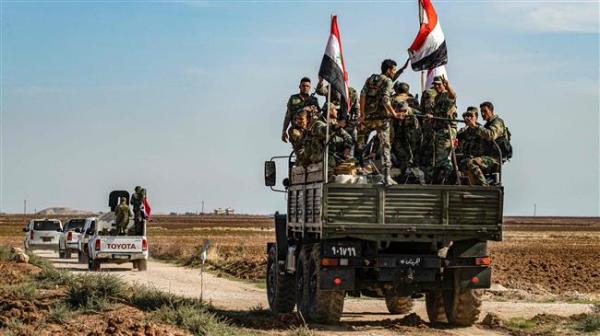
Military forces of the Syrian government liberating Maarat-al-man in Idlib Province from Al Qaeda and like elements.
After waiting nearly a year while its allies Russia and Iran have tried to convince Turkey to give up on its ill conceived plans to annex parts of Syria – Idlib Province in particular – either de facto or de Jure – the Syrian Army began its offensive to defeat Al Qaeda, the Turkman Liberation Front and other mercenary elements still wholed up there. There are different reports on the exact number of these elements but figures in the tens of thousands are not uncommon. Further, the western media, has suddenly shown “great concern” for civilian casualties in Idlib, playing down the fact that the region is being liberated by these fascist elements.
And now Turkey threatens military action…
Getting interesting.Essentially Turkey has invaded nw Syria …
There are a number of problems for Turkey involved.
1. Although it has removed SOME of the mercenaries it supported in Syria and sent them to Libya (and elsewhere). Turkey still fear that a Syrian victory in Idlib will result in a flood of those mercenaries coming back into Turkey itself. It cannot handle/control them and fears the destabilization and unrest they will cause. Over the past year Turkey has tried to influence other players (the Saudis, Qataris, UAE) to help re-assign these mercenaries to different places, to accept them, but no one wants them… Turkey’s move into nw Syria is to stop this inevitable stampede
2. Turkey still has “pan-Turkic” aspirations – you know, the nonsense about reviving some of the Ottoman Empire as well as spreading its influence into Central Asia… As it stole a part of Syria in the 1920s, it hopes to continue that process and controlling Idlib Province would not only solve its mercenary dilemma but would build on what might be called “Turkish Zionism” (that is what I call it). Of course the presence of the Turkish military in nw Syria changes the chemistry some…but that said, it is a losing strategy. It is no accident that at the same movement, Israel is bombing Damascus. So while there are tensions between Turkey and Israel when it comes to strategic cooperation, they are still on the same (U.S.-NATO) team!
3. It is Turkey’s way of showing that despite tensions with the USA that it still can play a role as a NATO member – especially in efforts to destabilize Central Asia (and ultimately Russia and China) – again a losing strategy… but one which will lead to more bloodshed and the unnecessary loss of life and property.
By way of example of how Turkey has worked in Syria – I quote from a piece from the blog “Essence of Time”
Turkish security forces control terrorist groups in Syria, said the arrested militants during the liberation of the suburbs of Aleppo, RIA Novosti reported on February 4.
As a result of the fighting, the Syrian army has liberated several localities and an area in the suburbs of Aleppo. During the “sweep” of the area, the military captured two terrorists, natives of Syria.
During the interrogation, they testified that they had to leave their places of permanent residence as a result of the civil war and decided to leave Syria as refugees with their families. When crossing the border, Turkish security forces forced military-aged men to join one of the terrorist organizations and brought them back into Syria, while they transferred relatives to a special camp for displaced persons as hostages.
The prisoners also showed that they had been received their military specialty under the supervision of Turkish instructors who were training them. According to the prisoners` testimony, formations from Pakistan and Afghanistan as well as groups formed from citizens of former Soviet republics are fighting in the militant-controlled parts of Syria
Forcing civilians fleeing the war to join Turkish run terrorist groups and then putting their families in what amounts to concentration camps as hostages; other Turkish trained mercenaries from Pakistan, Afghanistan “as well as groups formed from citizens of former Soviet republics” are fighting in Syria.. They wind up in Turkish-run mercenary groups like Jaysh al-Watani al-Suri, Hayat Tahrir al-Cham and a plethora of other mercenary militias.
Happy Stalingrad Day! Remembering Stalingrad – February 2, 1943
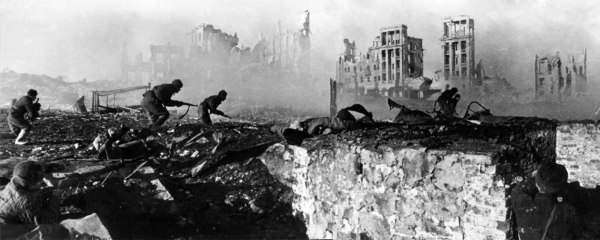
Soviet soldiers advancing in Stalingrad, late January, 1943
This evening, as a part of a tradition handed down by my father to drink over-priced Scotch, with my bottle of Colorado-brewed stuff, I shall lift a glass or two – all I can drink these days – to the heroic defenders of Stalingrad.
I intend to make February 2 a personal family holiday every year now, between today and when I pass from the scene. As I have already done this morning, I’ll spend an hour reading and thinking about Stalingrad, of the greatness of the victory over German Nazism, of the terrible almost unimaginable price paid for that victory.
Well frankly, it would be difficult for me to “remember” Stalingrad. It, the epic battle that broke the back of German Nazism, ended with the Nazi unconditional surrender on this day, February 2, 1943. Since I was born some 17 months later, in November of 1944, still before World War 2 in Europe or Asia had ended it is impossible for me to remember the event.
So it is not a question of a “personal” remembrance, rather it should be a historical remembrance – like a holiday that comes around once a year. The date should be celebrated worldwide including here in the United States, and in that sense “remembered” historically at least. Why? Because it marks the major turning point in WW2 on the European front, nothing less. Until Stalingrad, the Nazis were piling up victory after victory and had rolled to victory through almost all of Europe.
At Stalingrad after 4 1/2 months of some of the bitterest fighting the world had every known, Hitler and Nazism were stopped dead in their tracks, the progress ended not far from the Volga River and from there they were pushed back so that two years and three months later, in May 1945, the Third Reich was put to rest, smashed to smithereens. It was at Stalingrad that the Soviets – essentially singlehandedly – wiped the smirk off of Hitler’s face; in fact from February 2, 1943 until his death in early May, 1945 he couldn’t stop peeing in his pants every time the Soviets moved that much closer to Berlin. Read more…
Romero Troupe of Colorado Presents “I Didn’t Choose Palestine; It Chose Me: Personal Stories of Transformation


Millions Demonstrate in Baghdad calling for a dismantling of U.S. military bases and an end to its military presence in Iraq – January 24, 2020
“The Assassination of Qassem Soleimani – The U.S. Shoots Itself In the Foot in the Middle East…Again” with Ibrahim Kazerooni and Rob Prince. KGNU 1390 AM, 88.5 FM – Hemispheres, Middle East Dialogues. Tuesday, January 28, 2019. 6 pm Mountain Time.
We’ll discuss the latest developments in the Middle East, trying as usual to deconstruct the mainstream government and media narrative and explain – or try to – what is actually going on.
Yes, it was a political assassination of a high level representative of a foreign government. As some people have noted – even during the most tense periods of the Cold War – the United States never assassinated a high level Soviet official as it did Qassem Soleimani.
In fact it was a political assassination of government representatives of two foreign governments. Besides Qassem Soleimani, Abu Mahdi al-Muhandis was killed. Although the mainstream media tries to portray him as a “militia” leader, he was actually a high level official in the Iraqi government.
It was also the first time since WW2 that a government openly challenged the US government militarily with the Iranian missile strike on the two US bases in Iraq.
In any case, we’re going to talk about this assassination – and what it set in motion in some detail
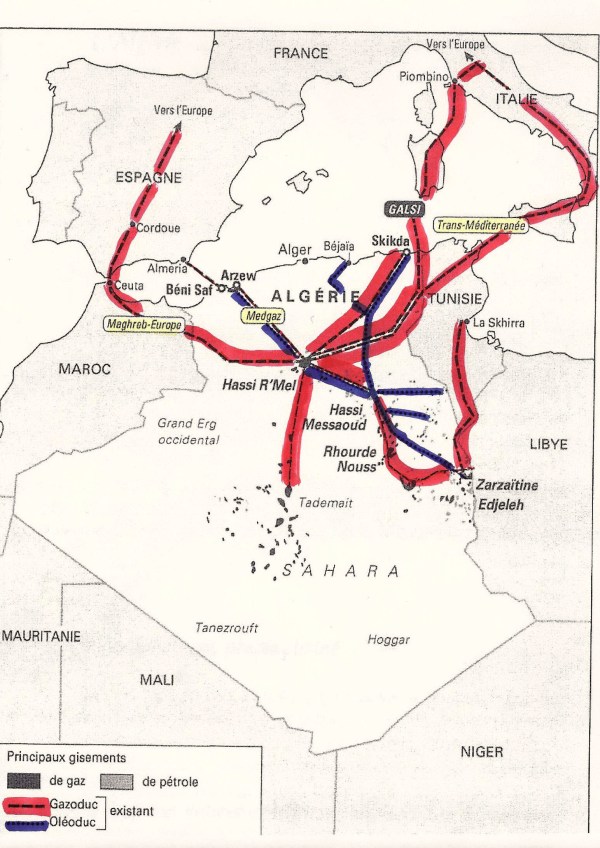
Algeria After Salah: Difficult Days Loom Ahead
_______________________________________________________
First published at Inside Arabia – January 22, 2020
_______________________________________________________
Angst and uncertainty remain heightened after the death of Algeria’s General Ahmad Gaid Salah, the country’s strongman during the transition period. The new chief of staff of the National People’s Army, General Saïd Chanegriha, appears to be even more of a hard-liner.
_______________________________________________________
One Algerian strongman general, Ahmed Gaïd Salah, died on December 24, 2019, to be replaced the same day, by… another strongman general, Saïd Chanegriha, as chief of staff of the Algerian army. Outside his own military-security circle and foreign countries with interests in Algeria (France, the U.S., Spain) mourning for Salah was subdued at best. Too much water under the bridge – and blood in the Algerian soil for that.
The promotion of General Saïd Chanegriha to replace Salah at the head of the Algerian military is not a particularly encouraging sign. General Chanegriha, is known to have been a ruthless hard-liner during the “Dirty War” of the 1990s. In one of his earliest statements since his recent installment in his new position as chief of staff of the National Peoples’ Army (ANP), Chanegriba warned of “a dangerous conspiracy” that “threatens the country’s stability and its institutions” which could lead to “chaos.”
While Salah proved to be a somewhat stiff and unimaginative figure, when push came to shove he did essentially single-handedly force from power former president Abdulaziz Bouteflika, Algeria’s longest standing president, on April 2, 2019, in response to near universal public pressure.
Mass popular pressure demanded radical political and social change that included sweeping aside the country’s largely discredited old guard, in which the military was a major factor.
Having removed Bouteflika, Salah found himself pressed from all sides. Mass popular pressure demanded radical political and social change that included sweeping aside the country’s largely discredited old guard, in which the military was a major factor. The country’s old guard and the government’s main international backers, on the other hand, took the opposite view. They insisted on no fundamental shift in the country’s sources of political power.
The balancing act could not last forever. Read more…
US Plans Permanent Occupation of Iraq

Cyprus. January 1987. Demonstration Against U.S. Bases at Akrotiri and Dhekelia, As I recall, there were 100,000 people protesting their presence on the island.
Source: US Plans Permanent Occupation of Iraq
Stephen Lendman Global Research – January 12, 2020
The US plans permanent occupation of numerous nations worldwide, including Afghanistan, Syria, Iraq, and other countries it attacked preemptively.
It’s up to officials of these countries and mass public opposition to end US occupation through the power of resistance
Pentagon bases are platforms for endless wars, including against host and neighboring countries.
So-called status of forces (SOFA) agreements establish the framework under which US forces operate abroad — serving its own interests at the expense of occupied nations and their people.
Chalmers Johnson explained SOFAs as follows, saying:
“America’s foreign military enclaves, though structurally, legally, and conceptually different from colonies, are themselves something like micro-colonies in that they are completely beyond the jurisdiction of the occupied nation,” adding:
“The US virtually always negotiates a ‘status of forces agreement’ (SOFA) with the ostensibly independent ‘host’ nation.”
They’re a modern day version of 19th century China’s “extraterritoriality” agreements. Read more…
 View from the Left Bank: Rob Prince's Blog